
Website:https://www.toa-const.co.jp/eng/
IR Information:https://www.toa-const.co.jp/eng/ir/
Video:https://c-hotline.net/Viewer/Default/6467ccb9c41e3afa37a891770895059818ac
FY2026 1Q Financial Results Briefing
Takeshi Nakao (hereinafter, “Nakao”): I am Takeshi Nakao, Representative Director and Senior Executive Officer, Chief of Corporate Management General Headquarters. Before I begin, I would like to say a few words. I would like to express my heartfelt sympathy to everyone affected by the recent earthquake in Kumamoto Prefecture. As a construction company, we will do everything in our power to fulfill our responsibilities and contribute to recovery and reconstruction as quickly as possible.
I would also like to express my deepest condolences following the serious accident that occurred at one of our construction sites in April. I mourn the loss of the four individuals who died and extend my sincerest condolences to their bereaved families. I also extend my heartfelt sympathy to those who were injured.
We take this incident extremely seriously and recently announced measures to prevent a recurrence. We will ensure that these measures are fully implemented, return to our fundamental principle of placing safety above all else, and work together as an entire company to regain trust.
Today's Highlights
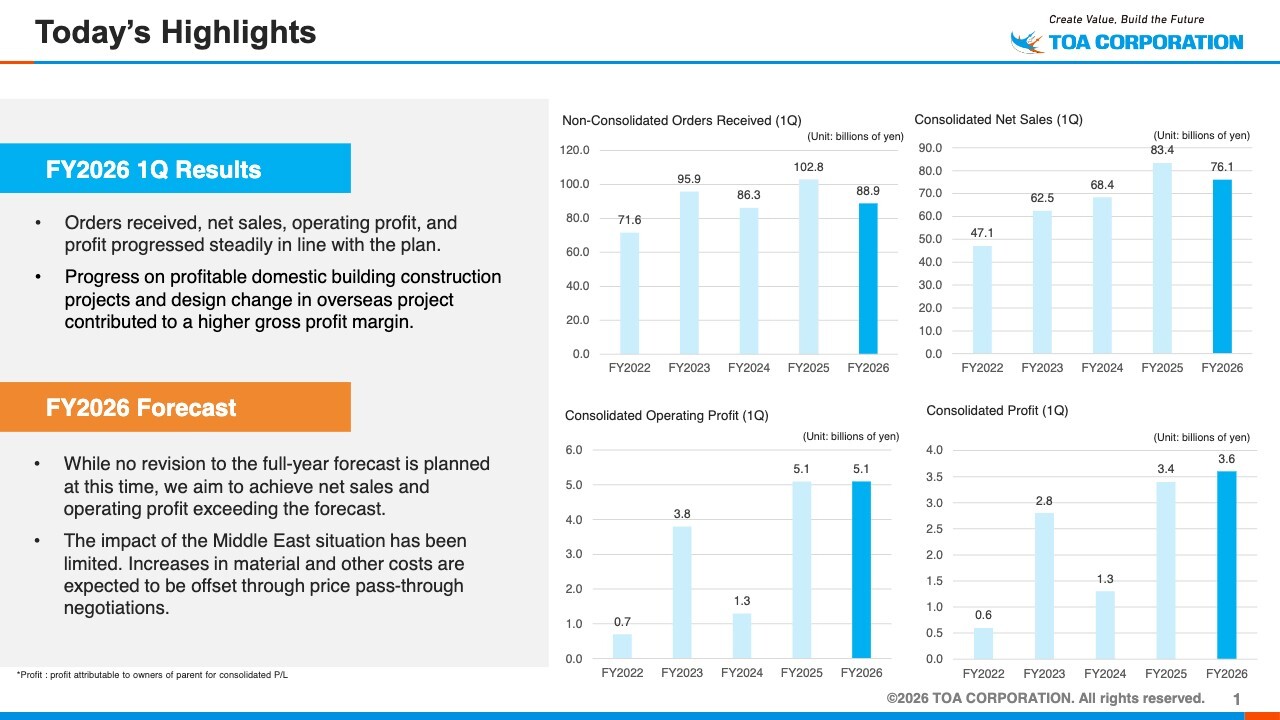
I will now explain our 1Q performance. This is an overview of the 1Q of FY2026. There are two key points I would like to highlight.
First, the 1Q results progressed steadily in line with the plan. Net sales declined because sales from large-scale building construction projects were recorded in the previous year, but our full-year outlook for higher net sales remains unchanged.
Second, high margin domestic building construction projects and design changes in overseas projects contributed to a higher gross profit margin. The consolidated gross profit margin was 12.5%, above the full-year forecast of 11.3%.
We do not plan to revise the full-year forecast at this time, but the entire company will work together to achieve net sales and operating profit above the forecast. We currently expect the impact of the situation in the Middle East to be limited.
FY2026 1Q Financial Results
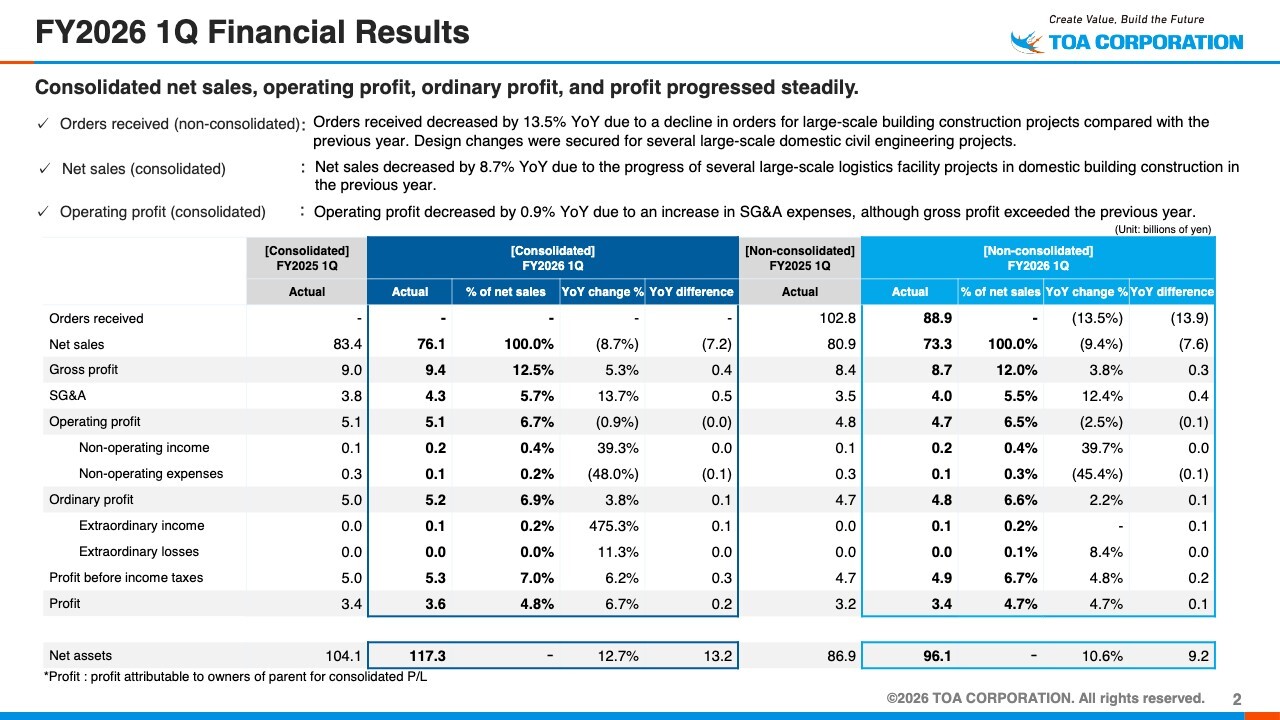
As I mentioned earlier, overall 1Q results were in line with the plan.
Although non-consolidated orders received and consolidated net sales were below the same period of the previous year, gross profit increased YoY, operating profit was almost unchanged, and profit attributable to owners of the parent increased to ¥3.6 billion.
[Non-consolidated] Breakdown of Orders Received by Business
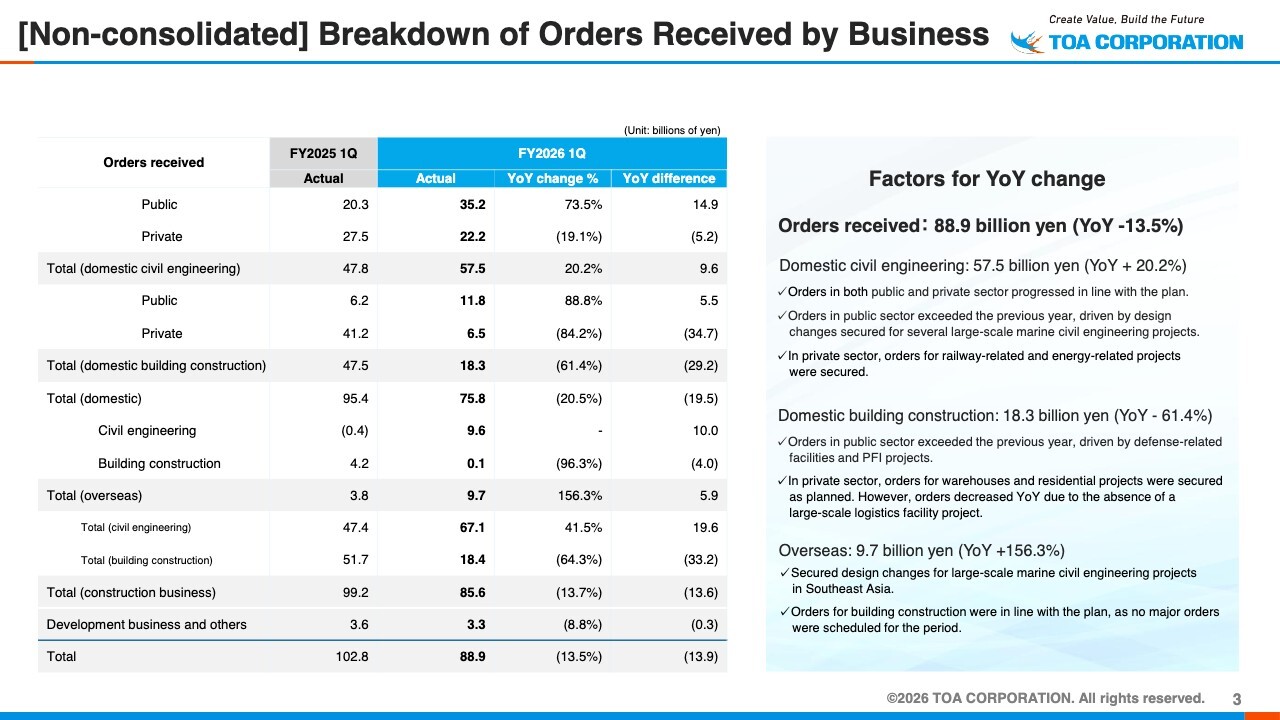
I will now explain non-consolidated orders received by business. Total orders received were ¥88.9 billion, down 13.5% YoY.
Orders received in domestic civil engineering increased 20.2% YoY to ¥57.5 billion. In the public sector, we secured design changes for several large-scale marine civil engineering projects. In the private sector, we won railway-related and power and energy-related projects. Results progressed in line with the plan.
Orders received in domestic building construction decreased 61.4% YoY to ¥18.3 billion. Although we secured orders for defense-related facilities and PFI projects, orders declined due to the absence of a large-scale logistics facility project secured in the same period of the previous year. We plan to secure an order for a large-scale logistics facility during the current fiscal year and expect full-year orders to exceed the previous year.
Overseas orders received increased 156.3% YoY to ¥9.7 billion. We secured design changes for large-scale marine civil engineering projects in Southeast Asia and Africa. The ¥9.7 billion includes a positive impact of ¥2.7 billion from the depreciation of the yen.
We are not revising the full-year order forecast, but opportunities for projects not included in our initial plan are emerging, and we will aim for further upside going forward.
[Consolidated] Breakdown of Net Sales and Profit/Loss by Reportable Segment
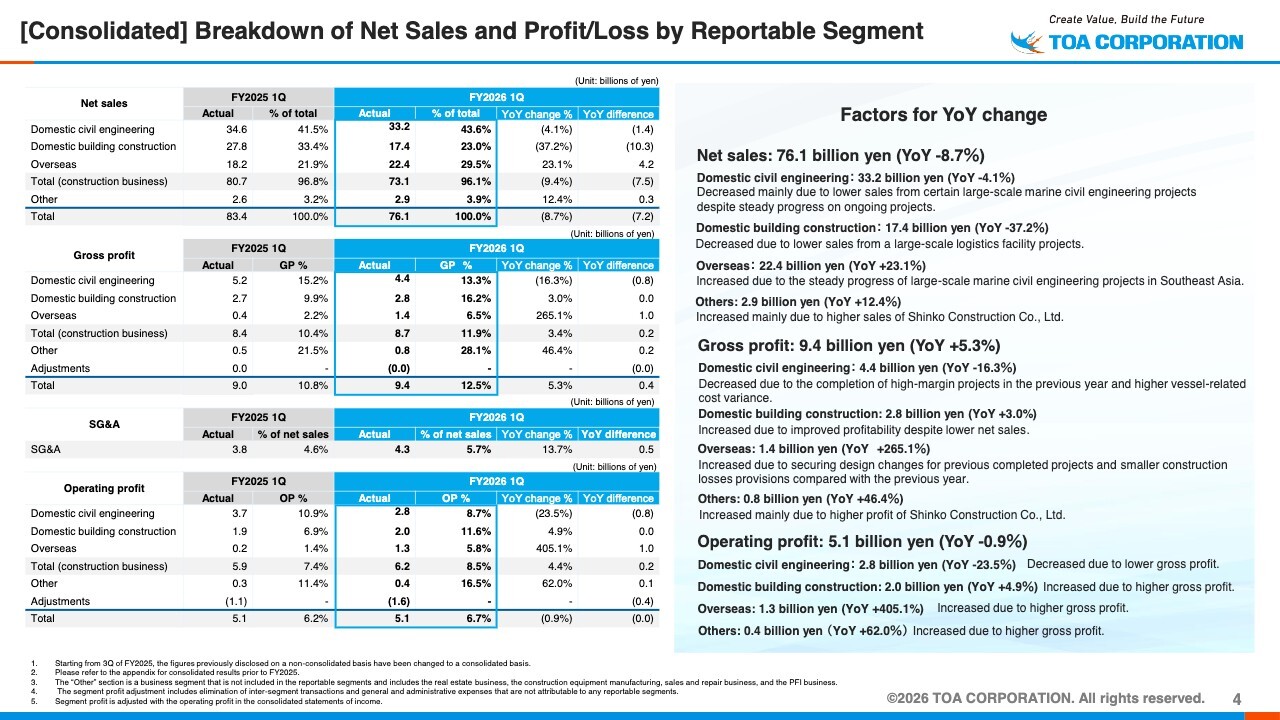
I will now explain net sales and profit/loss by business. Total net sales decreased 8.7% YoY to ¥76.1 billion.
Net sales in domestic civil engineering decreased 4.1% YoY to ¥33.2 billion. Although construction on hand progressed steadily, net sales declined because sales from certain large-scale marine civil engineering projects were below the same period of the previous year.
Net sales in domestic building construction decreased 37.2% YoY to ¥17.4 billion, reflecting lower sales from large-scale logistics facility projects than in the same period of the previous year.
Overseas net sales increased 23.1% YoY to ¥22.4 billion, driven by steady progress on large-scale marine civil engineering projects in Southeast Asia.
As I mentioned earlier, there is no change to our full-year consolidated net sales forecast.
Total gross profit increased 5.3% YoY to ¥9.4 billion. Gross profit in domestic civil engineering decreased 16.3% to ¥4.4 billion, and the gross profit margin was 13.3%. Gross profit declined due to the absence of high-margin projects completed in the previous year and larger vessel-related cost variances than in the previous year.
Gross profit in domestic building construction increased 3.0% YoY to ¥2.8 billion, and the gross profit margin was 16.2%. Although net sales declined by approximately ¥10.0 billion, improved profitability resulted in higher gross profit. We will continue to improve profitability while maintaining a selective approach to orders.
With regard to rising material costs caused by the uncertain situation in the Middle East, we will negotiate with clients to have these increases reflected in new contracts and design changes.
Overseas gross profit increased 265.1% YoY to ¥1.4 billion, and the gross profit margin was 6.5%. We recognized profit after securing design changes for projects completed in prior fiscal years.
Another factor behind the increase was that, unlike in the same period of the previous year, no provision for construction losses was recognized in the current period. The increase in fuel costs due to the situation in the Middle East has been limited and has not had a significant impact.
Operating profit was almost unchanged YoY, as the improvement in gross profit was offset by higher SG&A expenses.
Consolidated Balance Sheets
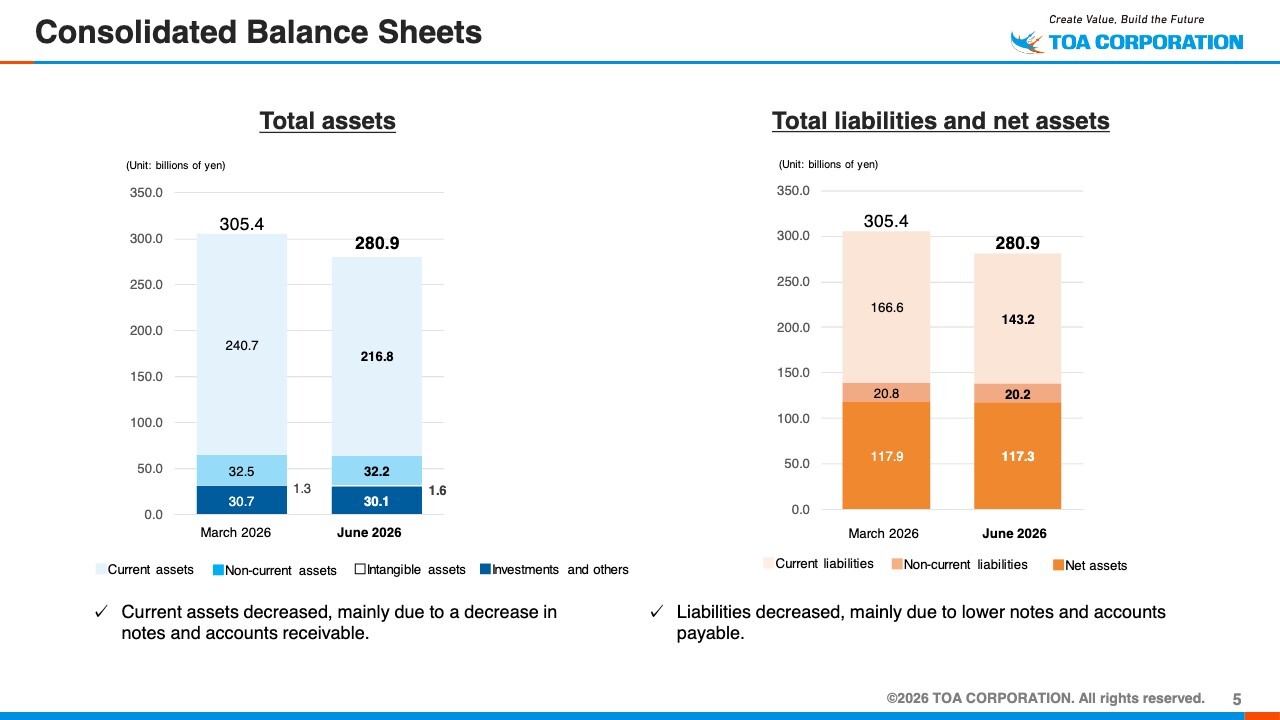
I will now explain the consolidated balance sheets. Total assets decreased to ¥280.9 billion. Current assets decreased to ¥216.8 billion, mainly because accounts receivable from completed construction contracts declined as payments were collected on large-scale projects.
Investments and other assets were broadly unchanged at ¥30.1 billion. Investment securities increased by ¥1.5 billion due to higher market values. Current liabilities decreased to ¥143.2 billion, reflecting lower notes and accounts payable.
FY2026 Forecasts
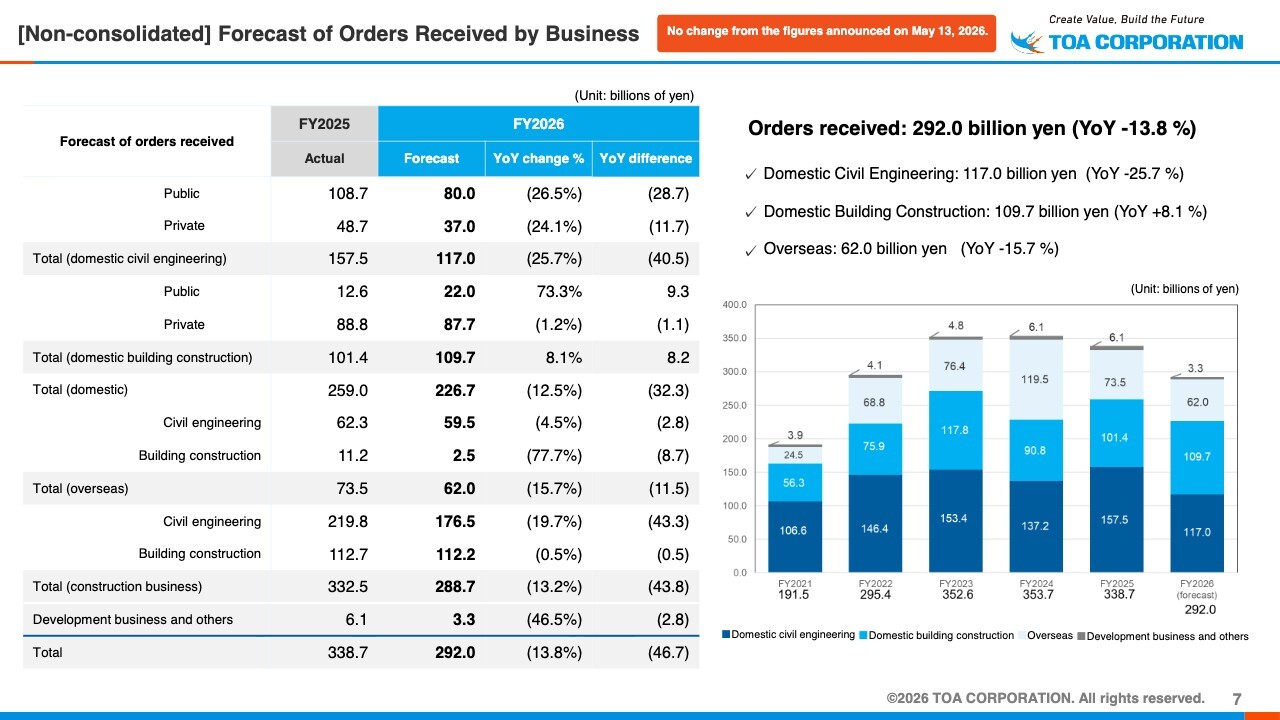
[Non-consolidated] Forecast of Orders Received by Business
[Consolidated] Forecasts of Net Sales and Profit/Loss by Reportable Segment
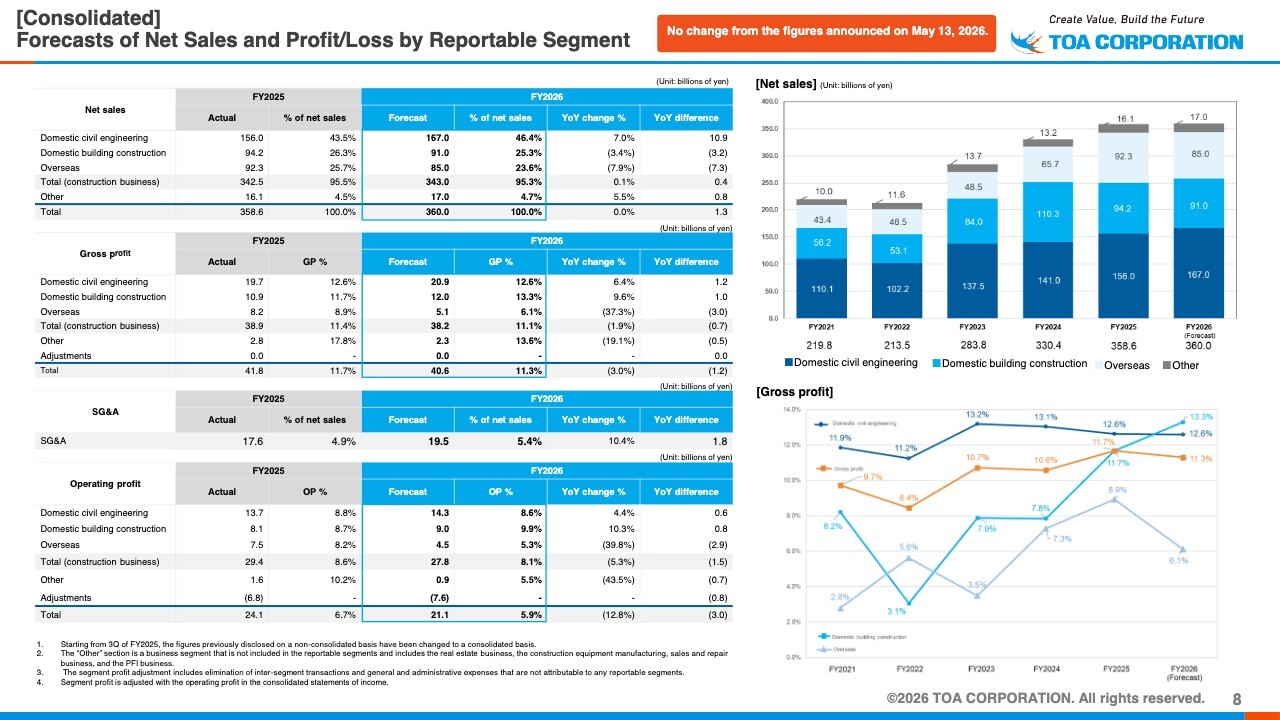
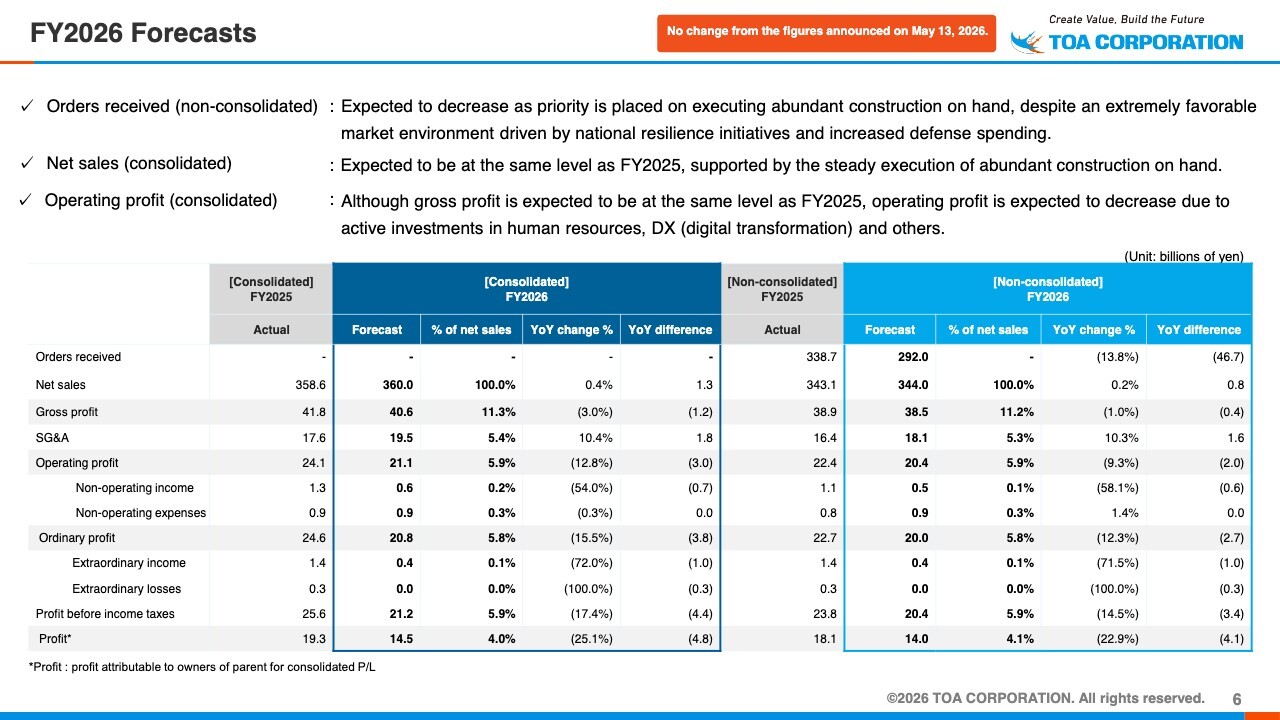
There is no change to the full-year forecasts announced on May 13, 2026.
Topic 1: Organizational Restructuring of Technology Research & Development Center
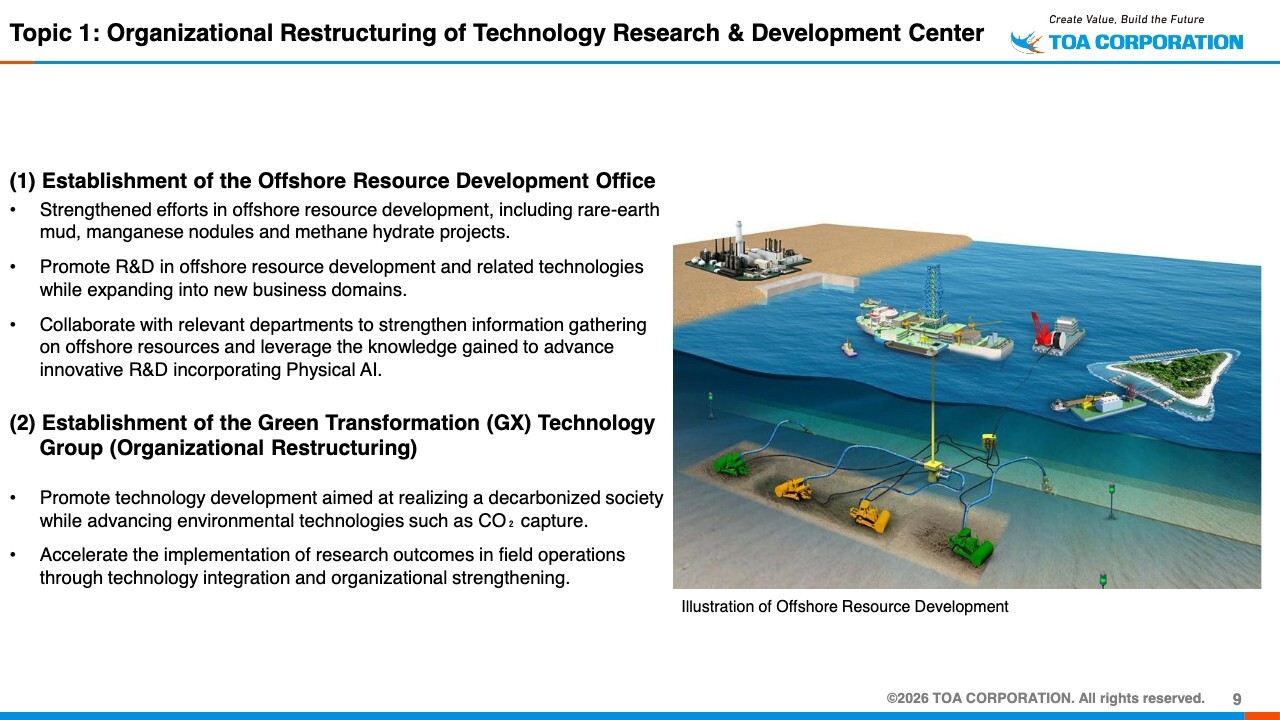
As a recent initiative, we restructured the TOA Research & Development Center. Specifically, we established the Offshore Resource Development Office to promote R&D related to offshore resource development, including rare-earth mud, manganese nodules, and methane hydrates, while working with relevant departments to pursue new technological domains.
We also established the Green Transformation (GX) Technology Group to accelerate technological development toward a decarbonized society. We will advance environmentally friendly technologies such as CO2 capture, strengthen our R&D framework, and seek to put research outcomes into practical use at an early stage.
Although the commercialization of offshore resource development will take time, we view it as a promising field over the medium to long term. We hope to contribute to society by leveraging our technologies and expertise.
Topic 2: External Sustainability Evaluations
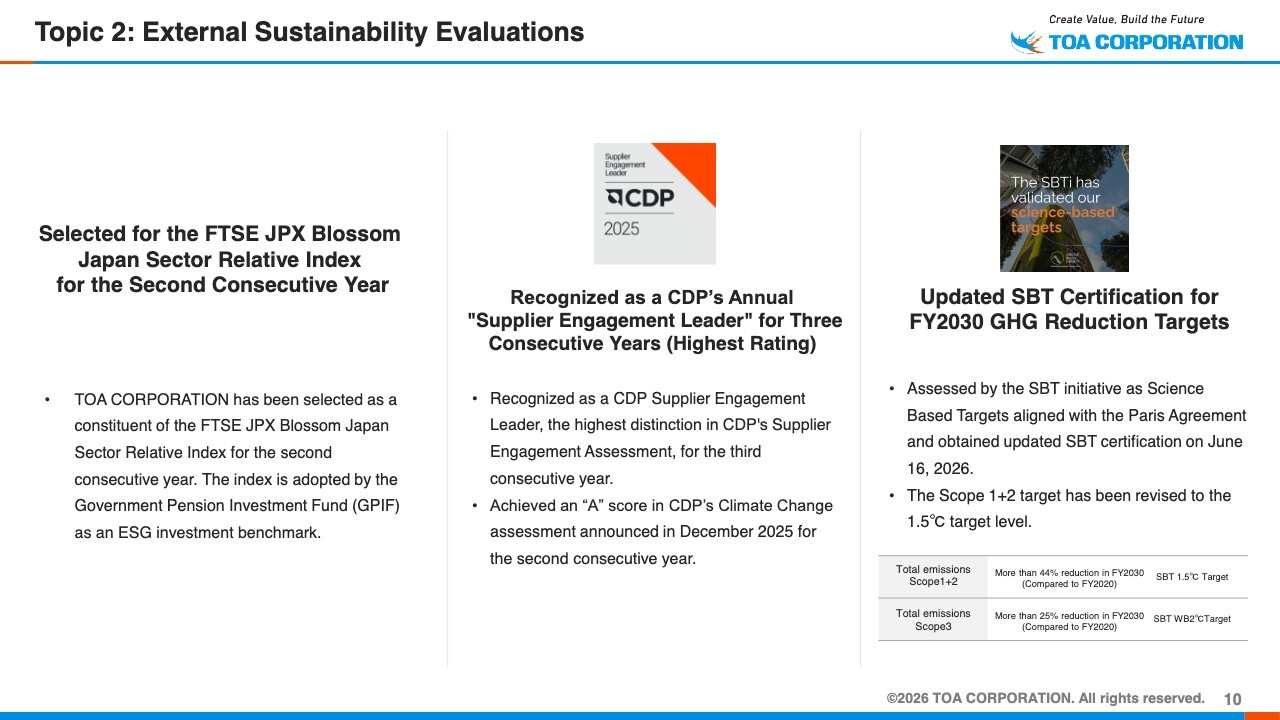
I will now explain the external evaluations we have received in the area of sustainability.
TOA CORPORATION was selected as a constituent of the FTSE JPX Blossom Japan Sector Relative Index for the second consecutive year. We were also recognized by CDP as a Supplier Engagement Leader, its highest rating, for the third consecutive year.
We are also making steady progress in our initiatives toward a decarbonized society, including obtaining updated SBT certification for FY2030 GHG reduction targets.
This concludes my presentation.
Q&A: Factors Behind Margin Improvements in the Domestic Building Construction Business
Questioner: The 1Q margin in domestic building construction improved significantly from the previous year. Am I correct in understanding that this reflects profitability at the time orders were received and the profitability of construction on hand? I would also appreciate any comments on whether there were any special factors.
Nakao: Until the previous fiscal year, profitability was constrained in part by low-margin projects reaching completion. Currently, however, projects for which we were able to secure a certain level of profit from the order stage are progressing, resulting in a higher margin.
Although rising material costs and other issues present challenges at the order stage, we discuss these matters with clients and pursue orders that will allow us to secure the highest possible level of profitability.
These efforts are gradually yielding results, and profitability is improving. Although it is difficult to provide specific guidance on the future, we believe this trend can be sustained to some extent.
Q&A: Factors Behind Margin Deterioration the Domestic Civil Engineering Business
Questioner: With regard to the domestic civil engineering business, you explained that adverse vessel-related cost variances were one factor behind the deterioration in the margin. Should we expect this factor to continue from 2Q onward? Alternatively, is it concentrated in 1H, or should we expect some variation by quarter or between 1H and 2H?
Nakao: Adverse vessel-related cost variances in the domestic civil engineering business, work-vessel utilization in the 1Q was lower than in the previous year. The resulting adverse cost variances were reflected in the 1Q results and were one factor behind the lower margin in the domestic civil engineering business.
From 2Q onward, the extent to which we can reduce these adverse cost variances will depend on the orders we secure. We intend to win as many projects as possible that enable us to use our own work vessels, thereby minimizing the adverse cost variances. We expect such projects going forward, so we will pursue this approach and aim to improve the margin.
In addition to improving work-vessel utilization, we believe margins on construction on hand can improve if we secure design changes through discussions with clients. We will continue to make such efforts.
Q&A: Market Conditions in Domestic Civil Engineering and the Outlook for Defense and National Resilience Budgets
Questioner: You explained the full-year outlook in May, but I would like to ask about it again. Regarding the operating environment for domestic civil engineering, the presentation describes market conditions as favorable due to national resilience initiatives and increased defense spending.
However, I understand that the initial national resilience budget is flat and that any increase will depend on a supplementary budget. In addition, given the recent earthquake in Kumamoto, even if the overall national resilience budget increases to some extent, I expect a greater share may be allocated to reconstruction.
With regard to defense spending, there are various factors from the perspective of global geopolitical risk, but I do not feel the budget is increasing dramatically. Could you therefore explain in more detail the basis for describing the market environment as extremely favorable?
If the environment is indeed favorable, how do you plan to expand your construction capacity? I would also appreciate any comments on the outlook for defense- and national resilience-related projects, taking into account changes in the external environment over the past several months.
Nakao: With regard to the national budget, projects administered directly by the Ministry of Land, Infrastructure, Transport and Tourism and defense-related projects account for a large share of our work. We expect projects already funded under the national resilience program to be put out to tender steadily.
Against this backdrop, we aim to bid on projects with the highest possible profitability. There is naturally competition, so we cannot win every project. Our strategy is to target and secure highly profitable projects.
In the defense-related field, for example, a project that we expect to be highly profitable is planned at Camp Schwab. By pursuing these projects diligently and securing orders, we believe we can achieve stronger results in both business volume and profit. We also expect the environment in our business fields to remain favorable to some extent.
Q&A: Outlook for the Overseas Gross Profit Margin
Questioner: The overseas gross profit margin appears to have made a good start in the 1Q. Could you explain the factors behind this and how sustainable it will be from the 2Q onward?
Nakao: Until the previous fiscal year, a large, highly profitable project in Africa generated solid earnings. That project was completed in the previous fiscal year, so one factor supporting the strong margin is temporarily absent. From the current fiscal year onward, however, we expect to maintain adequate profitability as large-scale marine civil engineering projects in Singapore and elsewhere progress.
We also recognized appropriate provisions in the previous fiscal year for projects with challenging profitability. Accordingly, we believe our overseas construction business can maintain a certain level of profitability this fiscal year.
Conditions appear somewhat more challenging than in the previous fiscal year. However, in the 1Q, design changes secured for projects from prior fiscal years contributed to profit. We will therefore continue to engage in close discussions with clients and seek to achieve the highest possible margin as we address the current earnings environment in the overseas business.
Q&A: Order Potential for Data Centers
Questioner: Could you discuss the order potential for data centers? I understand that TOA CORPORATION has recently secured warehouse-related orders, including large-scale projects. Given the current strength of data center demand, what potential do you see for expanding orders in this area?
Nakao: We have steadily built a track record in logistics facilities and feel that we have earned the trust of clients and established a certain level of brand recognition. Because data centers are similar in some respects in terms of building configuration, they are one area we would like to pursue.
However, data centers are technically different from logistics facilities because they house precision equipment, and the customer base is also different. We are therefore still in the learning stage. Frankly, we have not yet reached the stage of committing fully to the data center business and expanding it.
Our current strategy is to focus on logistics facilities, an area in which we have particular strengths. Demand remains high for both dry warehouses and refrigerated and frozen warehouses, and we intend to further strengthen our focus on these areas.