Contents
Muneyuki Hashimoto (“Hashimoto”): Thank you for joining our earnings presentation today. I am Hashimoto, the CFO of Sansan, Inc. First, I will explain our full-year results for FY2025. I will then discuss the updated Medium-Term Financial Policy for FY2026–FY2028 and our full-year forecast for FY2026. After that, Terada will explain our growth strategy.
Highlights of FY2025 Results
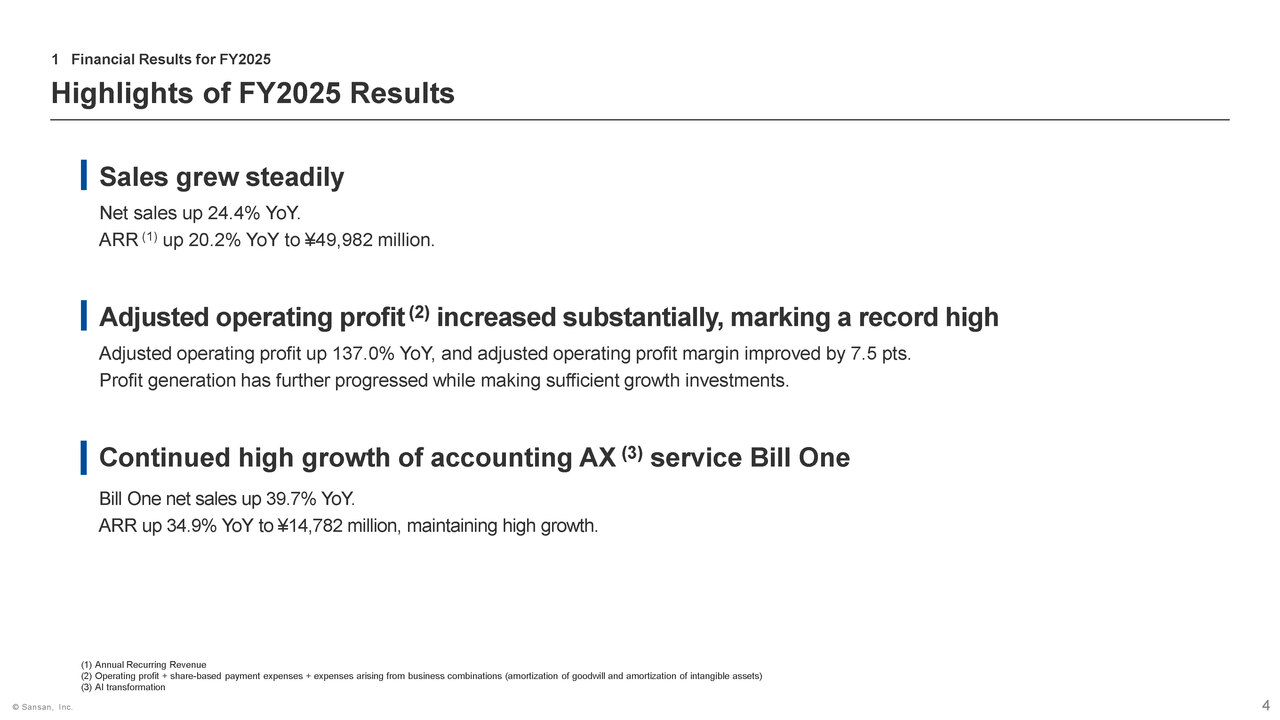
Please turn to page 4. I will discuss the highlights of our full-year results for FY2025.
First, net sales increased by 24.4% YoY and came in within the range of the earnings forecast that we revised upward in Q3.
Second, adjusted operating profit increased by 137.0% YoY while we made sufficient growth investments, reaching a record high.
Third, our accounting AX solution Bill One continued to deliver high growth, with net sales up 39.7% YoY.
Overview of Financial Results
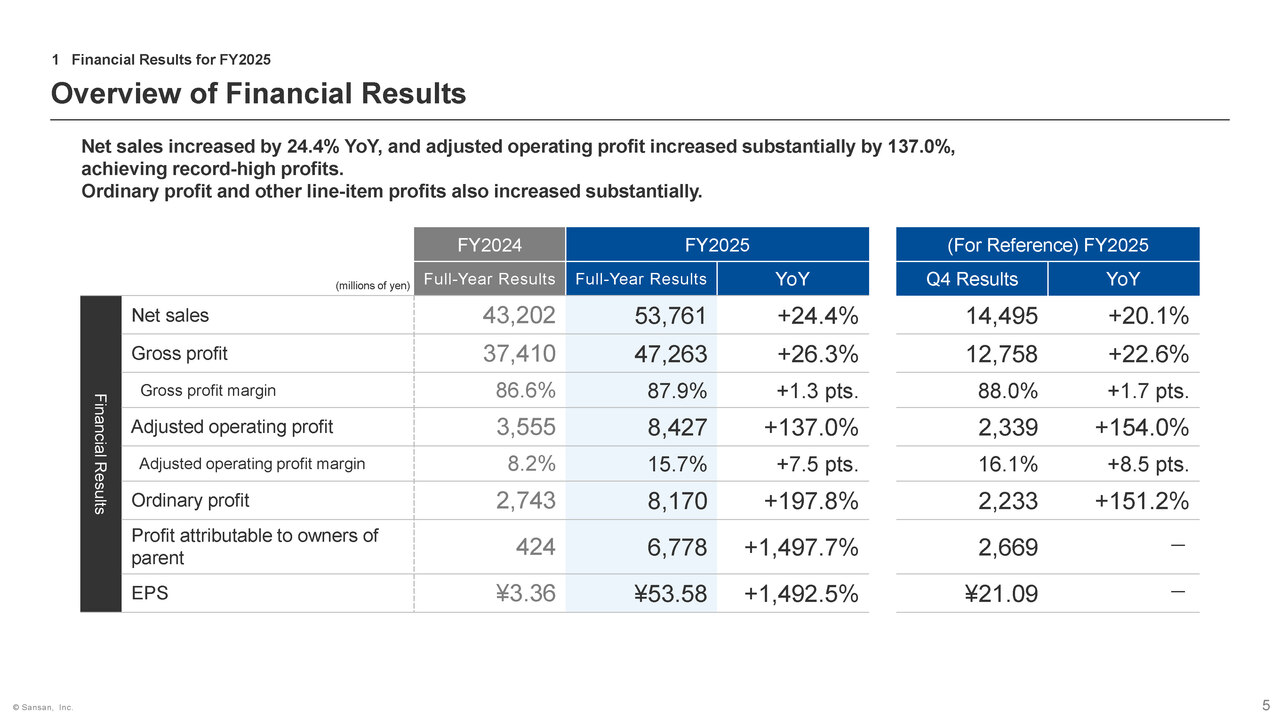
I will explain our company-wide financial results. Please turn to page 5. Net sales grew steadily, up 24.4% YoY. Gross profit margin improved by 1.3 percentage points YoY, mainly due to improved profitability at Bill One following improvements in digitization operations.
Adjusted operating profit increased substantially, up 137.0% YoY, driven by net sales growth and a decline in the SG&A ratio, reaching a record high. Ordinary profit and other line-item profits also increased substantially against the backdrop of this profit growth.
Profit attributable to owners of parent increased significantly YoY, partly because we recorded an extraordinary loss on the sale of shares in the previous fiscal year, while in the current fiscal year we recorded a gain on the sale of shares of logmi, Inc., a consolidated subsidiary, as extraordinary income.
Contributors to Changes in Adjusted Operating Profit
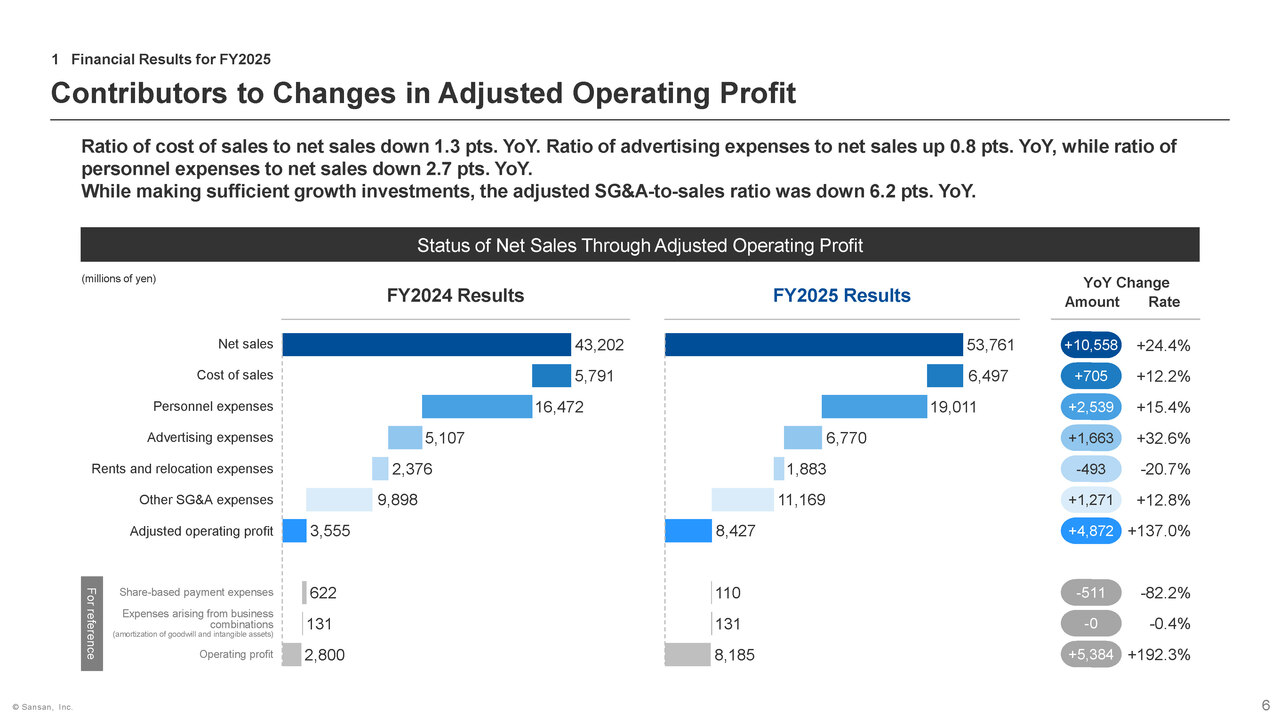
I will now explain the details of adjusted operating profit. Please turn to page 6. First, gross profit increased as net sales grew steadily and the cost of sales ratio decreased by 1.3 percentage points.
Among SG&A expenses, advertising expenses increased by approximately ¥1,663 million YoY as we strengthened promotional activities such as TV commercials, and the ratio of advertising expenses to net sales rose by 0.8 percentage points. Meanwhile, personnel expenses increased by approximately ¥2,539 million YoY, but the ratio of personnel expenses to net sales declined by 2.7 percentage points.
As a result, the adjusted SG&A-to-sales ratio decreased by 6.2 percentage points YoY, and adjusted operating profit increased substantially while we continued to make the investments necessary for growth.
Results by Segment
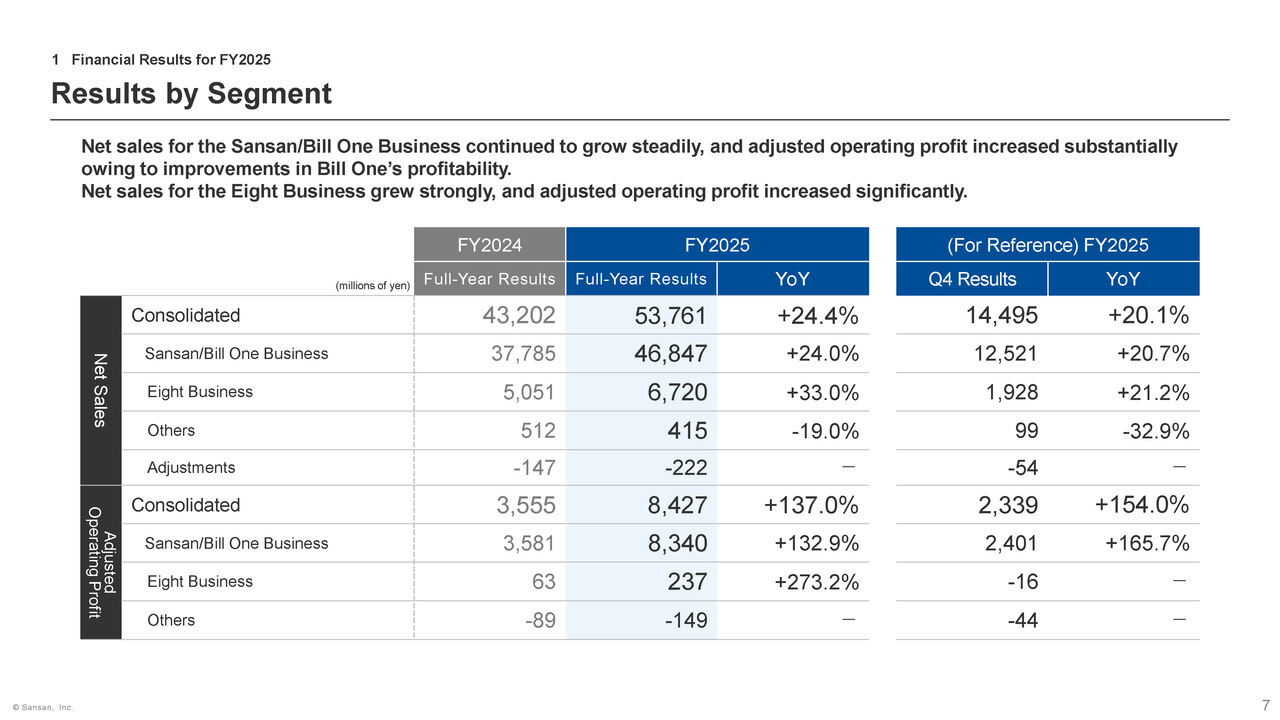
Next, please turn to page 7 for an overview by segment. Net sales for the Sansan/Bill One Business continued to grow steadily, and adjusted operating profit increased substantially. Net sales for the Eight Business also continued to grow strongly, and adjusted operating profit increased significantly.
Sansan/Bill One Business Overview
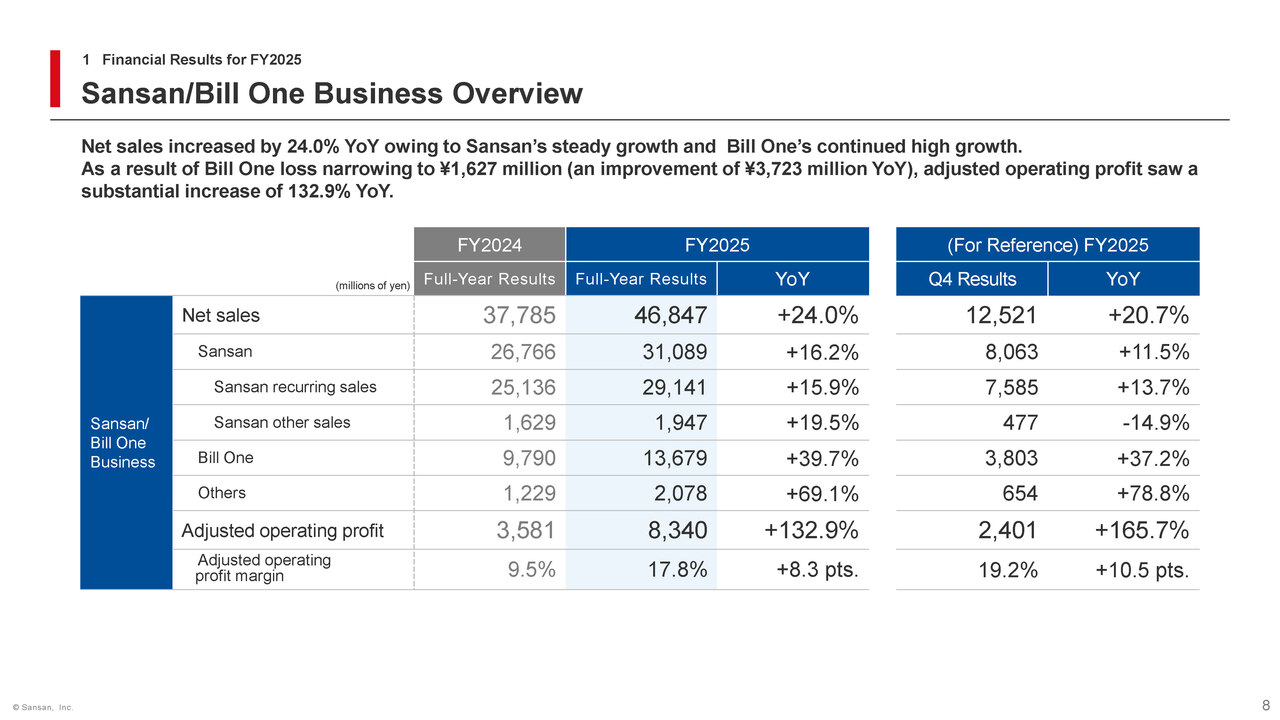
Next, starting on page 8, I will explain the details by segment.
Net sales for the Sansan/Bill One Business increased by 24.0% YoY. By solution, Sansan grew steadily, up 16.2% YoY, and Bill One continued its high growth, up 39.7%.
In addition, Others, which includes the performance of Contract One and Ninout, Inc., a group company, also performed well and contributed to sales growth.
Next, adjusted operating profit increased substantially, up 132.9% YoY.
By solution, Bill One’s profitability improved significantly against the backdrop of strong net sales growth. Even while making growth investments, the Bill One loss narrowed by approximately ¥3.7 billion YoY to approximately ¥1.6 billion. On a monthly basis, profitability continued to improve steadily, with some months in Q4 profitable, as we also the case in Q3.
In addition, adjusted operating profit for Sansan on a stand-alone basis increased by 19.1% YoY.
Sansan: Status of Key Indicators
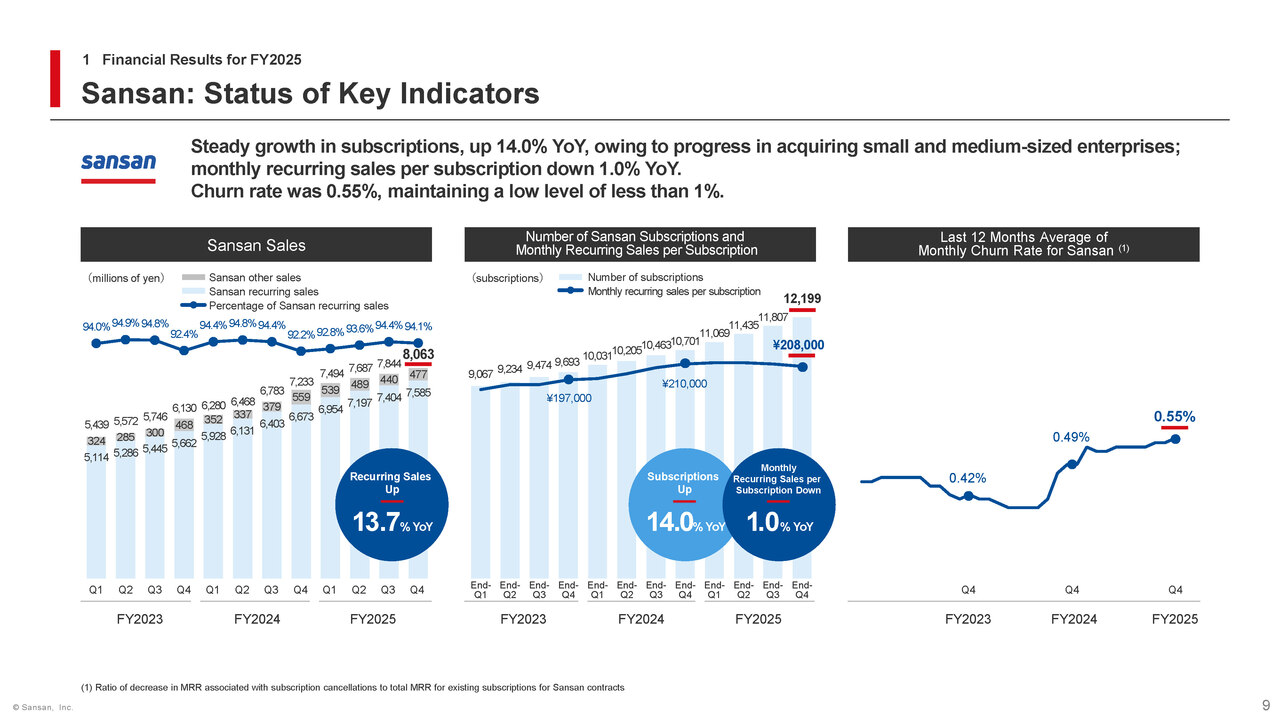
I will explain the KPIs for Sansan on page 9.
Recurring sales on the left side continued to grow steadily, up 13.7% YoY. The number of subscriptions shown in the center graph increased by 14.0% YoY, while monthly recurring sales per subscription decreased by 1.0% YoY.
In FY2025, we steadily acquired subscriptions throughout the year, particularly among small and medium-sized enterprises. This customer mix made it difficult to increase monthly recurring sales per subscription, but quarterly net additions reached their highest level since the launch of the solution, expanding our customer base.
The graph on the right shows the average monthly churn rate over the last 12 months. In FY2025, it was 0.55%, remaining stable at a low level of less than 1%.
Bill One: Status of Key Indicators
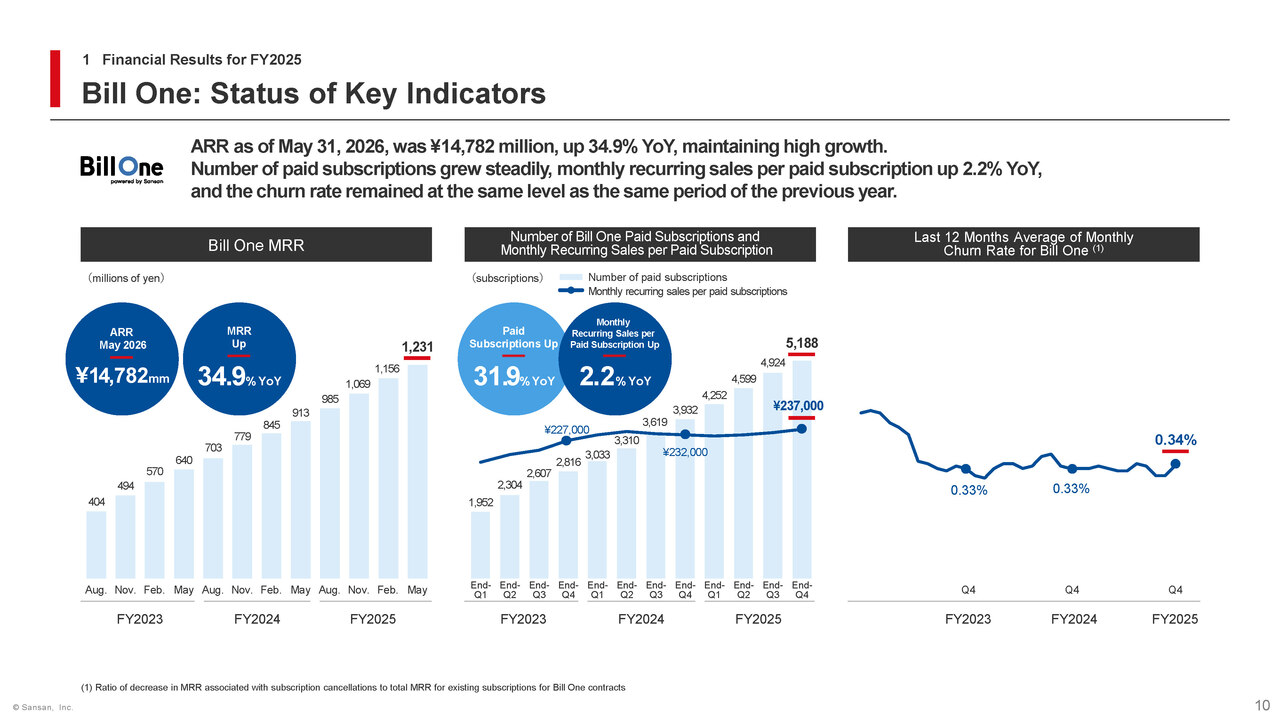
Next, I will explain the KPIs for Bill One on page 10. MRR shown in the graph on the left increased by 34.9% YoY to approximately ¥1,231 million, maintaining a high growth rate.
The number of paid subscriptions shown in the center grew strongly, up 31.9% YoY, while monthly recurring sales per paid subscription increased by 2.2%.
The graph on the right shows the average monthly churn rate over the last 12 months, which remained low at 0.34%.
Eight Business Overview
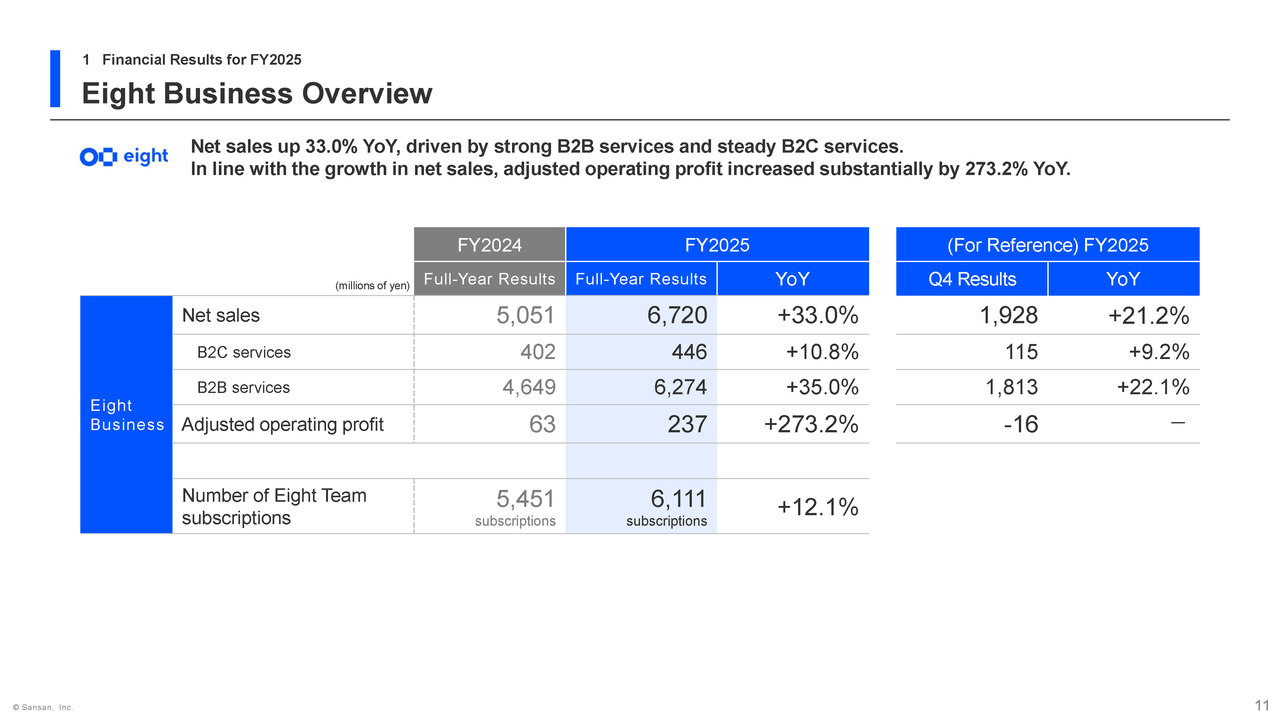
Next, I will explain the Eight Business. Please turn to page 11. Net sales from B2C services increased by 10.8% YoY. Net sales from B2B services increased by 35.0% YoY, driven by strong growth in business events and recruiting-related services. As a result, net sales for the Eight Business increased by 33.0% YoY.
Adjusted operating profit increased substantially, up 273.2% YoY, against the backdrop of strong net sales growth.
Following the share sale, logmi, Inc., formerly a consolidated subsidiary, was excluded from the scope of consolidation in April 2026.
Medium-Term Financial Policy
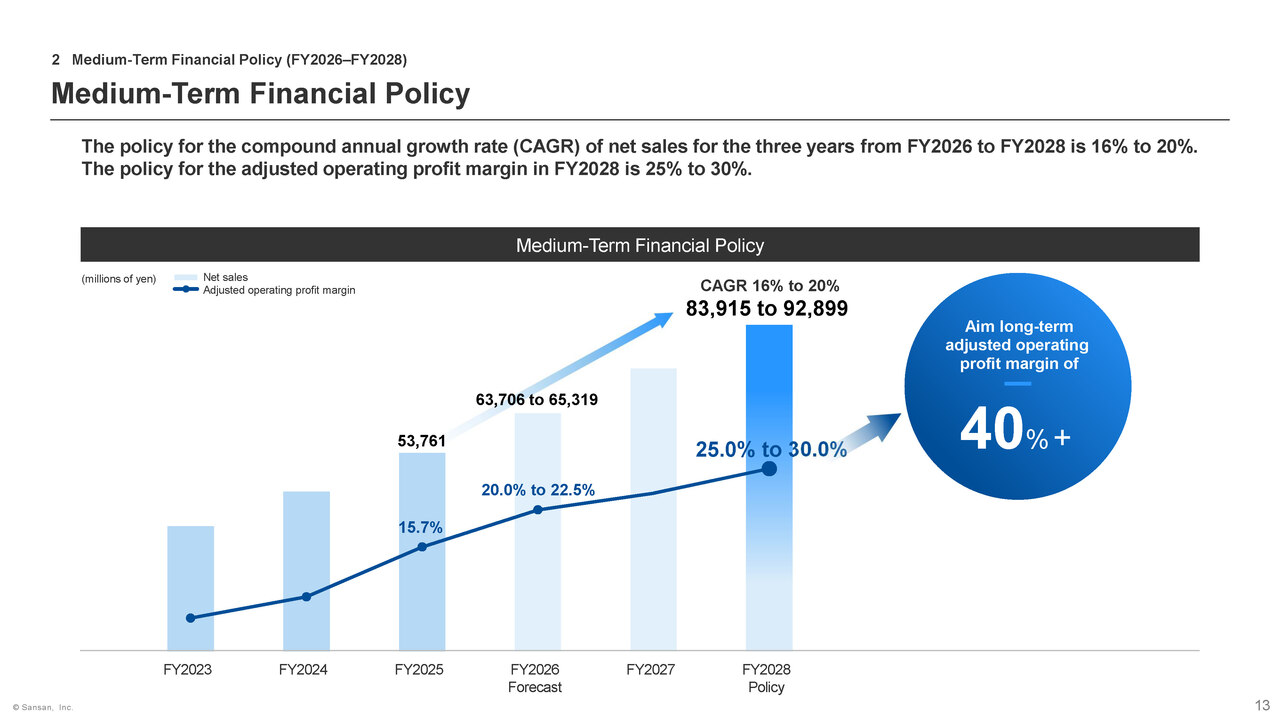
Next, I will explain our new Medium-Term Financial Policy. Please turn to page 13. In our financial results announcement for FY2023, we announced a Medium-Term Financial Policy covering the three-year period from FY2024 to FY2026.
Measured against that policy, our performance through FY2025 has remained on track. We have made progress in achieving both net sales and profit growth, and our earnings structure has steadily improved, as demonstrated by an adjusted operating profit margin of 15.7% in FY2025.
Looking ahead over the medium term, we recognize that business opportunities for our services are expanding further against the backdrop of the evolution of generative AI. In this environment, our policy is to continue pursuing both net sales growth and profit growth through investment in high-growth businesses, and to enhance corporate value over the medium to long term.
Based on this approach, we have formulated a new Medium-Term Financial Policy covering the three years from FY2026 to FY2028. Specifically, our policy is to achieve a net sales CAGR of 16% to 20% for the three years through FY2028, and an adjusted operating profit margin of 25% to 30% in FY2028.
Generation of Free Cash Flow
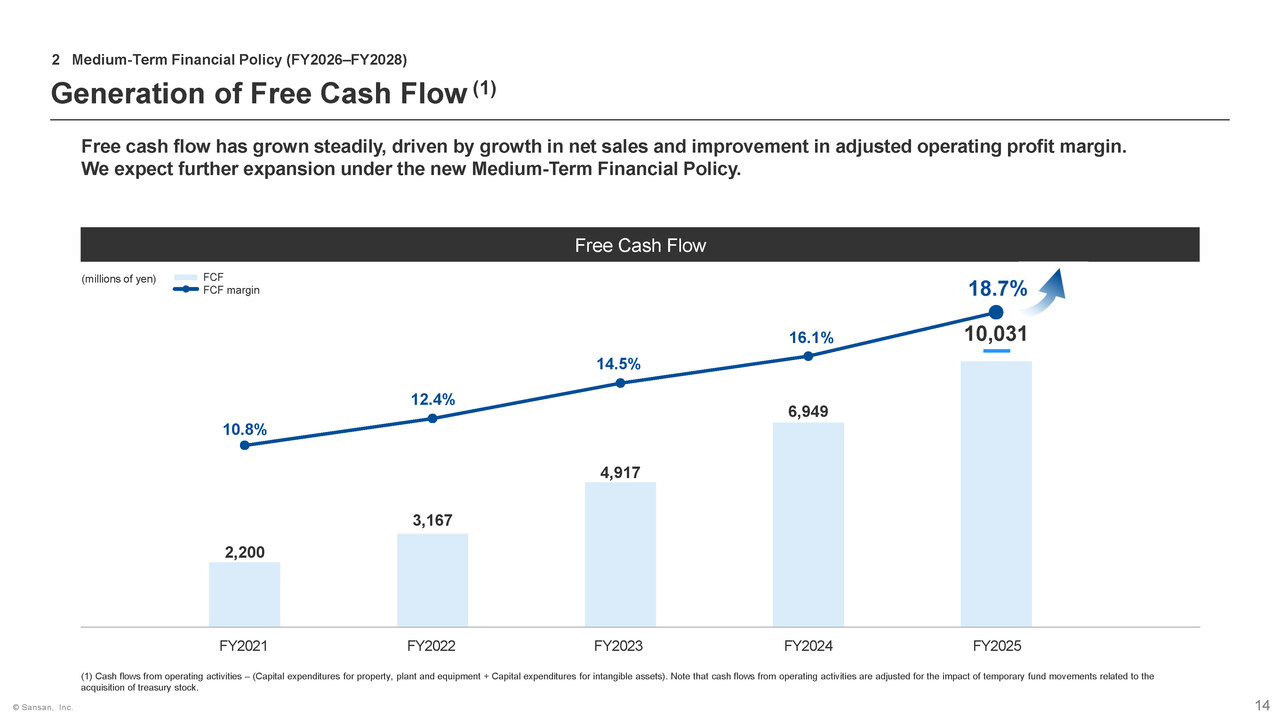
I will explain the status of free cash flow. Please turn to page 14. Free cash flow has continued to expand in line with our business growth to date.
In FY2025, free cash flow expanded to approximately ¥10 billion, and the FCF margin rose to 18.7%. This was due not only to net sales growth but also to steady progress in improving profitability across the entire business portfolio.
Under the newly disclosed Medium-Term Financial Policy through FY2028, we expect our ability to generate free cash flow to expand further going forward.
Basic Policy on Capital Allocation
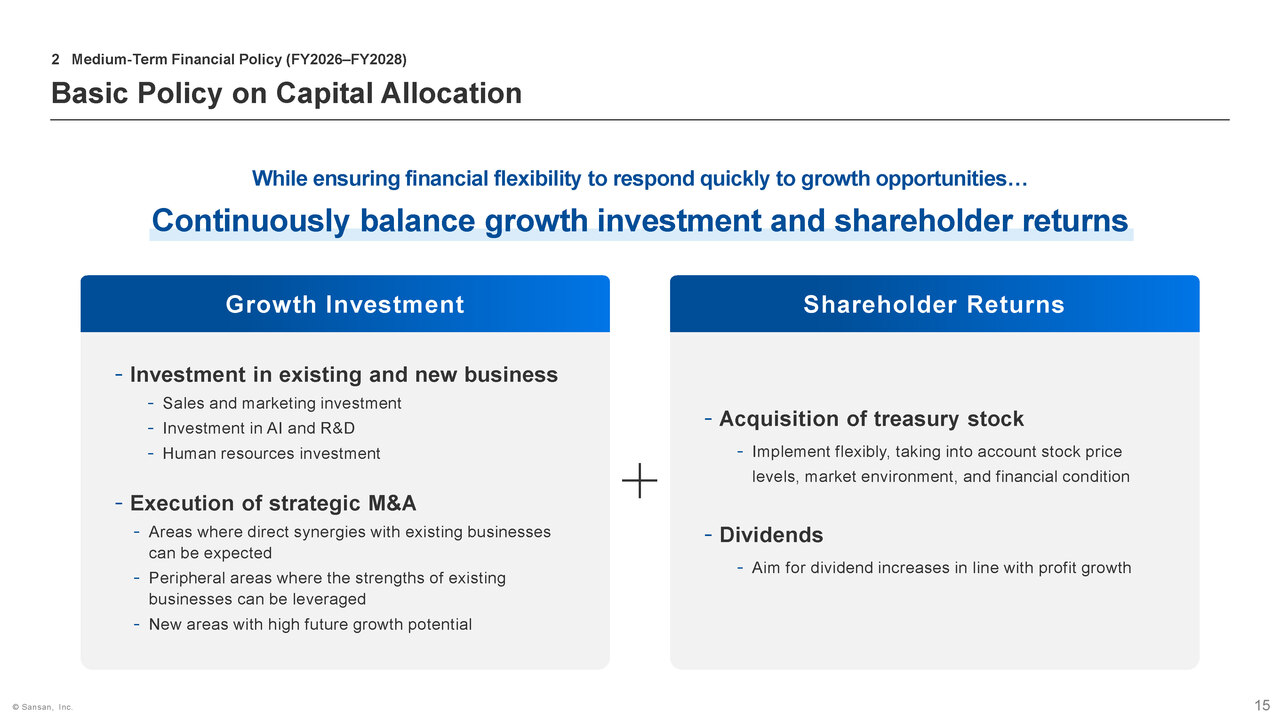
I will explain our basic policy on medium-term capital allocation based on factors such as free cash flow. Please turn to page 15.
With our cash-generating capacity expanding, we plan to continuously balance growth investment and shareholder returns while maintaining the financial flexibility to respond quickly to growth opportunities.
First, our growth investment in existing and new businesses will include sales and marketing, AI and R&D, and human resources investment such as hiring and development.
In addition, we plant to allocate capital to strategic M&A as an important means of advancing our growth strategy. Specifically, we will evaluate and execute M&A opportunities with agility in areas where direct synergies with existing businesses can be expected, peripheral areas where the strengths of existing businesses can be leveraged, and new areas with high future growth potential.
Regarding shareholder returns, we will continue to position the acquisition of treasury stock as a central tool, while considering the optimal combination with dividends. Our policy is to implement the acquisition of treasury stock flexibly, taking into account stock price levels, market environment, financial condition, and other factors in a comprehensive manner.
For dividends, we aim to deliver consistent increase in line with profit growth.
FY2026 Earnings Forecast
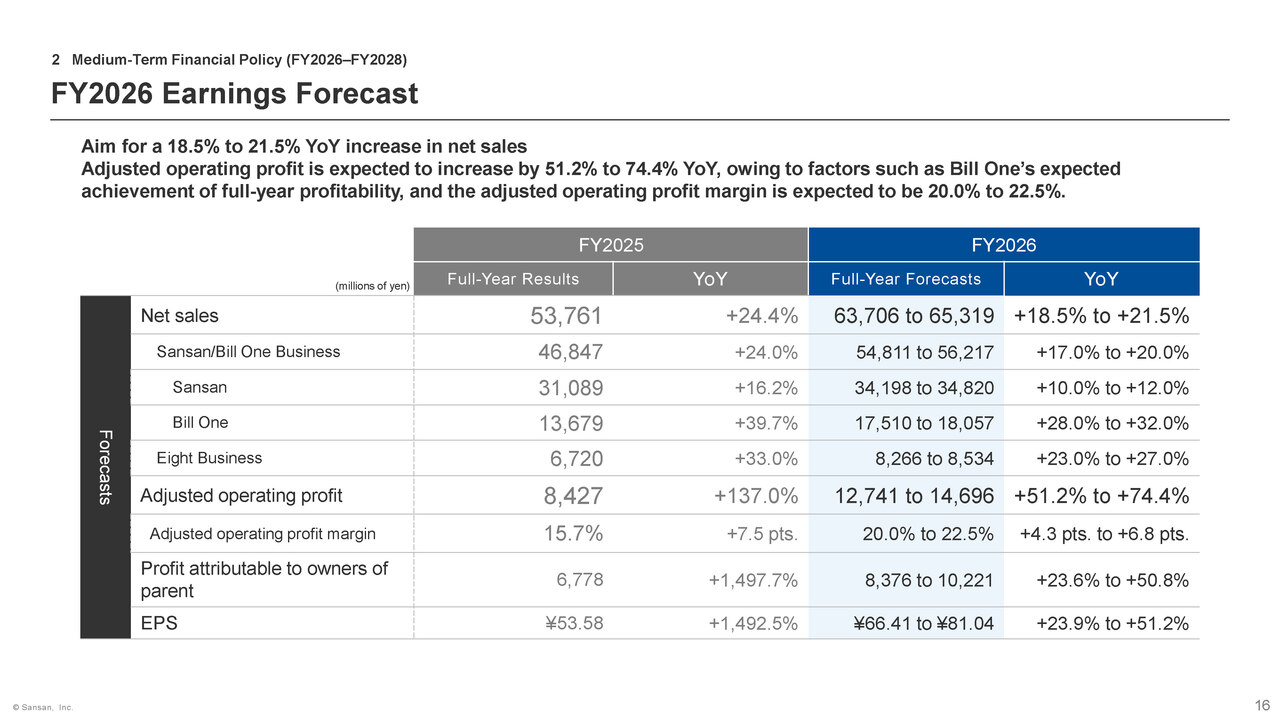
I will explain our full-year earnings forecast for FY2026. Please turn to page 16. We expect net sales to increase by 18.5% to 21.5% YoY.
By solution, we expect net sales for Sansan to increase by 10% to 12% YoY and Bill One to increase by 28% to 32%. We also expect net sales for the Eight Business to increase by 23% to 27% YoY.
For adjusted operating profit, we expect an increase of 51.2% to 74.4% YoY, owing to factors such as Bill One’s expected achievement of full-year profitability, and we expect the adjusted operating profit margin to be 20.0% to 22.5%.
From FY2026, while adjusted operating profit will remain the profit indicator we emphasize, we have changed our disclosure policy to also provide forecasts for reported operating profit and profit, and EPS.
In particular, we expect EPS to increase by 23.9% to 51.2% YoY.
Outlook of Major Costs for FY2026
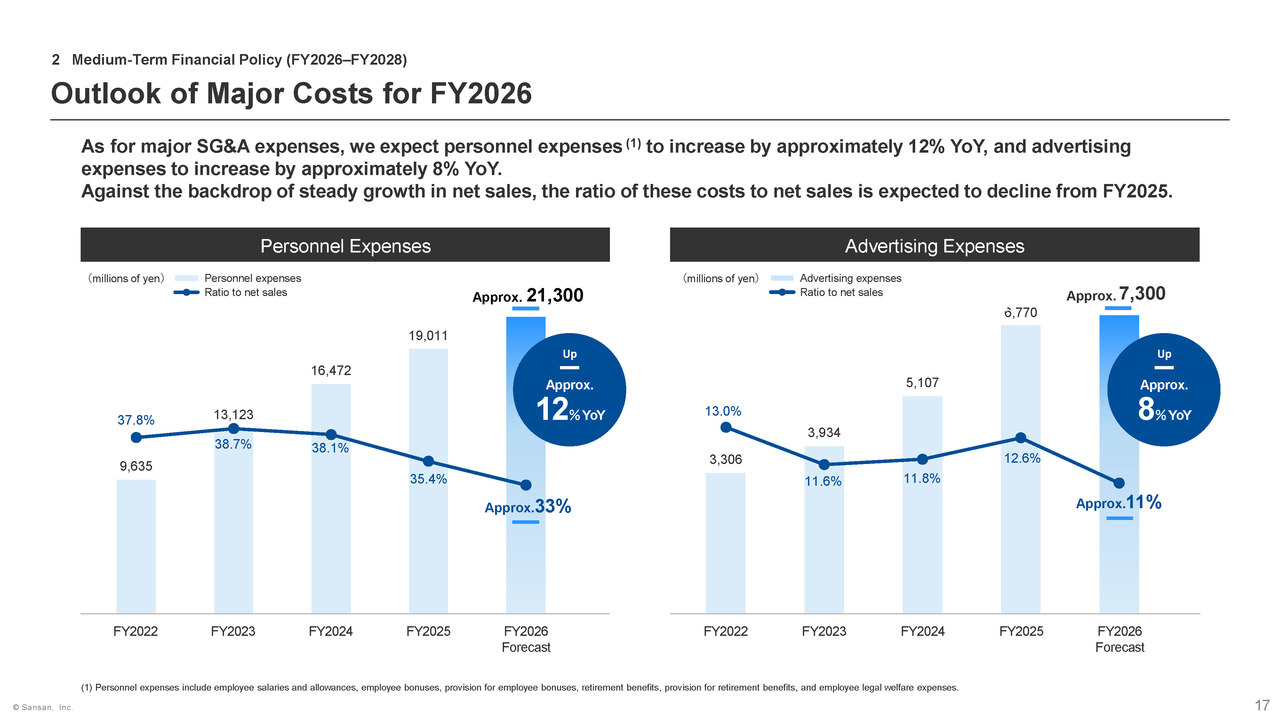
I will explain the outlook for major costs. Please turn to page 17. We expect to continue allocating growth investment mainly to personnel expenses and advertising expenses. With net sales expected to continue growing steadily and productivity improving through the use of generative AI and other initiatives, we expect the ratio of each cost to net sales to decline from the previous fiscal year.
For personnel expenses, we plan to hire approximately 470 employees, including both new graduates and mid-career hires, and expect an increase of around 12% YoY. For advertising expenses, we expect an increase of around 8% YoY.
Shareholder Returns: Results and Forecast
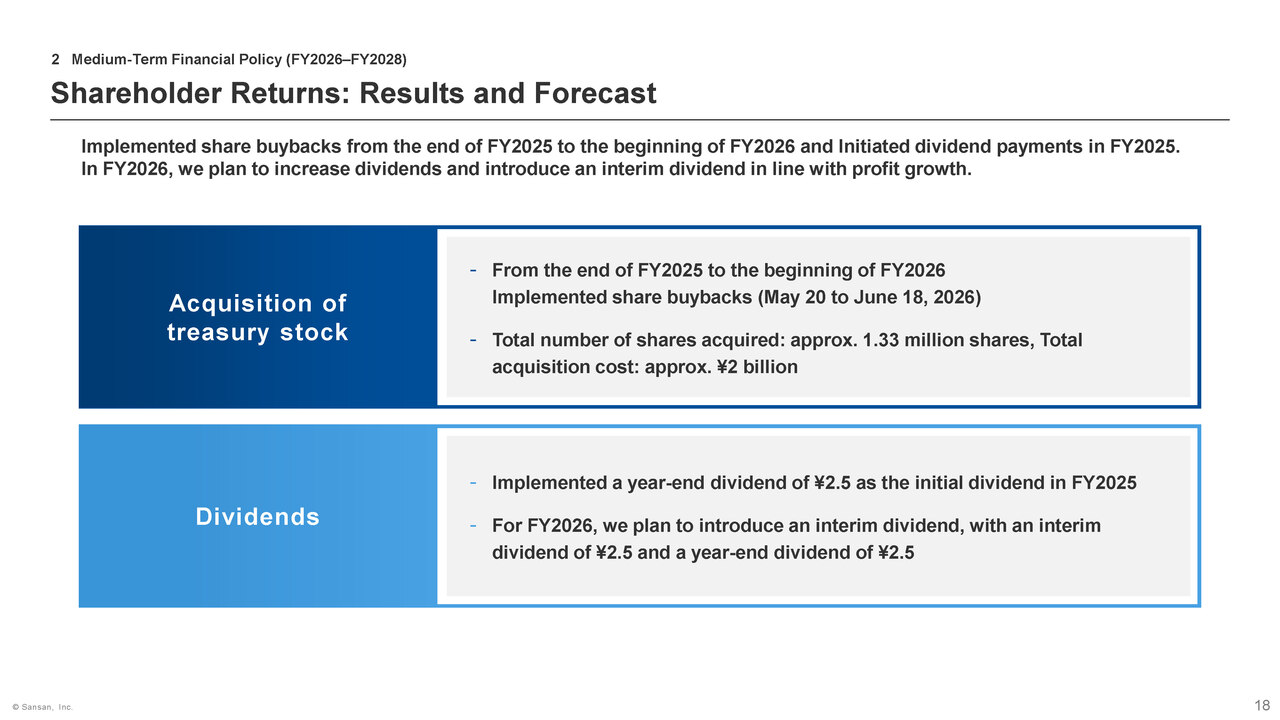
To conclude my part of the presentation, I will discuss the results and forecast for shareholder returns. Please turn to page 18. As announced on May 19, 2026, we decided to conduct share buybacks and initiate dividend payments.
This is because, as a result of achieving stable and continuous business growth to date, we are in a phase in which profit growth is structurally accelerating. We determined that, even after conducting share buybacks and paying dividends as a means of returning profits to shareholders, we would remain fully capable of maintaining stable business operations and executing growth investments going forward.
First, we have already repurchased approximately 1.33 million shares for approximately ¥2.0 billion from the end of FY2025 to the beginning of FY2026.
For dividends, we set the year-end dividend for FY2025 at ¥2.5 per share. For FY2026, we plan to introduce an interim dividend of ¥2.5 per share and pay a year-end dividend of ¥2.5 per share, for an annual dividend of ¥5 per share.
Going forward, we will enhance shareholder returns through flexible acquisitions of treasury stock and continuous dividend increases in line with profit growth.
That concludes my presentation. I will now hand over to Terada.
Increasing Value of Our Services in the Generative AI Era
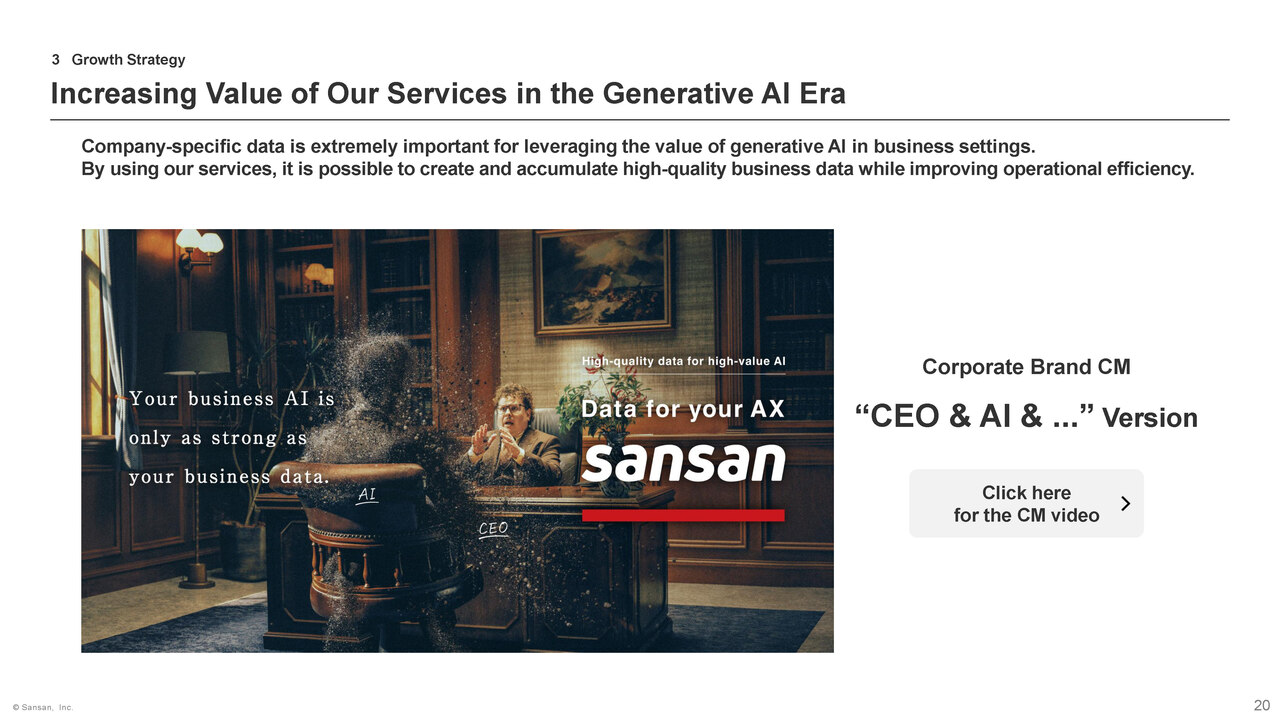
Chika Terada (“Terada”): I am Terada, the CEO. I will explain our medium- to long-term growth strategy. Please turn to page 20.
It has been some time since the phrase “SaaS is Dead” began to be widely discussed in the capital markets. However, as I have explained previously, I believe the value of our services will instead increase in the generative AI era.
Since May this year, we have been airing a corporate brand commercial that symbolically expresses this idea, so please first watch this. https://www.youtube.com/watch?v=Z8QZYCXiWlA
Thank you for watching. “Your business AI is only as strong as your business data.” Our services are structured to accurately digitize and continuously accumulate analog primary information generated in corporate activities, such as business cards, invoices, and contracts, while improving users’ daily business productivity.
As a result, our services become a powerful, company-specific business data foundation for effectively utilizing generative AI. This is the major strength of our services in the generative AI era.
Profitability Management According to Growth Phase
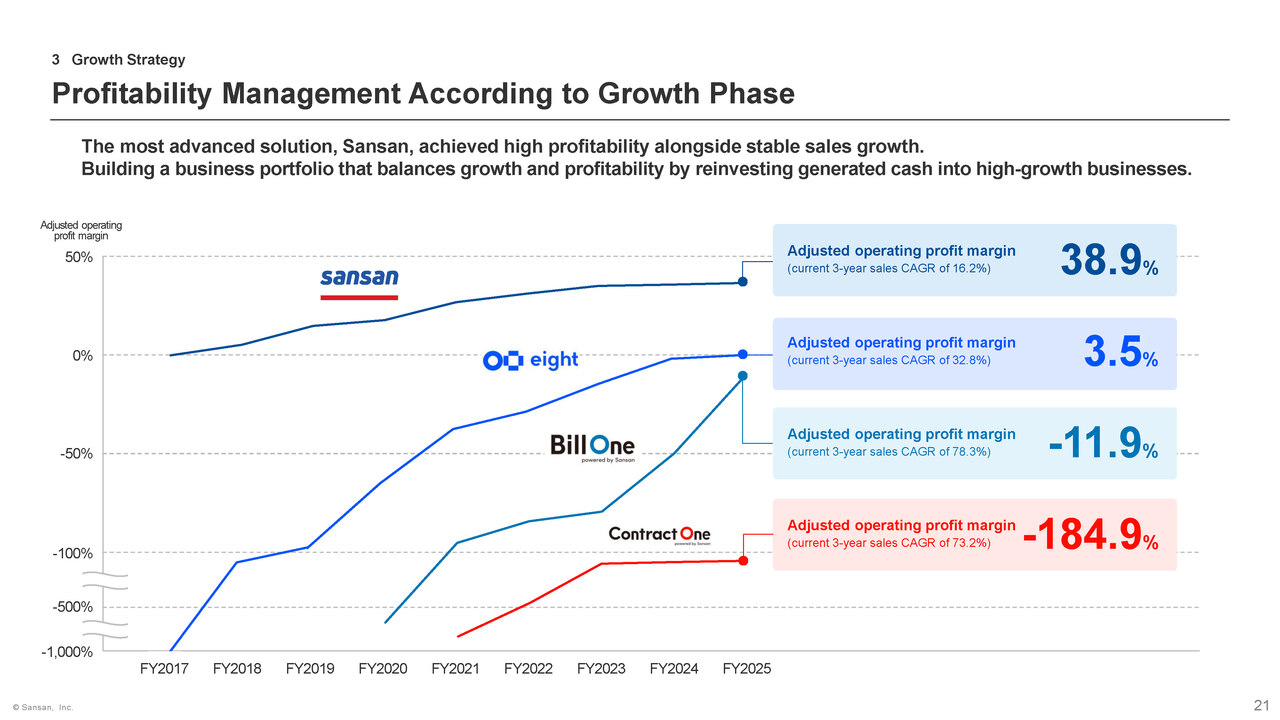
Please turn to page 21. From the perspective of our business portfolio, Sansan, the solution furthest along in its growth phase, has achieved high profitability alongside stable net sales growth and has evolved into the earnings base of the Sansan Group. We continuously reinvest the cash it generates into high-growth businesses such as Bill One and Contract One, building a business portfolio that balances growth and profitability.
Today, based on this approach to our business portfolio, I will explain the direction of each of our main solutions.
Sansan: Performance Trends
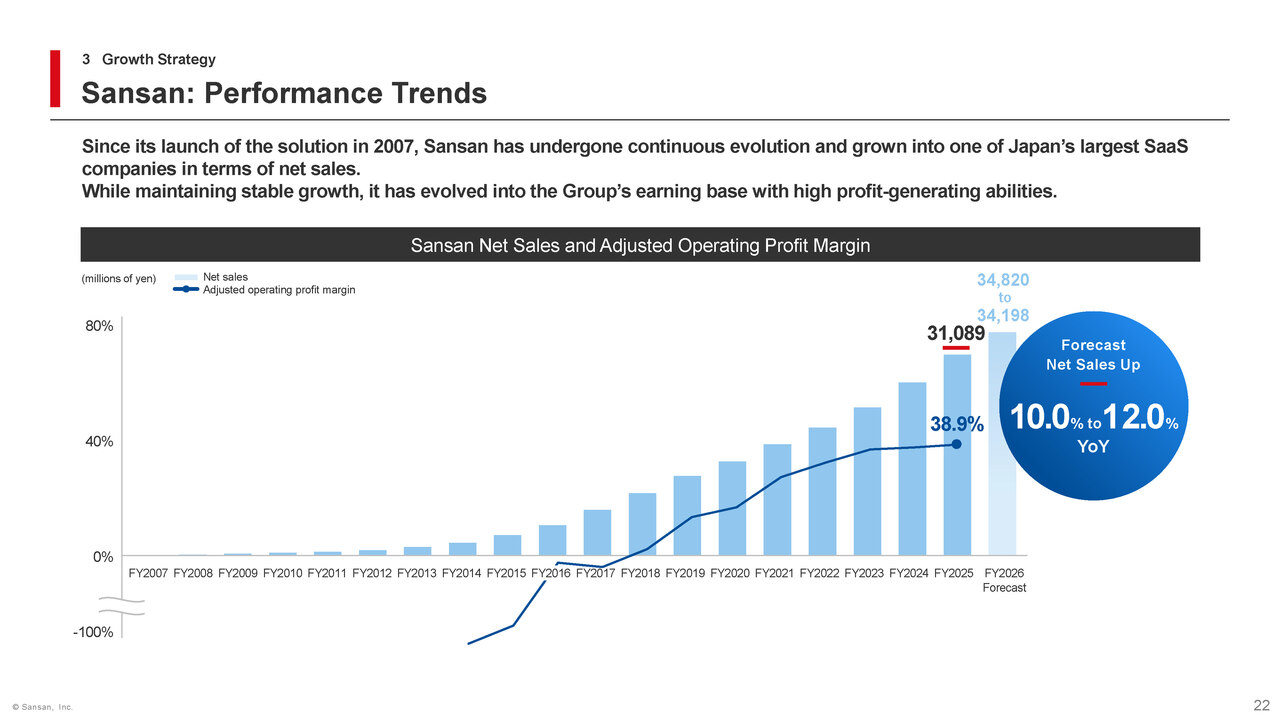
Please turn to page 22. Since its launch in 2007, Sansan has undergone continuous evolution and grown into one of Japan’s largest SaaS companies in terms of net sales. While net sales growth has gradually slowed as net sales have expanded, Sansan has evolved into a foundation supporting the Group’s continued growth through stable cash generation underpinned by high profit margins.
Sansan: Expansion of Provided Value
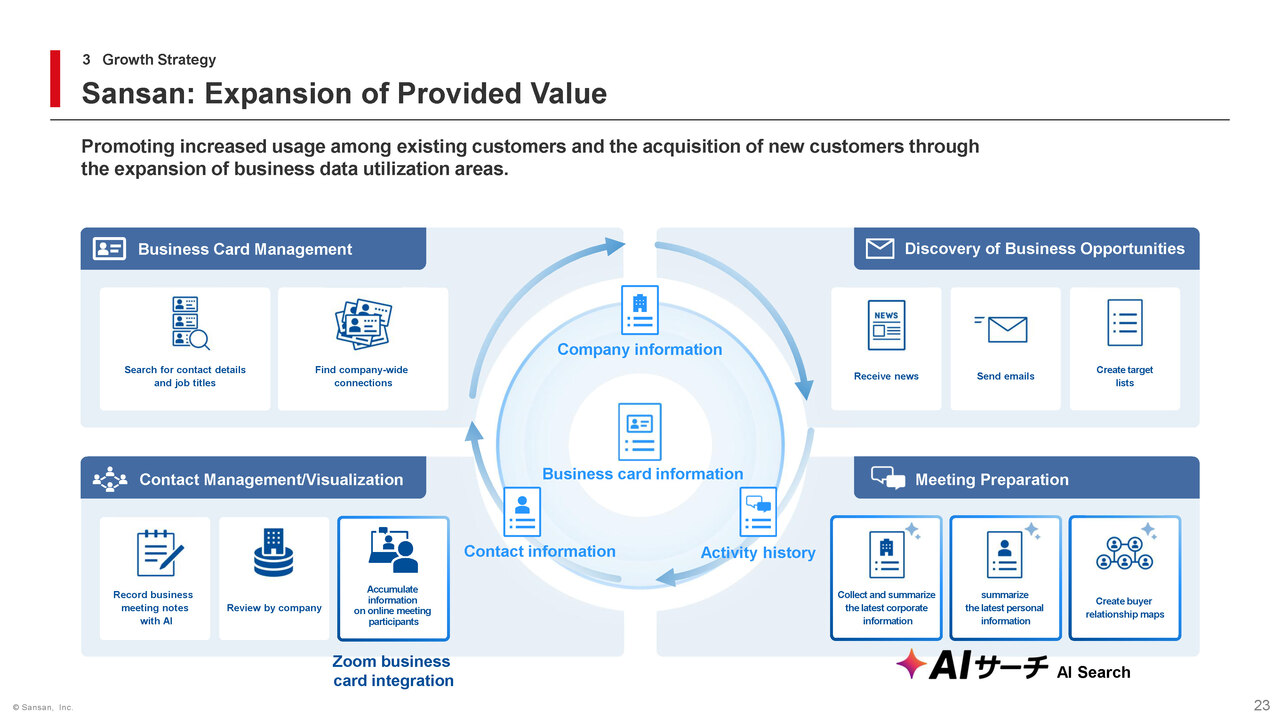
Please turn to page 23. To date, Sansan has supported corporate sales activities by digitizing and structuring a wide range of information related to sales activities, including not only business card information but also company information and executive information.
Today, Sansan has evolved beyond a business card management service into a sales AX solution that utilizes company-specific business data.
Specifically, by utilizing AI, users can leverage the business data accumulated in Sansan more efficiently and comprehensively, which is improving operational efficiency in various sales activities such as information gathering and meeting preparation.
Going forward, we will continue to promote increased usage among existing customers and the acquisition of new customers by further expanding the areas in which business data is utilized.
Sansan: Online Meeting Integration
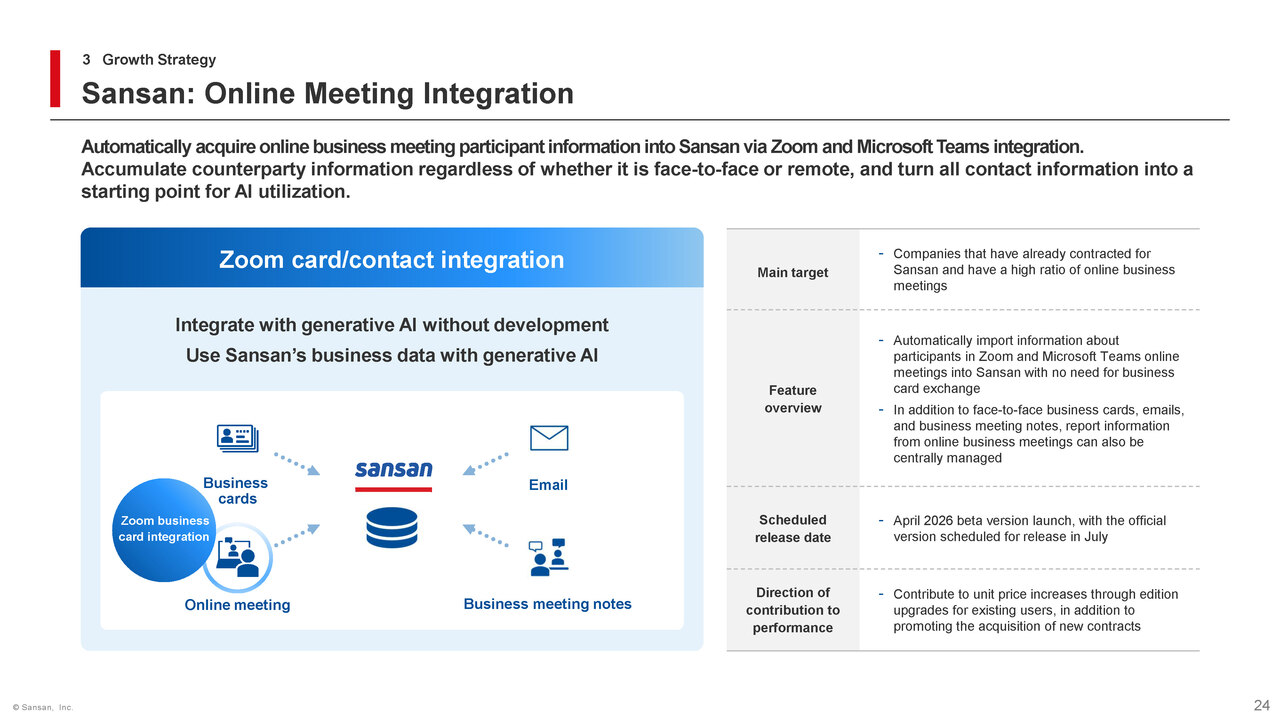
One feature supporting this expansion is Online Meeting Integration. Please turn to page 24. Previously, online meeting participant information was difficult to capture adequately. With this feature, for example, issuing a Zoom meeting URL through Sansan allows participant information to be automatically imported into and integrated with Sansan.
As a result, in addition to face-to-face business card exchanges, contact information from online meetings can also be utilized as continuous business data.
Sansan: AI Search
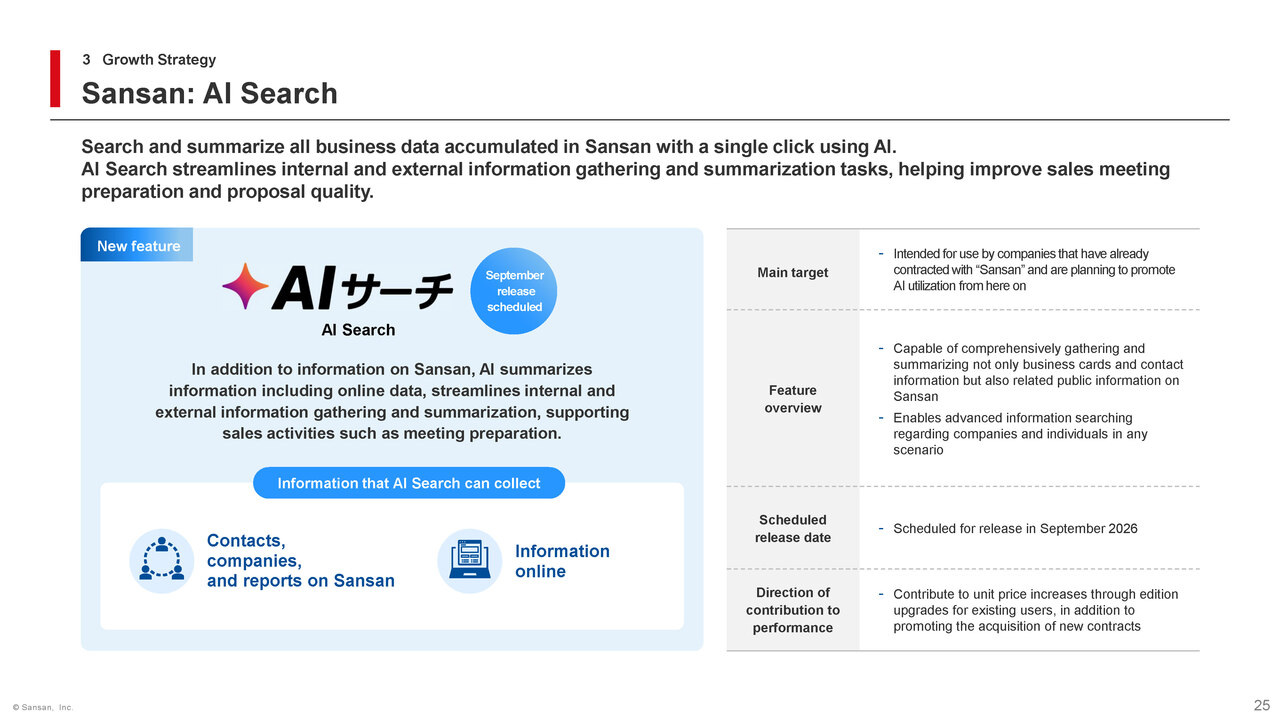
Next, I will explain AI Search on page 25. AI Search enables users to use natural-language queries to search across and utilize business card data and contact history stored in Sansan, as well as data linked from sales tools.
For example, when asked to identify manufacturing companies investing in DX with which the user’s company already has contact, AI Search can instantly generate highly accurate results by combining relevant data.
Sansan: New Service Plans
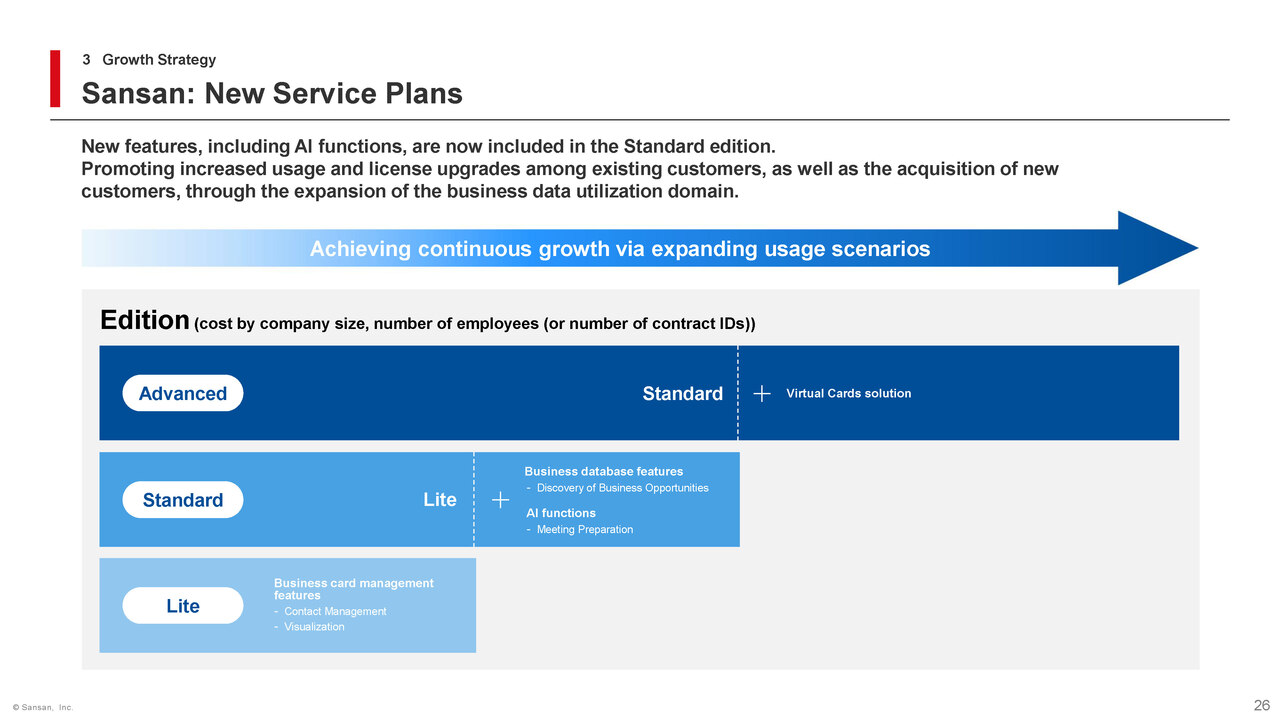
Following the addition of these new features, we updated Sansan’s service plans in June 2026. Please turn to page 26.
Online Meeting Integration and AI Search are included as standard in the Standard edition. We have also completed the PoC for the Sansan MCP server, which is designed for companies advancing their use of generative AI, and plan to include it in the Standard edition as well, with release scheduled for next January.
The Sansan MCP server is a feature that links the external generative AI tools used by customer companies with business data in Sansan.
By including this basic set of features for effectively utilizing company-specific business data as standard in the Standard edition, we will promote greater usage among existing customers and acquire new customers, leading to stable net sales growth for Sansan.
Bill One: Performance Trends
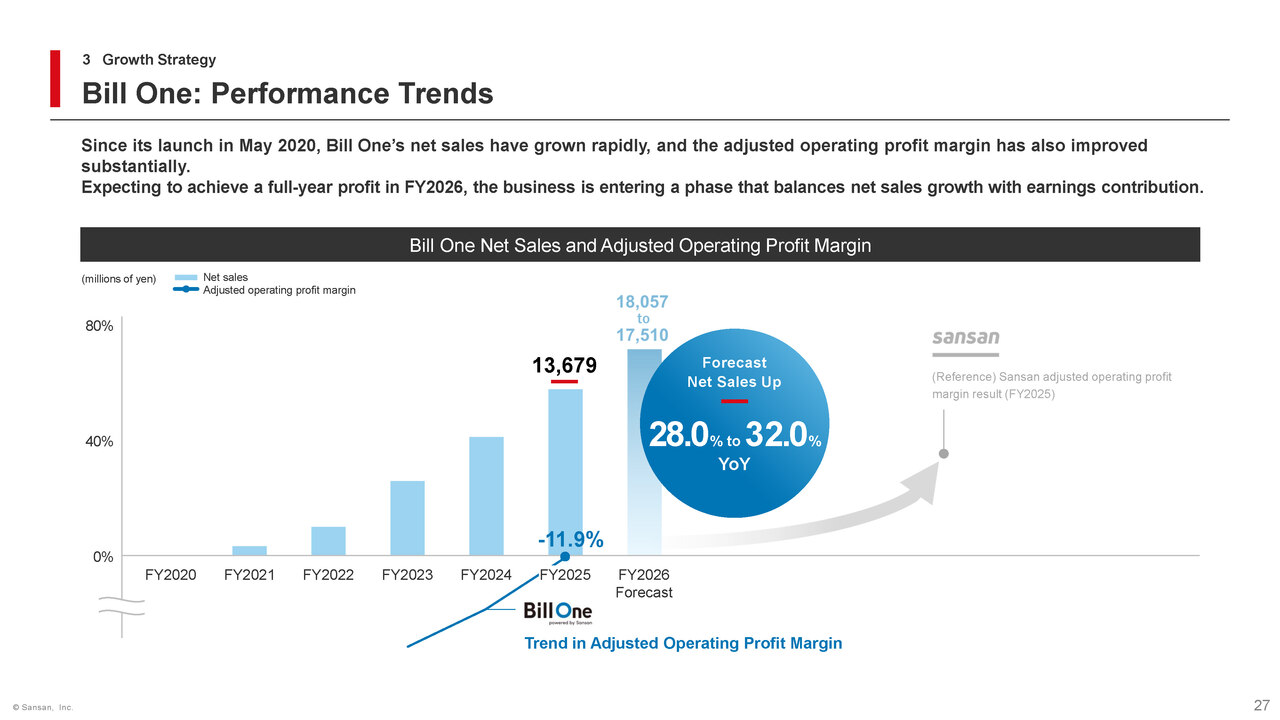
Next, I will explain Bill One. Please turn to page 27. Since its launch in 2020, Bill One has grown at a pace rarely seen in Japan’s SaaS market, and its ARR reached approximately ¥14.8 billion as of May 2026.
Profitability has also steadily improved. In FY2025, the adjusted operating loss narrowed substantially, and in FY2026, we expect Bill One to achieve full-year profitability.
Going forward, Bill One is evolving into a phase in which it can balance continued high net sales growth with earnings contribution, following the path taken by Sansan.
Bill One: Expanding the Value Proposition
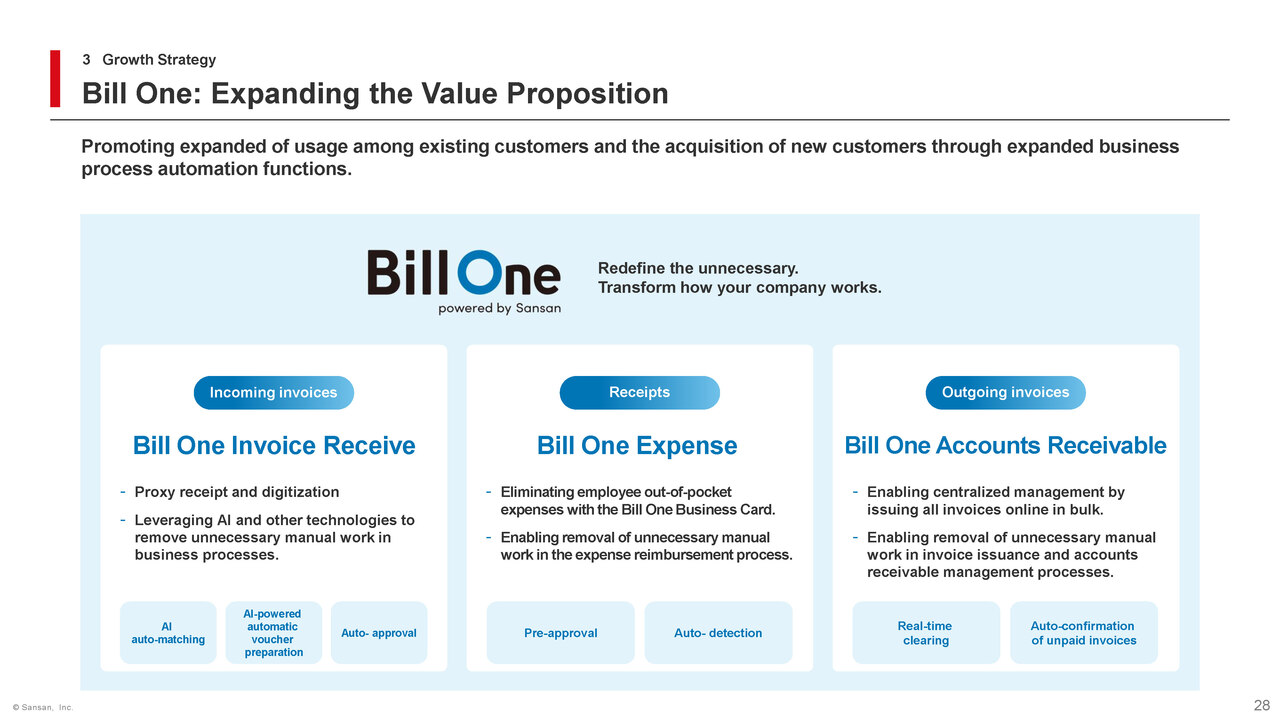
Please turn to page 28. Bill One has expanded beyond invoice receipt to encompass accounting operations more broadly, including expense reimbursement and accounts receivable management.
Today, Bill One has evolved beyond simply improving the efficiency of accounting operations into an accounting AX solution that transforms how companies work by enabling the removal of unnecessary manual work in analog and inefficient business processes.
Specifically, by utilizing AI and various technologies, Bill One is eliminating voucher preparation, reconciliation, and approval from invoice receipt processes. It is also expanding the scope of what can be eliminated beyond invoice receipt, including advance requests for expense reimbursement and payment clearing in accounts receivable management.
Bill One: AI Auto-Matching
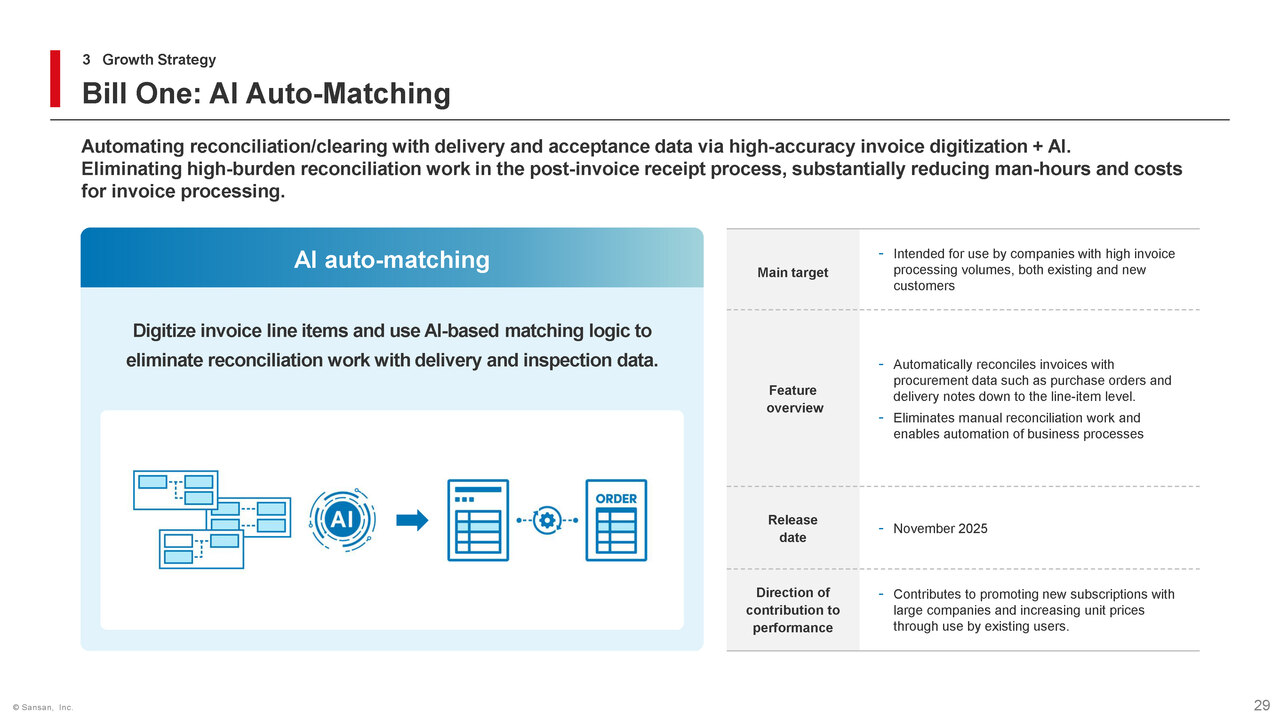
Today, I will introduce the latest status of the features we explained in Q3 as specific examples. First is AI Auto-Matching. Please turn to page 29.
AI Auto-Matching is a feature that matches the details of invoices with purchase orders, acceptance certificates, and other related documents at both the total amount and line-item levels. Companies perform this type of reconciliation work to prevent overpayments and other issues, but in many cases it is performed manually by staff.
This is an area with an extremely high operational burden and cost, including cases where invoices contain thousands of line items and companies must assign dozens of staff to the task around month-end and the beginning of the following month.
In addition, because product master data and naming conventions differ among companies, staff previously had to visually check variations in the names used for the same product—for example, the Japanese terms “ringo” and “appuru,” both meaning “apple.”
To address these issues, in June 2026 we launched a new AI Auto-Matching feature that uses AI to identify variations in notation and subtle differences in model numbers and specifications and assist with reconciliation work. This will substantially reduce the burden of reconciliation work.
Furthermore, by continuously training the AI on staff corrections and past matching results, we will improve the accuracy of its judgments and work toward eliminating manual reconciliation altogether.
Bill One: AI Auto-Request and Auto-Approval
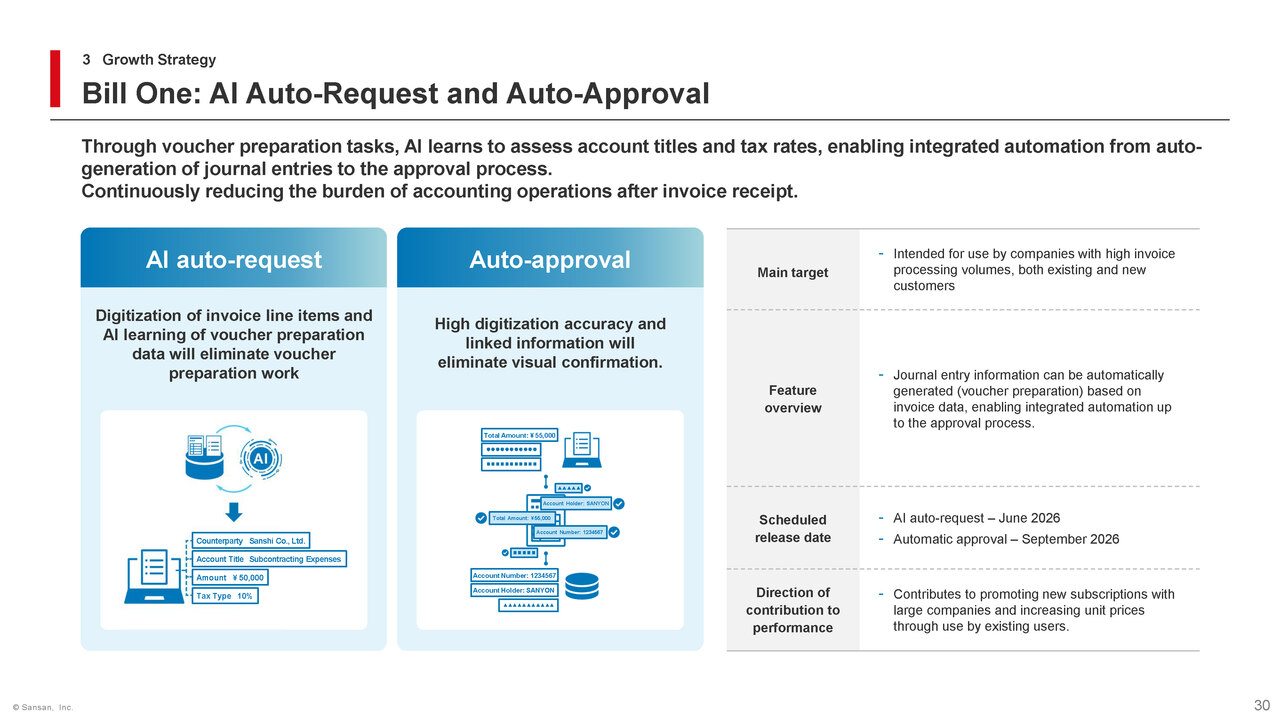
Next, I will discuss AI Auto-Request and Auto-Approval. Please turn to page 30. AI Auto-Request uses AI to automatically input and suggest account titles, tax rates, and other items based on received invoice data and past processing details. As the feature is used, it accumulates company-specific processing data, improving AI accuracy.
As a result, we aim to achieve highly accurate automation of voucher preparation and eliminate voucher preparation work itself.
Auto-Approval automates checks such as whether amounts and bank account information match, based on predefined approval rules. By streamlining the visual checks and approval tasks previously performed manually and gradually expanding the scope of automation, we aim to eliminate the need for manual approvals.
Bill One: New Service Plans
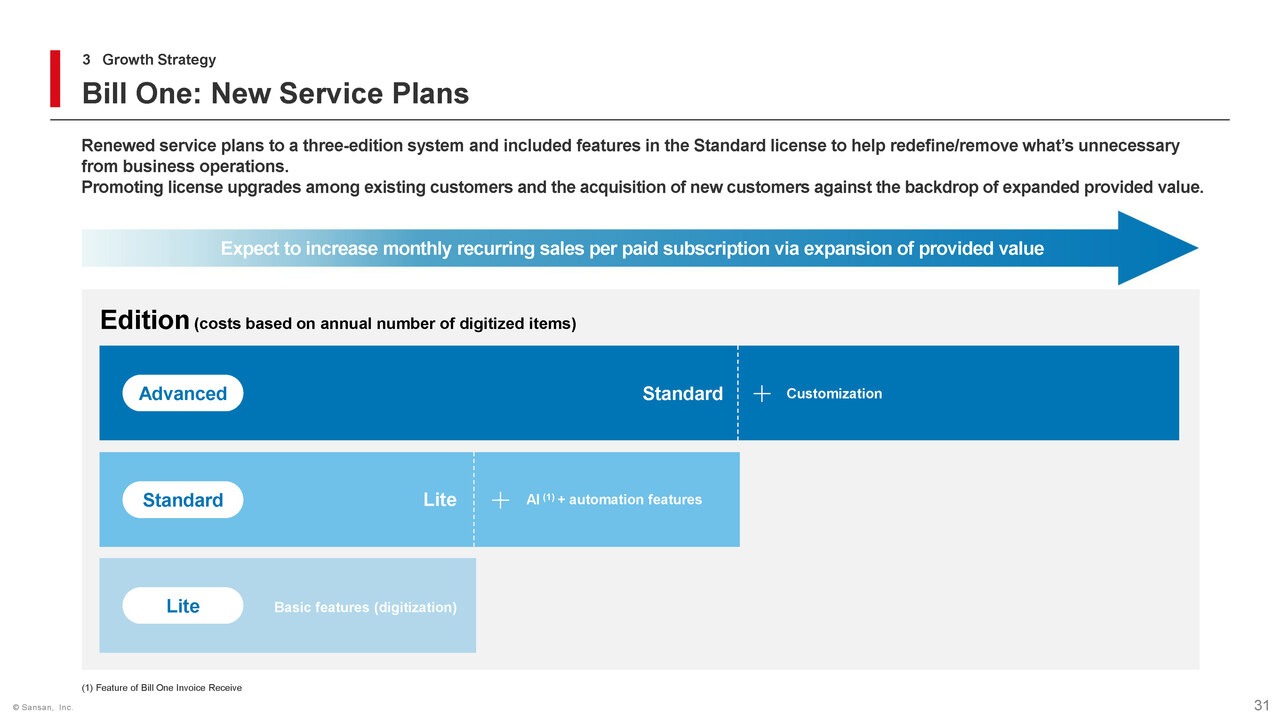
With this expansion in the value Bill One provides, we revamped Bill One’s service plans in June 2026. Please turn to page 31. Specifically, as with Sansan, we moved to a three-edition structure, with the existing basic features continuing to be offered in the Lite edition.
The new set of features, including AI Auto-Matching, AI Auto-Request, and Auto-Approval that I introduced earlier, will be provided as standard features of the Standard edition.
In addition, in the Advanced edition, we will further promote accounting AX by offering additional services that can be flexibly customized to address the issues faced by each company.
Through these feature expansions and the renewal of our service plans, we expect both to acquire more new customers and to see existing customers migrate to higher editions. As a result, we believe we can maintain strong growth in the number of paid subscriptions while also steadily increasing monthly recurring sales per paid subscription.
Contract One: Performance Trends
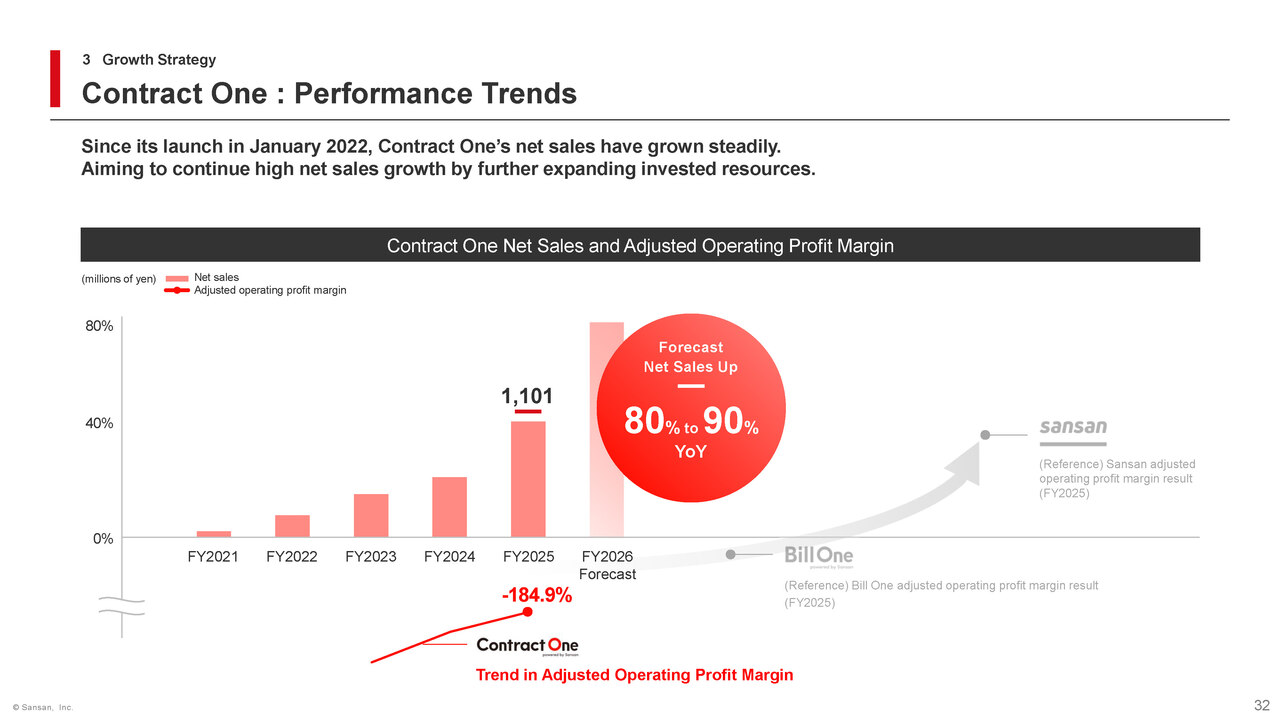
Next, I will explain Contract One. Please turn to page 32. Since its launch in 2022, Contract One’s net sales have grown steadily.
In FY2025, growth initiatives—including strengthening the sales organization and airing TV commercials—helped drive a 92.6% YoY increase in net sales. The number of subscriptions also rose by 91.3% YoY, continuing its steady expansion. In FY2026, by further expanding invested resources, we expect high net sales growth of 80% to 90% YoY.
On the service front, we will further expand the value proposition by deploying individual solutions, including AI-enabled features. I will explain specific examples on page 33.
Contract One: Deployment of Individual Solutions
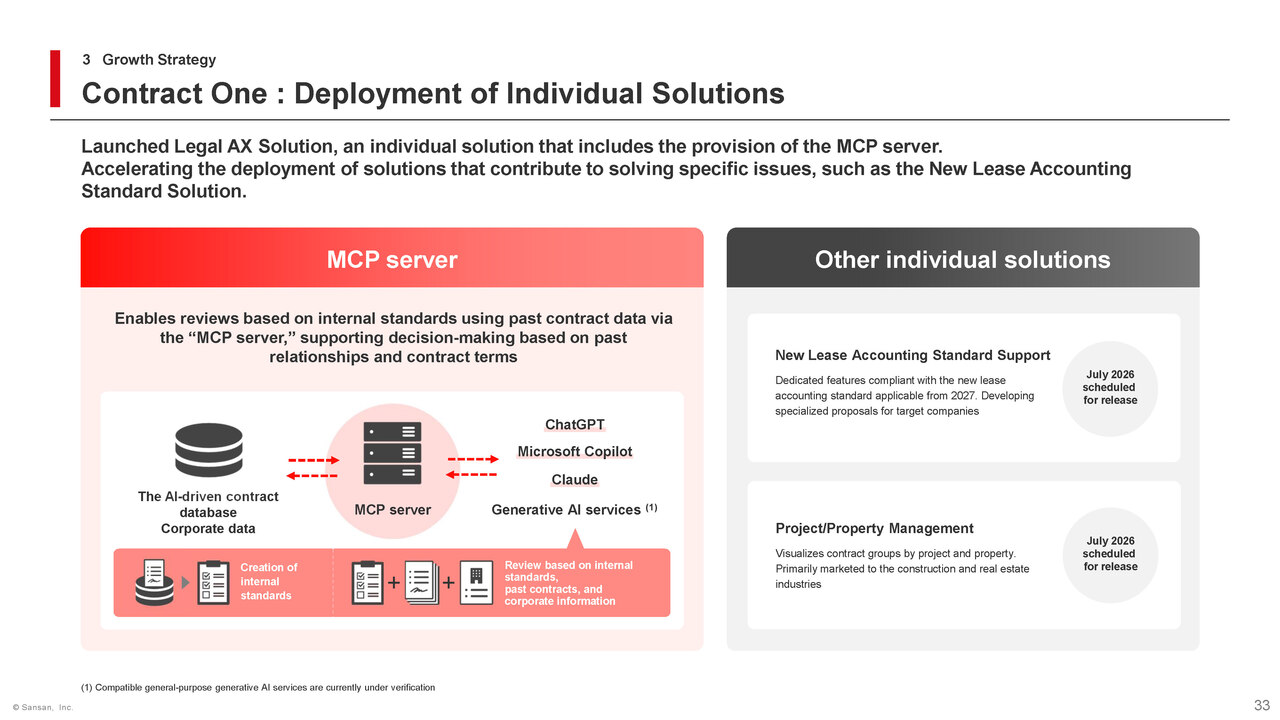
The MCP server, which we also introduced at our Q3 earnings presentation, has been officially launched as the Legal AX Solution following PoCs and deployments at multiple companies. By linking general-purpose generative AI with Contract One via the MCP server, the solution enables contract reviews based on past contract data and internal standards, supporting practical contract decisions that are more closely aligned with actual business operations.
In addition, we are deploying individual solutions that support compliance with legal and regulatory changes and address industry-specific issues, such as the New Lease Accounting Standard Solution and the Project/Property Management Solution.
Going forward, we will strengthen not only the value of Contract One as a contract database that can be used across industries, but also the provision of solutions optimized for specific industries and business issues.
Contract One: Service Plans
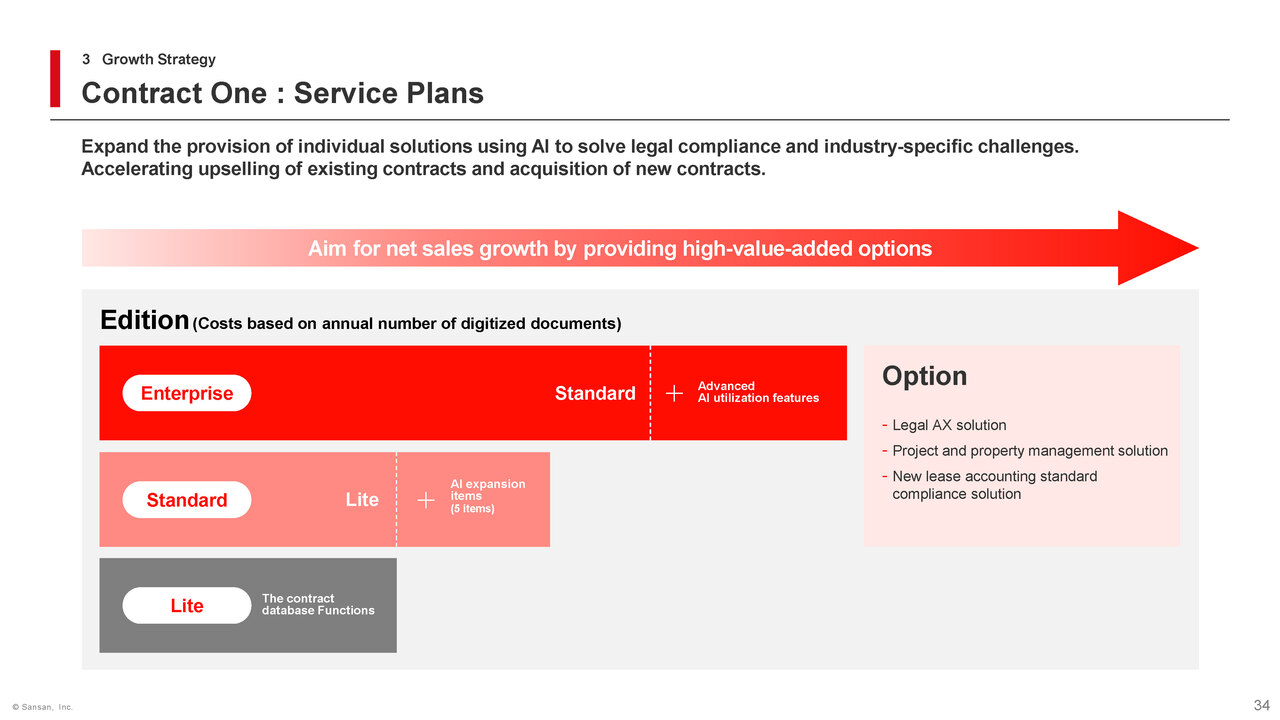
Please turn to page 34. Contract One also uses a three-edition pricing structure, as do Sansan and Bill One.
The individual solutions I introduced are offered as optional features for the Standard edition and above. Through the provision of these features, we aim to increase usage among existing customers and accelerate the acquisition of new contracts.
Eight: Performance Trends
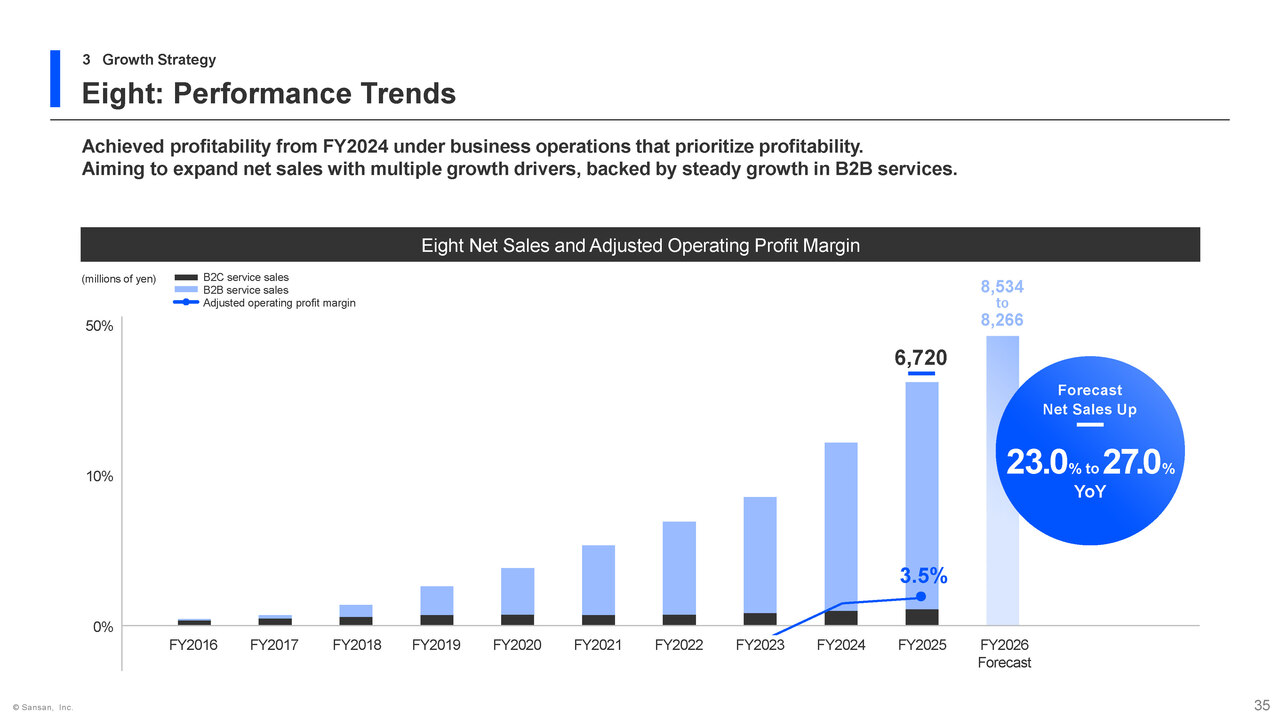
Finally, I will explain the Eight Business. Please turn to page 35. The Eight Business has continued to deliver strong net sales growth to date, backed by growth in B2B services.
In addition, under business operations that prioritize profitability, the Eight Business achieved profitability in FY2024 and delivered a substantial increase in profit in FY2025. Going forward, we will aim for further growth by leveraging the user base of the Eight Business card app and using multiple B2B services as growth drivers.
Eight: Development of B2B Services
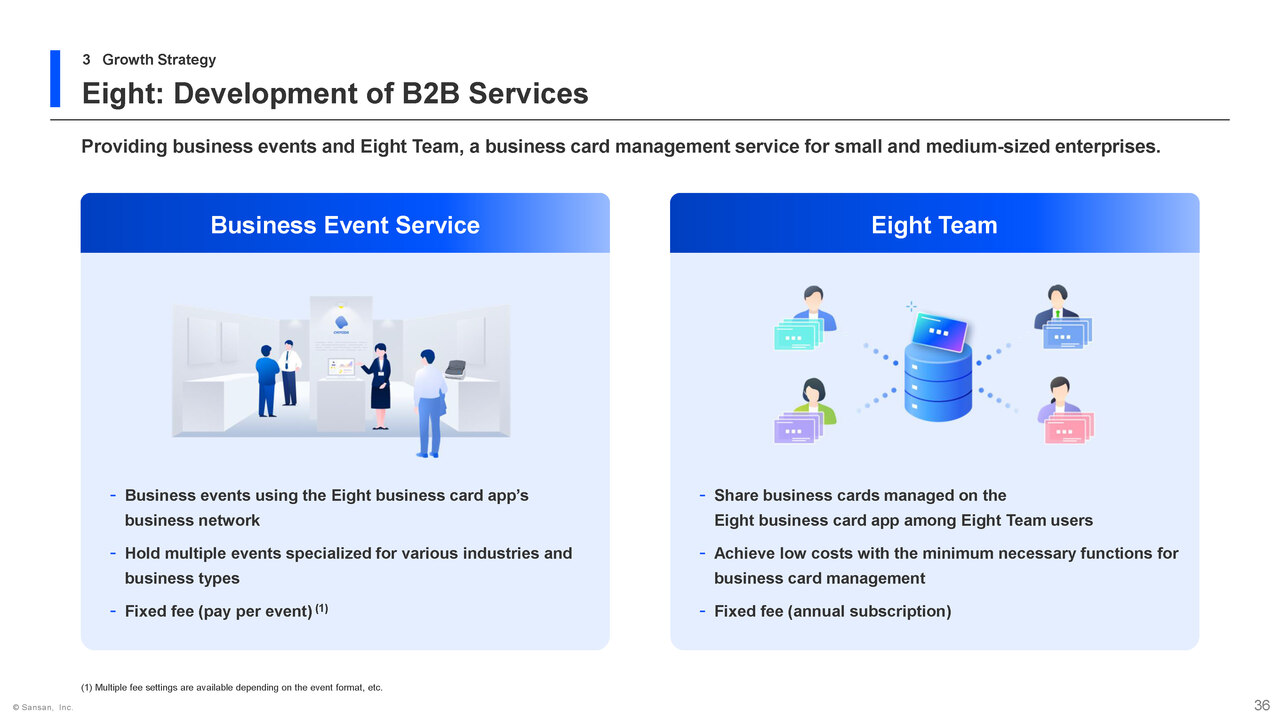
I will introduce some of the B2B services we offer in the Eight Business. Please turn to page 36.
The Business Event Service holds multiple events focused on specific industries and themes and again achieved strong growth in FY2025. Going forward, we aim to grow further by expanding our event lineup and entering more regional markets.
Eight Team is a business card management service for small and medium-sized enterprises that enables business cards managed in Eight to be shared within teams. The service has expanded steadily, with more than 6,000 companies now using it. Going forward, we will further expand its adoption by strengthening partner sales.
Eight: Development of B2B Services
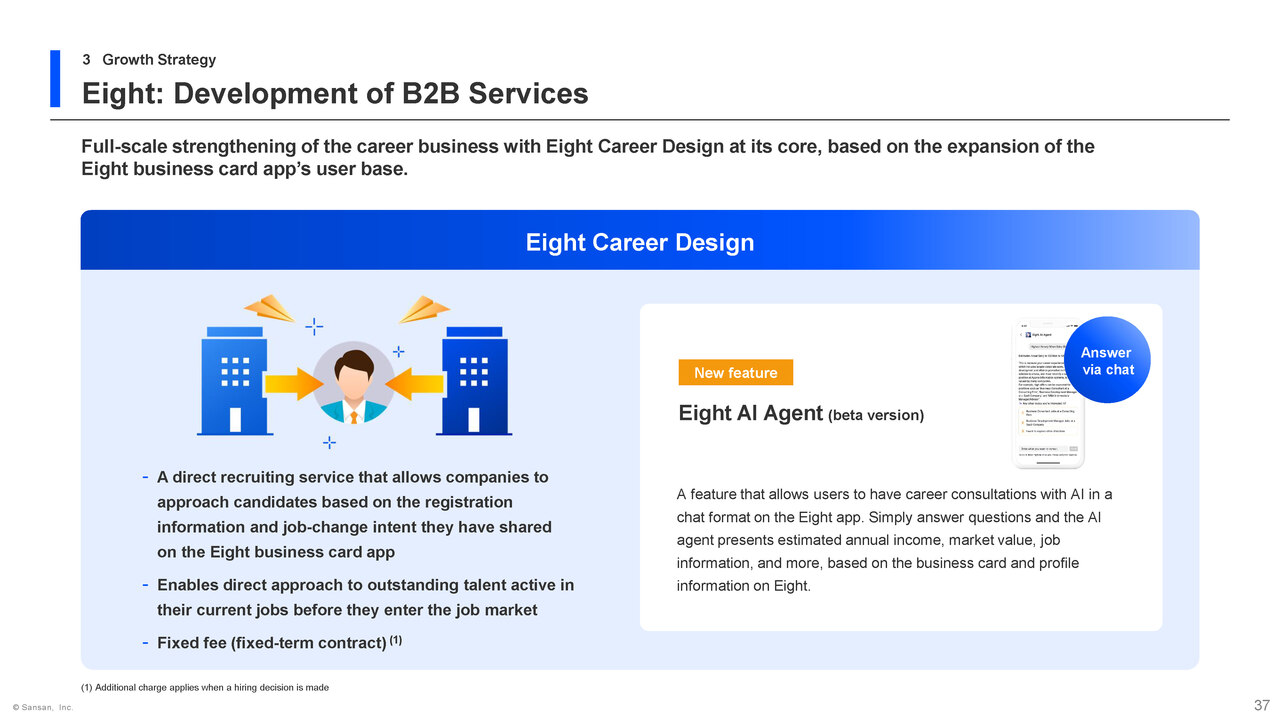
Eight Career Design, a recruiting-related service offered since 2019, is also growing steadily. Please turn to page 37.
In the current job market, it has become more difficult to hire experienced management-level professionals who can make an immediate contribution. Eight Career Design’s strength is that 58% of Eight users are at the leader level or above, enabling companies to directly approach such professionals before they enter the job market.
In January 2026, we brought EDOA Corp., which operates a recruitment agency business, into the Group to strengthen our expertise in recruitment services. EDOA’s results of operations have been included in our consolidated financial statements since Q4.
We have also launched Eight AI Agent, which enables users to consult AI about their careers in a chat format. By steadily growing B2B services around Eight’s user base, we aim to achieve steady net sales growth and expand earnings for the Eight Business as a whole.
Medium-Term Direction for Each Solution
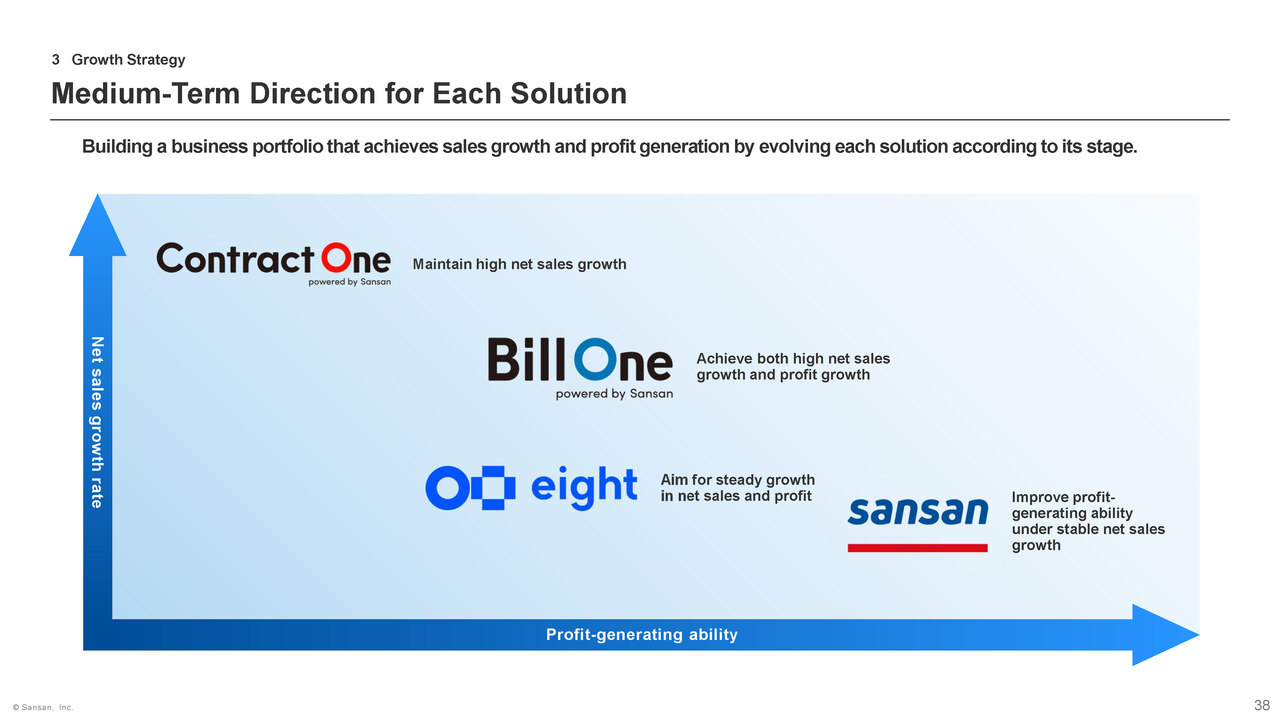
Finally, please turn to page 38. Today, I explained the direction of each of our main businesses, which are at different stages. To summarize, Sansan will improve its profit-generating ability while maintaining stable net sales growth.
For Bill One, we expect profitability to continue improving, and going forward it will enter a phase in which it achieves both high net sales growth and profit growth.
With profits generated by Sansan and Bill One as a foundation, Contract One, which we position as our next growth business, will aim to maintain a high net sales growth rate.
For Eight, we will aim for steady growth in net sales and profit through multiple B2B services. Through the evolution of the entire business portfolio, we will aim to enhance corporate value over the medium to long term.
That concludes my presentation. Thank you very much.
Q&A: Assumptions for growth rates in the Medium-Term Financial Policy
Questioner: I have a question about the Medium-Term Financial Policy. You announced a new Medium-Term Financial Policy this time. Could you explain the assumptions behind the net sales CAGR of 16% to 20% and the range for the adjusted operating profit margin?
Hashimoto: Our assumptions are limited to organic growth achievable within our existing businesses.
That said, we naturally expect order intake to fluctuate above or below our assumptions. As previously explained, we estimate order intake per salesperson, apply a reasonable range of fluctuation, and use the resulting upper and lower bounds in our plan.
On the cost side, stronger net sales growth and order intake may allow us to accelerate hiring. We therefore prepare two range-based scenarios: one pairs the upper end of the net sales growth range with the lower end of the adjusted operating profit margin range, reflecting a lower margin when net sales are higher; the other pairs the lower end of the net sales growth range with the upper end of the margin range.
Q&A: Positioning of main products and AI features in the Medium-Term Financial Policy
Questioner: How do you position your main products, Sansan and Bill One, and what kind of growth story are you envisioning for new services under the Medium-Term Financial Policy?
Also, could you tell us to what extent the new AI features introduced earlier are incorporated into the Medium-Term Financial Policy, or whether they represent upside potential?
Hashimoto: We have not precisely quantified the contribution of the AI features. Our plan is based primarily on the assumption that our current businesses and services will continue as they are.
Accordingly, we treat potential benefits from the AI features—including the pricing effects Terada discussed earlier, higher monthly recurring sales per paid subscription, and faster order growth—as upside factors and have reflected them in our plan.
Q&A: Drivers of net sales in the current fiscal year plan and the impact of net increases in new customers
Questioner: I have a question about the plan for the current fiscal year. I would mainly like to ask about the net sales growth assumptions for Sansan and Bill One. Should we understand that net customer additions will continue to be the primary driver of net sales this fiscal year?
Hashimoto: Yes. As for average revenue per subscription, Sansan saw a decline in the most recent quarter. This did not reflect a major underlying change; rather, the increase in small and medium-sized customers lowered the average.
Therefore, I believe average revenue per subscription will follow a trend similar to the past and not change significantly. However, in terms of new customer acquisition and subscription growth, both Sansan and Bill One achieved record net customer additions in FY2025. We prepared our plan on the assumption that this trend will continue in FY2026.
Q&A: Hiring policy for the new fiscal year and over the medium term, and the impact of AI utilization
Questioner: You mentioned a decline in the personnel expense ratio. Could you explain changes in the hiring policy for the new fiscal year and over the medium term, including whether internal AI utilization has been a trigger?
Hashimoto: In 2025, we promoted AI utilization internally by declaring “AI First” across the entire company and encouraging everyone to use AI and get used to it.
This fiscal year, we have taken another step forward and are focusing on how to use AI to maximize the outcomes we seek and achieve those outcomes. Our FY2025 results demonstrated that we can maintain and improve productivity without a significant increase in headcount.
As a result, both the caliber of talent we hire and our hiring standards have risen, and we have been able to continue hiring selectively. Although our net increase in headcount was not particularly large, I believe the quality of our talent has clearly improved. AI has made a significant contribution in this regard.
In FY2026 as well, we plan to advance the use of AI even further. We will make investment decisions by comparing AI costs with personnel expenses and determining where to allocate more resources. In addition, because we are confident in the Company’s overall profitability, we expect to accelerate hiring compared with FY2025.
Q&A: Downward trend in unit price for Sansan and future outlook
Questioner: Earlier, you mentioned that the decline in unit price for Sansan was due to the mix with small and medium-sized customers. Is it fair to expect this trend to continue going forward, and is that acceptable strategically?
Hashimoto: Looking at existing customers, there is no specific factor behind the decline in unit price, so we are not particularly concerned. However, in order to maximize net sales, we believe we need to allocate more resources to areas where we can win orders. As a result, as we acquire more small and medium-sized enterprise customers, there may be downward pressure on unit price.
On the other hand, regarding pricing, initiatives such as adding various features to the Standard edition and encouraging customers to upgrade to higher-tier editions are beginning to produce results. This may create upward pressure on average revenue per subscription.
It is difficult to forecast what will happen to the unit price level as these factors combine. However, at present, management does not view the decline in unit price itself as particularly negative.
Q&A: Business efficiency from AI features and the importance of automation starting from business cards, invoices, and contracts
Questioner: I apologize for the somewhat abstract question, but I would like to better understand how AI features such as Sansan’s AI Search and Bill One’s AI Auto-Matching and AI Auto-Request can be used in sales discussions to help customers secure budgets.
For example, do you think a message such as “these features can reduce the work of customer staff by a certain number of person-months” is effective in the Japanese market?
Also, as AI-powered products emerge across a wide range of corporate and back-office functions, could you explain why you believe automation should begin in areas such as business cards, invoices, and contracts, as well as your reasoning and approach?
Terada: Since Sansan and Bill One cover very different business domains, I will discuss them separately.
Adding AI features to the Standard edition indicates that, following PoCs and trial periods, these features are moving closer to monetization. In other words, we want to show that they are becoming commercially viable features that customers are willing to pay for.
For example, AI Search is a more specific use case of the broader functionality Sansan already provides. Sales representatives already use Sansan to search for information as part of their meeting preparation.
Within this process, AI Search enables users to obtain insight-rich information on companies they are scheduled to meet. It also makes it easy to retrieve information stored in Sansan, including daily and weekly reports.
AI Search is also scheduled to connect with Contract One and Salesforce. Using normalized and structured business card data as a foundation, users will be able to easily access company information, key contacts, organizational charts, and the progress and history of sales opportunities. This will enable them to complete meeting preparation through natural-language Q&A.
In the future, we plan to evolve this further so that sales materials themselves can be generated from that information. We believe this will not only save time but also contribute further to sales growth and the growth of our customers’ businesses. Since Sansan itself contributes to both operational efficiency and sales growth, we will likely promote these features from this perspective as well.
On the other hand, Bill One’s AI features are intended primarily to streamline back-office operations. For that reason, ROI is relatively easy to evaluate, and we customize proposals according to each company’s circumstances. We also calculate and present ROI as needed.
Specifically, we aim to realize a world in which most accounting operations are automated. Bill One was originally launched to accelerate the monthly close. My personal view is that we are ultimately aiming to create a world in which the monthly close is completed automatically. This gives Bill One a clear and readily understandable value proposition in terms of operational efficiency.
Given the shortage of accounting staff at many companies, I believe Bill One is particularly well suited to their needs.
Finally, regarding the question of why Sansan, our view is that AI should be utilized and applied across all areas.
This does not mean that companies should start with Sansan. Rather, the strength and added value of combining our products with AI lies in the fact that, as I mentioned in the opening commercial, AI is most effective when built on accurate data.
In practice, it is difficult for companies to create accurate data first solely to make better use of AI. Therefore, rather than adopting Sansan or Bill One solely for AI utilization, companies adopt them for their more fundamental value. The data accumulated through their use can then support the evolution of these solutions into higher-value business applications.
By taking this approach, we believe we are well positioned to benefit from strong tailwinds in the AI era.
Q&A: Outlook for profitability improvement during the Medium-Term Financial Policy period
Questioner: I believe Sansan’s adjusted operating profit margin improved by roughly 1 percentage point again this year on a full-year basis. Under the new Medium-Term Financial Policy, could further improvements in digitization operations allow the margin to reach the 40% range?
Also, Bill One is aiming to achieve profitability this fiscal year. Do you see it eventually reaching the same level of profitability as Sansan, or do you think it would be somewhat structurally difficult for Bill One to reach the 40% range? Could you share your view on this?
Hashimoto: Achieving 40% during the Medium-Term Financial Policy period may be difficult, but we believe it is fully achievable on a company-wide basis.
For Sansan, we expect the adjusted operating profit margin to continue improving. We believe improvements in digitization operations, effective use of human resources, and productivity improvements will make a significant contribution.
Based on the FY2026 budget, advertising expenses may represent a larger percentage of net sales at Bill One than at Sansan. We therefore expect Sansan to further strengthen its earnings structure and operate with a leaner, more efficient cost base.
Meanwhile, Bill One is expected to achieve profitability this fiscal year. We also expect profitability to improve further, for example as development costs begin to be capitalized as software assets.
Digitization operations are also becoming more efficient, and Bill One’s cost of sales ratio is already lower than Sansan’s. Although there have been some fluctuations, the ratio has improved steadily on a monthly basis. Taking factors such as more efficient use of human resources into account, we believe Bill One can eventually achieve margins on par with or higher than Sansan’s.
Q&A: Possibility of Contract One becoming profitable during the Medium-Term Financial Policy period
Questioner: Contract One is spending a significant amount on advertising, so I believe its adjusted operating profit margin is negative. Is it realistically possible for it to become profitable during this Medium-Term Financial Policy period?
Hashimoto: We believe achieving profitability within these three years would be somewhat challenging. However, its growth rate is very high, and the higher the growth rate, the greater the incentive to invest. Therefore, at present, we do not expect it to become profitable within this three-year period.
Q&A: Order trends for Sansan and Bill One as of the end of May 2026
Questioner: Regarding order trends for Sansan and Bill One as of the end of May 2026, what changes did you see on a YoY basis?
Also, I remember that Sansan’s orders in the enterprise segment weakened in Q3. Is it fair to think they are now recovering?
Hashimoto: For Sansan, the growth rate in Q4 of FY2025 may appear to have declined slightly. This was affected by the fact that orders did not grow as much as expected in the most recent Q4.
For Sansan, the period from March to May is the contract renewal season, and every year during this period the churn rate tends to rise due to seasonality. As a result, net orders tend to decline. The same trend was seen this year, and it was somewhat disappointing because there was potential for orders to grow further.
On the other hand, Bill One remains on a very strong trajectory. As of Q4, we have no concerns about the level of orders and believe the solution is growing steadily.
In addition to the conventional invoice receipt feature, various modules such as expense reimbursement have been added, and these have also contributed to an increase in orders. Therefore, our impression is that order trends have not fluctuated significantly from Q1 to Q4 and have remained steady.
Q&A: Policy for determining the level of shareholder returns
Questioner: My question relates in part to page 38 of the presentation materials. When considering the appropriate level of shareholder returns going forward, Sansan is already generating solid free cash flow, and I expect Bill One, Eight, and Contract One to each grow profits and generate free cash flow in the future.
From a longer-term perspective, do you expect to shift toward determining the total amount of shareholder returns by adding together the free cash flow generated by each solution, or will you determine the appropriate level of shareholder returns based on free cash flow generated by the Group as a whole? Could you share your view on this?
How do you view this under the current Medium-Term Financial Policy and over an even longer time horizon? Hashimoto: Rather than looking at free cash flow by business, I believe we will determine the amount of shareholder returns based on how much capital the Group as a whole can allocate.
On the other hand, I believe decisions on how much to invest in each business will be made based on factors such as the status of each business, productivity, growth rate, market expansion, and competitive environment.
Q&A: Basic policy on capital allocation and the ratio of growth investment to shareholder returns
Questioner: I have a question about the fact that you have established a Basic Policy on Capital Allocation. I think the focus on shareholder returns is very positive. Regarding growth investment and shareholder returns in this area, if you have any assumptions, such as roughly an 8-to-2 ratio, could you share them?
Hashimoto: We have not quantitatively indicated a specific ratio or conducted such calculations. However, we have already completed part of the share buyback announced two months ago, and if we achieve the announced dividend level, I think the combined amount of shareholder returns will be just under ¥2.0 billion.
Compared with profit, this corresponds to a total payout ratio of more than 20%. However, this does not mean that we intend to maintain this level; we believe we can still provide sufficient shareholder returns.
By type, our policy is to focus on share buybacks. Depending on market conditions, we are not committing to repurchase more shares than in the current fiscal year. Instead, we intend to respond flexibly as conditions evolve, using a total payout ratio of around 20% for this fiscal year as one benchmark while allowing for fluctuations above or below that level.
To reiterate, I believe net sales growth is the most important priority. Net sales growth is essential to maximizing future profits.
We therefore intend to pursue growth investment to the fullest extent possible. While the amount will depend on the scale of growth opportunities, we want to allocate as much capital as possible to growth investment.