
Contents
Mr. Ryota Sugawara (hereafter, Sugawara): I am Ryota Sugawara, Director and Head of the President’s Office of Inspec Inc. Today, I will walk you through our earnings presentation in three parts, as outlined on the slide.
Company profile (As of May 1st, 2026)
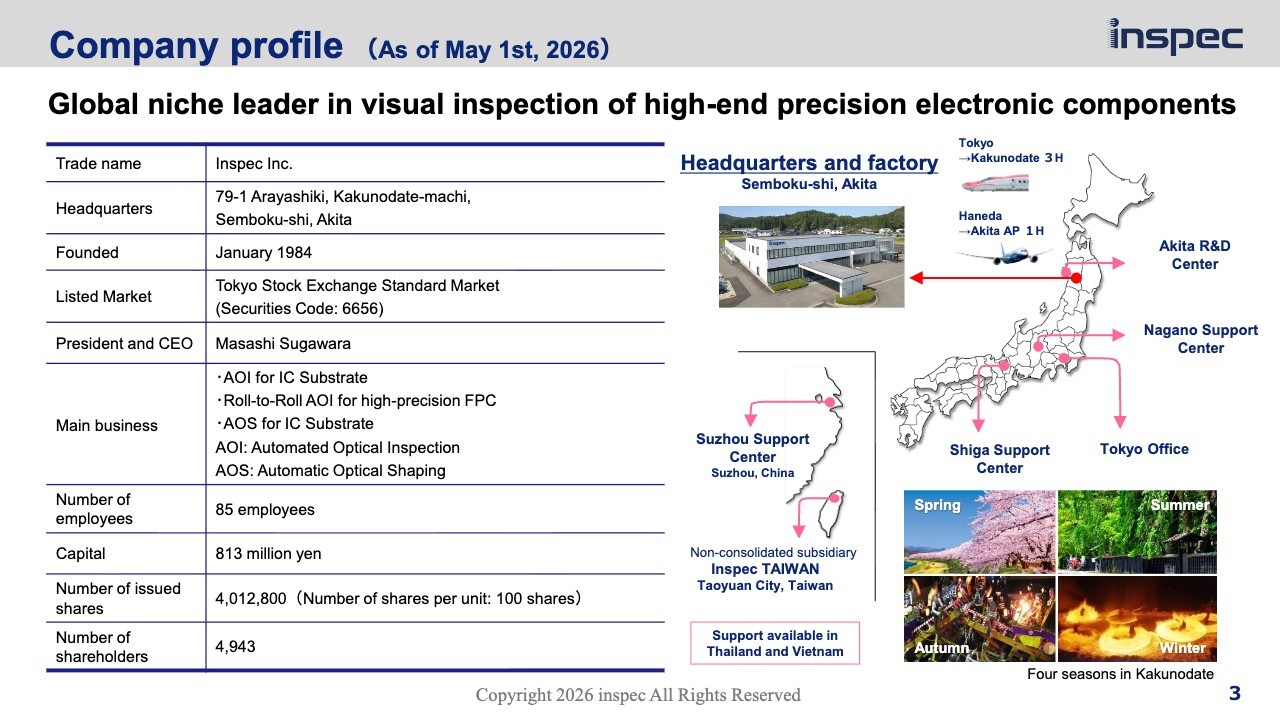
Sugawara: Let me begin with our company profile. Inspec was founded in 1984 in Semboku-shi, Akita, where our headquarters is located today. We initially manufactured precision electronic components as a subcontractor for major electronics manufacturers. In 1997, we launched our inspection equipment business for precision printed circuit boards (PCBs), which has since become our core business.
We have 85 employees. In Japan, we operate our headquarters, R&D Center in Akita-shi, a sales office in Tokyo, and Support Centers in Nagano and Shiga. Overseas, we have our non-consolidated subsidiary, Inspec Taiwan, in Taiwan and Suzhou Support Center in Suzhou, China, enabling us to serve customers throughout East and Southeast Asia.
Purpose
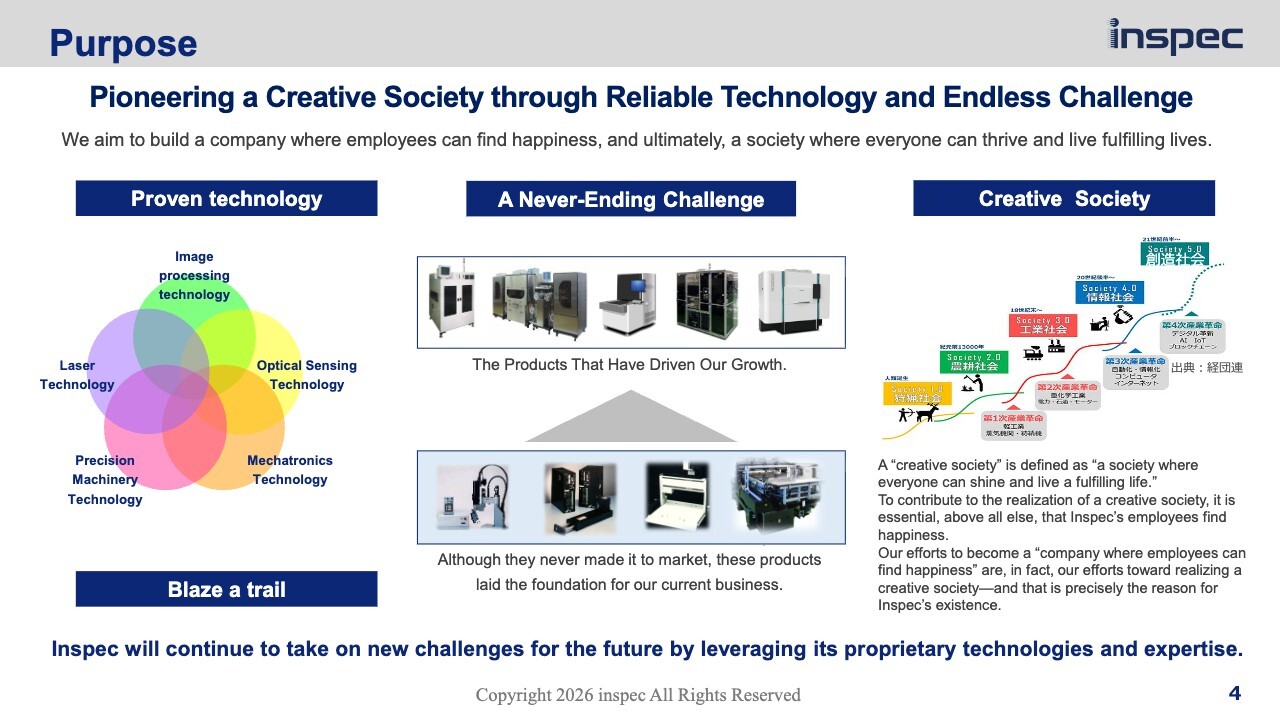
Sugawara: We operate our business based on our purpose: “Pioneering a Creative Society through Reliable Technology and Endless Challenge.” Over many years, we have accumulated a wide range of technologies and expertise. By leveraging fully these strengths, we continue to take on new challenges.
Toward Sustainable Growth
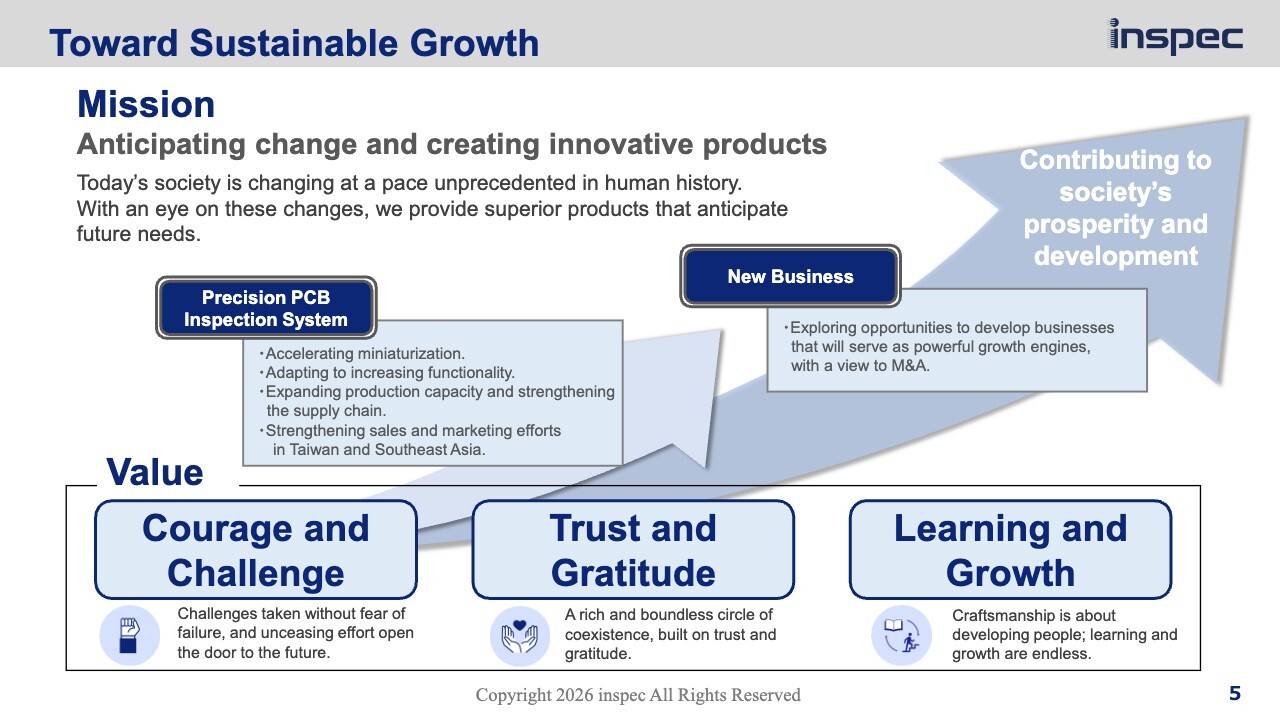
Sugawara: We conduct our business based on three values: Courage and Challenge, Trust and Gratitude, and Learning and Growth. Guided by these values, we continuously pursue new opportunities and look ahead to the next stage of growth. In recent years, we have placed particular emphasis on Learning and Growth by strengthening employee development and training programs, which I will discuss later.
Management Policy
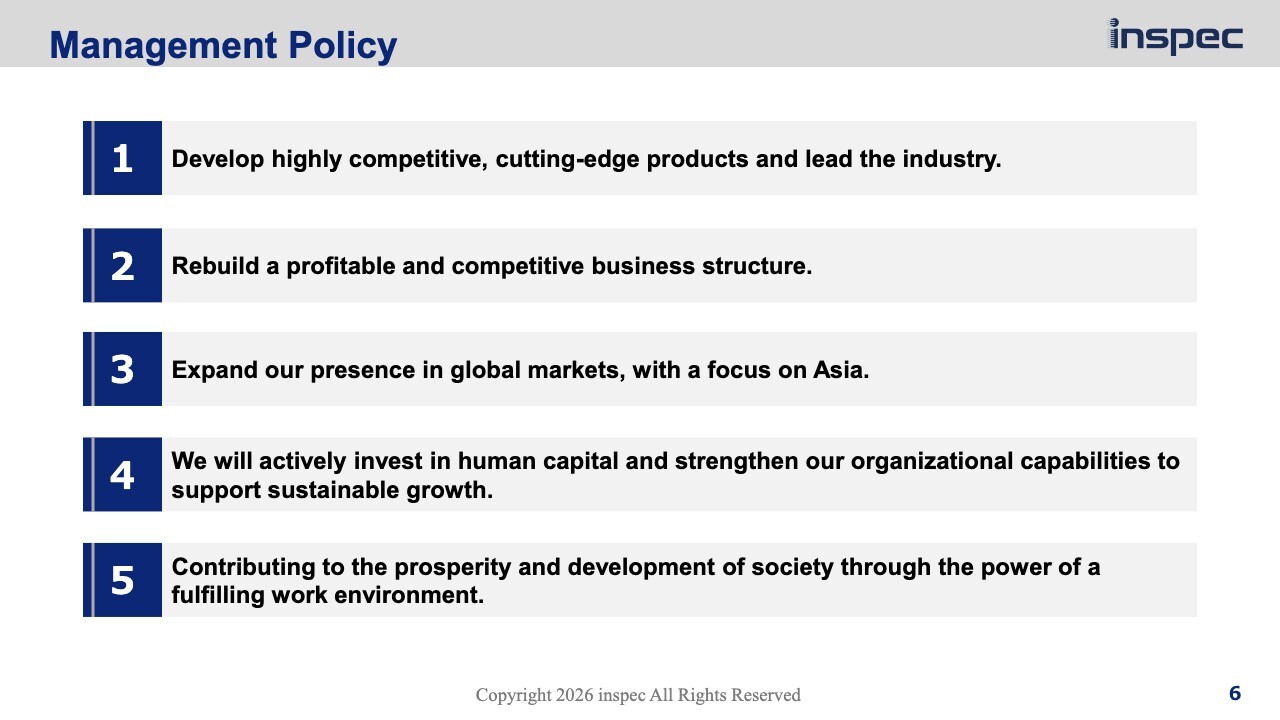
Sugawara: Let me now discuss our management policy, which consists of five key pillars. The first is developing highly competitive, cutting-edge products. While we are a relatively small company, we leverage our proprietary technologies to differentiate ourselves and have established a position as a global niche leader.
However, the recent surge in AI semiconductor demand has enabled rival manufacturers to expand their capabilities. In response, we will accelerate technology development, stay ahead of market trends, and rebuild our profitable business model.
In the previous fiscal year, domestic users accounted for the majority of our sales. Going forward, we will expand sales in East Asia and Southeast Asia, with a particular focus on Taiwan and China.
As I mentioned earlier, we continue to invest in talent development based on one of our values, Learning and Growth. We believe that one of the most meaningful ways we can contribute to society is not only by delivering innovative products, but also by building a workplace where employees can work with a sense of purpose, fulfillment, and enthusiasm.
Product Overview
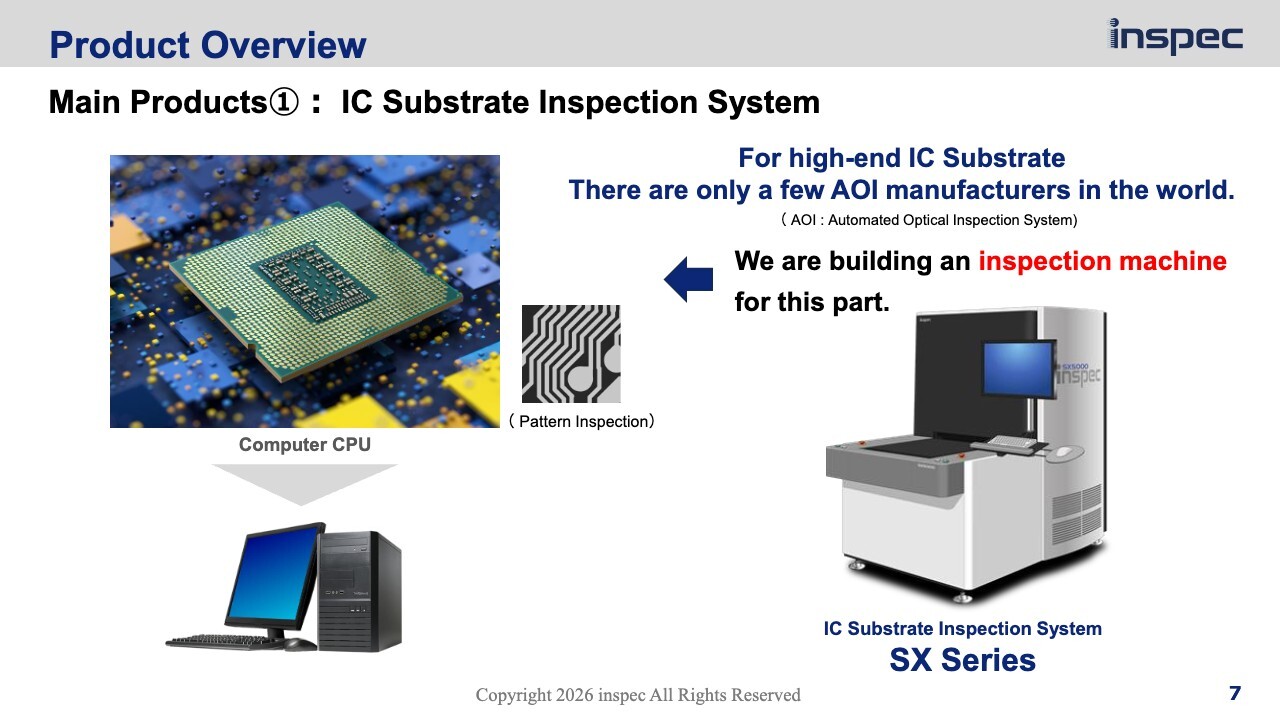
Sugawara: Let me introduce our products. We manufacture automated optical inspection (AOI) systems for precision printed circuit boards. While there are many types of printed circuit boards, one of our primary target markets is high-end IC substrates.
These substrates are used in computer CPUs and GPUs. The category also includes substrates on which so-called AI semiconductors are mounted.
Printed circuit boards contain precise circuit patterns. In the most advanced products currently available, line widths are around 8 microns. Next-generation and future-generation products will require even finer circuitry, with line widths shrinking to 5 microns and eventually 2 microns. To stay ahead of this trend, we are actively developing technologies for these future generations of products.
Product Overview
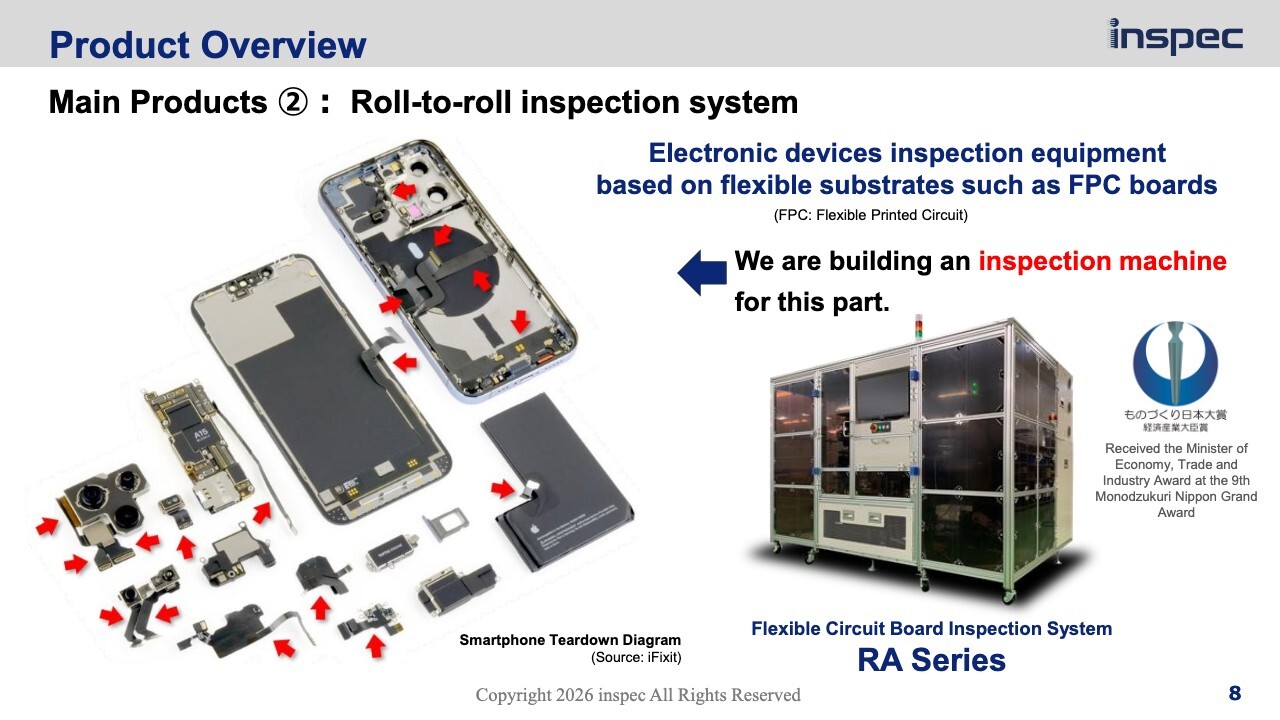
Sugawara: Another primary target market is flexible printed circuits (FPCs). While FPCs have a long history, production volumes surged as smartphones became widespread around 2008. Traditionally, FPCs were manufactured one sheet at a time, typically in about A4-sized formats. To improve productivity, however, the industry shifted to roll-to-roll manufacturing, processing the material directly from rolls.
At that time, the dominant inspection method was known as “step-and-repeat.” Even in roll-to-roll production, the equipment inspected an A4-sized sheet at a time. Once the inspection of a sheet was complete, it would feed the next sheet for inspection.
In contrast, our RA Series can inspect roll-to-roll products measuring 100 to 200 meters in length continuously from end to end without stopping. This high-speed, non-stop inspection capability has improved productivity by five to ten times compared with conventional systems.
In recognition of its contribution to the widespread adoption of smartphones, the RA Series received the Minister of Economy, Trade and Industry Award at the 9th Monodzukuri Nippon Grand Award in 2023.
Today, as vehicles become increasingly electronic and electrified, FPCs are being adopted in a growing number of automotive applications. In particular, battery management systems for traction batteries for EVs and hybrid vehicles rely on FPCs in nearly every case. Our inspection systems help support the mass production of some of these applications.
Devices that contribute to a better world
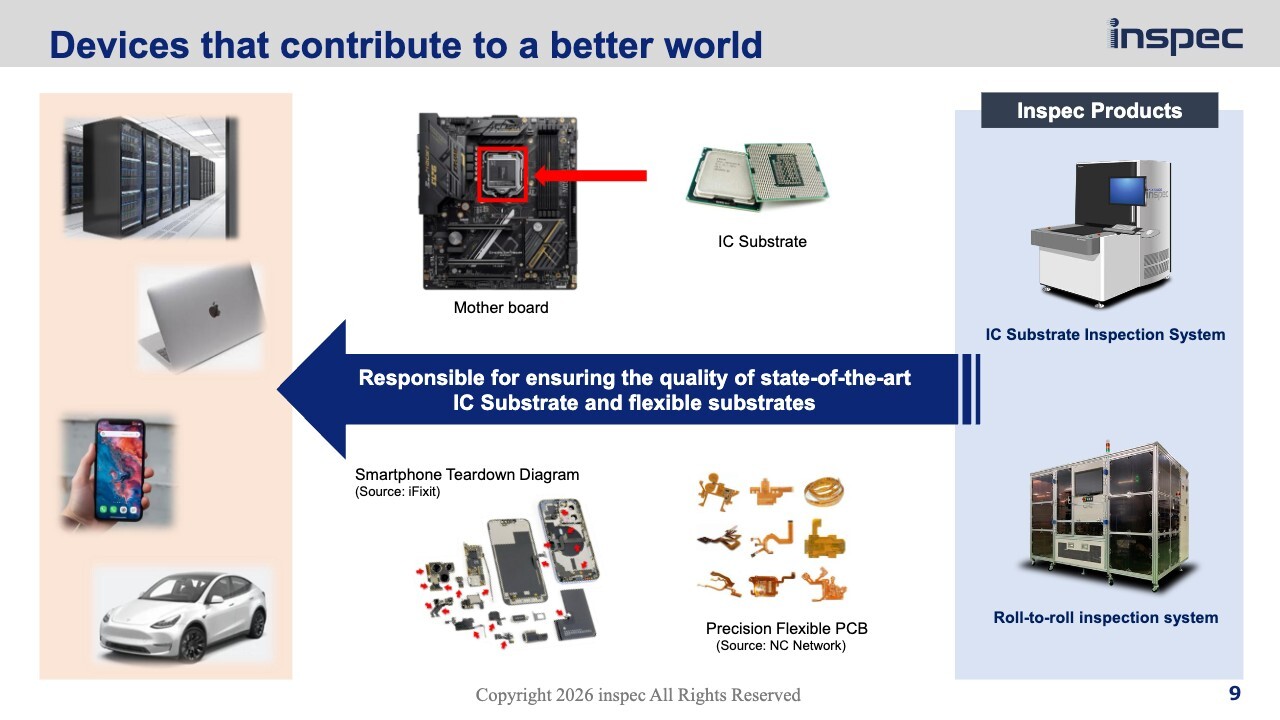
Sugawara: In this way, Inspec contributes to a broad range of applications, including personal computers, data centers, servers, and other computers, as well as smartphones and automobiles. More recently, demand has also been growing for substrates used in communication satellites that support data transmission. We expect this market to continue expanding going forward.
Next, Sato, Executive Officer and Manager of the Administrative Department, will walk you through our financial highlights for the fiscal year ended April 2026.
Financial Highlights for the Fiscal Year Ended April 2026
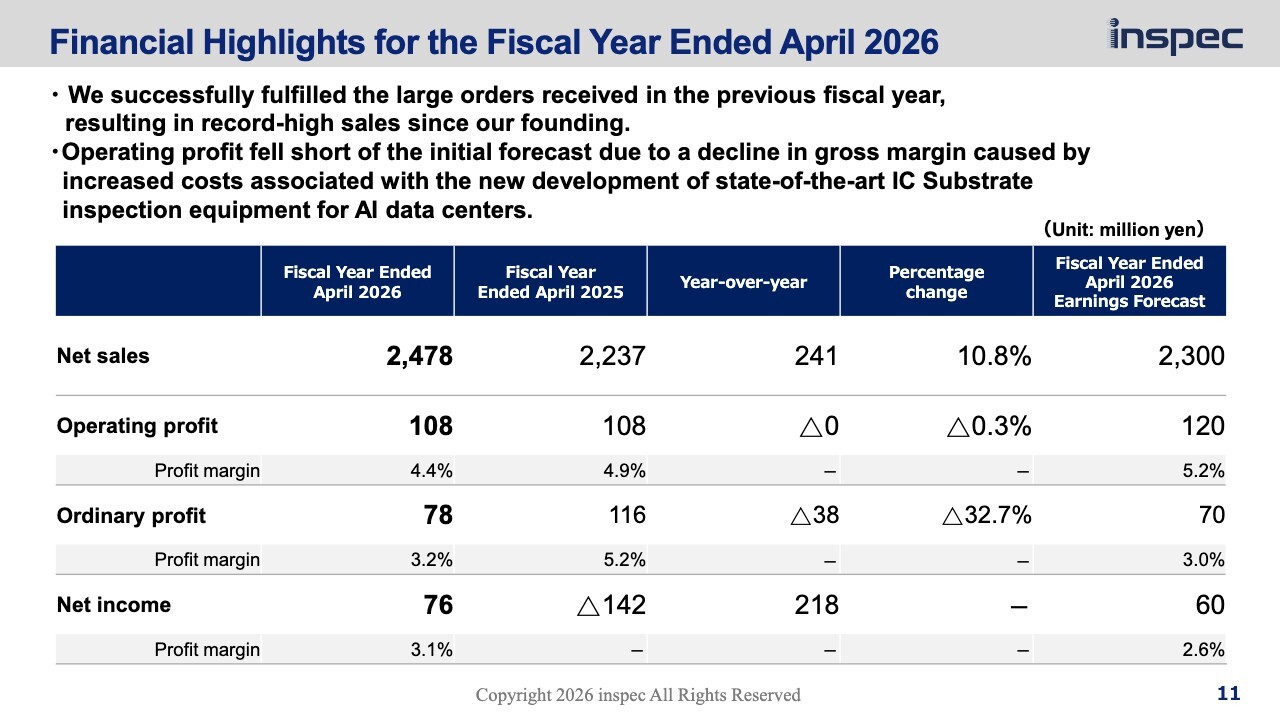
Mr. Tamotsu Sato (hereafter, Sato): I am Tamotsu Sato, Executive Officer and Manager of the Administrative Department. As Part 2, I will now walk you through our financial highlights for the fiscal year ended April 2026.
First, let me highlight our financial results. There are two key takeaways from the current fiscal year. First, we achieved record-high net sales. By successfully fulfilling the large orders we received in the previous fiscal year, we delivered strong top-line growth.
The second key takeaway is that profitability fell short of our plan due to the burden of new product development. In particular, we stepped up development of state-of-the-art IC substrate inspection equipment, which resulted in profit margins below our original expectations. Importantly, this weaker profitability did not stem from a decline in demand. Rather, it reflects upfront investments in future growth areas.
Accordingly, we view the current fiscal year as one in which we achieved solid sales growth while accelerating development efforts aimed at future revenue opportunities. In the following sections, I will explain the factors behind these results, focusing on orders, product mix, and research and development activities.
Progress of the Mid-Term Management Plan
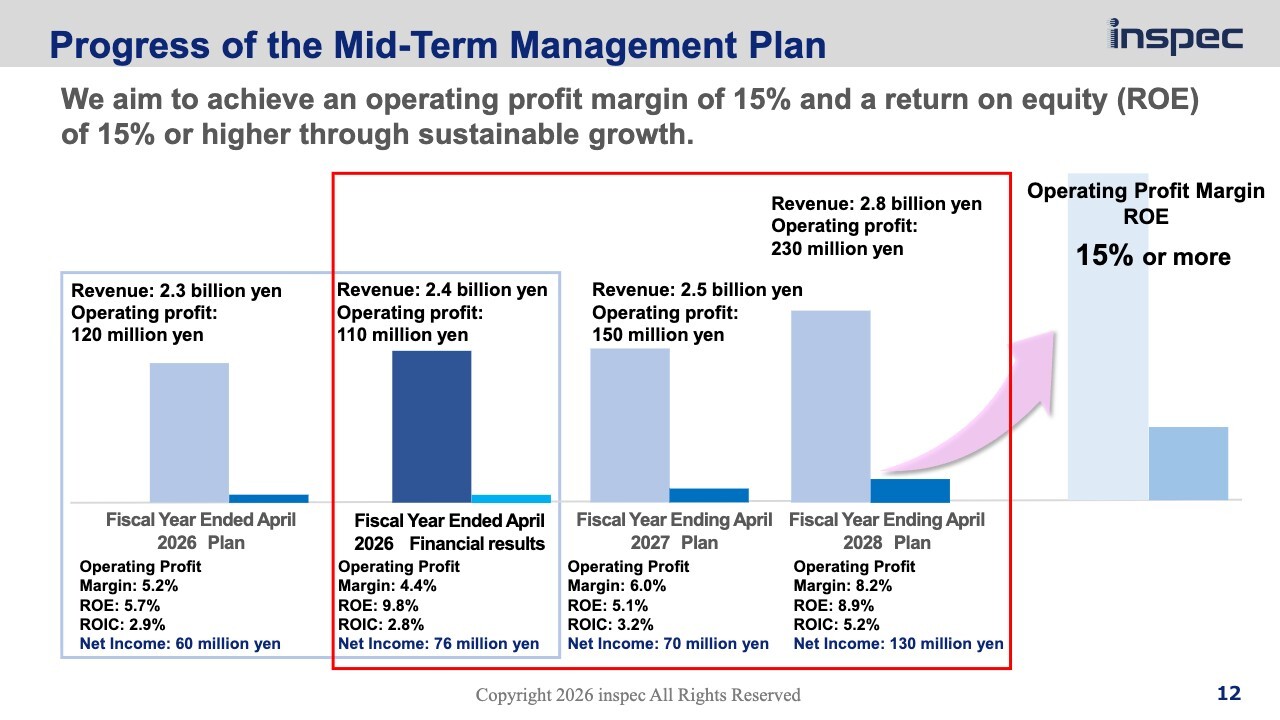
Sato: Next, let me discuss the progress of the Mid-Term Management Plan. Under our initial plan for the fiscal year ended April 2026, we targeted revenue of 2.3 billion yen, operating profit of 120 million yen, operating profit margin of 5.2%, ROE of 5.7%, ROIC of 2.9%, and net income of 60 million yen.
Against these targets, we delivered revenue of 2.4 billion yen, operating profit of 110 million yen, operating profit margin of 4.4%, ROE of 9.8%, ROIC of 2.8%, and net income of 76 million yen in the fiscal year ended April 2026.
The main factors affecting our performance in the current fiscal year were strong sales growth driven by the steady execution of projects, offset by lower profitability due to upfront development costs and changes in product mix.
Under the Mid-Term Management Plan we formulated in the previous fiscal year, we target revenue of 2.5 billion yen and operating profit of 150 million yen for fiscal year ending April 2027, the second year of the plan. These targets are unchanged from the figures we announced in our financial results on June 12.
For the fiscal year ending April 2028, the third year of the plan, we target revenue of 2.8 billion yen and operating profit of 230 million yen. Looking further ahead, we aim to achieve an operating profit margin of 15% or higher and an ROE of 15% or higher through sustainable growth.
Although profitability remained a challenge in the current fiscal year, we remain committed to our growth objectives. Going forward, we will drive sales growth while steadily restoring and improving profit margins.
Trends in Orders Received and Sales
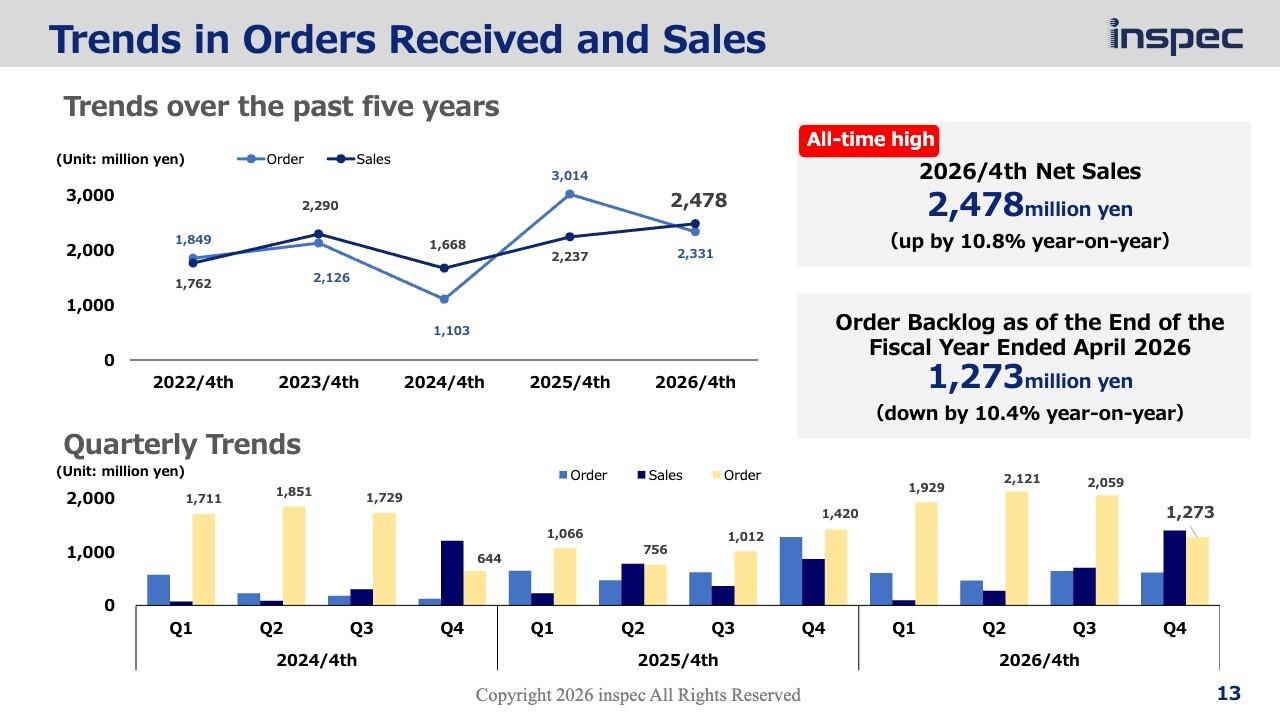
Sato: Turning to trends in orders received and sales, net sales rose 10.8% year on year to an all-time high record of 2,478 million yen in the fiscal year ended April 2026. In contrast, order backlog declined 10.4% year on year to 1,273 million yen.
Looking at trends over the past five years, orders received peaked at 3,014 million yen in the fiscal year ended April 2025 and totaled 2,331 million yen in the fiscal year ended April 2026. At the same time, net sales increased from 2,237 million yen to 2,478 million yen. This reflects the steady execution of previously secured orders and their conversion into net sales.
In quarterly trends, net sales are typically weighted toward the fourth quarter. This is due both to the project-based nature of our business, where revenue depends on acceptance timing, and to seasonality, as many customers have March fiscal year-ends and therefore complete investments and product acceptance during our fourth quarter.
Therefore, it is important to look not only at quarterly fluctuations but also at order backlog and progress of full-year sales.
Revenue by Product
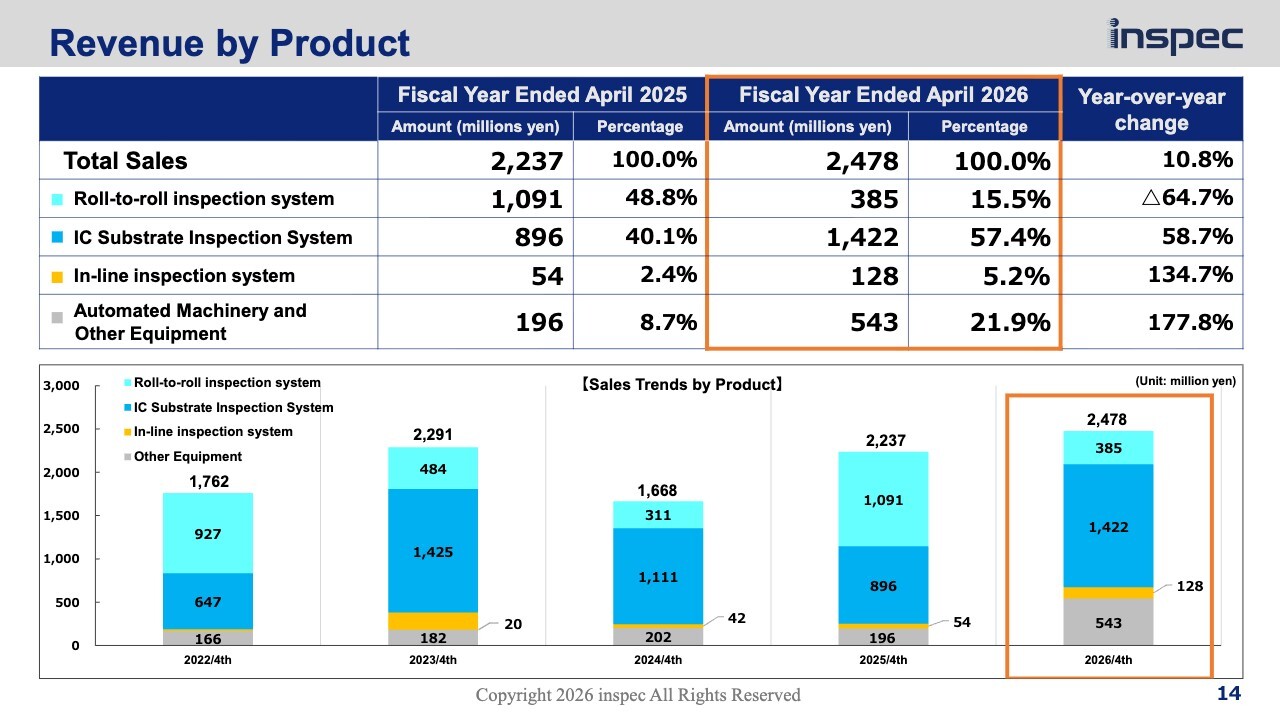
Sato: I will now discuss revenue by product. Looking at revenue by product, IC substrate inspection systems delivered the strongest growth. Sales rose from 896 million yen to 1,422 million yen, an increase of 58.7% year on year. Their percentage expanded from 40.1% to 57.4%, driving overall revenue growth during the current fiscal year.
By contrast, roll-to-roll inspection systems recorded lower sales, declining from 1,091 million yen to 385 million yen, a decrease of 64.7% year on year. As a result, their percentage dropped from 48.8% to 15.5%.
In-line inspection systems delivered strong growth, with sales increasing from 54 million yen to 128 million yen, up 134.7% year on year. Automated machinery and other equipment also performed well, with sales rising from 196 million yen to 543 million yen, representing growth of 177.8% year on year.
A key feature of the current fiscal year is that, compared with the previous fiscal year, our sales mix shifted from roll-to-roll inspection systems to IC substrate inspection systems. This clearly demonstrates that our core business is increasingly aligned with the faster-growing IC substrate market, as reflected in our product mix.
Statement of Cash Flows
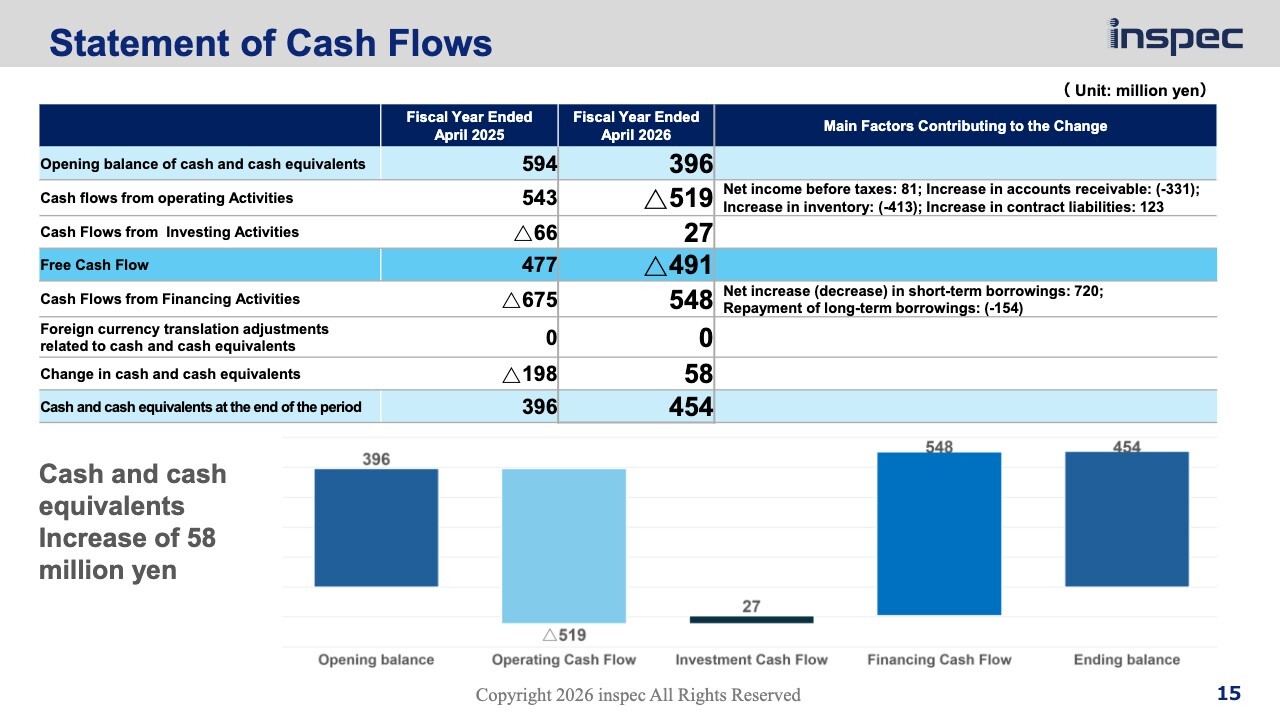
Sato: Turning to statement of cash flows, cash and cash equivalents increased by 58 million yen year on year. Operating cash flow was negative 519 million yen, reflecting increased working capital to support business expansion. We secured the necessary funding through financing cash flow.
While free cash flow is temporarily negative, this is mainly the result of upfront investments and higher working capital requirements associated with business expansion. Looking ahead, we expect these investments to improve cash generation over the medium term.
Research and Development Expenses
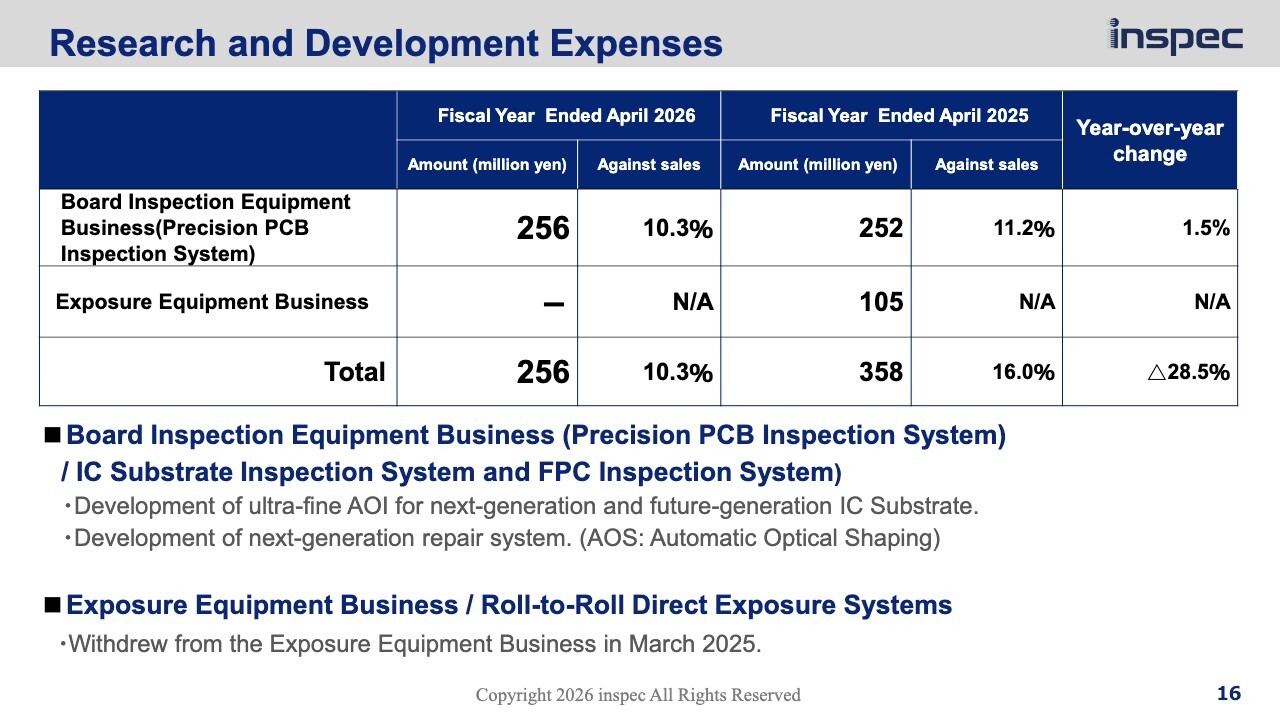
Sato: Next, let me discuss research and development expenses. Research and development expenses in our board inspection equipment business totaled 256 million yen in the fiscal year ended April 2026, representing 10.3% against sales. In the previous fiscal year, research and development expenses were 252 million yen, or 11.2% against sales. On an amount basis, research and development expenses increased 1.5% year on year.
The exposure equipment business incurred 105 million yen in research and development expenses in the fiscal year ended April 2025. Following our withdrawal from the business in March 2025, we recorded no related research and development expenses in the fiscal year ended April 2026. Consequently, total research and development expenses decreased from 358 million yen to 256 million yen, a decline of 28.5% year on year.
Our key research and development priorities are the development of ultra-fine AOI for next-generation and future-generation IC substrate, as well as the development of next-generation repair system, AOS (Automatic Optical Shaping).
This does not mean that we have reduced our commitment to research and development investments. Rather, we have restructured our business portfolio and concentrated our research and development investments on the high-growth market for precision PCB inspection systems.
This concludes my presentation on the financial highlights for the fiscal year ended April 2026. Next, Sugawara, Director, will discuss Part 3, Future Growth Strategy.
Understanding the External and Business Environments
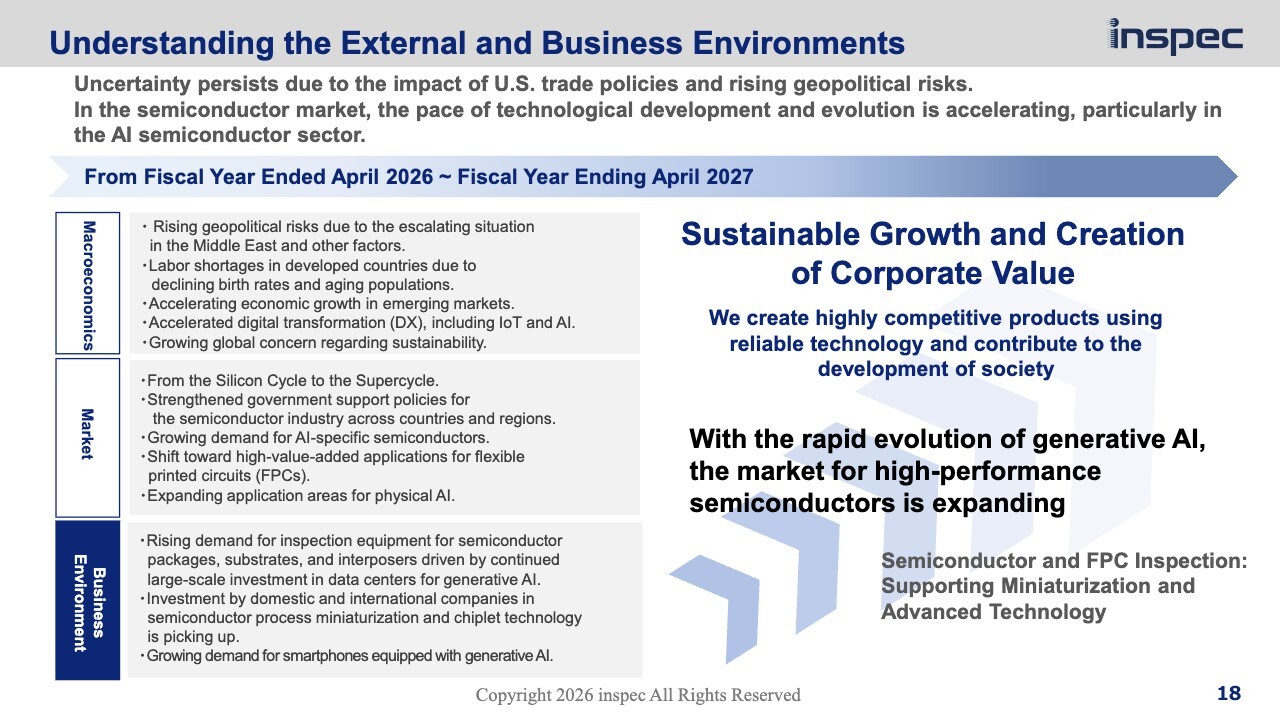
Sugawara: I will now discuss our growth strategy. First, I would like to discuss the external environment surrounding our business and the markets in which we operate. Uncertainty persists due to the impact of U.S. trade policies and the Middle East problem.
At the same time, technological innovation is accelerating across the semiconductor market and its surrounding markets, particularly in the AI semiconductor sector, and the markets continue to expand. As a company operating in these rapidly growing markets, we are working every day to advance our technologies, to capture this opportunity and strengthen our leadership position in the industry.
Business Environment
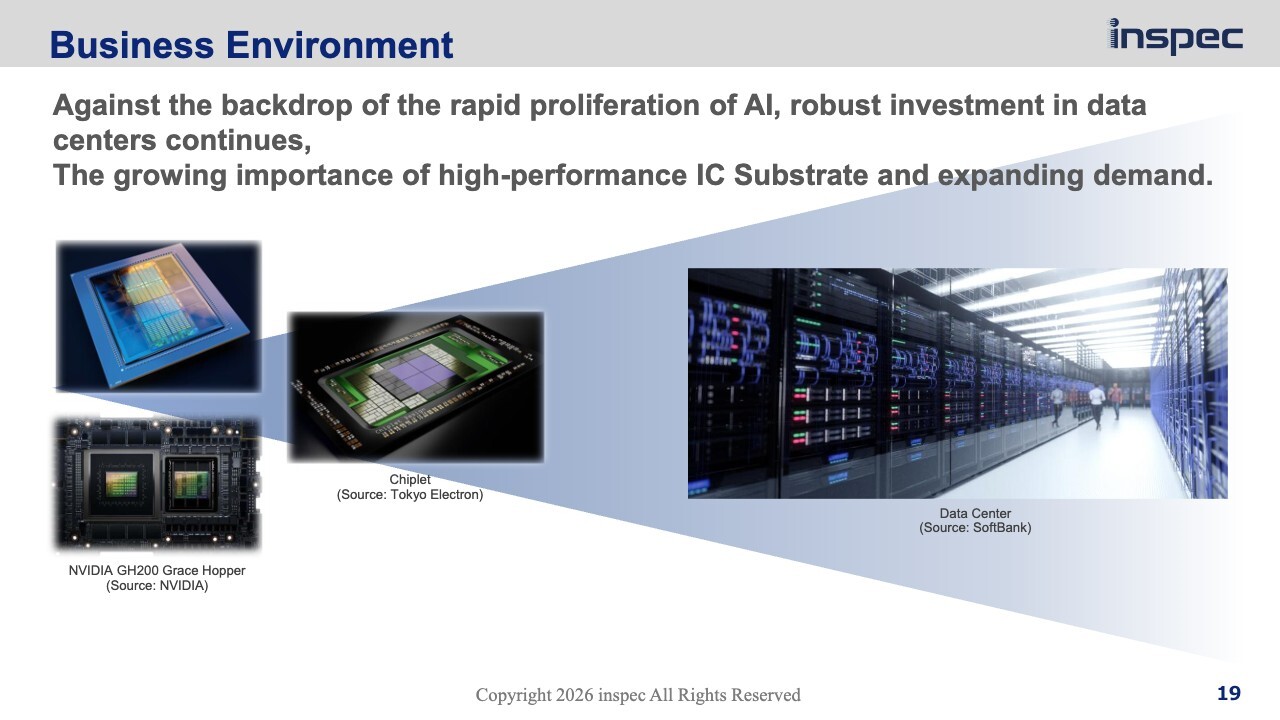
Sugawara: The image on the left shows one of the latest processors. While processors were traditionally categorized as CPUs, GPUs, or SoCs, this is referred to as a superchip, specifically for AI supercomputers.
The Acceleration of Chipletization
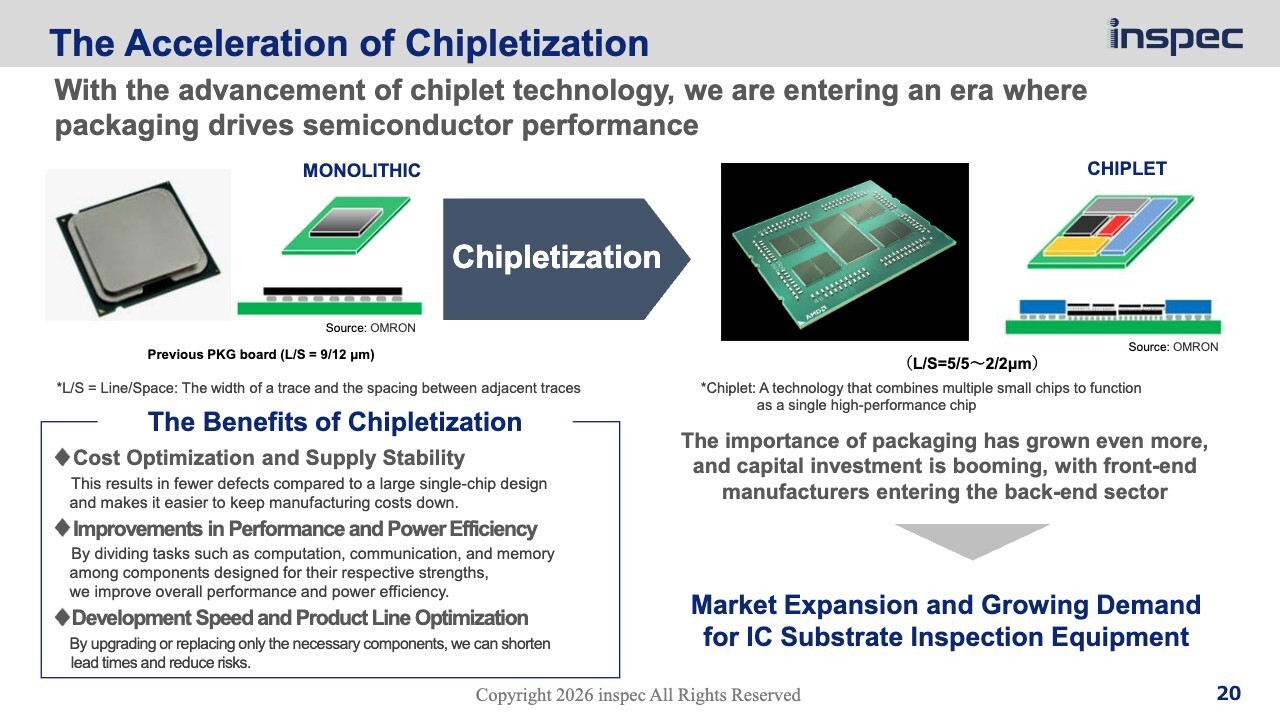
Sugawara: These state-of-the-art, high-end IC substrates incorporate a technology known as chiplets.
Traditionally, processors used a monolithic architecture, with the CPU, GPU, memory, and other functions integrated into a single chip. Chiplet technology combines multiple chips, each designed for a specific function, within a single substrate.
To increase data transfer speeds between chips and ensure a stable power supply, more advanced and complex circuit designs are required. This also makes inspection substantially more difficult.
Business Strategy – Precision PCB Inspection System
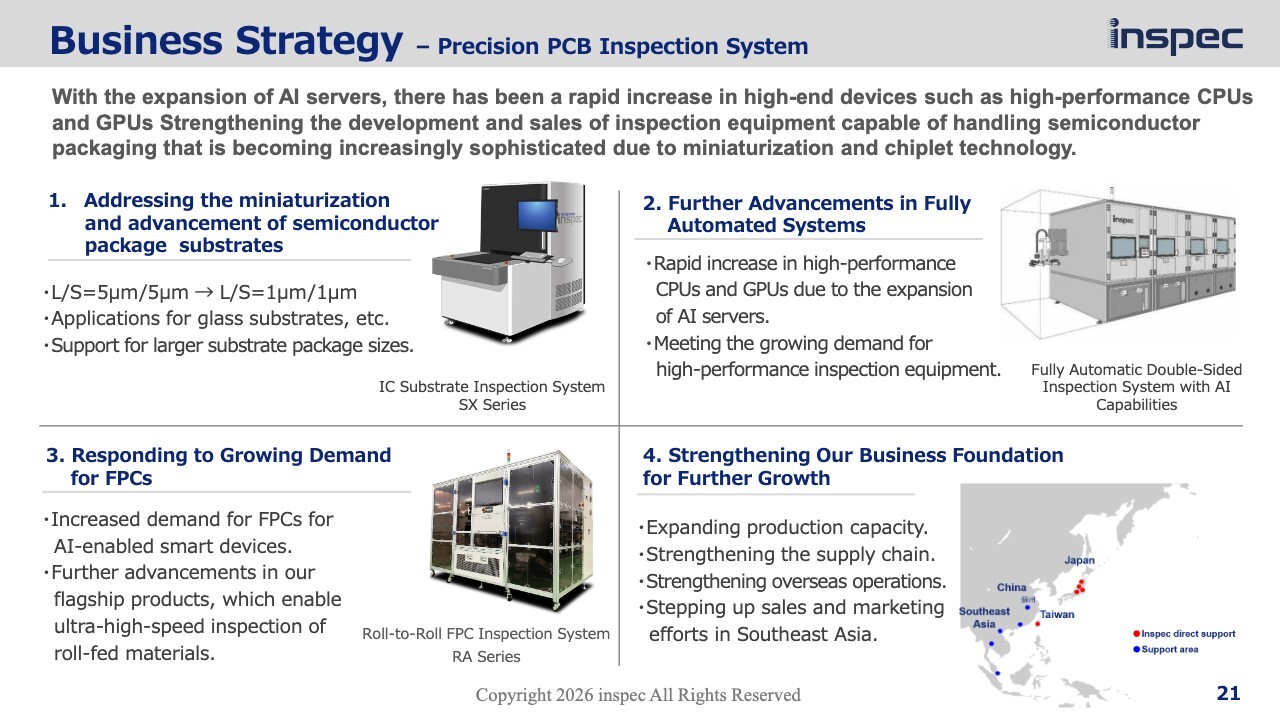
Sugawara: The product that plays a key role in these high-end IC substrates is our flagship SX5000 Series. For mass production, demand is also expanding for fully automatic inspection systems that integrate the SX Series with verify products equipped with an AI-based defect detection function.
While current market attention is focused on AI and semiconductors, our roll-to-roll inspection systems for FPCs remain another key pillar of the business. We continue to receive stable orders for these systems, while steadily advancing the technology through ongoing innovation.
With respect to our business foundation, we plan to strengthen our supply chain and support system in anticipation of a higher proportion of overseas sales.
Business Strategy – Precision PCB Inspection System
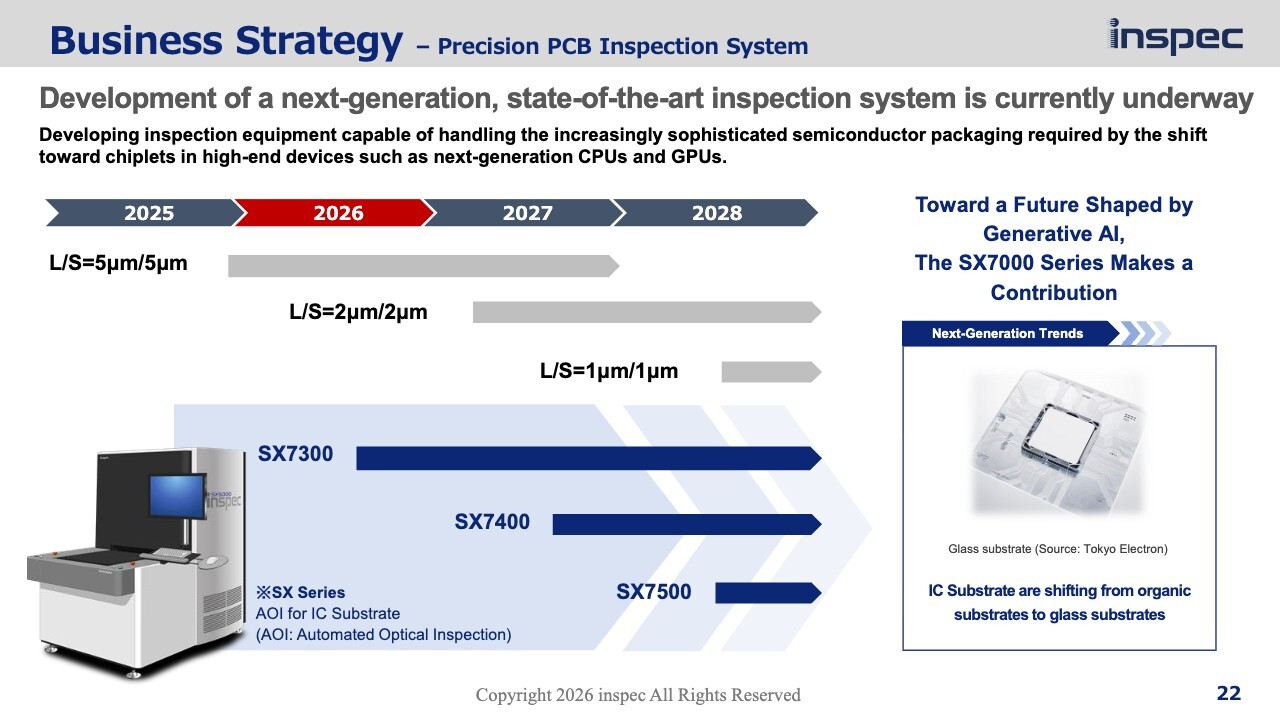
Sugawara: The width of circuit lines and the spacing between them on a printed circuit board are commonly expressed as line-and-space, or L/S. In the high-end market, mass production at L/S = 5/5 microns has already begun. At the same time, development is progressing toward next-generation and future-generation technologies based on L/S = 2/2 microns and even L/S = 1/1 micron.
We launched the SX7000 Series in July last year as our inspection systems for future IC substrates. We are currently conducting evaluations with high-end users both in Japan and overseas. We are also seeing growing demand for through-glass via (TGV) inspection for glass-core substrates, a promising future technology, and are evaluating customer samples in this area.
Business Strategy – Precision PCB Inspection System
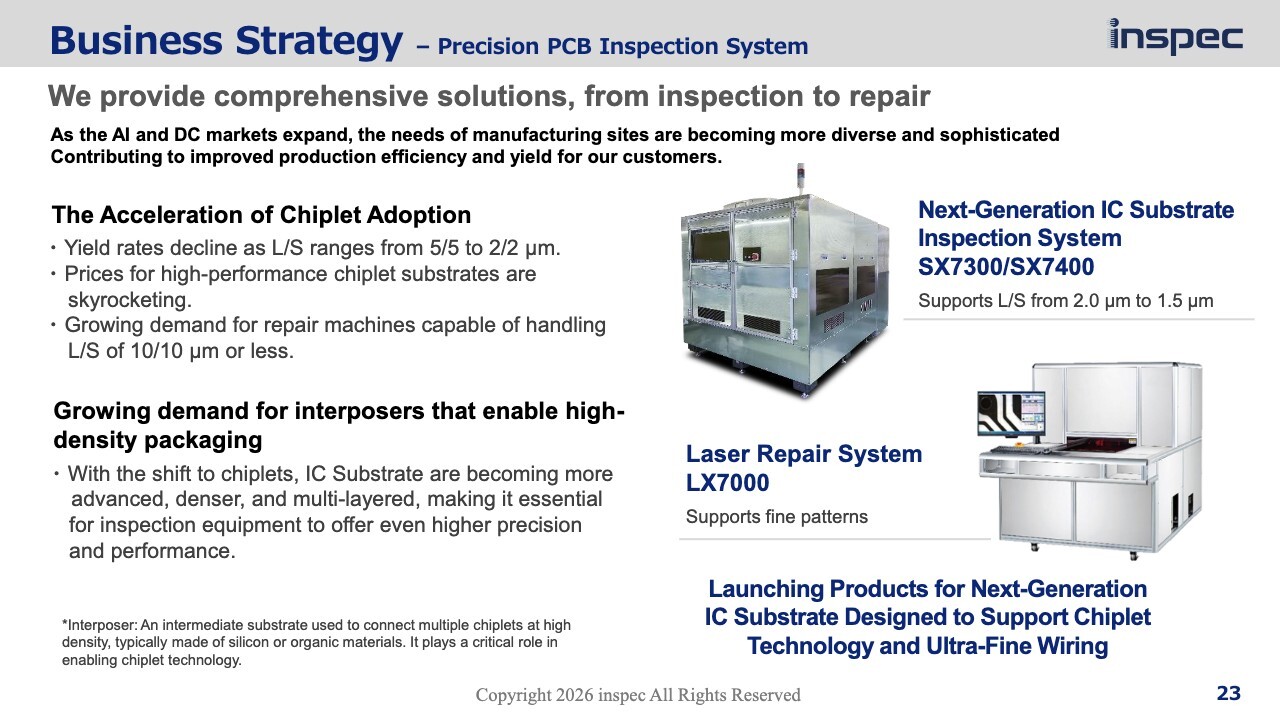
Sugawara: Let me now discuss our repair systems. As I mentioned earlier, as IC substrates adopt chiplet technology and deliver higher performance, substrate sizes continue to increase. CPUs that were once about half the size of a business card are now approaching postcard size, and some have become even larger.
This means that, IC substrates are generally mass-produced by panelizing multiple substrates on large panels measuring approximately 50 to 60 centimeters square. As individual substrate sizes increase, fewer substrates can be produced from a single panel.
In addition, as circuit patterns become finer and more complex, defect rates increase and yields decline. As a result, the cost of each substrate rises. In the past, small CPUs were relatively inexpensive, and defective units were simply discarded. Today, however, some advanced substrates cost tens of thousands to hundreds of thousands of yen per unit, making it far more difficult to scrap defective units.
As a result, demand is increasing for solutions that repair defects and recover product value rather than scrapping defective units. We are also seeing growing interest from customers who want to purchase inspection systems and repair systems as an integrated solution.
Strengthening Sales and Support Systems
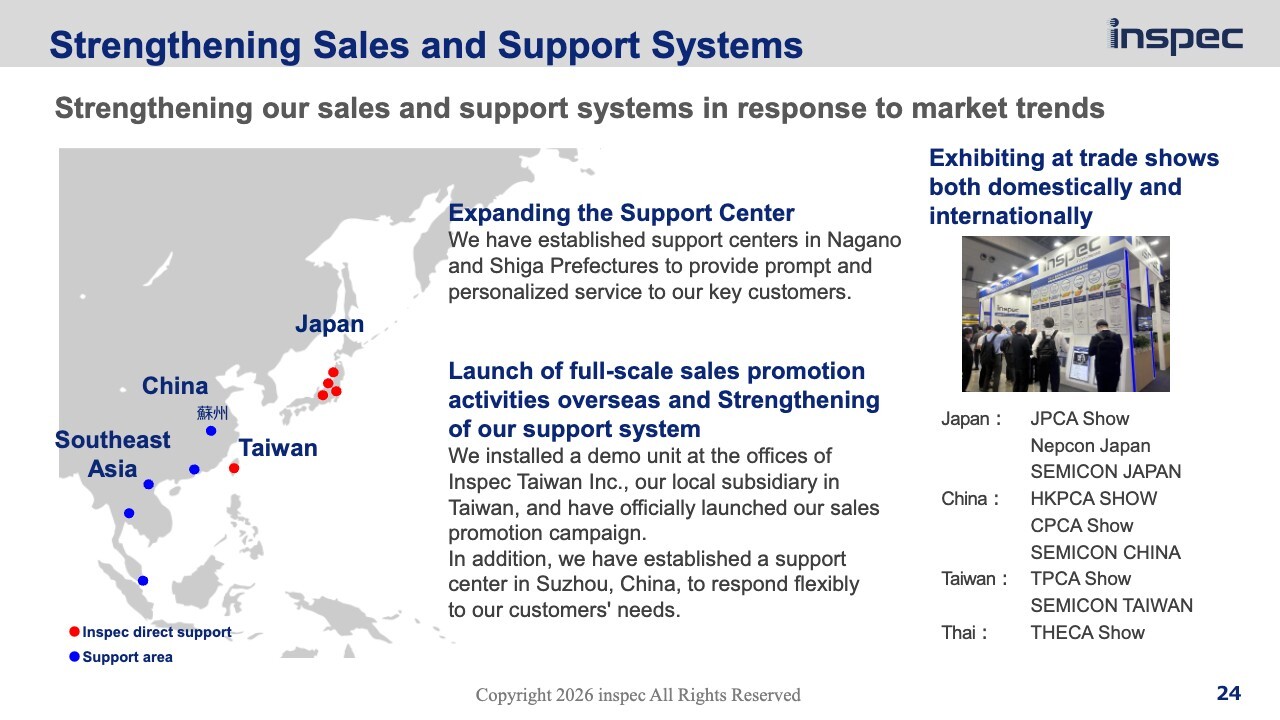
Sugawara: In recent years, shipments of IC substrate inspection systems have been concentrated in the domestic market. Going forward, as overseas markets continue to expand, we will strengthen our sales and after-sales service capabilities in collaboration with our distributors.
Full-Year Financial Forecast for the Fiscal Year Ending April 2027
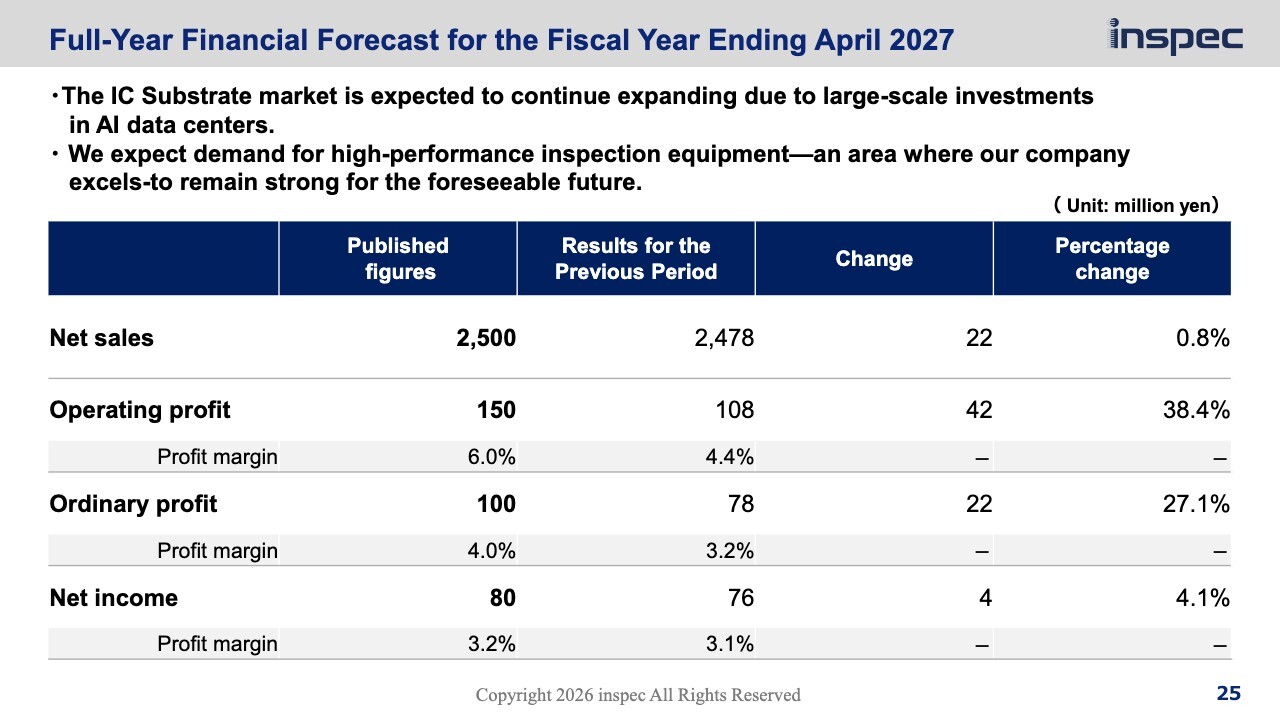
Sugawara: Let me now discuss our financial forecast for the fiscal year ending April 2027. This fiscal year marks the second year of the Mid-Term Management Plan, and our forecast is based on the targets set in that plan. We project net sales of 2,500 million yen, operating profit of 150 million yen, ordinary profit of 100 million yen, and net income of 80 million yen.
Investment in AI data centers remains robust, and the IC substrate market continues to expand. We also expect demand for high-end inspection systems, an area where our company excels, to remain strong going forward.
Human Resources Strategy
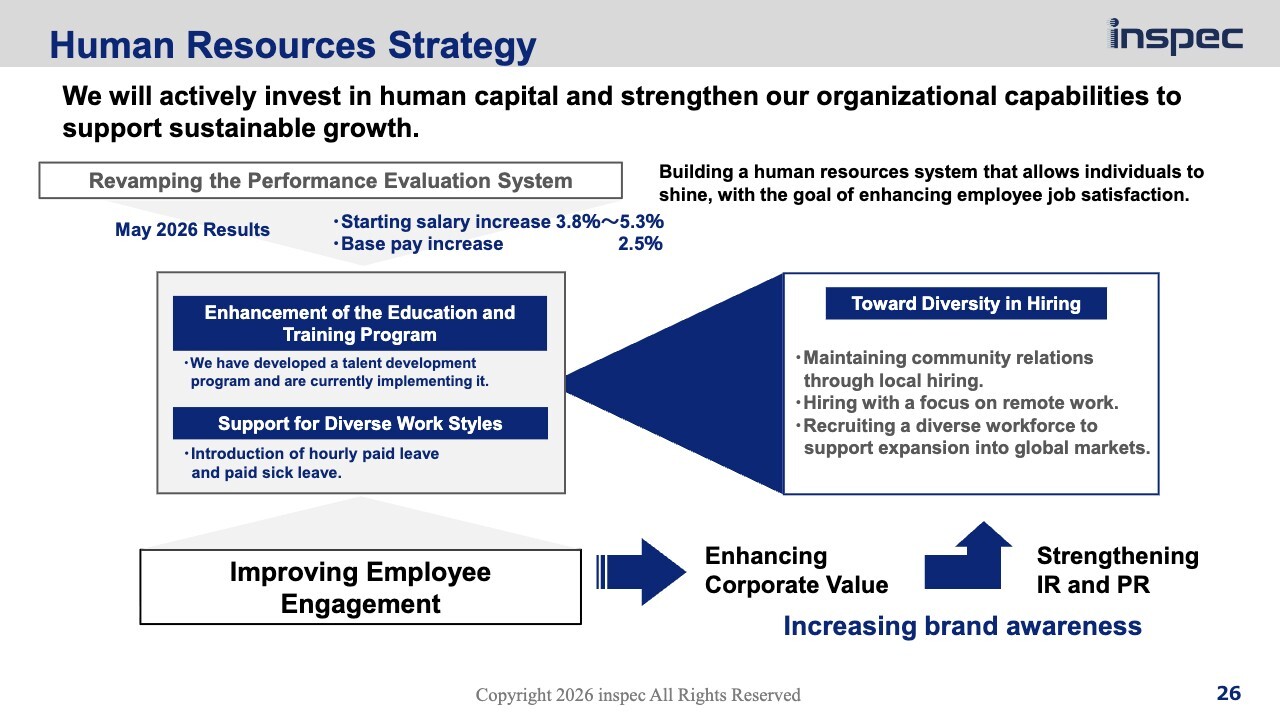
Sugawara: Let me now discuss our human resources strategy. We believe our people are the driving force behind our future growth. Under one of our values, Learning and Growth, we provide more than 50 hours of employee training annually. At the same time, we are pursuing talent acquisition aggressively through multiple recruiting initiatives.
In addition, we have implemented annual base pay increases since 2024 and raised base pay by 2.5% in the current fiscal year. At the same time, we also increased starting salaries. By creating an environment where every employee can work with pride and a sense of purpose, we aim to enhance our corporate value.
Human Resources Strategy
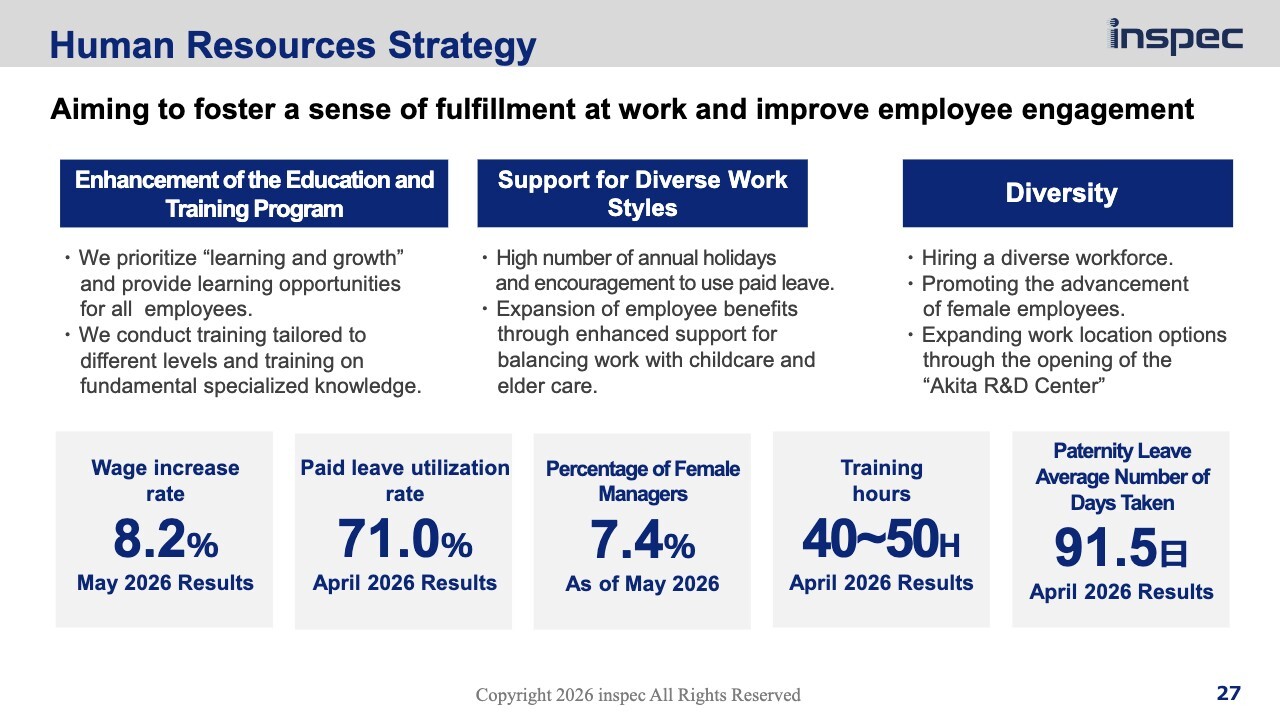
Sugawara: The slide highlights our key initiatives and the results they have delivered. We have introduced a range of programs designed to support our employees both professionally and personally, and the effectiveness of these efforts is clearly reflected in these metrics.
Measures to achieve management practices that take into account the cost of capital and stock prices
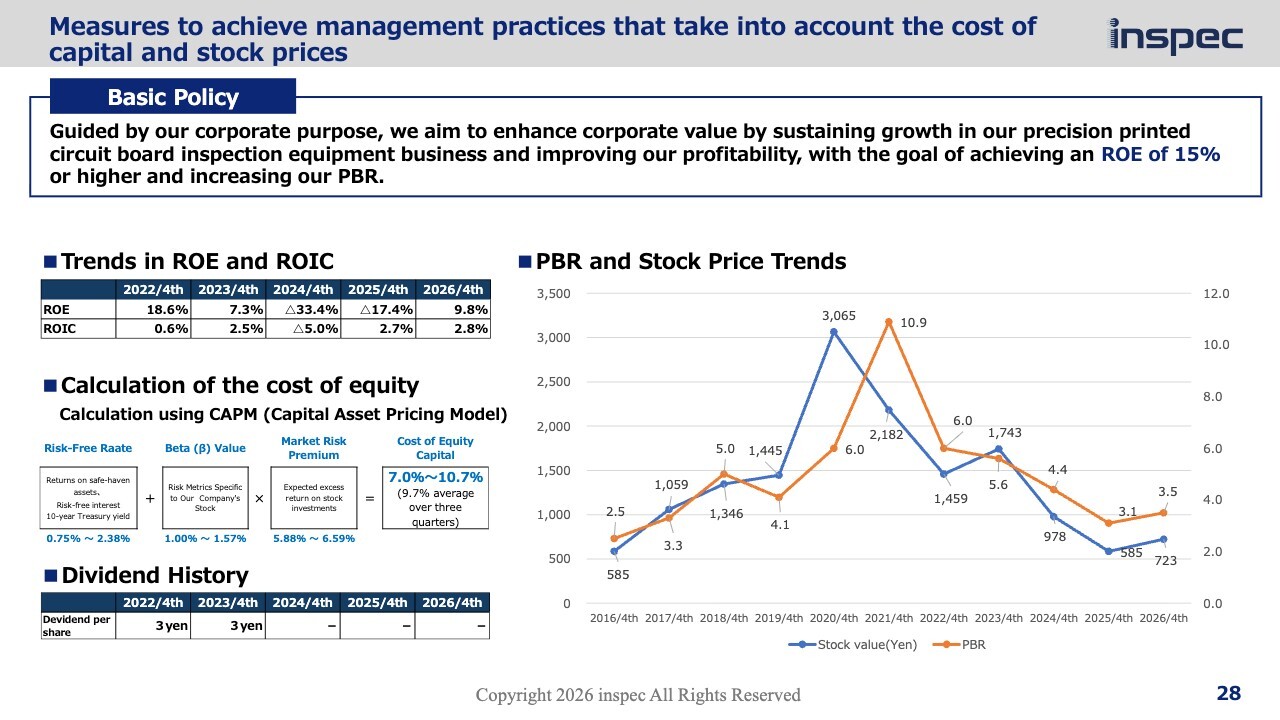
Sugawara: Finally, I would like to discuss our management practices that take into account the cost of capital and stock prices. Guided by our corporate purpose, we are committed to maximizing corporate value through the sustainable growth of our precision printed circuit board inspection equipment business and the strengthening of our profitability.
Looking at the PBR and stock price trends, you can see that, while market conditions have influenced performance, our profitability and growth prospects have also been reflected in our valuation.
With respect to shareholder returns, our policy is to maintain an optimal balance between stable dividends and growth investments. However, based on the current fiscal year’s results, we concluded that we had not yet secured sufficient distributable earnings to pay a dividend.
We believe that giving priority to strengthening our financial foundation is essential to delivering stable shareholder returns on a sustained basis. Accordingly, we have decided to forgo the payment of a dividend for the current fiscal year.
Going forward, we will ensure management that explicitly takes into account the cost of capital and strive to earn an appropriate market valuation by balancing capital efficiency with sustainable growth.
This concludes our presentation on Inspec Inc.’s earnings presentation for the fiscal year ended April 2026. Thank you for your attention.
Q&A: Demand for IC Substrate Inspection Systems
MS. Saori Arai (hereafter, Arai): The question is: “Regarding demand for AI semiconductors, high-performance CPUs and GPUs, and chiplet-related applications, could you comment on whether current orders and customer inquiries are evolving from one-off projects into broader, recurring opportunities across multiple customers and production lines? To the extent you can comment, could you share your view?”
Sugawara: These IC substrates are produced by multiple manufacturers in Japan and overseas, and we are already seeing strong interest from customers across the industry. We expect the AI semiconductor market to continue growing, and we believe customer inquiries for our inspection systems will remain robust.
Q&A: Outlook for the SX7000 Series
Arai: The question is: “Regarding the SX7000 Series, could you provide an update on the development of systems supporting L/S = 2/2 microns and L/S = 1/1 micron, customer evaluations, the progress of qualification for mass production, and the expected timing of revenue contributions?”
Sugawara: We launched the SX7000 Series in July last year. It targets IC substrates with L/S = 2/2 microns and L/S = 1/1 micron, which represent next-generation and future-generation technologies.
We expect these products to enter mass production and reach the market in the second half of 2027 or around 2028. At present, our customers are still in the research and development phase, and they are first evaluating the SX7000 Series for research and development applications.
Q&A: Competitive Advantages
Arai: The question is: “What differentiates your inspection systems from those of overseas competitors? Specifically, could you discuss your competitive strengths in inspection accuracy, inspection speed, false detection rates, AI-based image processing, customization, pricing, and after-sales service?”
Sugawara: From the outset, we have focused our business on IC substrates, the most high-end segment of the printed circuit board (PCB) market. Although this market has historically been smaller than the broader PCB market, it is also one of the most technically demanding in terms of inspection.
We have remained focused on this market and consistently pursued a one-of-a-kind strategy. Today, as advances in AI semiconductors continue to drive market expansion, the opportunity is growing. At the same time, however, competing equipment manufacturers are steadily strengthening their capabilities.
Against this backdrop, we have built strong in-house expertise in automation and mechatronics technologies, drawing on our heritage as an automated machinery manufacturer.
As a result, when customers ask us to develop a system tailored to their specific requirements, we can handle the entire process in-house, whereas many competitors rely on outsourcing for parts of the work. This ability to deliver fully customized solutions is one of our key competitive strengths.
Another key strength is our customer support. We provide comprehensive after-sales service, which has earned us strong customer recognition both in Japan and overseas. This is an area where overseas competitors are often viewed as less competitive, making it another important point of differentiation for us.
Arai: Developing everything in-house also gives you advantages in both development speed and cost efficiency.
Sugawara: That’s correct.
Q&A: Hardware and Software Enhancements
Arai: The question is: “Some of your inspection systems highlight labor savings through automated defect screening. Looking ahead, where do you see the greater growth opportunity: expanding hardware sales or increasing the value added by your software?”
Sugawara: One of Inspec’s key strengths is that we develop both our hardware and software in-house and possess expertise in both technologies. Rather than prioritizing one over the other, we intend to strengthen both in parallel.
Hardware continues to evolve, and software is advancing rapidly with the emergence of generative AI. By effectively integrating market trends and technology, we aim to maintain our leadership in the industry.
Arai: So, rather than focusing on one over the other, your strategy is to grow both.
Sugawara: That’s correct.
Q&A: Strategic Focus Areas
Arai: The question is: “With generative AI driving further semiconductor miniaturization, which area do you expect to be your primary growth driver going forward: IC substrates or FPCs?”
Sugawara: As I mentioned earlier, the semiconductor industry is currently experiencing strong growth, and our performance for the fiscal year ended April 2026 reflected that trend. At the same time, the FPC market continues to grow steadily.
Accordingly, while the balance between the two businesses may shift over time, our strategy is not to focus on one at the expense of the other. Instead, we will continue to strengthen both as our two core growth pillars.
Q&A: Our Akita Bases
Arai: The question is: “Could you explain why Inspec has remained committed to Akita Prefecture as its founding base? Specifically, could you discuss the advantages in terms of costs, talent, industry-academia collaboration, and customer support?”
Sugawara: Inspec was founded in rural Akita and has grown there ever since. In the 1980s, when we started as a subcontractor to major manufacturers, our location likely posed a significant disadvantage, and that is certainly what we have been told by those who were there at the time.
Today, however, Kakunodate is served by the Shinkansen, and our site is only about a 40-minute drive from the airport. As a result, we see very few geographic disadvantages today. On the contrary, we believe that manufacturing highly precise equipment in the clean environment of rural area is a real advantage.
In addition, our sales and customer support operations are fully supported through our office in Tokyo and our support centers in Nagano and Shiga.
Arai: It is also clear from what you shared earlier about your commitment to employee well-being that you provide an excellent working environment.
Q&A: Strengthening Equipment Installation Support
Arai: The question is: “To reduce the implementation time and operational burden that can become barriers to adopting your equipment, what enhancements do you plan to make to your installation support and customer support framework?”
Sugawara: The world is currently facing a range of uncertainties and challenges. These have led to higher component costs and longer lead times. In addition, tight semiconductor memory supply has pushed up the cost of computer-related components.
We discuss these challenges with our customers and negotiate price adjustments and delivery schedules. Some customers understand and accept these changes. However, particularly in overseas markets, some customers simply decide to source from another supplier.
To address these challenges, we believe it is essential to plan procurement well in advance and continue making every effort to deliver our products at the prices and delivery schedules our customers expect.
With respect to customer support, we are strengthening our overseas sales by working with local distributors. These distributors also have their own field engineers, and we are providing them with training to ensure they have a thorough understanding of our products.
Today, when we deliver products to overseas customers, Inspec engineers travel on-site to handle installation and provide after-sales support. Going forward, our goal is to enable our distributors’ field engineers to independently manage both installation and after-sales service in their local markets.
By enabling customers to receive support without requiring Inspec engineers to travel on-site, we expect to realize significant savings in both time and cost. We are steadily advancing the initiatives needed to achieve this.
Q&A: Strategy and Key Success Factors in the Taiwan Market
Arai: The question is: “As you expand your overseas business, which region is your highest priority for market entry, and what do you see as the key to winning in that market?”
Sugawara: Taiwan is our highest-priority market for overseas expansion. It is the world’s largest manufacturing base for semiconductors and also leads the world in the production of PCB, including IC substrates. Accordingly, we intend to further expand our presence in the Taiwan market.
In particular, Japan, Taiwan, and South Korea are the world’s primary manufacturing hubs for high-end IC substrates. For that reason, we intend to further accelerate our expansion in the Taiwan market.
Our winning strategy is to compete in Taiwan and other overseas markets by leveraging the SX7000 Series, which we introduced for next-generation and future-generation applications.
Arai: Taiwan is a highly competitive market. Do you have a strategy that is specifically tailored to winning in Taiwan?
Sugawara: There are two major competitors in the inspection equipment market, one based in South Korea and the other in the United States. Against this backdrop, we have a subsidiary in Taiwan, where I also serve as a representative.
We will strengthen our sales activities by working closely with leading trading companies in Taiwan while continuing to invest in training engineers in Taiwan. We also believe that the high level of customer support that distinguishes Japanese manufacturers from our Korean and U.S. competitors is a key competitive advantage. By leveraging this strength, we aim to become our customers’ supplier of choice.
Q&A: Current Domestic and Overseas Sales Mix and Future Outlook
Arai: The question is: “What is your current domestic-to-overseas sales mix, and do you expect the overseas share of total sales to increase going forward?”
Sugawara: In the fiscal year ended April 2026, our sales mix was approximately 90% domestic and 10% overseas. We expect the overseas contribution to increase steadily as the Taiwan and China markets continue to expand, as I mentioned earlier.
We also expect Southeast Asia to account for a larger share of our overseas business, as an increasing number of Japanese companies continue to expand their operations in the region.
Q&A: Initiatives to Stabilize Order Intake
Arai: The question is: “Capital investment by major customers can be cyclical. What initiatives are you pursuing to diversify across industries and monetize services to help stabilize order intake?”
Sugawara: We are fully committed to capturing every major capital investment opportunity from our key customers. At the same time, as you pointed out, we cannot expect to receive orders consistently every year.
To support these efforts, we participate in around 10 domestic and international trade shows each year, together with our distributors. Through these ongoing activities, we continue to strengthen our relationships with existing customers.
PCBs encompass a wide range of inspection applications. In addition to our core circuit pattern inspection business, our inspection systems can also be applied to material inspection, hole inspection, and many other applications. We have already secured customer adoption in these areas and are continuing to expand our sales activities.
By expanding our technologies into additional applications, we aim to further stabilize our business.
Arai: So, your core strengths allow you to compete successfully across a wide range of applications.
Sugawara: That’s exactly right.
Message from Mr. Sugawara
Sugawara: At Inspec, we operate in the fast-growing semiconductor market. While remaining firmly grounded, we will be fully committed to responding quickly to market trends and translating those opportunities into sustainable growth. We appreciate your continued support and look forward to your continued confidence in Inspec.
Thank you very much.
Additional Questions and Answers Received During the Presentation
We also received a number of questions on the day of the presentation that we were unable to address due to time constraints. We subsequently asked the Company to provide responses, which we would like to share with you below.
Question 1
Question: When customers evaluate your automated optical inspection systems against competing products, what do you believe is the single most important factor in their purchasing decision?
Answer: Today, there is no clear leader in terms of inspection performance or productivity, as each supplier has its own strengths and weaknesses. In the domestic market, customers generally base their decisions on a combination of proven performance, price, delivery time, and support. Overseas customers tend to prioritize price and delivery time above all else.
Question 2
Question: Could you tell us about your business in Taiwan?
Answer: In Taiwan, we have built a strong track record with leading PCB manufacturers and continue to actively expand our sales activities in collaboration with our distributors. In addition, Inspec Taiwan is a non-consolidated subsidiary dedicated to customer support, covering Taiwan, China, and Southeast Asia.
Question 3
Question: I have a question regarding the SX7400. In the exposure equipment business, customer evaluations and technology development progressed steadily. However, changes in market conditions ultimately prevented the business from reaching commercialization.
On the other hand, you mentioned that customer evaluations of the SX7400 are currently underway. Are these evaluations being conducted for production deployment, or are they still at the technology validation stage?
Also, compared with the former exposure equipment business, could you explain why you believe the SX7400 has a higher likelihood of successful commercialization?
Answer: The SX7400 is designed for products that are approximately two generations beyond those currently in mass production. As a result, customers are currently evaluating the system primarily for research and development applications.
Products with these specifications are expected to enter mass production around the second half of 2027. Another key difference from the former exposure equipment business is that exposure equipment was a new business in which we entered the market as a latecomer. In contrast, inspection systems are our core business, where we have built a strong track record over many years.
We also expect the semiconductor market to continue growing for the foreseeable future, giving us confidence in the market outlook.
Question 4
Question: Your roll-to-roll inspection systems appear to be underperforming. Since your major customers are smartphone manufacturers, and many have shifted their operations from Japan. You inevitably face disadvantages in product development, sales, and partnerships compared with local manufacturers in China and Taiwan. Are you considering exiting this business? If not, what strategies do you have to strengthen your competitive advantage?
Answer: We do not view our roll-to-roll inspection system business as underperforming. While sales were lower than in the previous fiscal year, demand for inspection systems for IC substrates increased. We therefore concentrated our resources on that business, enabling us to achieve record-high sales.
In addition, we do not supply our products directly to smartphone manufacturers. Instead, our customers are PCB manufacturers in Japan and overseas that supply flexible printed circuits for high-end smartphones. While this market is not growing as rapidly as the semiconductor market, it continues to expand. We therefore intend to continue strengthening both businesses as our two core growth pillars. Accordingly, we have no plans to exit this business.
In addition, customers in Japan and overseas recognize our roll-to-roll inspection systems for their superior inspection speed compared with competing products, which we believe is a key competitive advantage. Going forward, we will continue to build on this strength while enhancing our price competitiveness through supply chain optimization and cost reductions.