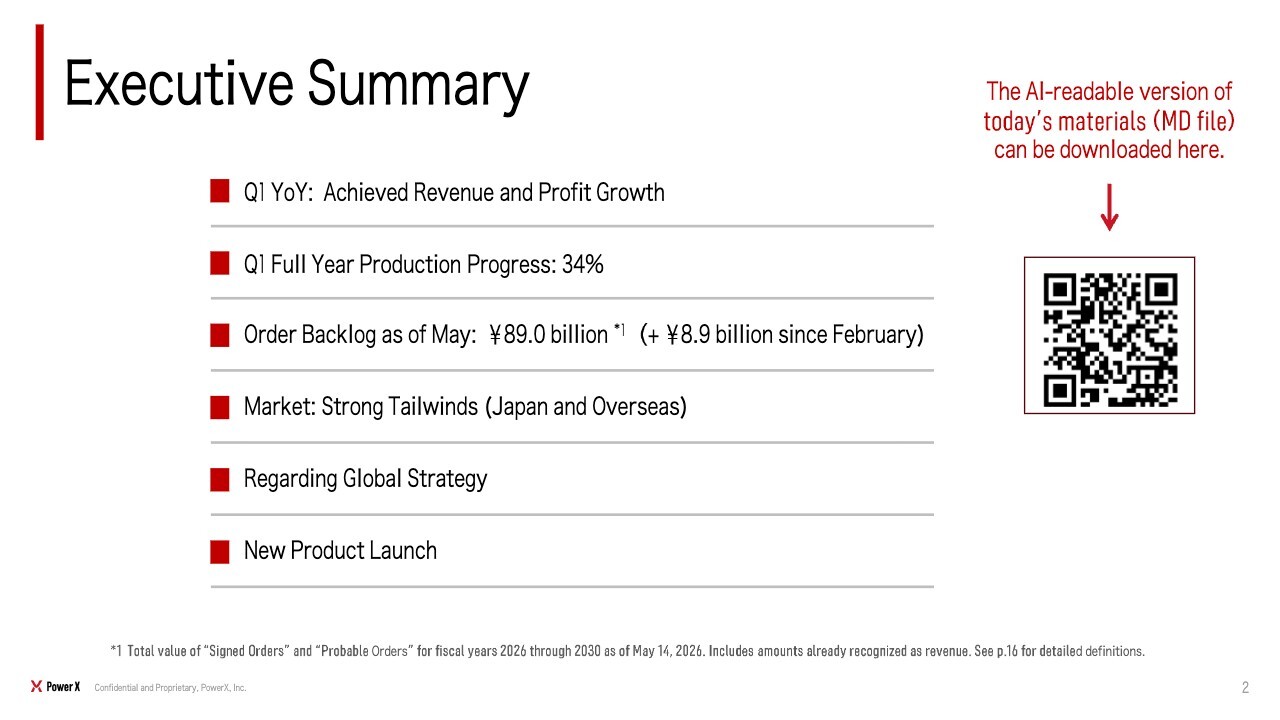
Executive Summary
Masahiro Ito (hereinafter, “Ito”): Hello. I am Masahiro Ito, Representative Director, President & CEO of PowerX, Inc. Thank you for joining us today for our financial results briefing for the first quarter of the fiscal year ending December 31, 2026 (“Q1 FY2026”).
Here is the executive summary. Our business is based on order-driven manufacturing: we receive orders, continue production at our factory, and deliver products sequentially. Seasonally, the first quarter is typically a period in which we build up production intensively. Even so, in the first quarter under review, we achieved year-on-year growth in both revenue and profit.
As a result of this production build-up, the production progress rate has reached 34% of our full-year revenue forecast. We operate strictly on a made-to-order basis, and all of these products are scheduled for delivery during this fiscal year. In addition, we have secured ¥8.9 billion in new orders since February, bringing our current order backlog to ¥89.0 billion.
As for the market environment, energy has been a hot topic recently, and we are seeing tailwinds both in Japan and overseas.
Last week, we entered into a partnership with Elektroprivreda Crne Gore AD Nikšić (hereinafter “EPCG”), the state-owned utility company of Montenegro. My presentation will provide the overview of this partnership and our overseas strategy.
I will also introduce a new product that we are very excited about and looking forward to.
After the previous briefing, we received feedback that the financial results materials were very long, voluminous, and difficult to read. In response, as a new initiative, we have made a Markdown, or MD, file available via the QR code shown on the slide.
If you download this MD file and provide it to an AI, it can be used as a Markdown file optimized for AI readability. This enables the AI to generate responses based on the content of the materials.
We created this specifically as an AI-friendly version of the financial results briefing materials, and we encourage you to give it a try.
FY2026 Q1> Consolidated Financial Summary
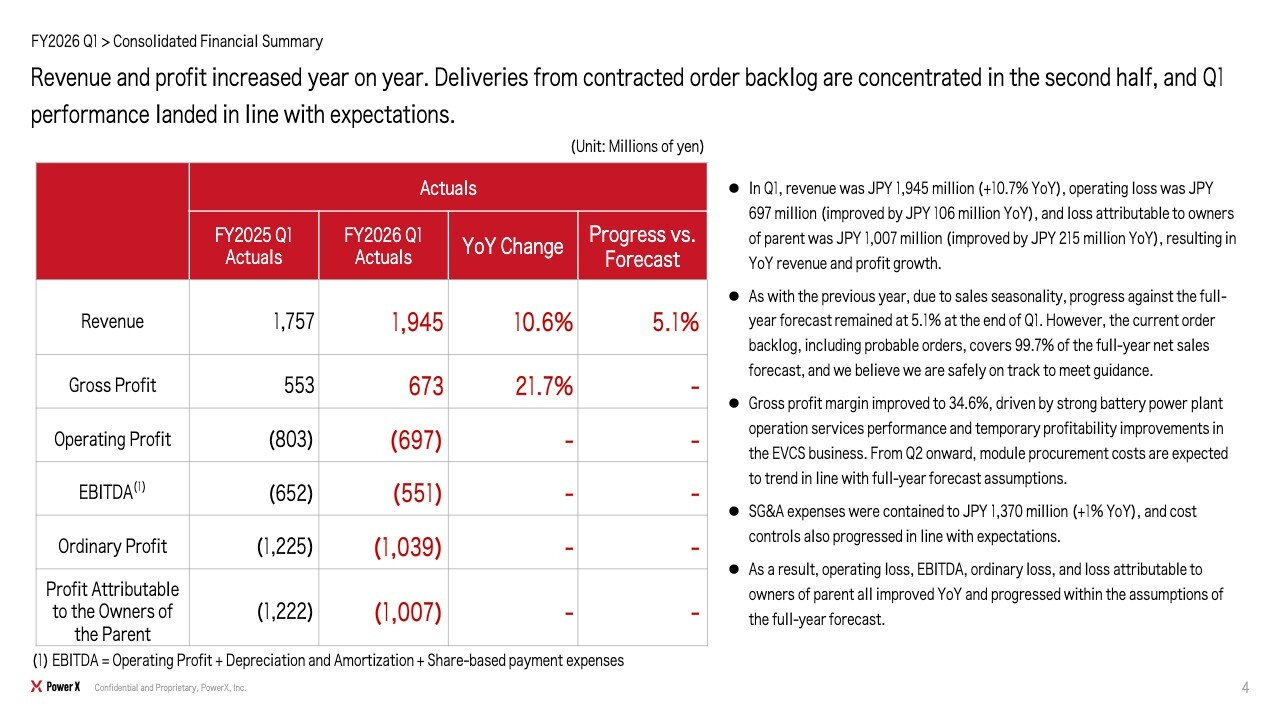
First, I would like to explain our consolidated financial results for the first quarter. In Q1, revenue was 1.94 billion yen, up 10.7% year on year. Operating loss improved by 106 million yen year over year to 697 million yen, and net loss also improved by 215 million yen year on year to 1 billion yen. As a result, we achieved both revenue growth and improved profitability year over year.
As in the previous year, due to revenue seasonality, progress against the full-year forecast remained at 5.1% at the end of Q1. However, we have secured orders that have reached 99.7%, of our expected revenue this year and we believe we are safely on track to meet guidance. Gross profit margin was 34.6%, and gross profit totaled 673 million yen.
Gross profit improvements can be attributed to a strong performance in battery operation (tolling) services along with temporary high margin projects in the EVCS business. As explained in our last quarterly call, we are still expecting an increase in battery costs in Q2 and beyond.
SG&A expenses totaled 1.37 billion yen, representing only a 1% increase year over year. As a result, operating loss, EBITDA, ordinary loss, and net loss have all improved year over year, and we believe overall performance is progressing well.
FY2026 Q1> Consolidated Financial Summary
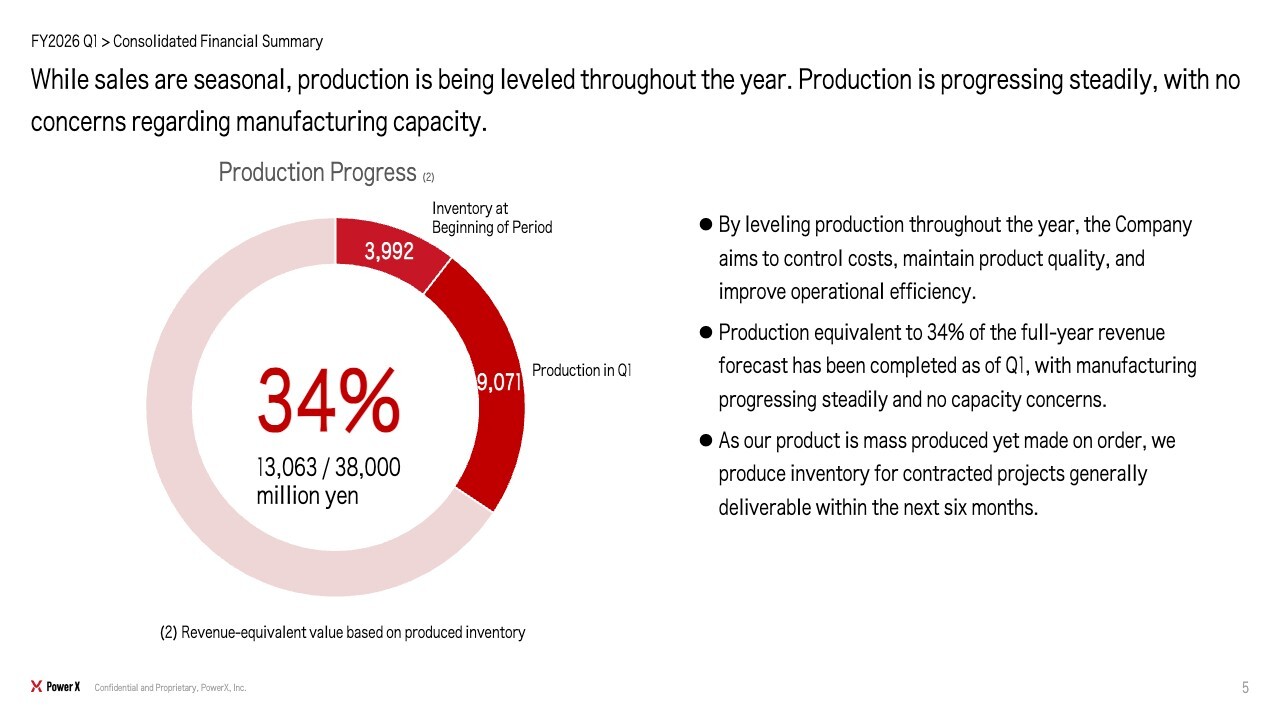
Next, I would like to explain where we are in production. While revenue recognition is seasonal, production of our product remains constant throughout the year.
As of the first quarter, production progress reached 34.6% of our annual production plan, progressing steadily without any operational concerns. As our product is mass produced yet made on order, we produce inventory for contracted projects and do not accumulate stagnant inventory.
So everything we make will be delivered and everything we have now will be delivered this year.
FY2026 Q1> Quarterly Revenue, Gross Profit, and Gross Margin Trends
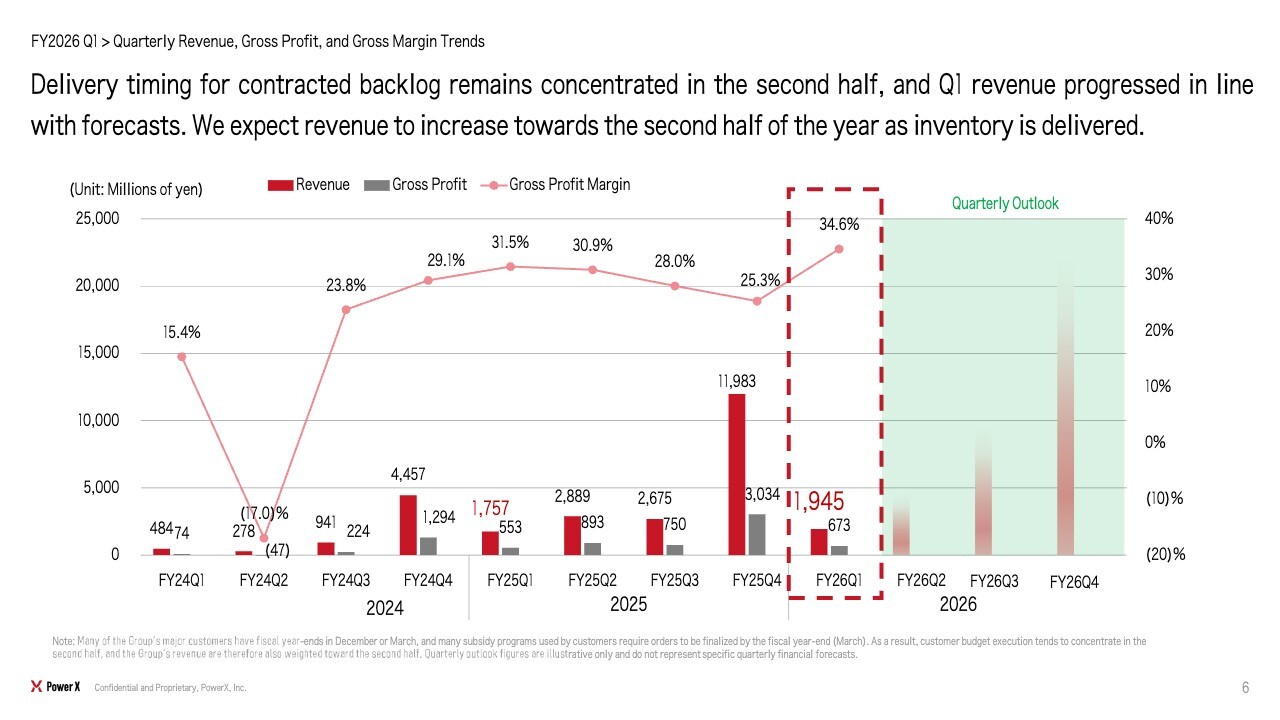
Next, I would like to touch on quarterly performance trends.
In both FY2024 and FY2025, revenue was heavily concentrated in the fourth quarter, and we expect this trend to continue this year as well. Please note that the chart is an illustration of how revenue would progress per quarter and not to be seen as specific financial guidance.
Speaking of the rest of the year, we expect larger revenue starting in the third quarter as larger projects require deliveries to start early, so the third quarter revenue is expected to be relatively larger than years before.
We expect gross margins to trend within our original assumptions despite first quarter margins being better. As mentioned earlier, we see first quarter margins being elevated due to some one-time factors.
FY2026 Q1> Quarterly Revenue, Gross Profit, and Gross Margin Trends
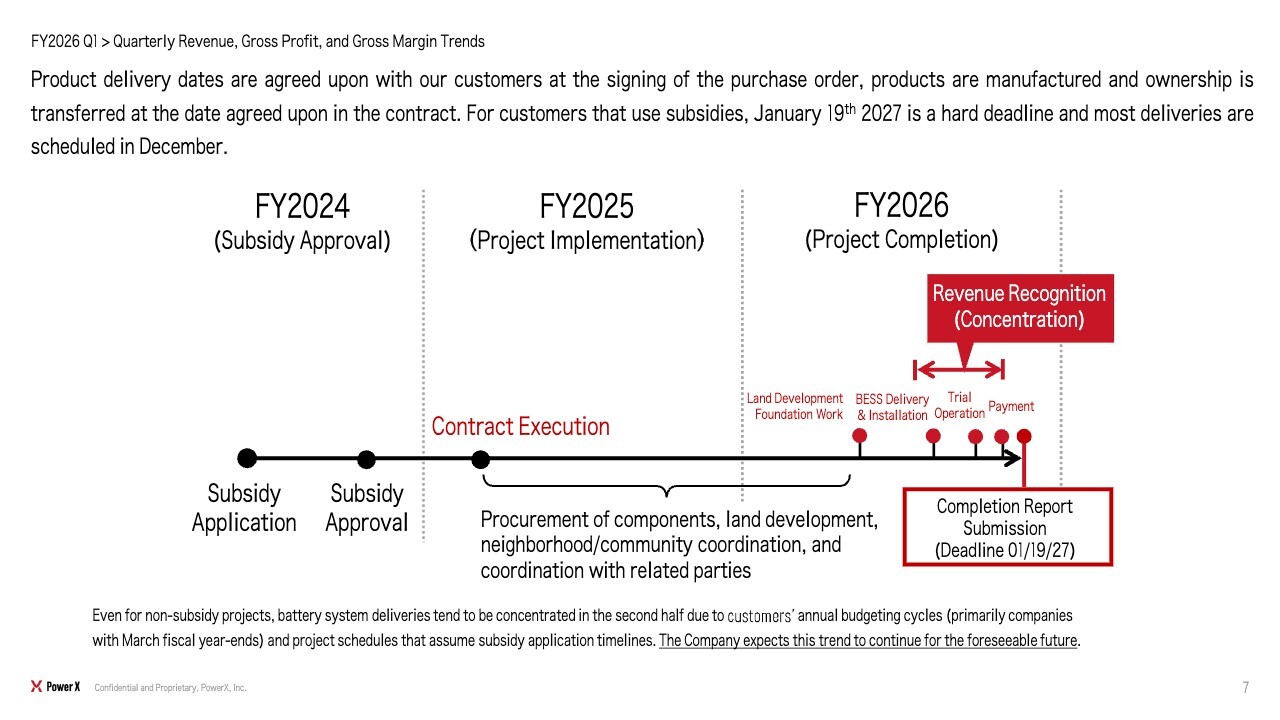
I’d like to provide investors with some additional context regarding our seasonality and its causes. For our customers that use government subsidies, battery installations must be completed and reports must be submitted by January 19, 2027 as a requirement of those subsidies.
As a result, working backward from the submission deadline, installation and delivery of the battery storage systems must be completed by the end of 2026, which is one of the primary reasons for the concentration of deliveries in the second half of the year.
In any case, battery handover / delivery dates are agreed upon with our customers at the signing of the purchase order and do not allow for delays purely on our customer’s readiness. If the customer is unable to accept a delivery due to delays on their side, ownership of the product is transferred at our factory on the date agreed upon in the contract.
FY2026 Q1> Segment Performance
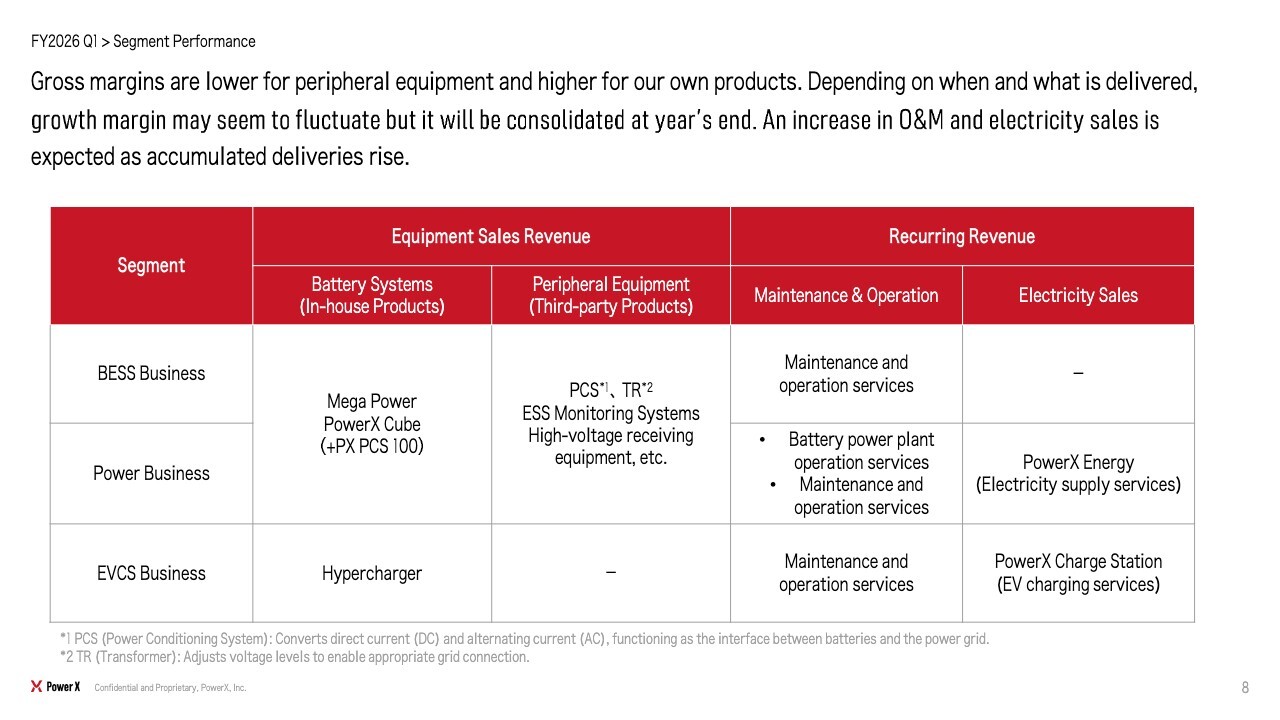
I’d like to dive a bit deeper into each of our business segments and highlight some notable trends we’re starting to see.
For BESS, in addition to our own products, we’ve sold a record number of third party peripherals - namely power converters and other control equipment needed for battery power plants. As sales and installations increase, we’re expecting to see an uptick in maintenance and operation revenue as well.
For our Power Business, we not only sell energy to customers but provide a vertically integrated development business where we procure and construct battery power plants on behalf of the customer and operate the plant. This is why we recognize peripheral equipment sales here along with sales of our battery products.
What's common across these businesses is the fact that revenue from our own products usually carries the highest profit margin which can sometimes affect how profitability looks for these businesses at a certain moment in time.
FY2026 Q1> Segment Performance
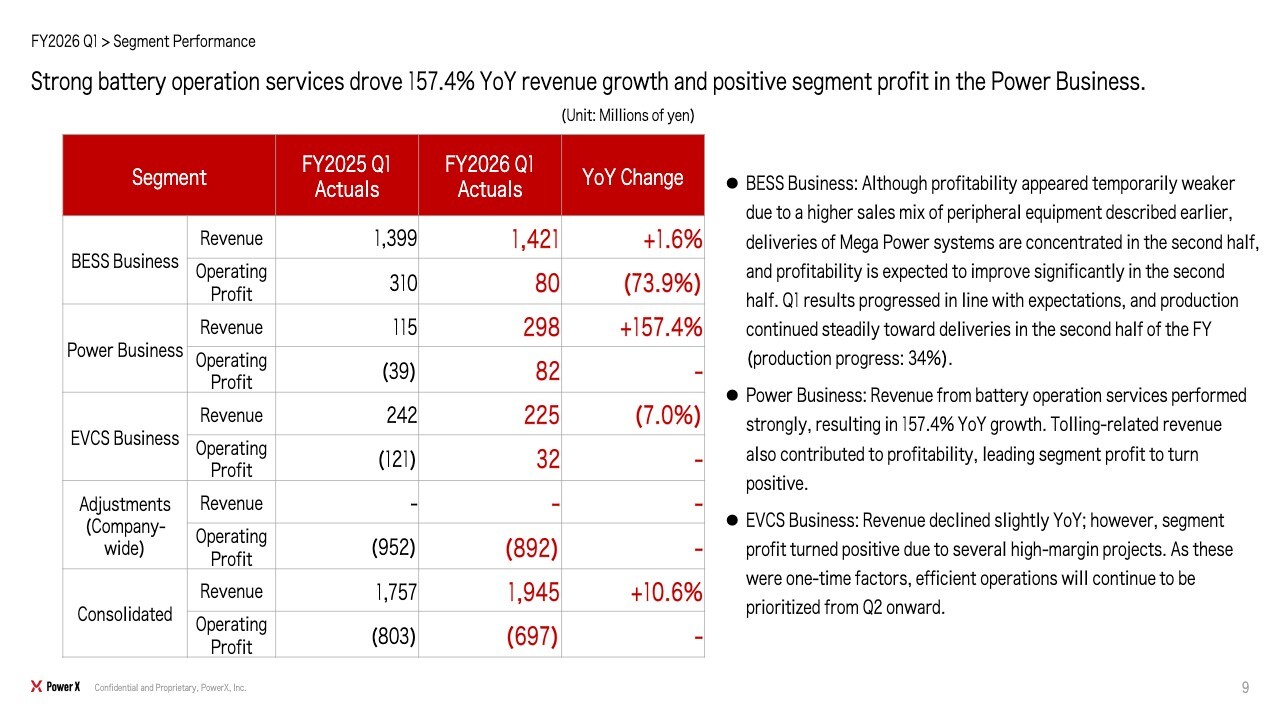
Next, let’s look at performance of each of our business segments.
First, regarding the BESS Business, profitability may look weaker than last year, but this is due to revenue recognition of third-party peripherals that have increased in this quarter. Keeping in mind that these third-party peripherals are just that, overall profitability is anchored by the higher margin of our own products and as deliveries of our batteries progress, we expect profitability to improve.
In the Power Business, battery operation services performed strongly, resulting in 157.4% revenue growth and improved profitability. For the EVCS Business, revenue was largely flat year on year. However, profitability improved due to several high-margin projects.
FY2026 Q1> Quarterly Breakdown and Ratio of SG&A Expenses
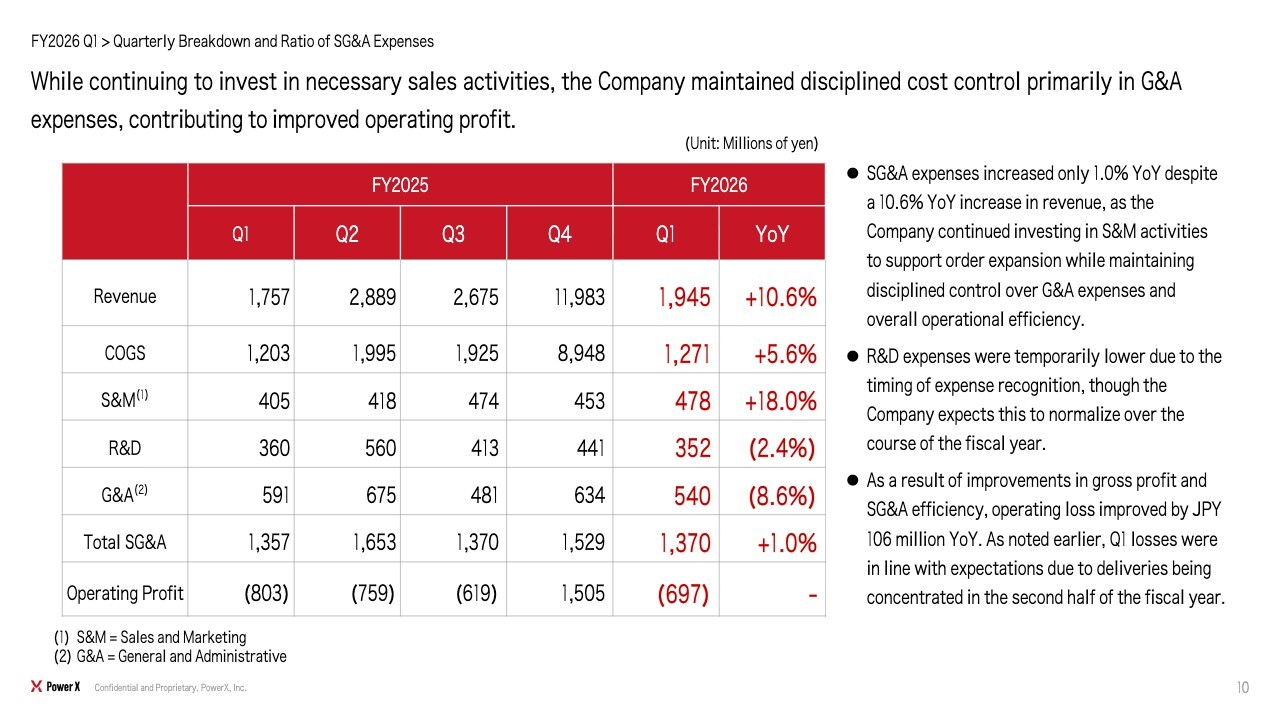
Next, allow me to explain the breakdown of SG&A expenses.
Total SG&A expenses were 1.37 billion yen, representing only a 1.0% increase year on year despite revenue increasing by 10.7%. Looking at the breakdown, sales and marketing expenses increased as they are essential to expanding revenue, while G&A expenses were kept under control.
Overall, we believe SG&A expenses are being managed in line with expectations.
FY2026 Q1> Order Backlog (Signed Orders) Trend
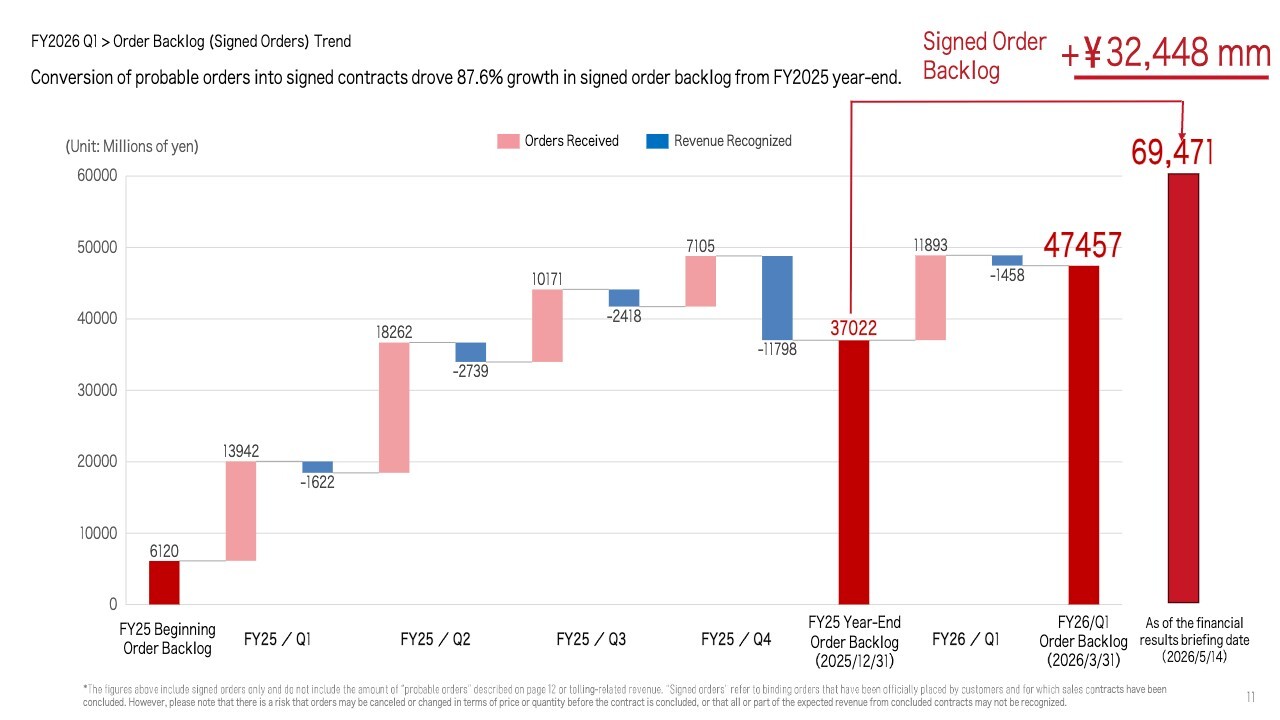
Next, I’ll talk about signed orders. The chart you see here only consists of definitive contracts that have been signed.
As of December 31, 2025, signed orders were approximately 37.0 billion yen which increased to 47.5 billion yen as of March 31, and further increased to 69.5 billion yen as of today.
We’re happy with this trend and expect it to continue for the foreseeable future.
FY2026 Q1> FY2026 Order Backlog (Total of Signed Orders and Probable Orders)
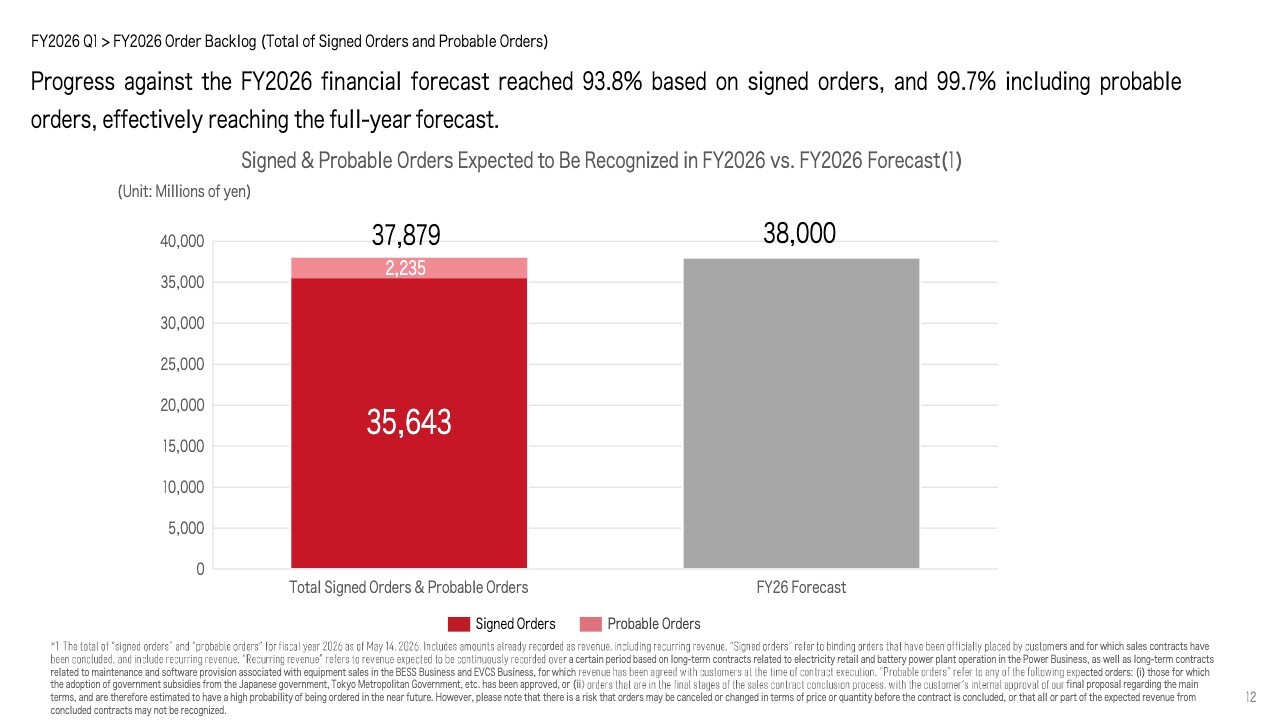
Next, I would like to compare this with the revenue forecast disclosed in our full-year guidance.
Against our FY2026 revenue forecast of 38.0 billion yen, signed orders alone have already covered 93.8% of the forecast as of Q1, and including probable orders, coverage reaches an almost complete 99.7%. We still have multiple months of sales opportunities remaining so we are confident that we will meet our sales guidance for this year.
FY2026 Q1> Consolidated Balance Sheet
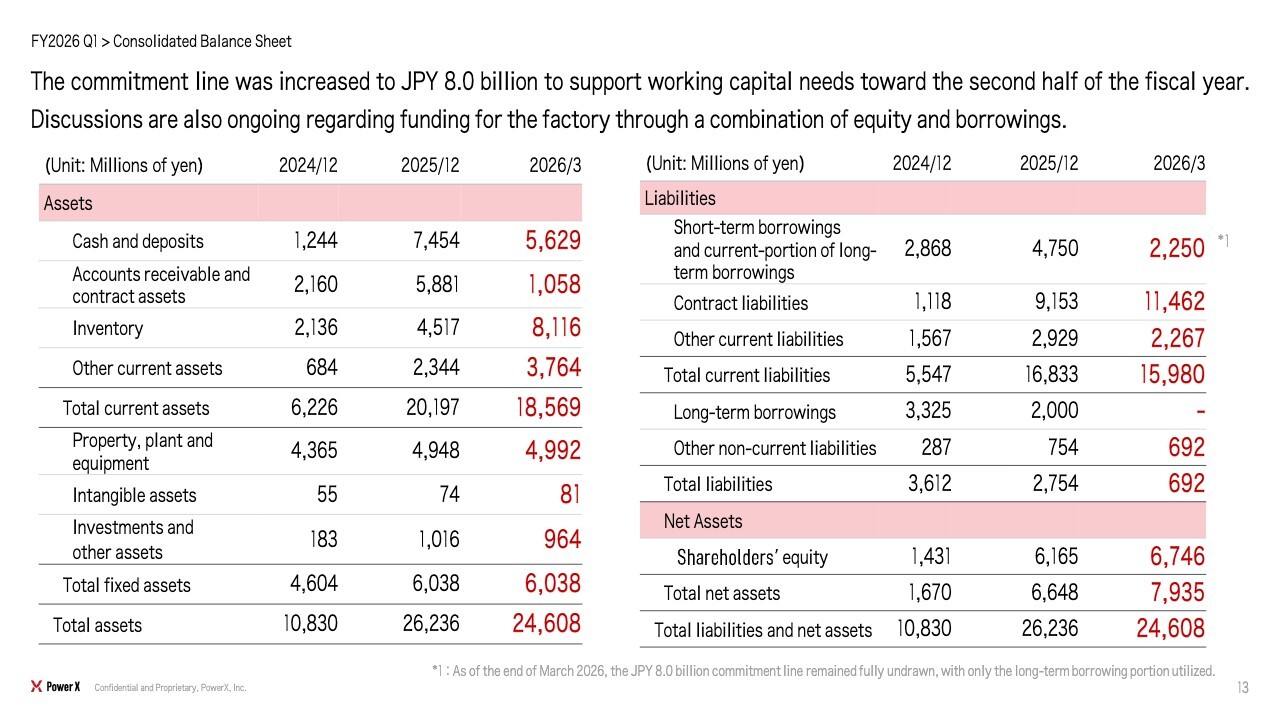
Finally, I would like to briefly explain the consolidated balance sheet.
Borrowings totaled 2.25 billion yen as of the end of the first quarter. In addition, we were able to increase the commitment line from our lenders to 8.0 billion yen, and we believe we are well positioned to address working capital needs toward the second half of the fiscal year.
Furthermore, to finance our new Hokkaido factory and expansion of our main facility, we are currently in discussions to increase long-term borrowings, and financing arrangements are progressing steadily.
Breakdown of backlog (including probable orders) – by fiscal year
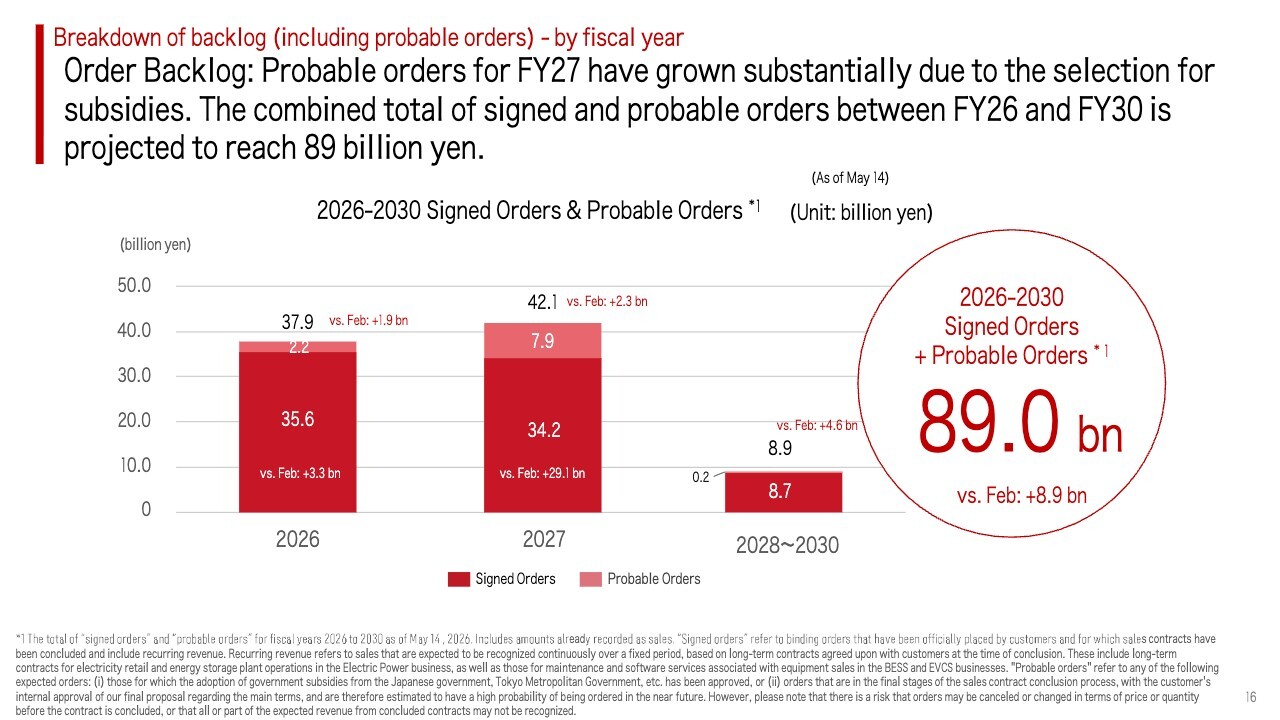
Let me discuss the status of our order backlog and the outlook for the future. Our greatest achievement over the past three months has been steadily converting probable orders into signed orders. In this period, we were able to add signed orders of nearly ¥39.0 billion.
For FY2027, we added ¥29.1 billion in signed orders, and also added ¥3.3 billion for the current fiscal year. Furthermore, we have secured ¥4.6 billion for FY2028 and beyond.
In addition, probable orders are steadily increasing, bringing the current order backlog to approximately ¥89.0 billion.
Breakdown of backlog (including probable orders) – by fiscal year
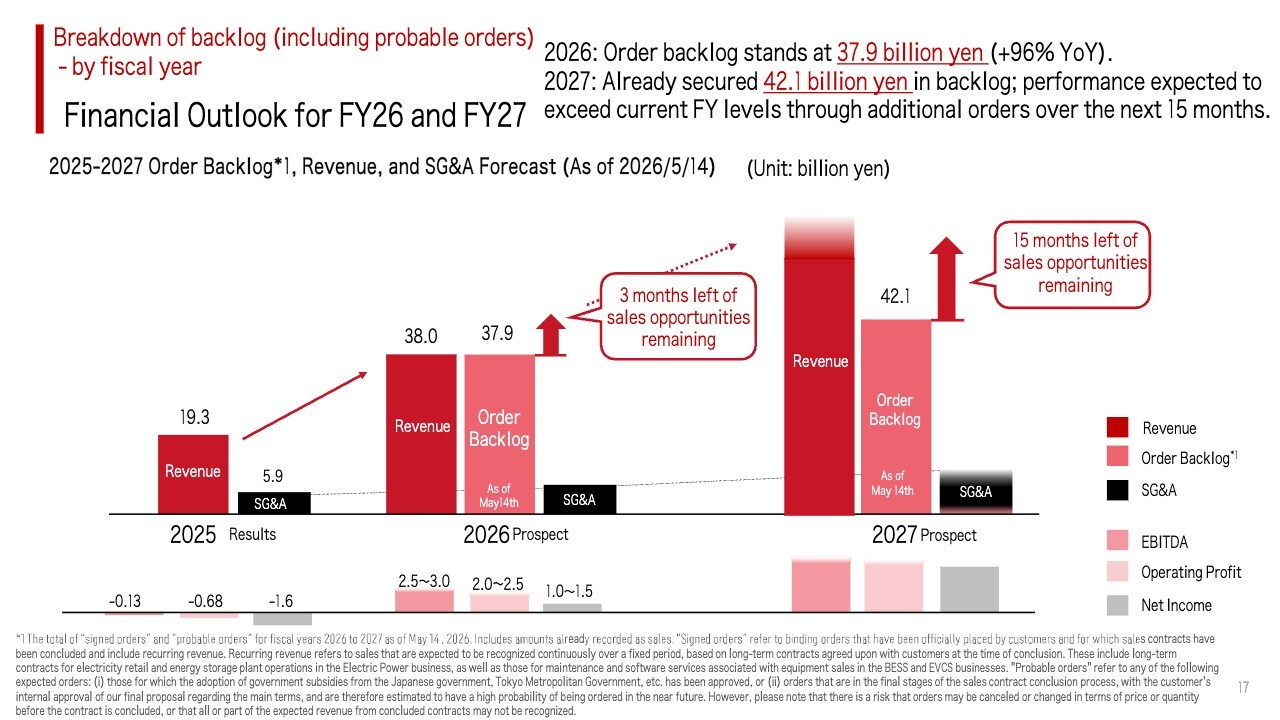
The probable orders include only the projects where the customer has explicitly expressed an intention to place an order. Meanwhile, projects with a high likelihood of leading to a contract in the near future are managed as part of our sales pipeline.
For FY2026 revenue, we expect to achieve this year’s target of ¥38.0 billion. Moreover, with sales activities in the remaining three months and pipeline projects currently under negotiation, we aim to achieve further upside.
Looking ahead to FY2027, with 15 months left for sales opportunities, we intend to steadily achieve results. Fortunately, our pipeline is robust, with current order backlog standing at ¥42.1 billion, and we see it steadily growing. We plan to continue diligently increasing our order intake.
Order Backlog + Active Negotiations with Clients
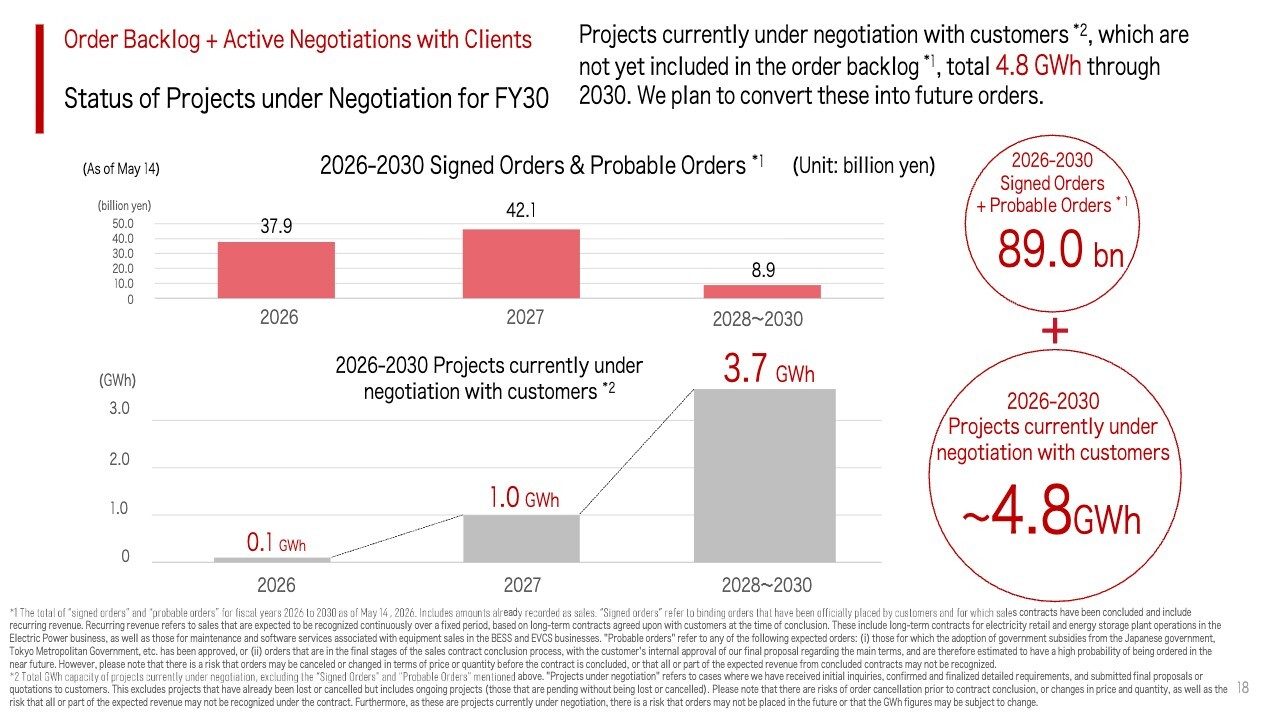
The slide shows the size of projects under negotiation in gigawatt-hours. For FY2026, approximately 0.1 GWh of projects remain under negotiation. For FY2027, approximately 1.0 GWh—about ten times that amount—is under negotiation, and for FY2028 and beyond, a large-scale project of approximately 3.7 GWh is currently under negotiation.
The figures shown on the slide represent the “A-class project," for which we are actively negotiating with customers, expecting to successfully close the contract.
At present, we feel a strong, long-term tailwind, and we believe that by solidifying our foundation and moving forward with determination, we can steadily build up our order backlog.
Projects totaling approximately 4.8 GWh are currently under negotiation, and we intend to actively pursue sales activities to achieve positive results.
Market Trends Related to BESS
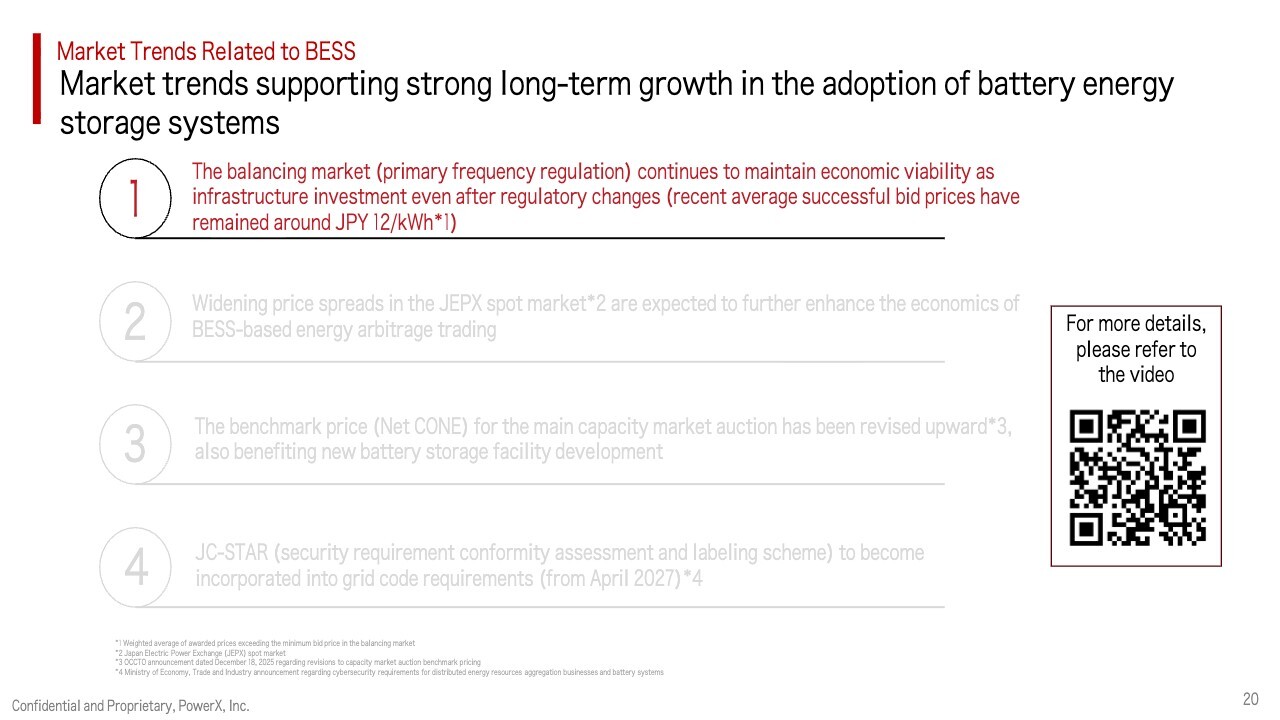
Let me discuss changes in the market environment. In recent years, the landscape surrounding battery storage and energy has been evolving. Today, I will specifically cover four environmental changes that impact the battery storage market. We have also provided a detailed explanation in a YouTube video for your reference, which you can access via the QR code below.
Today, I will summarize the key points.
Market Trends Related to Battery Energy Storage Systems – Update on the Balancing Market
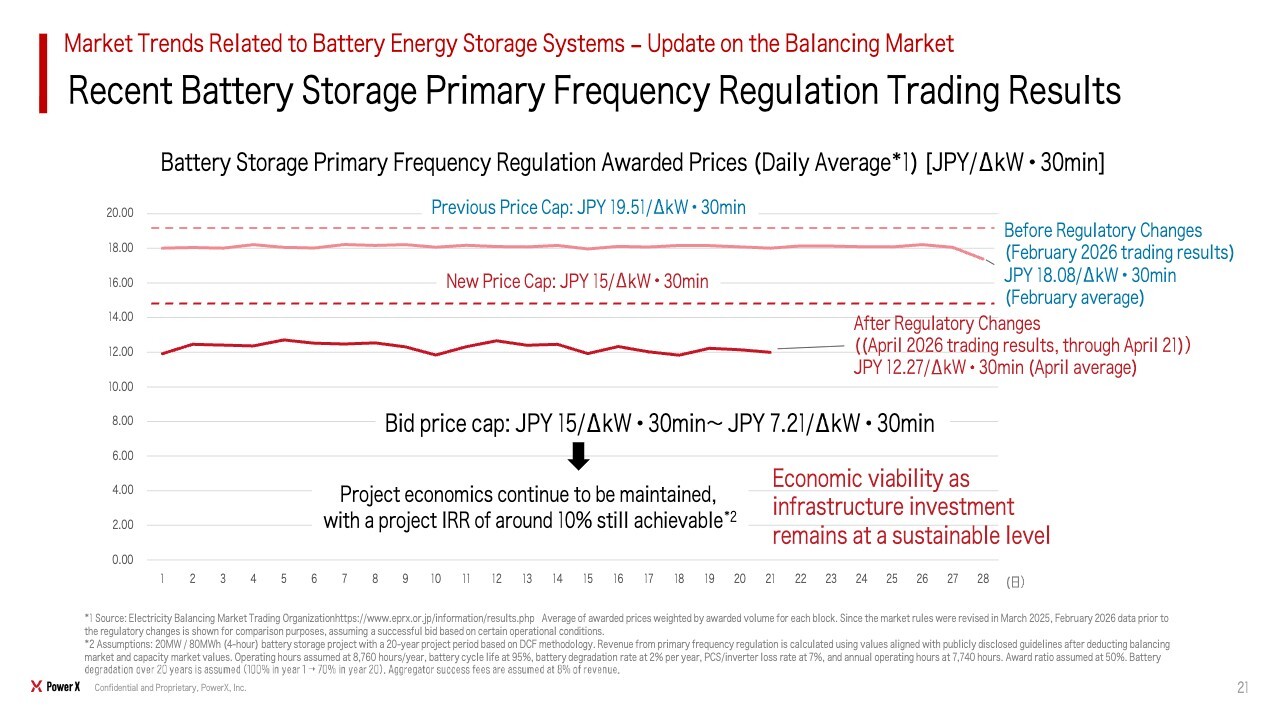
Firstly, let me explain the balancing market (primary frequency regulation capacity). The balancing market is one of the revenue sources for battery storage systems, allowing battery owners to earn income by providing balancing capacity. The price cap on this revenue source was previously set at ¥19.5, but following a regulatory revision, it was lowered to ¥15 starting in April.
The current average price is actually ¥12.27. In some regions, it remains at ¥15.
Thus far, we have not observed any deterioration in profitability. Operating storage batteries continues to yield a very high internal rate of return (IRR).
An IRR that ensures economic viability as infrastructure can be achieved even at ¥7. Therefore, we believe there is no need to worry about this balancing market. Currently, the average price is trending at around ¥12.
Market Trends Related to BESS – Update on the Electricity Spot Market
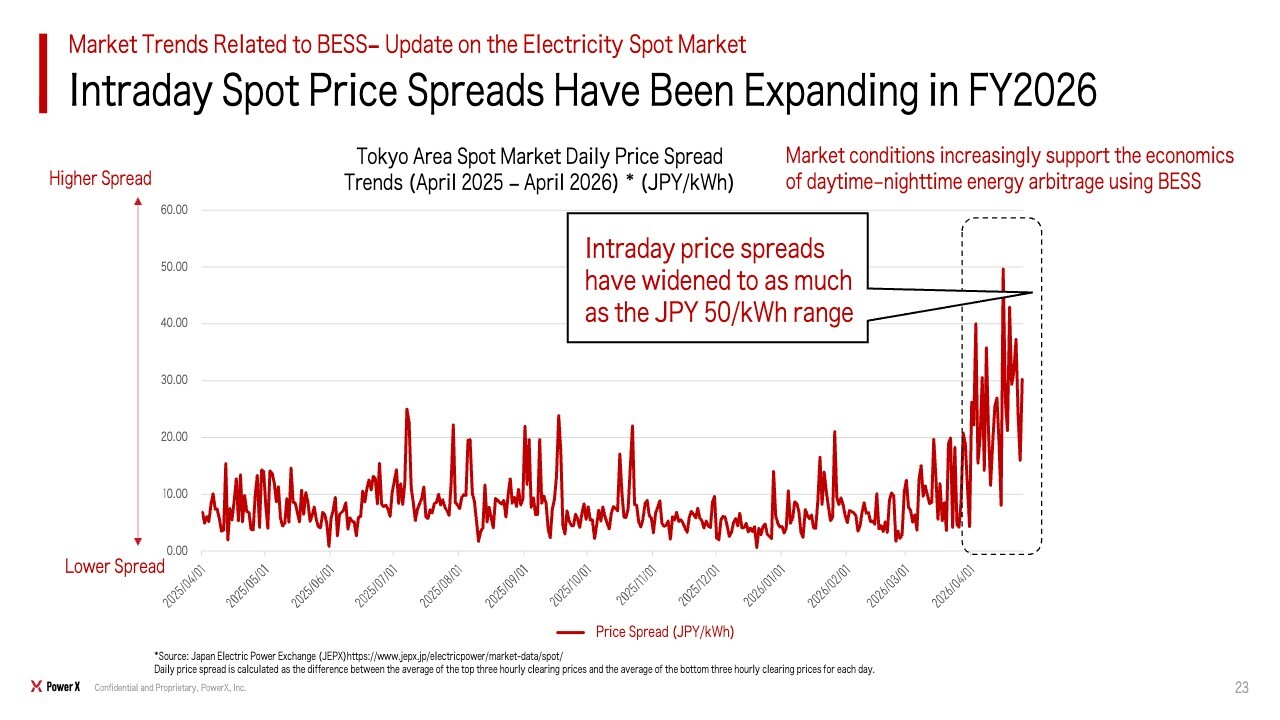
Secondly, the wholesale electricity market. In Japan, approximately 40% of the total electricity is traded on the wholesale market, while the remaining 60% is traded through bilateral transactions. Bilateral transactions are predominantly conducted by power companies that operate both generation and retail businesses by bundling generation and retail services.
Recently, power plants that previously engaged in these bilateral transactions have begun entering the market. This shift is not driven by price spikes caused by the situation in the Middle East or Iran, but rather by power plants participating in the market for block bidding. This has resulted in a widening gap between daytime and nighttime electricity prices.
This is an extremely favorable situation for batteries. Due to the structure of the system, daytime electricity rates are lower while nighttime rates are higher; since April, the intraday price spreads have widened to around ¥50 per kWh.
Experts even believe this summer’s profits from the wholesale market could exceed those from the balancing market. The wholesale market is also providing a strong tailwind for batteries.
Market Trends Related to BESS – Update on the Capacity Market
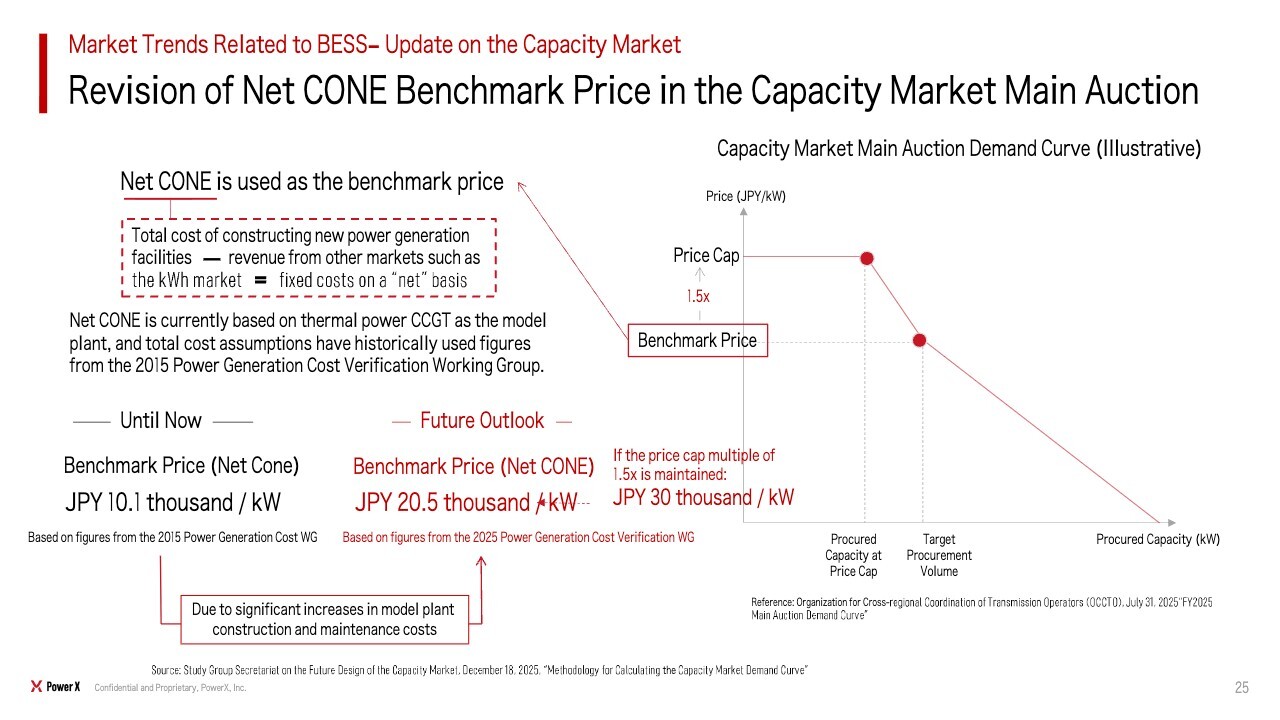
Thirdly, I will talk about Net CONE. Net CONE is an acronym for net cost of new entry, referring to the costs required to build a new power plant. Given the potential for power shortages four years from now if current conditions persist, this mechanism provides financial compensation to companies that, in collaboration with the government, construct power plants capable of transmission and distribution four years from now. This is known as the “capacity market.”
The capacity market is fundamentally designed based on gas-fired power generation. Net CONE is a system that compensates for the deficit resulting from subtracting the revenue obtained from the market from the total cost required to build a new power plant.
Previously, this deficit was estimated at ¥10,000/kW. Now, the figure is expected to reach ¥20,000/kW, or potentially ¥30,000/kW in some cases. Consequently, revenue from the capacity market has been increasing for new power plant construction projects.
Since battery power plant are a type of power generation facility, it is eligible to participate in this capacity market. The capacity market is attracting attention as a new revenue source for battery power plants, making it an attractive and advantageous option. This development is also providing a tailwind for the battery power plants.
Market Trends Related to BESS – Update on Cybersecurity Requirements
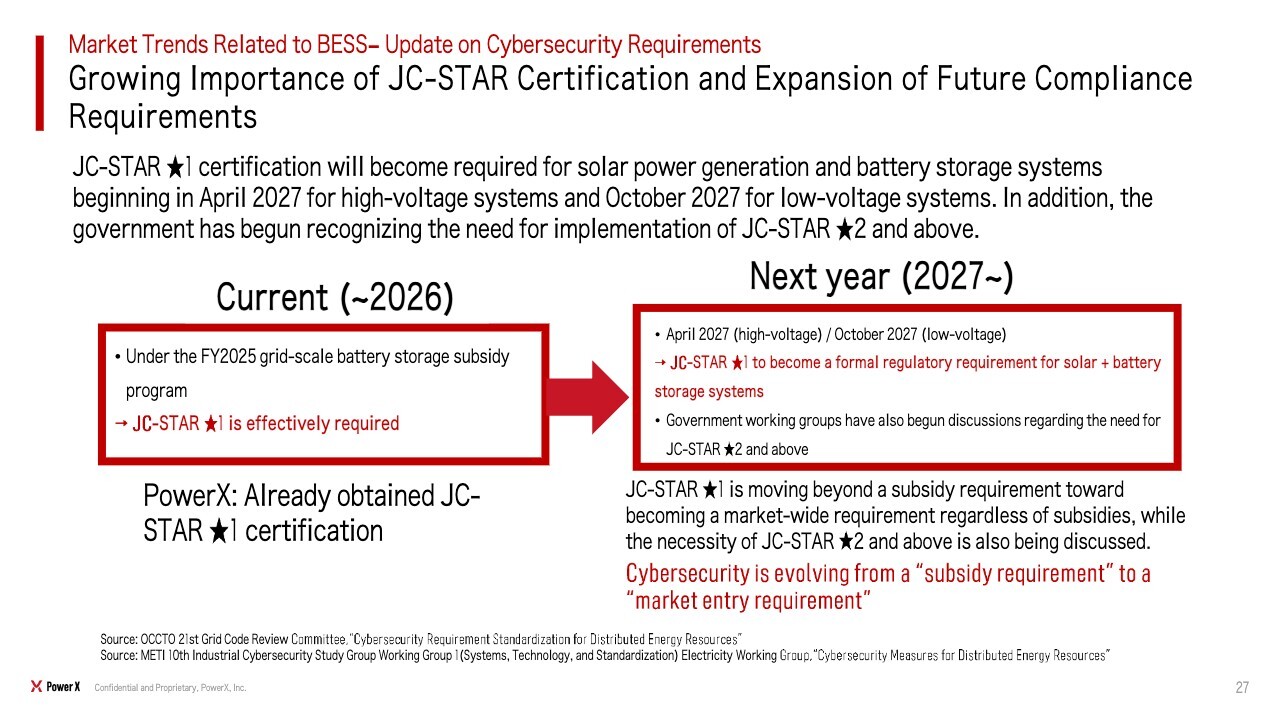
Lastly, a security certification system called “JC-STAR.” Although this system had not yet been finalized when we went public, it has now been established. Grid connection requirements have been set forth stipulating that without this “JC-STAR” security certification, connections to the power grid will not be permitted—specifically, for high-voltage connections from April 2027 and low-voltage connections from October 2027.
Many manufacturers’ products do not meet these security requirements and are therefore unable to be connected to the grid. In contrast, PowerX has already obtained JC-STAR ★1 (Level 1) certification.
If JC-Star ★2 (Level 2) or ★3 (Level 3) are added as requirements in the future, we plan to fully comply with them as well.
These technologies have been at the core of our business: we have developed and maintain all security systems in-house, including the source code. In other words, this is our area of expertise, and the requirement for “JC-STAR” certification is a major tailwind for us.
With April 2027 just around the corner, anyone considering purchasing a battery will likely have no choice but to look into JC-STAR-certified products.
We already offer a wide range of certified products. These are featured on our YouTube channel, so please check out the videos for more details.
BESS Business: Topics
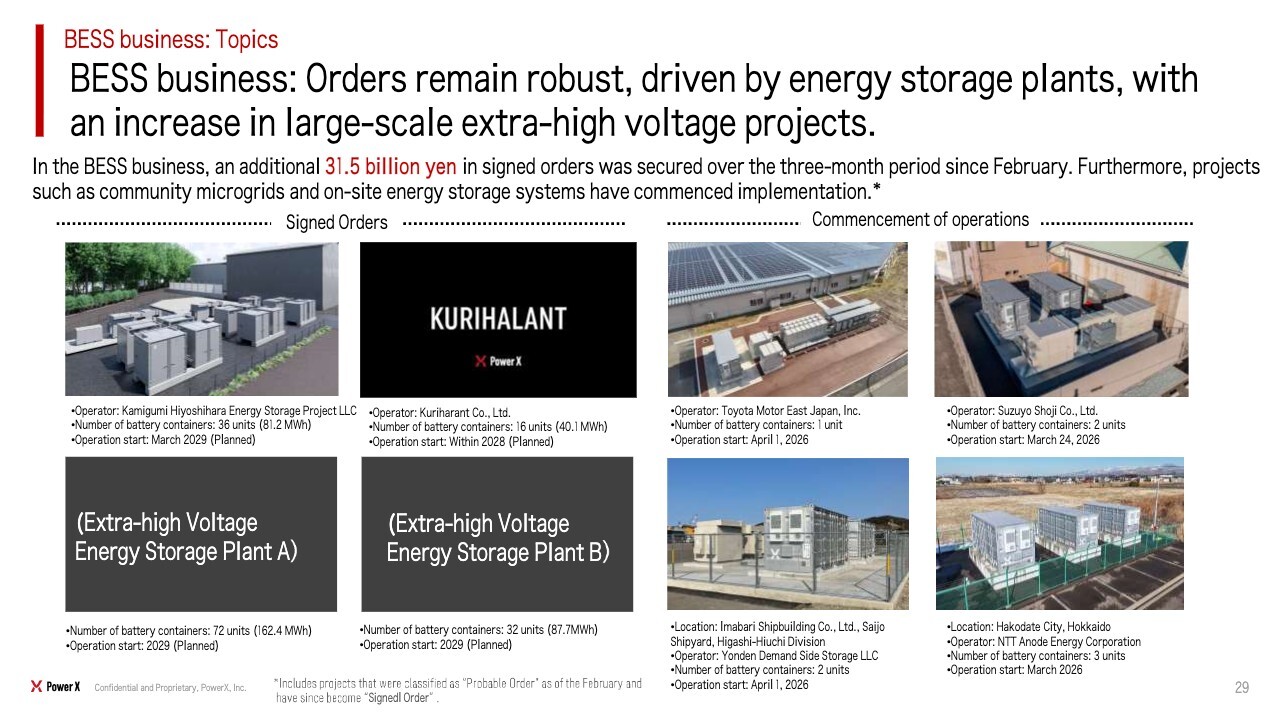
I will explain the BESS Business. This is the core business of the Company. Currently, the business is performing well, and the number of signed orders is steadily increasing.
We are also seeing a significant increase in the number of systems commencing operation. Specifically, systems have gone live at Toyota Motor East Japan’s plant, Imabari Shipbuilding, and various other battery power plants, and they are operating very stably. We are confident that our customers are highly satisfied with our services.
We will continue to advance our business steadily, with quality as our top priority.
BESS Business Recent Press Releases
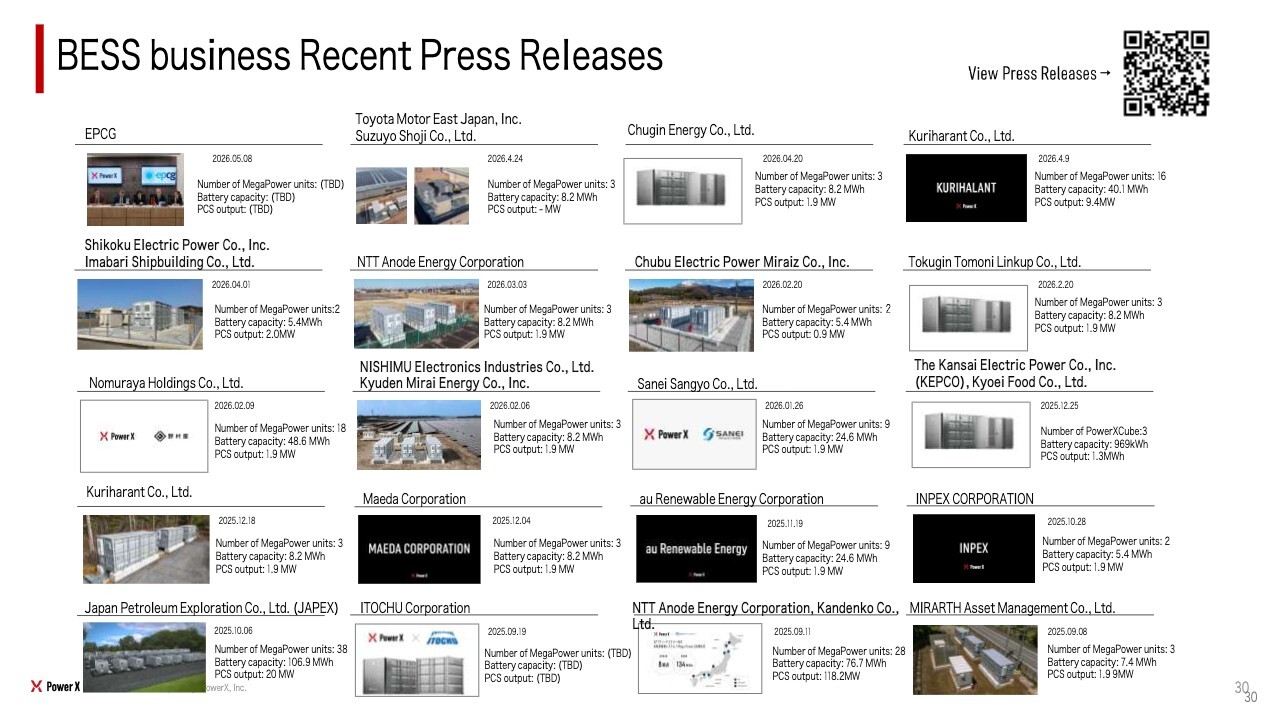
Our most recent press releases are shown on the slides. Please scan the QR code to learn more.
Power Business: Overview
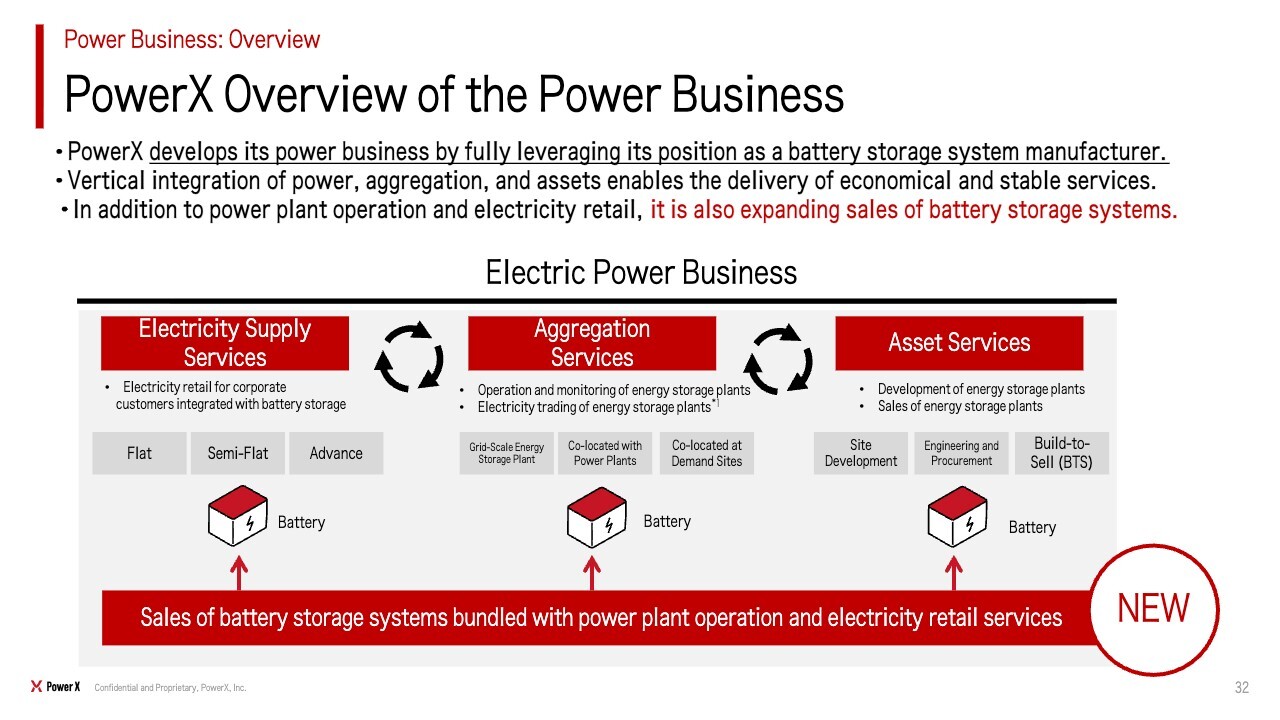
Let me explain about our Power Business. As a licensed electricity retailer, PowerX is also engaged in sales of electricity. Recently, our service—in which we provide battery storage and also its operational services —has been well received by our customers.
The operation of battery power plants is called tolling or aggregation. We have been focusing our efforts on this area recently, and we are seeing a significant increase in the number of customers entrusting us with the comprehensive management of their battery power plants.
Power Business: Topics
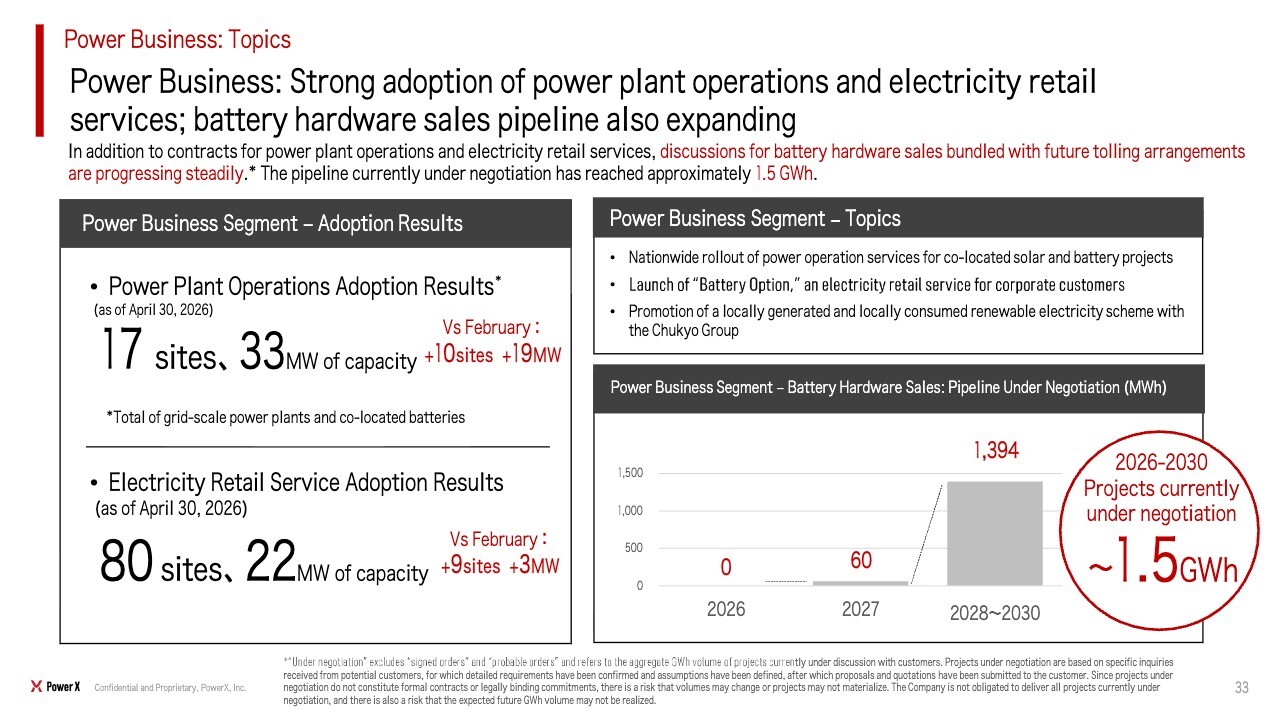
You may wonder, why are battery hardware sales included in the Power Business? This is because customers, to whom we sell hardware as part of vertically integrated packages, are also recorded in the Power Business segment.
The projects in this pipeline have reached 1.5 GWh. Most of the really large-scale projects are tolling arrangements, and in many cases, only a limited portion of the electricity is sold on the open market. Furthermore, in the past three months alone, the adoption of battery power plant operation has increased by 19 MW across 10 sites.
Our electricity retail services had been temporarily suspended due to the situation in the Middle East, but have recently resumed as conditions have stabilized. However, compared to February, the increase is limited to just 9 sites, amounting to only about 3 MW.
Therefore, the key drivers of the Power Business are the combined services of battery power plant operations and battery hardware sales, which are part of our vertical integration. This is our strength and a unique feature that differentiates us from our competitors.
PowerX Overseas Go-to-Market Strategy
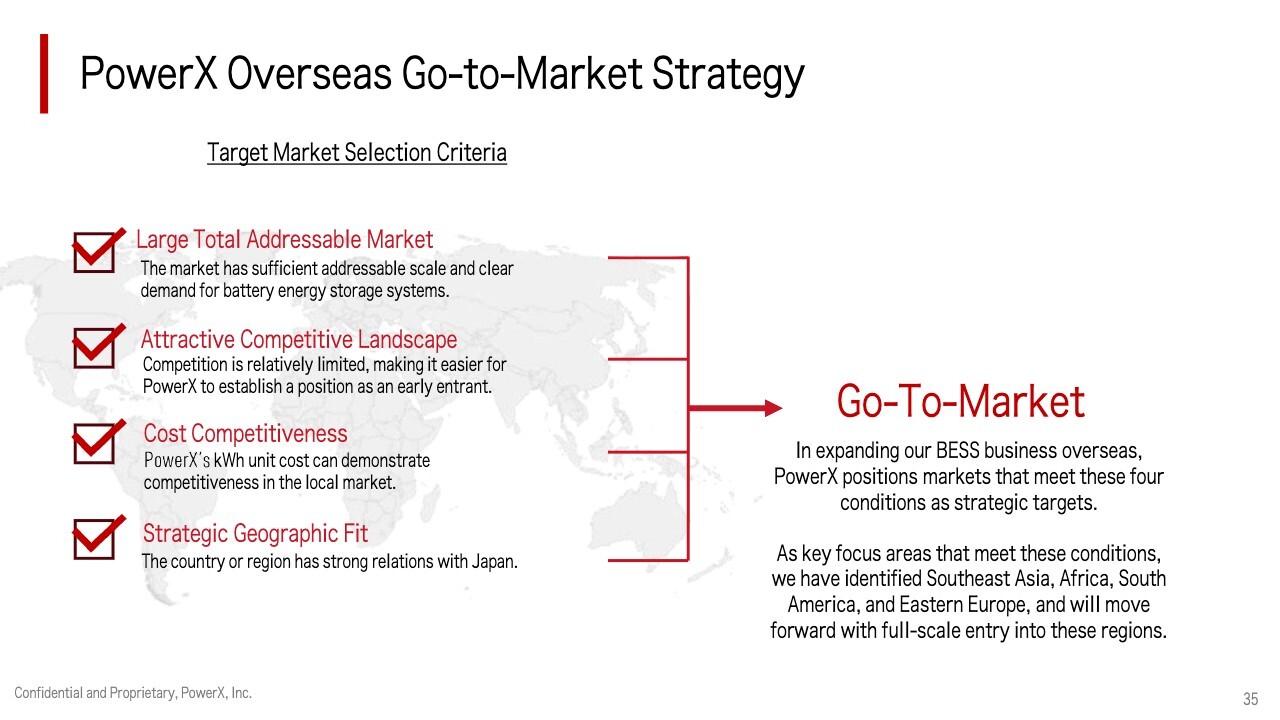
I will talk about our overseas business. We have recently announced a partnership with a company in Montenegro. Ideally, we should have held a separate briefing to explain how we plan to enter overseas markets; however, partly due to counterparty circumstances, we made the announcement ahead of a formal presentation.
As a basic policy, we are confident that we can maintain high growth rates in the Japanese market for another three to four years. However, when asked whether we can sustain high growth rates in the long term, we believe there is a risk that growth will eventually slow down because the Japanese electricity market itself has its limits.
We believe it would be too late to consider our response at that point, and we need to proactively plant new seeds now. As a manufacturer, we can sell our products in any country as long as they have the necessary international certifications.
Our battery systems have received international certifications, so we can ship them to any region in the world. To identify customers who will be satisfied with our products, we have established four selection criteria. Our policy is not to enter a market unless these four criteria are met.
The first criterion is the existence of large total addressable market (TAM). “Large” here means a TAM of sufficient scale to make the business viable, even if we capture only 10% or 20% of the market share.
The second criterion is attractive competitive landscape. We aim to target regions or areas with minimal competition. While Chinese companies are particularly prevalent among our competitors, recent geopolitical factors in the energy sector make some regions accessible while others are not. We plan to enter areas with low competition, focusing specifically on regions where there is strong demand.
The third criterion is cost competitiveness. When expanding overseas, we want to avoid operating with low gross margins. We will limit our targets to areas where we can manufacture products and sell them at prices that ensure a healthy gross margin.
Currently, due to the relatively weak Japanese yen, we are in a position to enter virtually any region in the world from a cost-competitiveness standpoint.
The fourth criteria is strategic geographic fit. Considering the speed of expansion, we intend to actively enter countries and regions that maintain good relations with Japan.
Trends in the European Battery Energy Storage Market
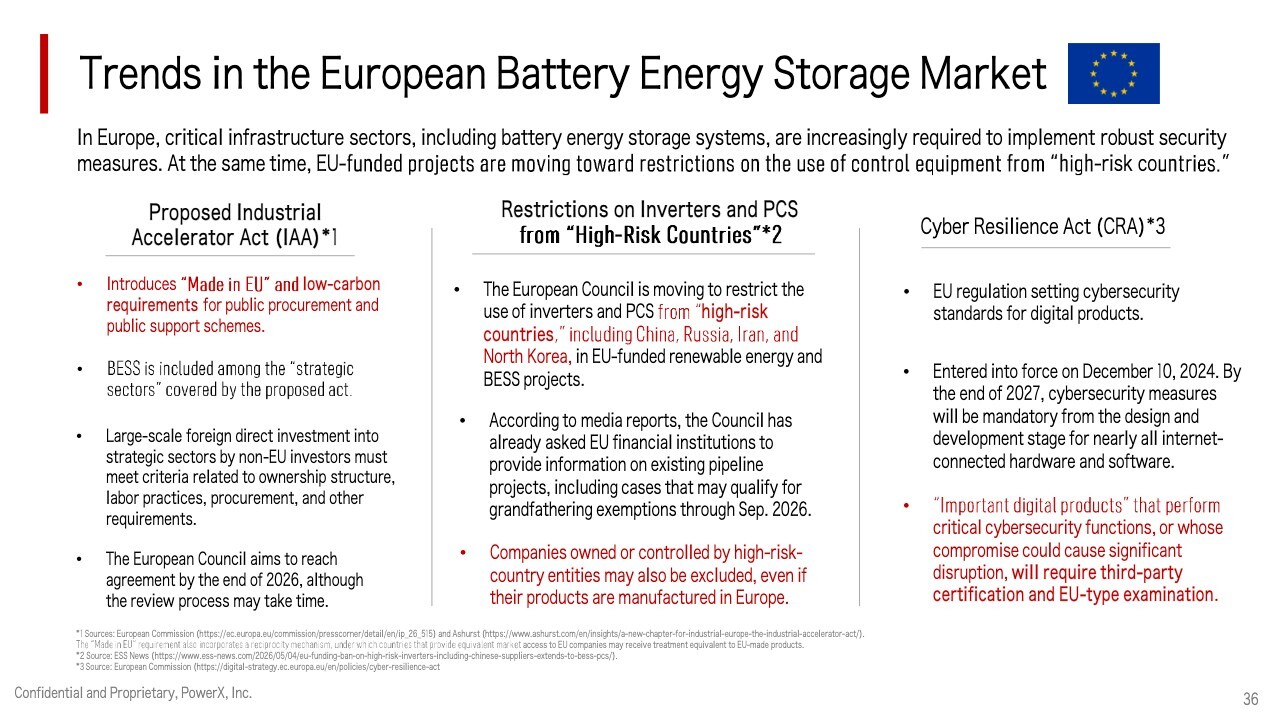
Here are our views on the EU and the European market. The situation has changed significantly since the start of this year, and regulations suddenly went into effect restricting the use of inverters and PCSs manufactured in high-risk countries. The high-risk countries include China, Russia, Iran, and North Korea.
Given this situation, the EU has become a very attractive market for Japanese companies. The exchange rate between the euro and the yen is favorable, and Japan also maintains strong relationships with the region..
Furthermore, we anticipate potential preferential treatment by manufacturing batteries inside the EU. We aim to actively pursue this opportunity moving forward.
PowerX Signs MOU with Montenegro’s National Utility EPCG for Strategic Cooperation on BESS
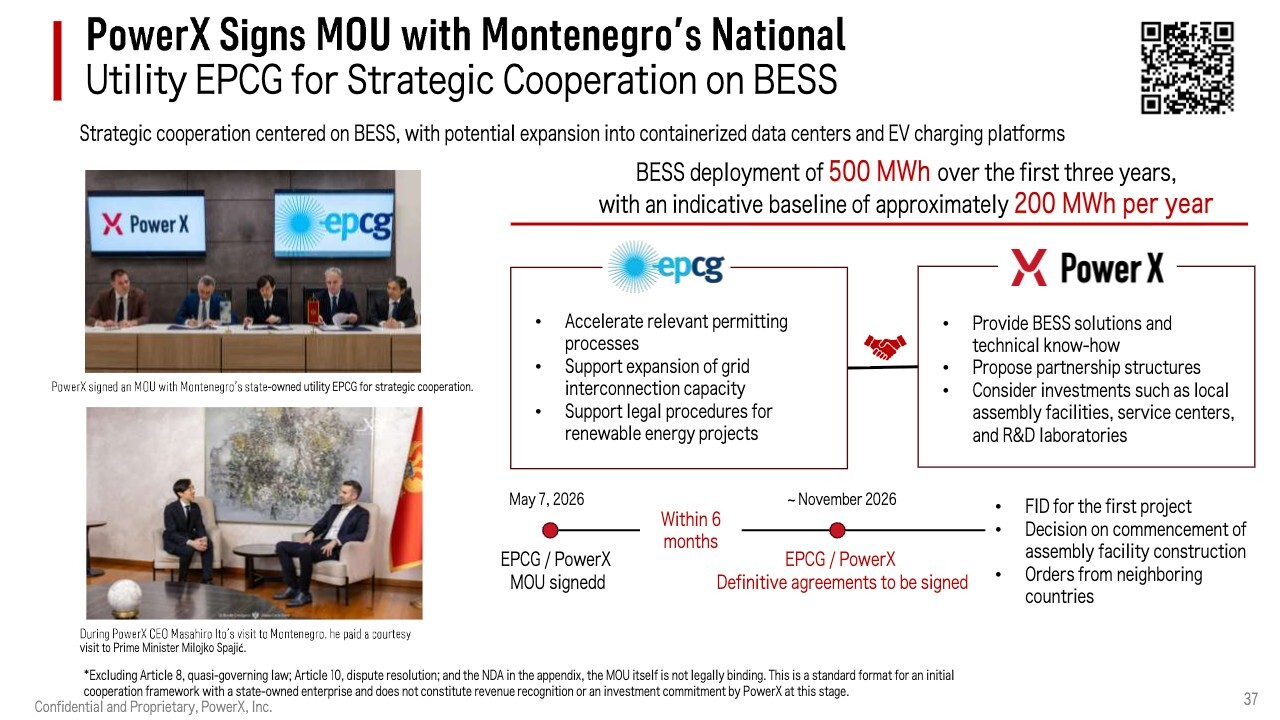
Based on these circumstances, we have decided to enter into a strategic cooperation agreement with EPCG, Montenegro’s state-owned utility company.
We have signed a Memorandum of Understanding (MOU) regarding battery energy storage systems (BESS) and are currently working together to finalize a formal agreement within six months.
While the target is to achieve approximately 500 MWh within three years, PowerX intends to take an even more aggressive approach.
Montenegro’s Energy Strategy and the Need for BESS
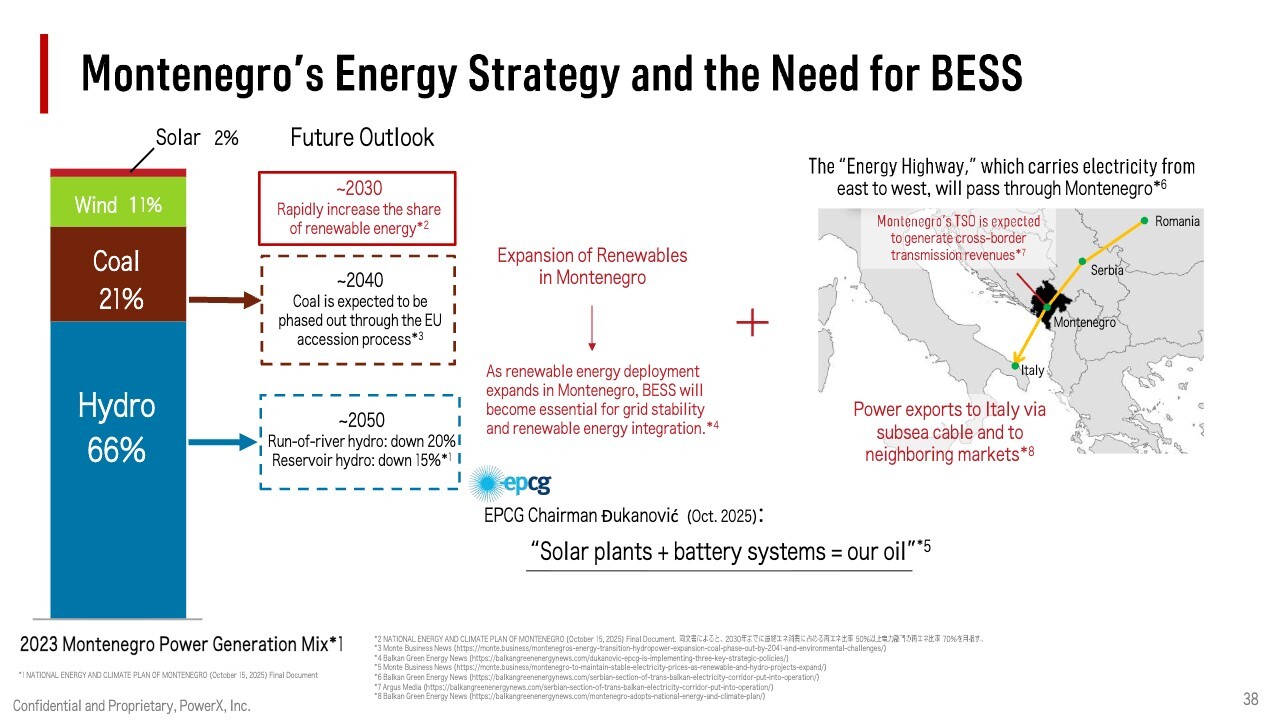
Why Montenegro? The answer is that Montenegro relies almost entirely on hydropower. Although the country does have coal-fired power plants, it must phase them out as part of its EU accession process, and its electricity supply is rapidly shifting toward renewable energy. This shift makes the power supply highly unstable, creating a significant need for battery storage.
Furthermore, the chairman of EPCG stated, “Solar power + battery systems = our oil.” They are pursuing an initiative to store domestically generated energy using battery storage systems until it reaches the optimal price, then sell it to other countries. They are also connected to Italy via a subsea cable capable of transmitting 600 MW of power.
In fact, the amount of electricity passing through Montenegro exceeds the amount consumed within the country. For example, when Serbia sells electricity to Italy, it must pay Montenegro a transmission fee. Battery storage systems are extremely effective in balancing this transmission capacity and managing supply and demand.
We also intend to consider manufacturing battery storage systems in Montenegro.
Scale of BESS Demand PowerX Aims to Capture (MWh/year (2027-2030))
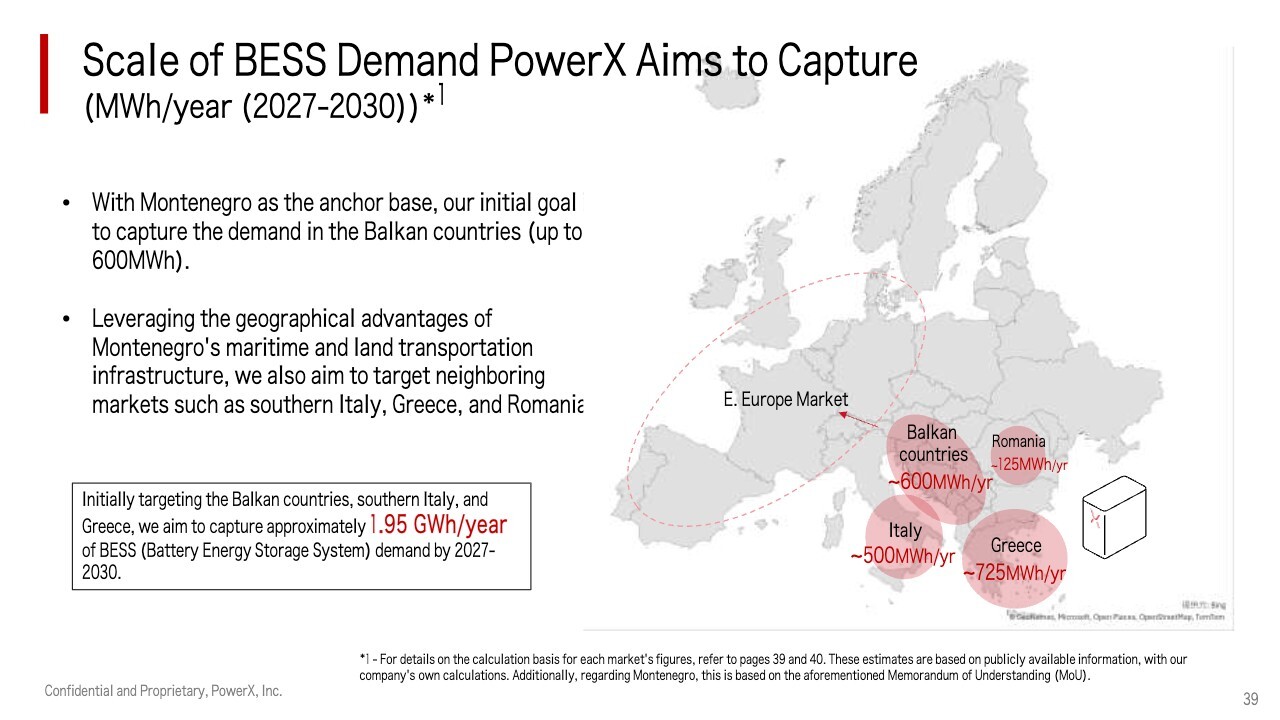
If we can manufacture battery storage sytems in Montenegro and sell them in the neighboring regions, we can secure a sizeable market share. The Balkan countries alone have an annual demand of 600 MWh, and when we add the surrounding regions, including Italy, the market potential reaches 2 GWh per year.
We believe this area will become extremely important for us if we can secure even a small percentage of that market.
From Montenegro to the Western Balkans, Southern Italy, Bulgaria, Greece, and Beyond
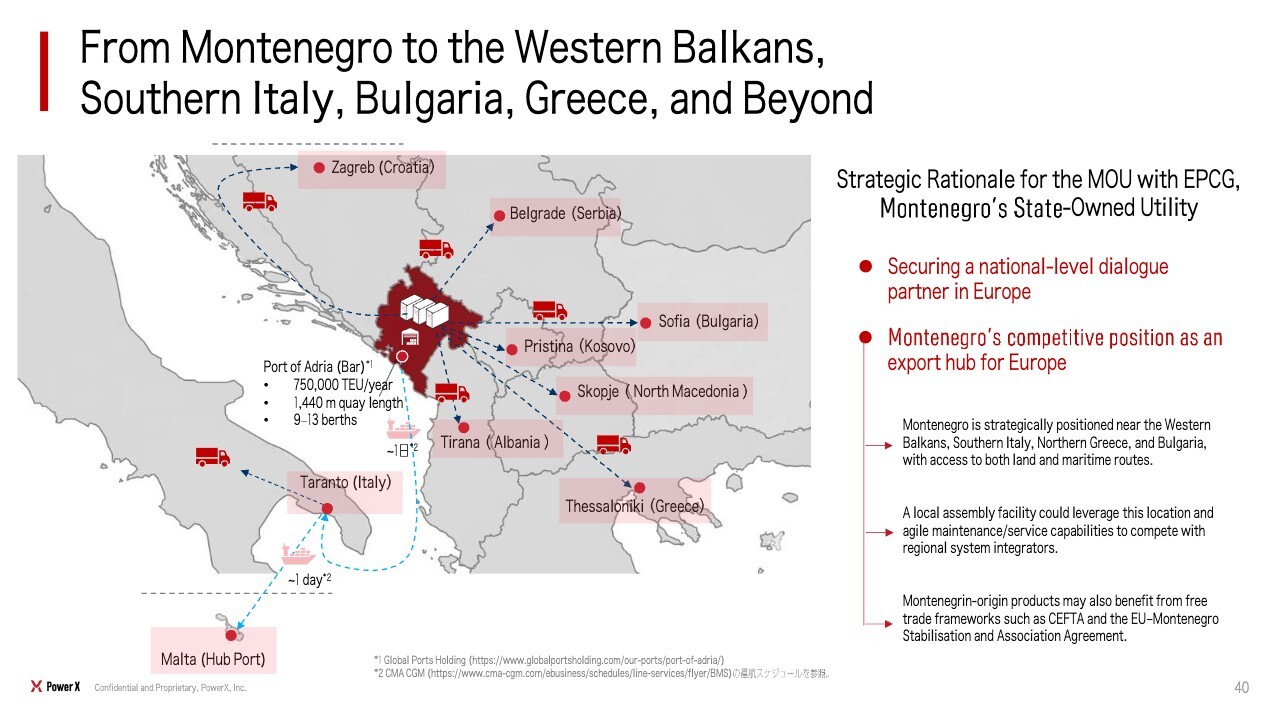
We view Montenegro as offering significant geopolitical advantages. Montenegro is expected to join the EU, and we understand that 2028 is the target date. If accession is achieved, the factory there will be positioned as an EU-based facility.
Even if it does not join the EU, the area remains highly attractive from a geopolitical perspective due to its accessibility to neighboring countries via road, rail, and sea.
Furthermore, both Japan and Montenegro are NATO member states, so we believe the countries share a friendly relationship. Given that the country meets all four of our selection criteria, we aim to actively expand our operations into Montenegro.
Reference: Calculation Process for BESS Demand PowerX Aims to Capture (1)
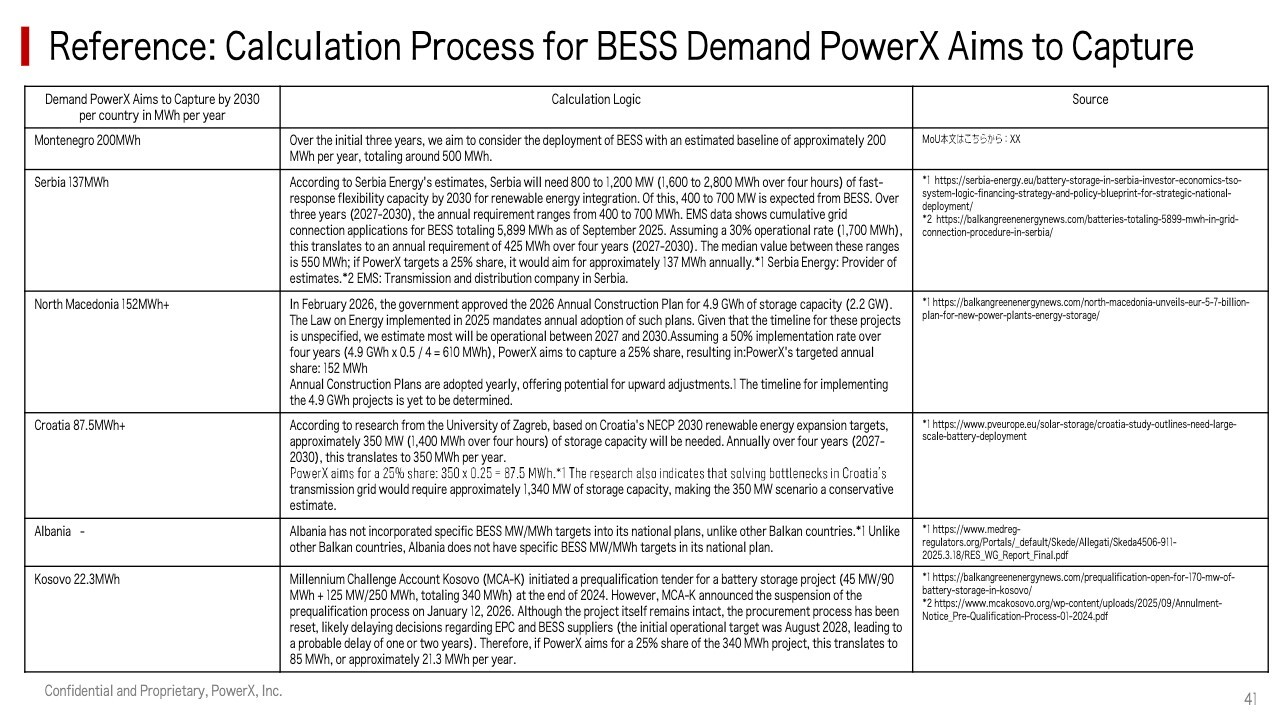
PowerX is also exploring potential for similar initiatives in other countries.
Reference: Calculation Process for BESS Demand PowerX Aims to Capture (2)
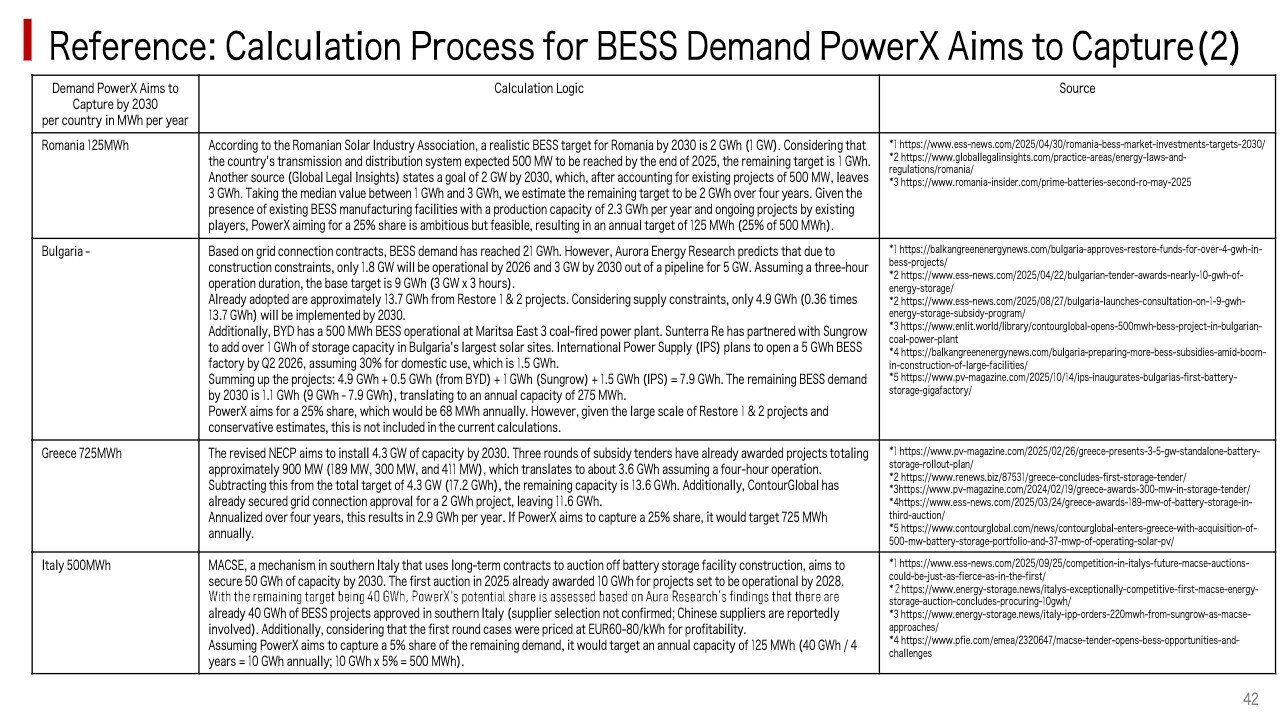
We have conducted extensive research on each country. The rationale is presented on the slides as supporting evidence.
Targeting Expansion into Southern Asia, South America, and Africa, in Addition to Eastern Europe
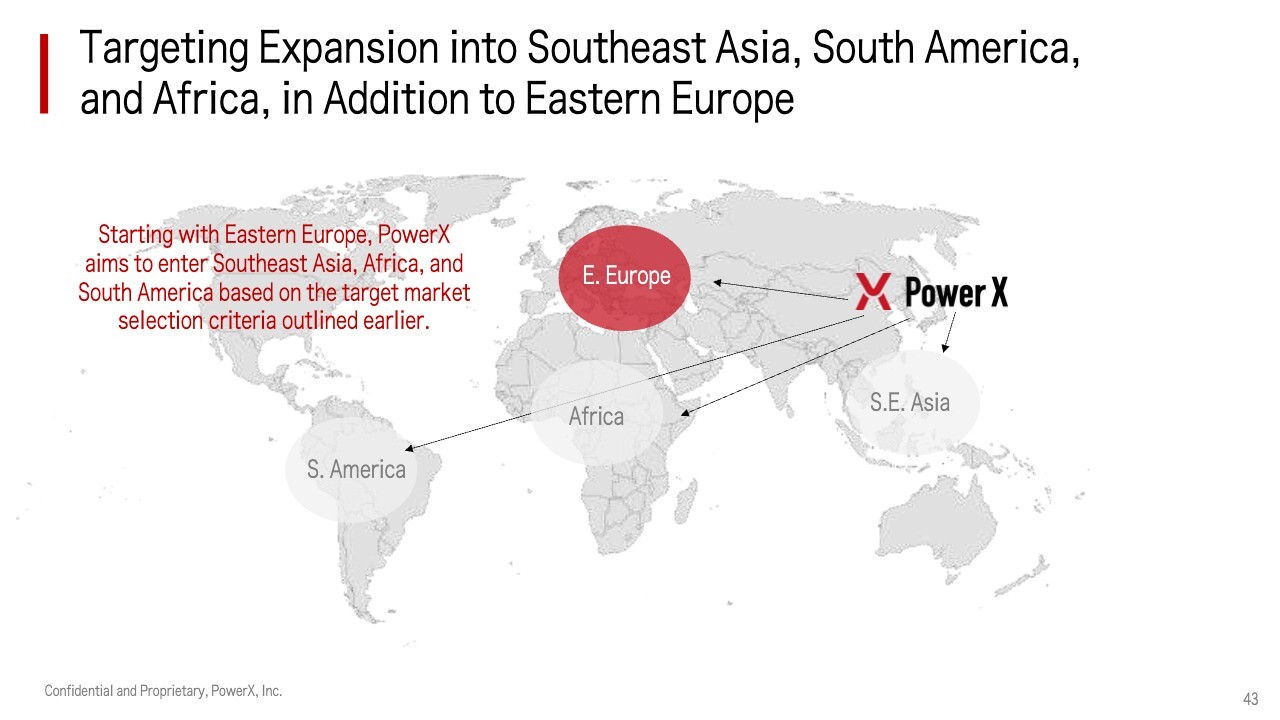
Regions within roughly 30 degrees of the equator have extremely abundant sunlight. At the same time, geopolitical factors have created various concerns over oil-related supply chains, and countries around the world are actively working to develop their own domestic energy resources.
Against this backdrop, we are also looking to expand into regions such as Southeast Asia, Africa, and South America. We have already received inquiries from each of these regions, and we intend to actively pursue these opportunities. At the same time, we will move forward only to the extent that such initiatives do not negatively affect our performance in Japan or involve excessive risk.
PowerX Data Center Products
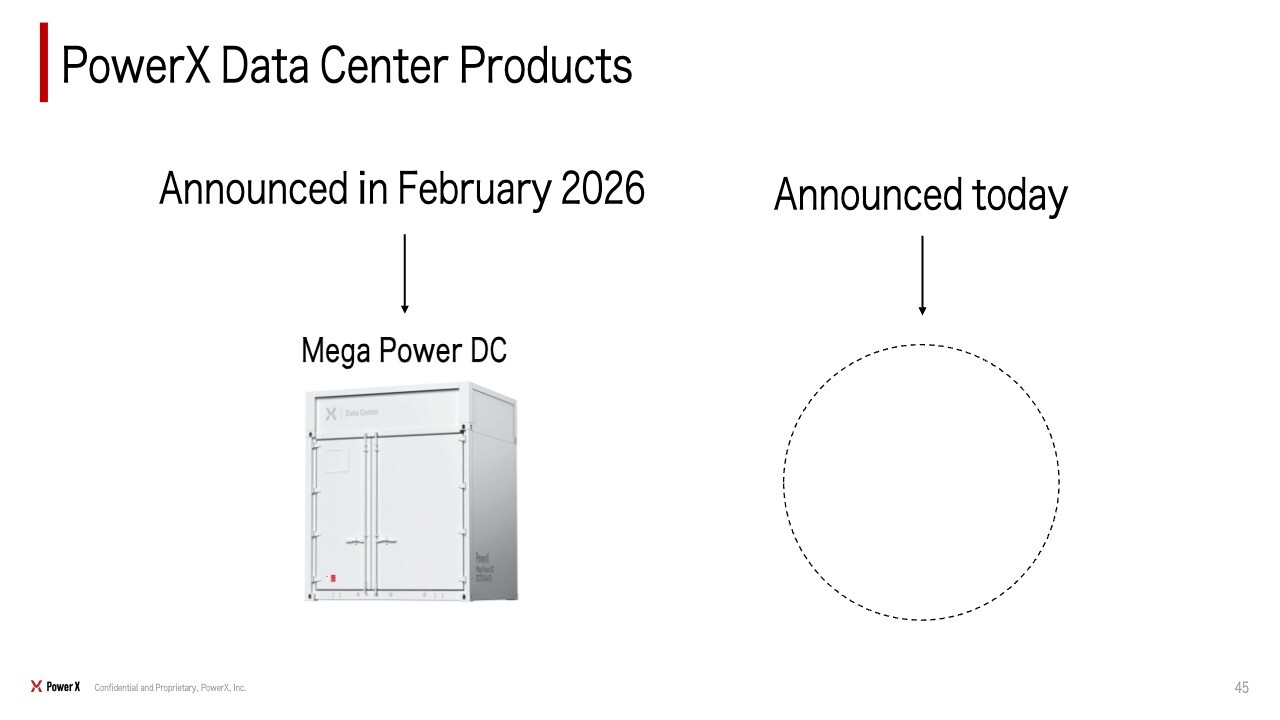
Let me now introduce our new product. In February 2026, PowerX announced Mega Power DC. This is a containerized data center that leverages battery enclosure and cooling technologies and uses direct current technology.
A key feature of this product is that it can be installed quickly, even at a time when constructing new buildings has become extremely difficult. We are already receiving many inquiries.
We are working to build a solid track record in the next fiscal year, and aim to generate meaningful revenue in the following fiscal year.
Modular Data Center Business: Topics
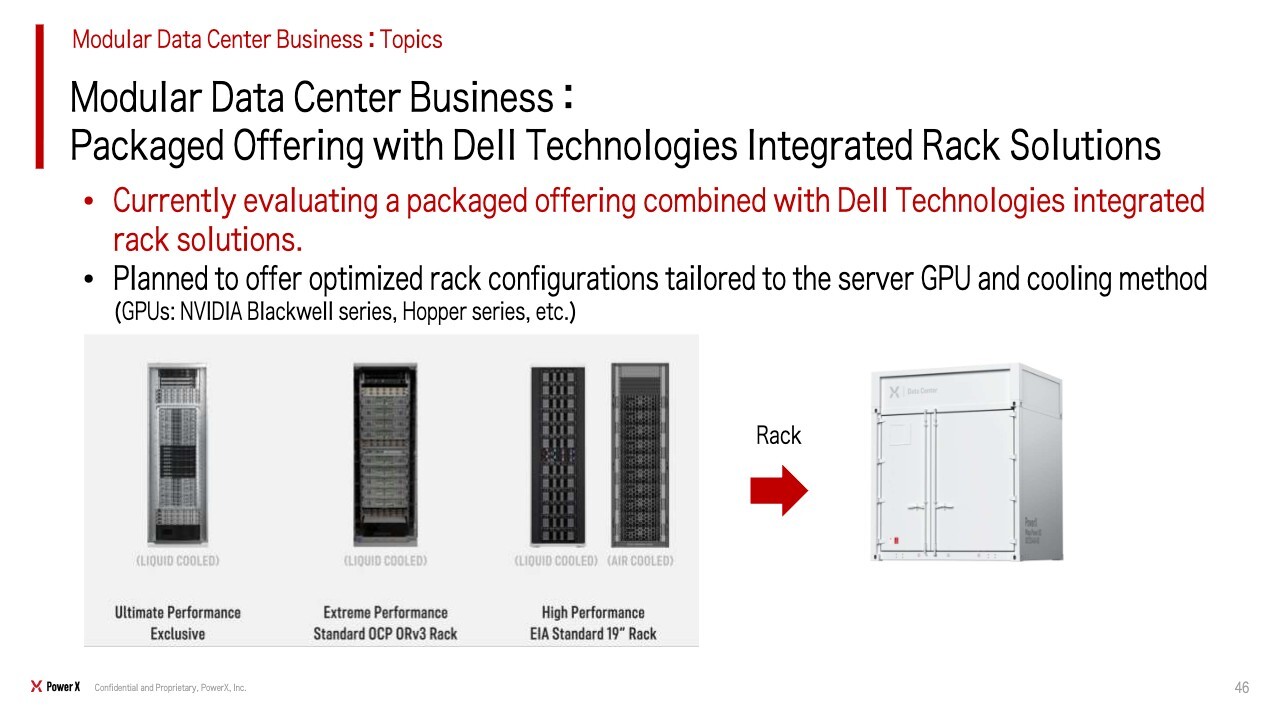
I will share an update on Mega Power DC. In our previous briefing, we explained contract manufacturing—specifically Phase 0, in which we assemble servers commissioned by customers and deliver them as custom-built products.
In Phase 1, we are working to source and sell products on our own or to partner with manufacturers. We are currently exploring integrated rack solutions with Dell Technologies.
By offering packaged products, we ensure they are fully operational and guaranteed to work upon installation, making them very attractive purchasing options for our customers.
Additionally, Dell Technologies products are compatible with state-of-the-art AI factories. We are currently exploring the 7000 and 8000 series, which support the NVIDIA Blackwell series and Hopper series.
Power Demand related to Data Center is Expected to Continue Increasing Worldwide, Driving an Urgent Need to Address Power Supply Challenges.
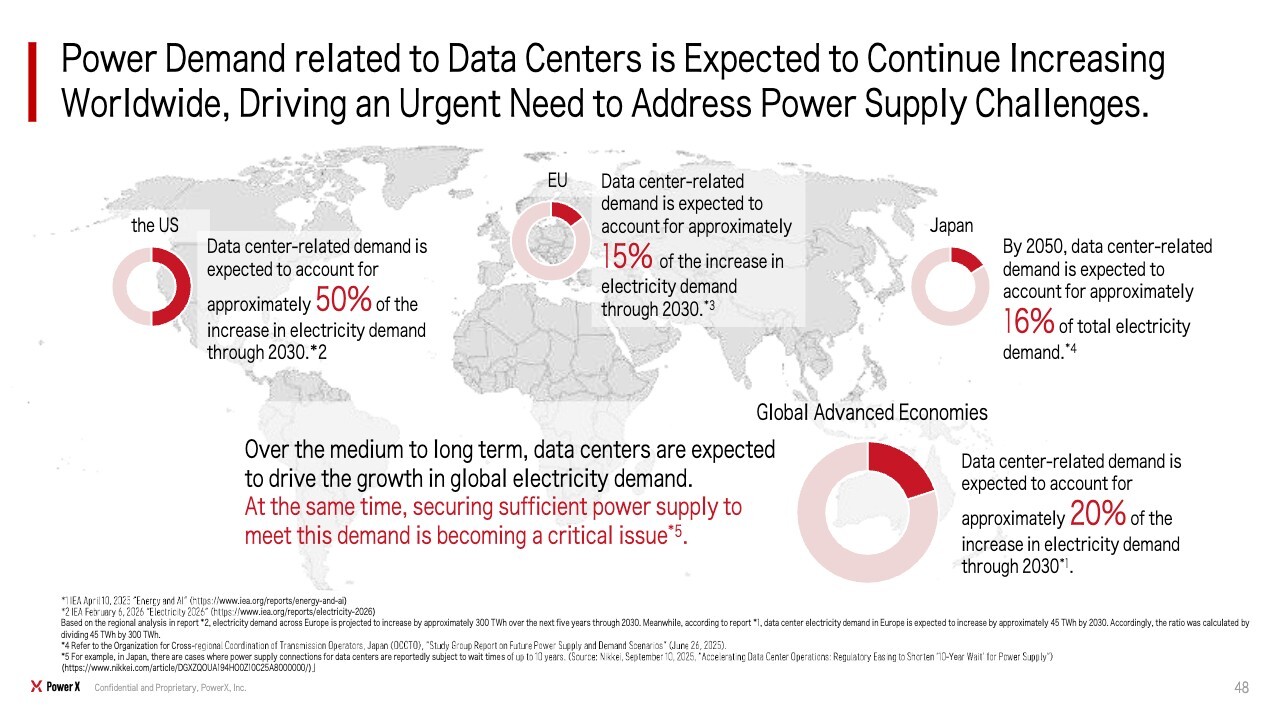
Moving on to the new product we’re announcing today. While this may not yet be immediately apparent in Japan, data centers already consume half of the country’s new power sources in the United States.
Earlier, I touched upon our AI-ready presentation material. In the process of feeding the data you’ve scanned into an AI system for Q&A, AI consumes a massive amount of electricity. As such, data centers consume an enormous amount of electric power, and power supply issues are becoming increasingly critical.
For this reason, cutting-edge research in the field is focused on how to operate data centers while minimizing power consumption.
The biggest challenge at this point is to ensure that data centers can be built and operated using infrastructure that is compatible with existing power grids, rather than simply aiming for energy efficiency.
PowerX’s Vision
PowerX is driven by its vision “For a Sustainably Prosperous Future.” We have been conducting extensive research to address the energy challenges arising from the rapid growth of data centers.
Our Initiatives to Address Data Center Power Challenges – Proof-of-Concept Demonstration
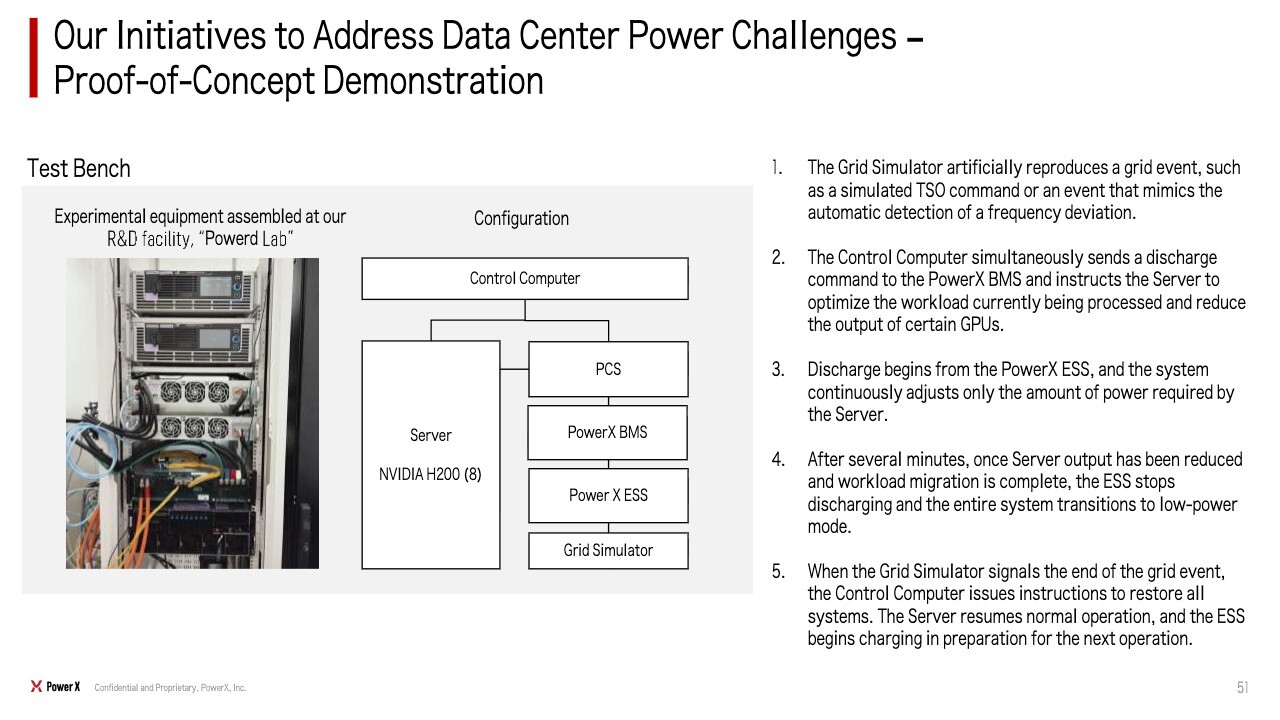
The photo on the slide shows an experiment conducted at PowerX’s Tokyo lab. As you can see in the diagram on the slide, the server on the left and the battery storage system on the right are connected via a control computer.
The Grid Simulator shown in the bottom right of the diagram is a device that simulates the power grid, enabling the artificial reproduction of various grid events.
For example, it can simulate situations where a power shortage causes a significant drop in frequency, voltage fluctuations, or the grid issuing restriction commands. In such cases, the Control Computer sends a request to the data center to reduce output. Specifically, the computer issues a command to the ongoing computational processes.
Concurrently, it sends a command to the battery to continue supplying power in response to the reduction in data center’s power, thereby achieving energy savings. However, computing power is not lost.
In this way, we conducted experiments to determine whether this mechanism—which reduces power consumption while maintaining computing power—could be temporarily achieved for durations of several minutes up to about 10 minutes.
Core Concept of Our Demonstration
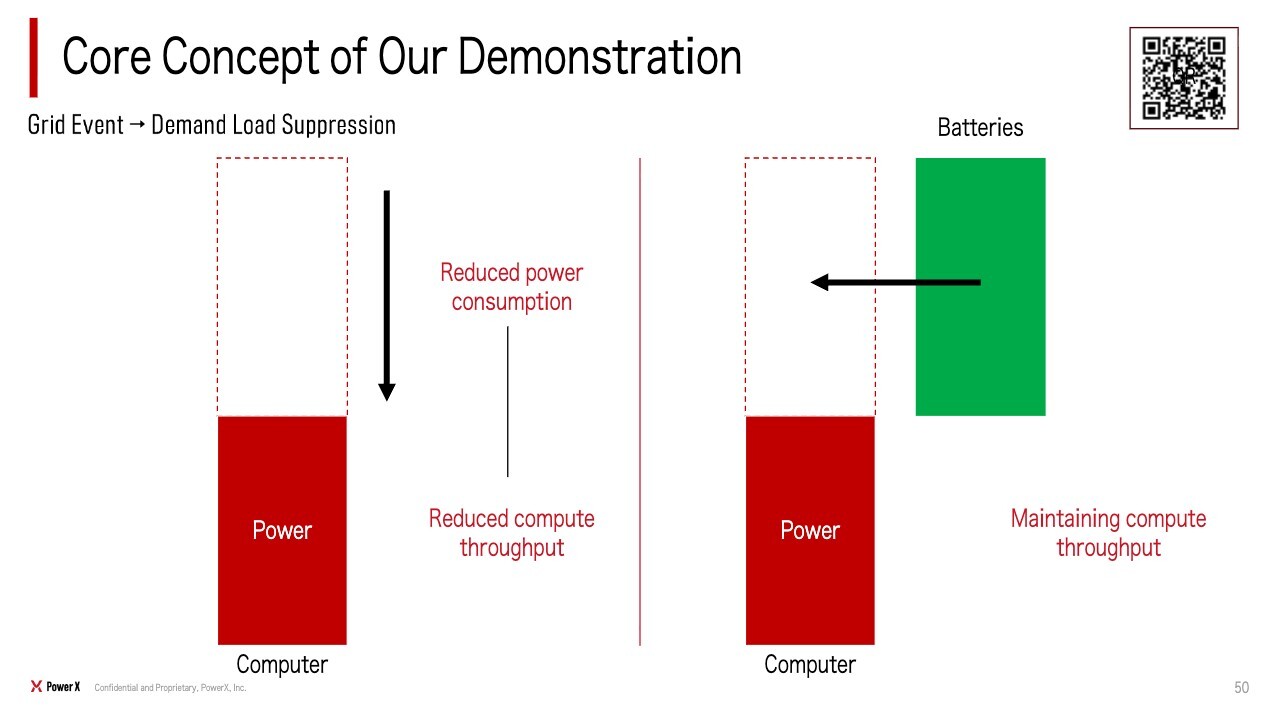
Here are the results of the experiment. Typically, reducing power consumption will also reduce computing capacity. Our approach is to maintain computing performance by compensating for the reduced power with battery storage.
Results of Power Discharge and GPU Power Suppression During Grid Events
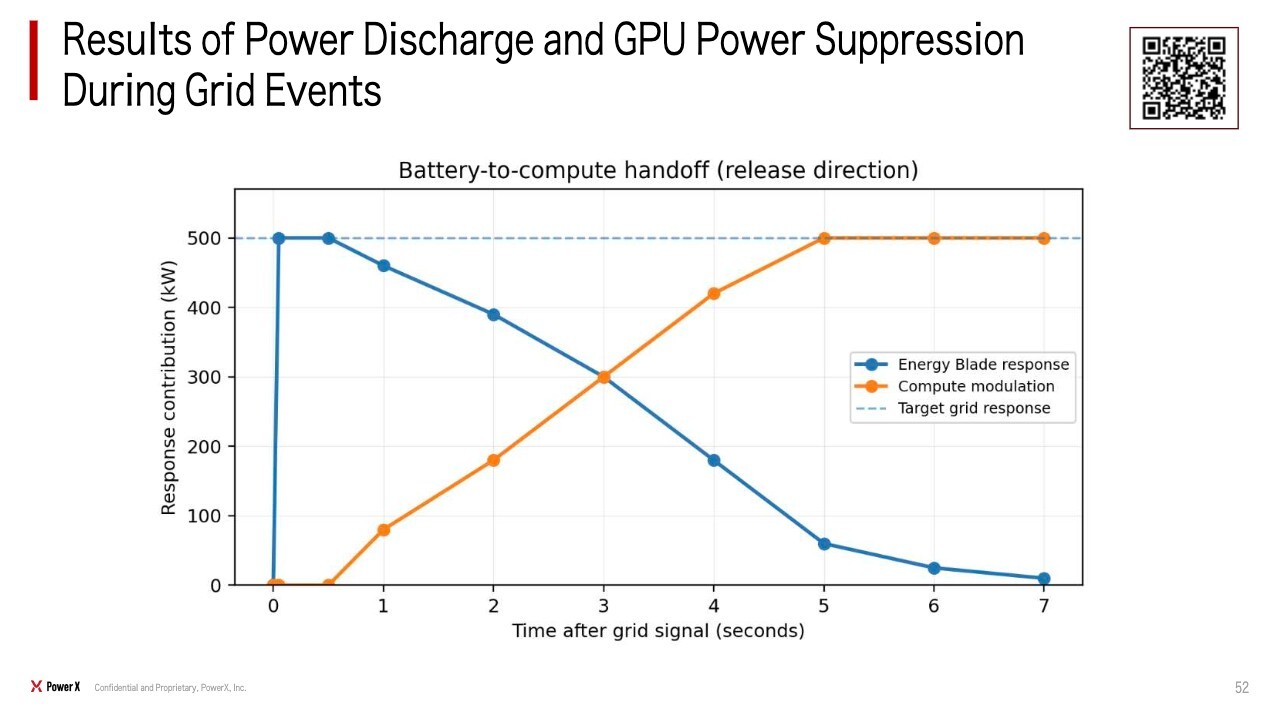
The blue line in the graph shows the power response from the experimental results. You can see that the power requirement decreases as power suppression progresses toward the right.
Proprietary Software: Operational Log During Grid Events (1)
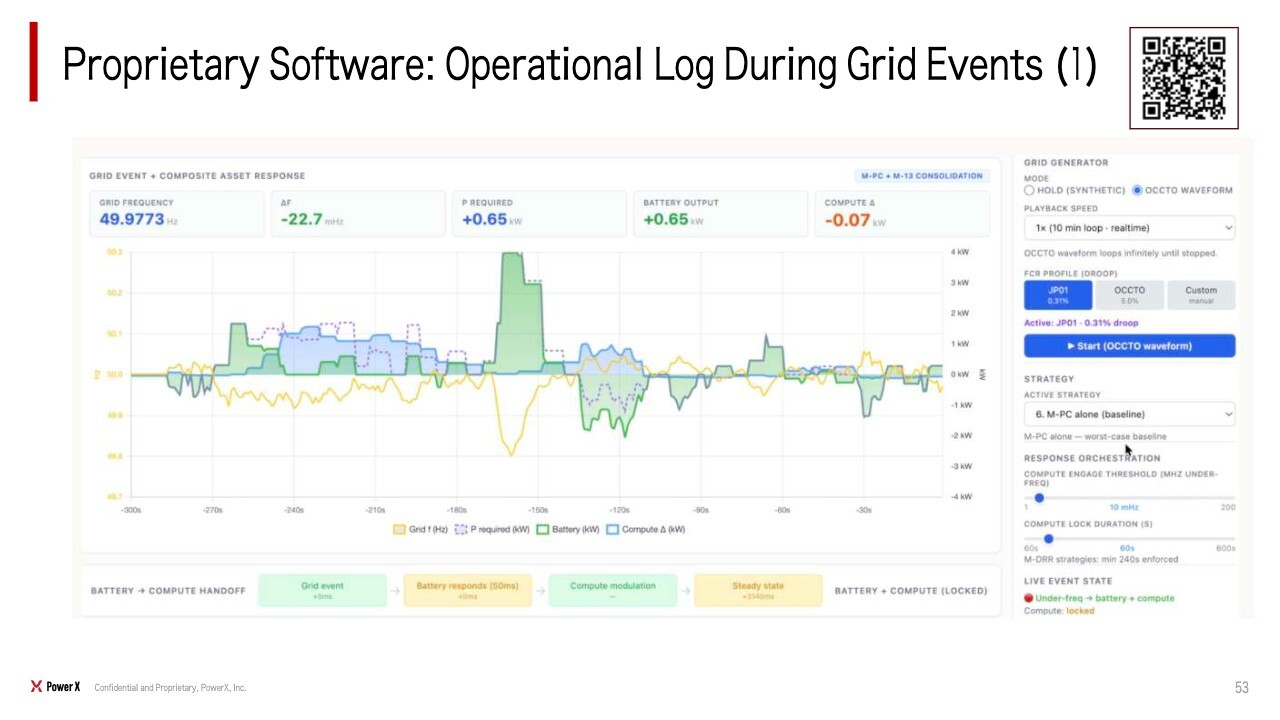
The yellow portion of the graph represents a simulated grid condition, illustrating various grid events occurring consecutively.
For example, in response to events such as power shortages that lead to potential frequency instability or significant voltage drops, the batteries operate at full capacity in accordance with grid commands, as shown by the green portion on the graph, to support the data center’s operations. The results demonstrate that the commands are also sent to the computer, ensuring computational performance is maintained while successfully overcoming these grid events.
Proprietary Software: Operational Log During Grid Events (2)
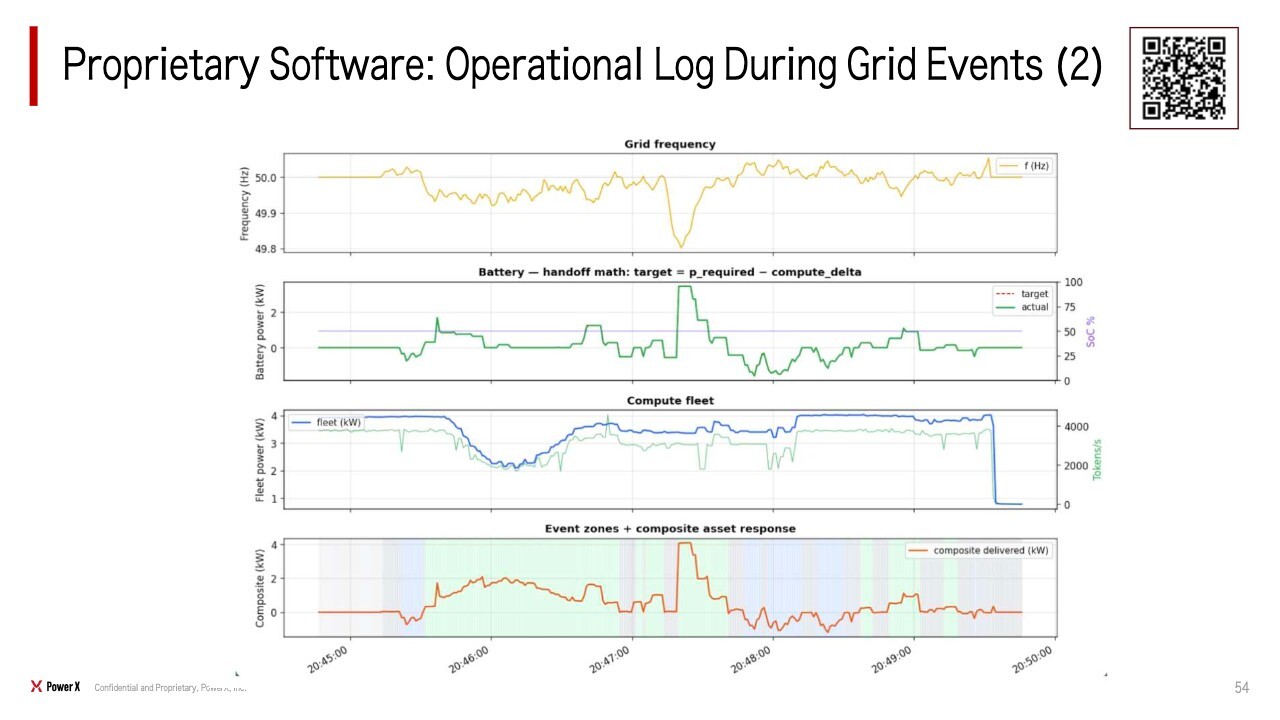
Here are the operational logs during grid events. Given these results, we intend to commercialize this new product.
Findings and Conclusions from the Demonstration
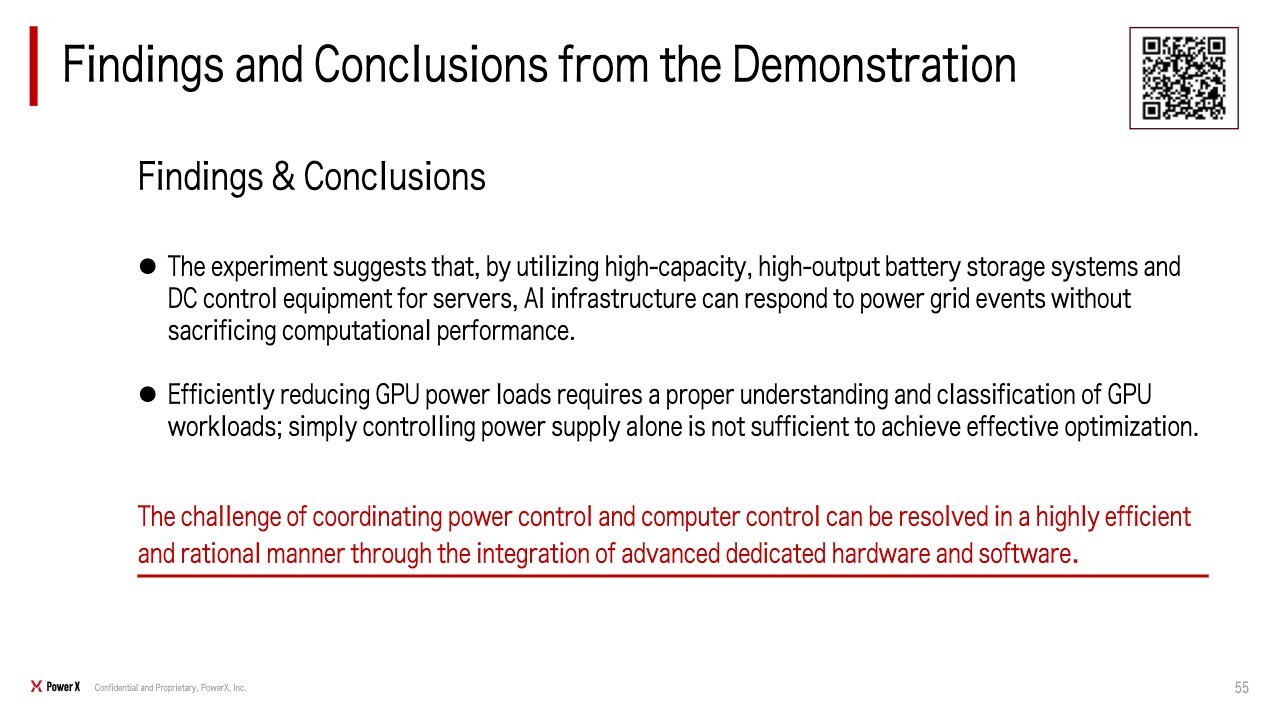
First, by utilizing high-capacity, high-output battery storage systems and DC control technology for servers, AI infrastructure can respond to power grid events without sacrificing computational performance.
On the other hand, we have found that accurate understanding is required when organizing GPU workloads.
As a result, it has become clear that integration of battery storage systems and controls is required as a solution, rather than simply installing battery storage systems. Based on this, we believe commercialization is feasible and are announcing a new product.
PowerX Energy Blade
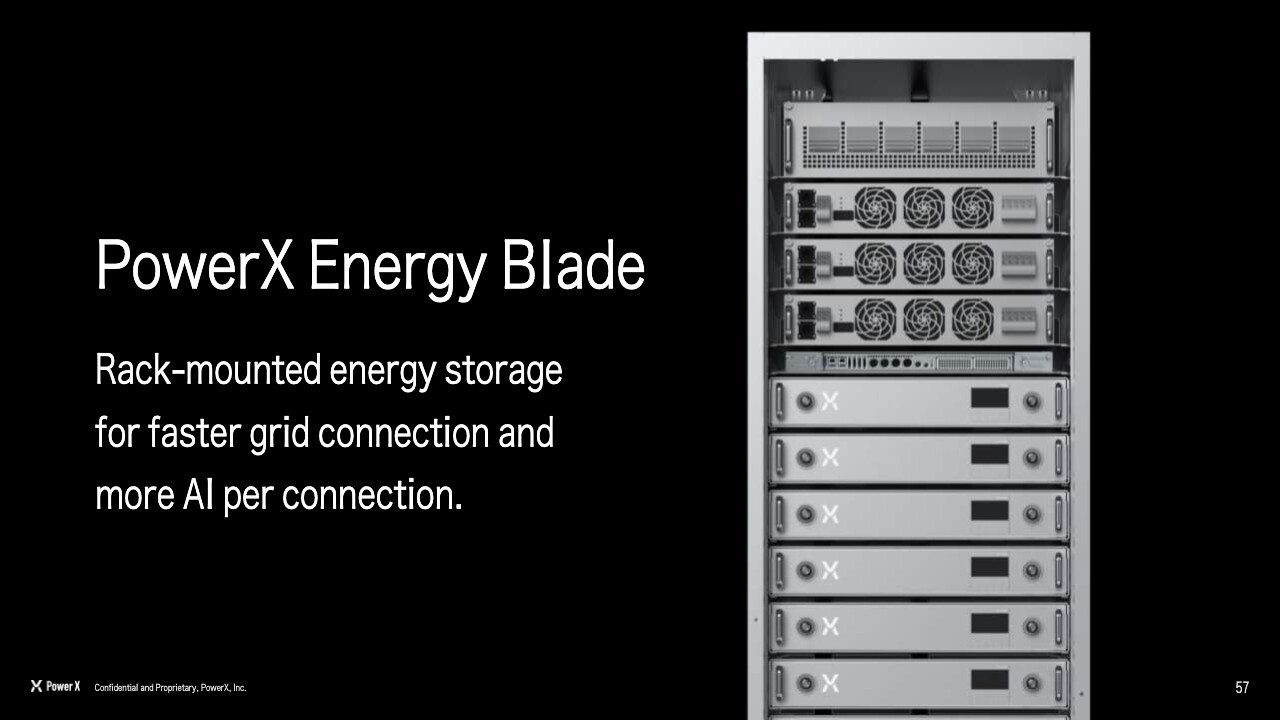
This is our PowerX Energy Blade 2027. It is a rack-mounted energy storage system, which can be installed in existing data centers or building-based data centers. All the blades inside the rack labeled with the “X” logo are battery storage units.
Unlike standard uninterruptible power supplies (UPS), this system offers significantly higher capacity and power output. It is also designed for grid connection and operates at high voltage.
Like having small battery storage units installed right next to the computers inside a data center, this system is characterized by its extremely fast response time.
PowerX Energy Blade Rack
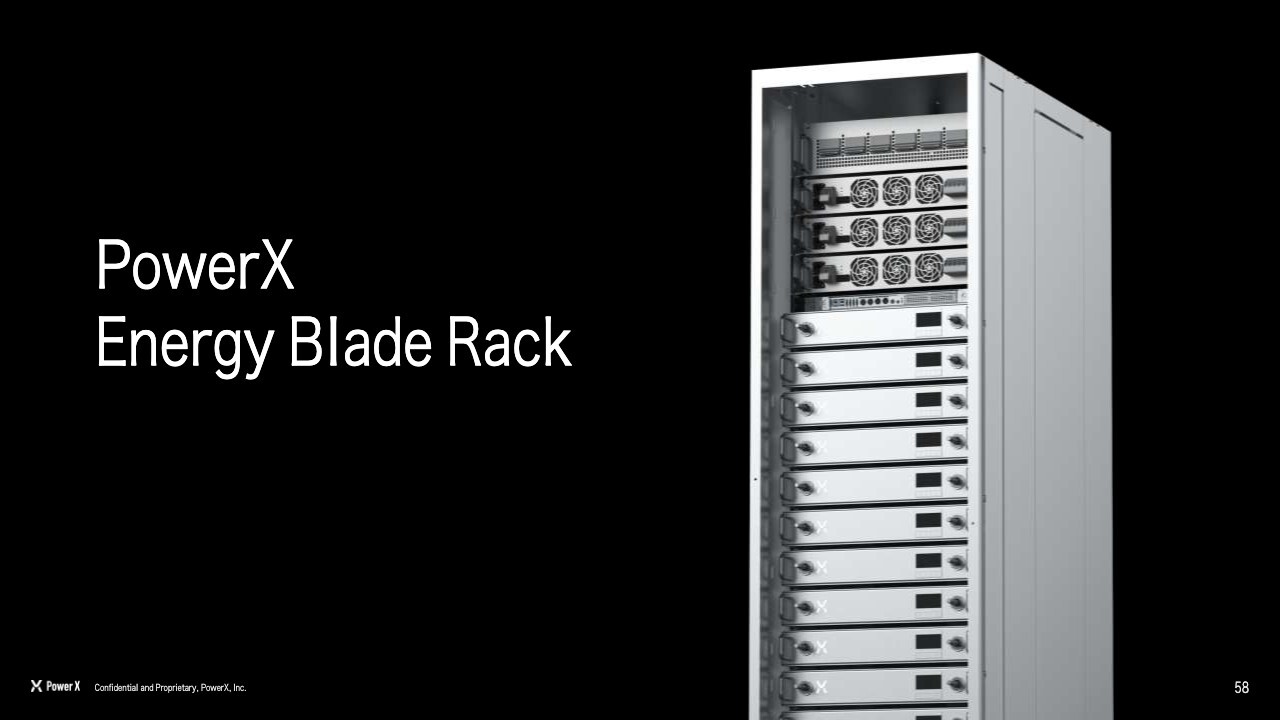
As shown on the slide, it is a rack-type configuration.
PowerX Energy Blade Rack
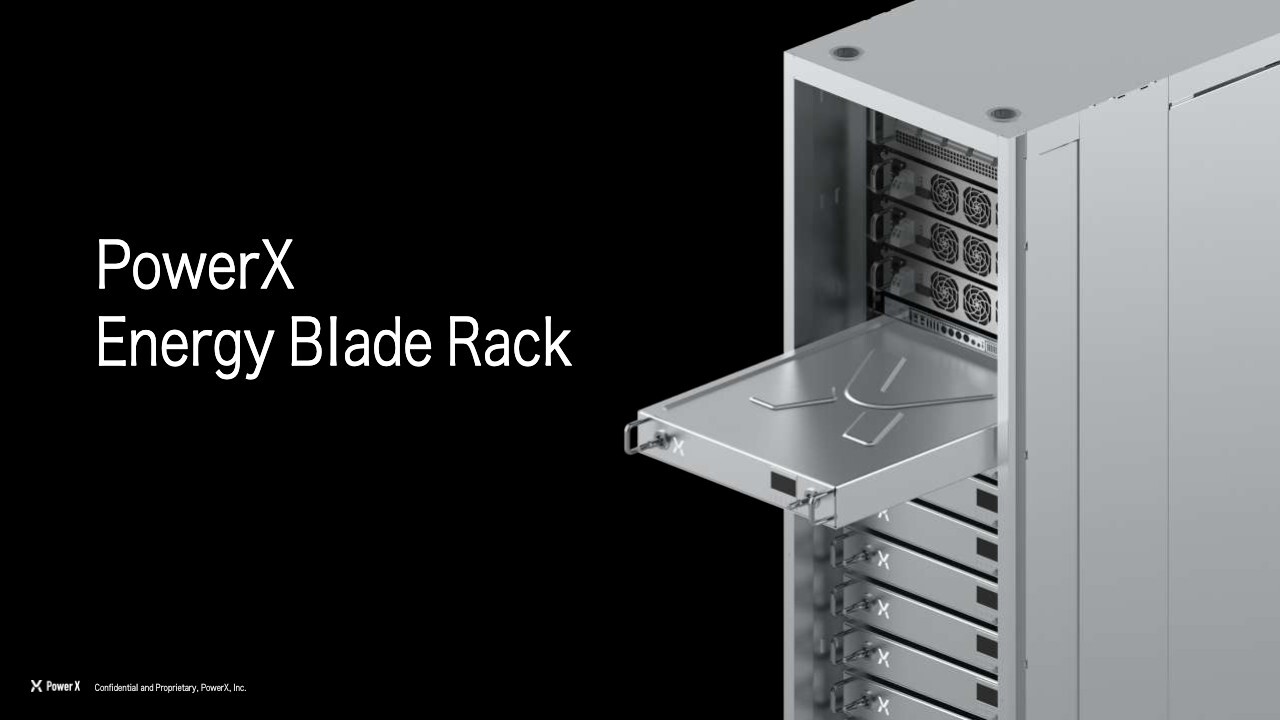
Each blade can be pulled out from the rack.
PowerX Energy Blade
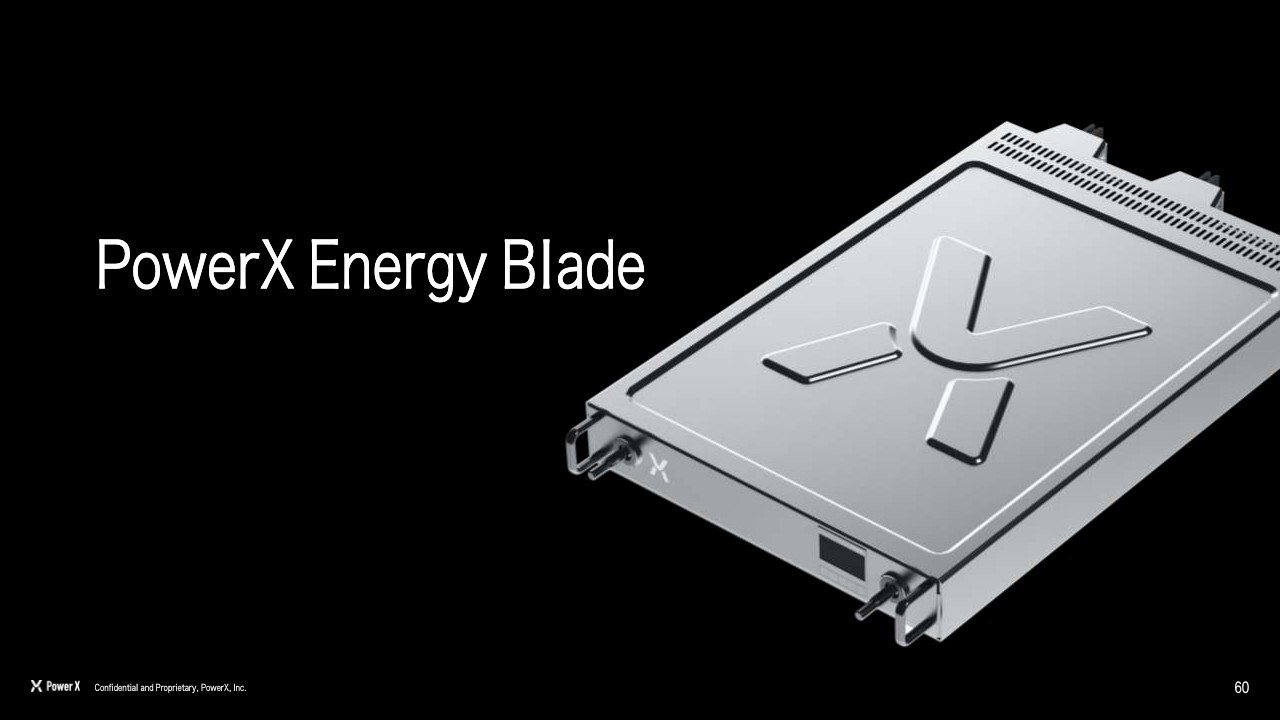
This is a single blade. The unit on the front is the liquid cooling system, which houses a built-in battery, while the computer is mounted at the rear. The product also comes equipped with a dedicated cooling heat exchanger and power plugs.
PowerX Energy Blade
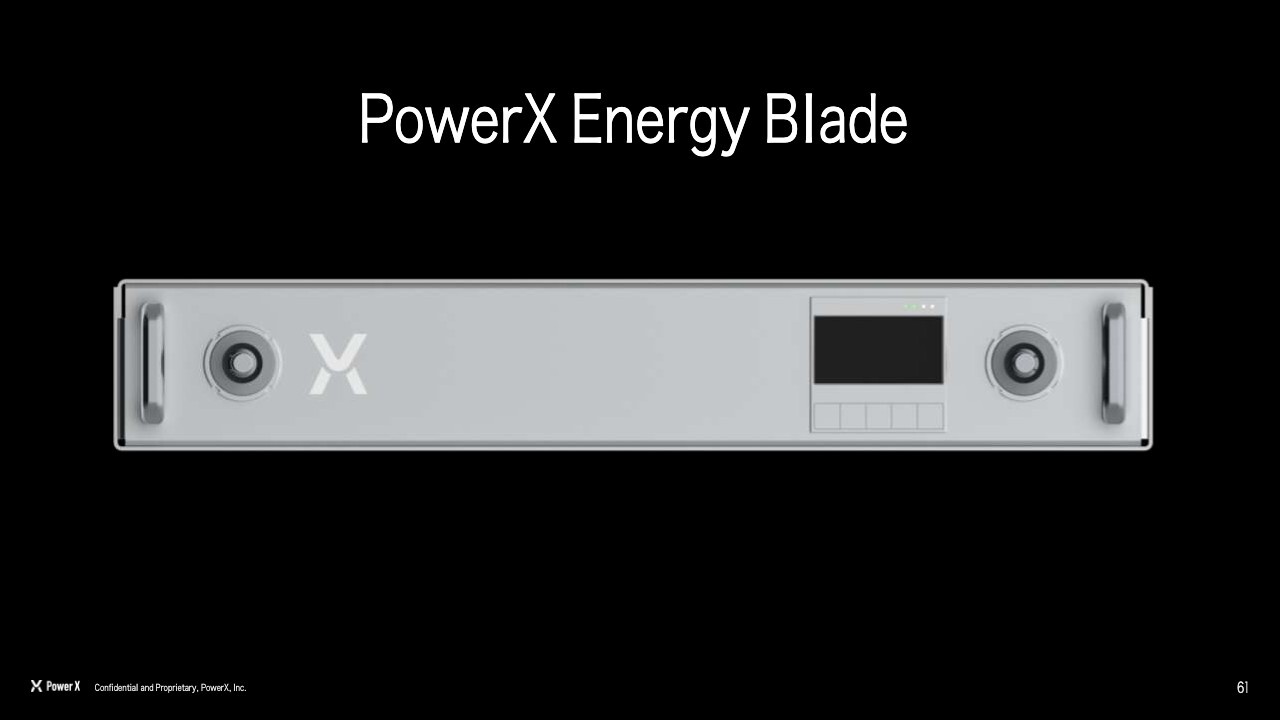
This is the front view of the PowerX Energy Blade.
Rack-mounted Battery System Delivering up to 48kWh, 120kW, and 800V DC for Data Centers
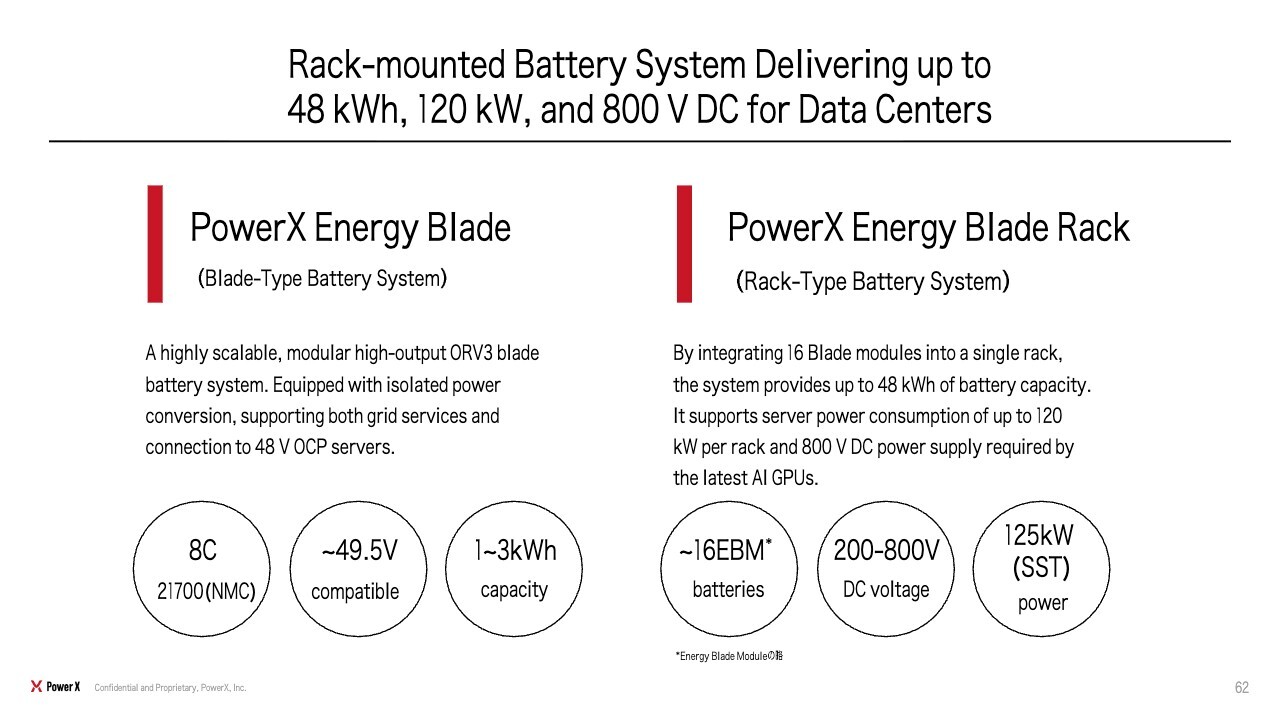
The product name for a rack-mounted PowerX Energy Blade is PowerX Energy Blade Rack.
The PowerX Energy Blade is not the conventional Lithium iron phosphate (LFP) battery we have been using. This is an 8C Nickel Manganese Cobalt (NMC) battery, a high-power battery commonly used in drones and similar applications. It supports 49.5 V and can be configured with capacities ranging from 1 kWh to 3 kWh, despite its compact blade size.
At the same time, the rack can store up to 16 blades, allowing for a substantial amount of storage capacity. Modern computers are all DC-compatible, and the system can adjust and deliver an output between 200 V DC and 800 V DC.
Furthermore, with a maximum output of 125 kW, it can easily supply power to cutting-edge AI data centers with high computing capabilities and the highest power consumption, such as NVIDIA’s Vera Rubin.
Creating New Revenue Streams for Data Center Operators while Supporting Faster Grid Interconnection
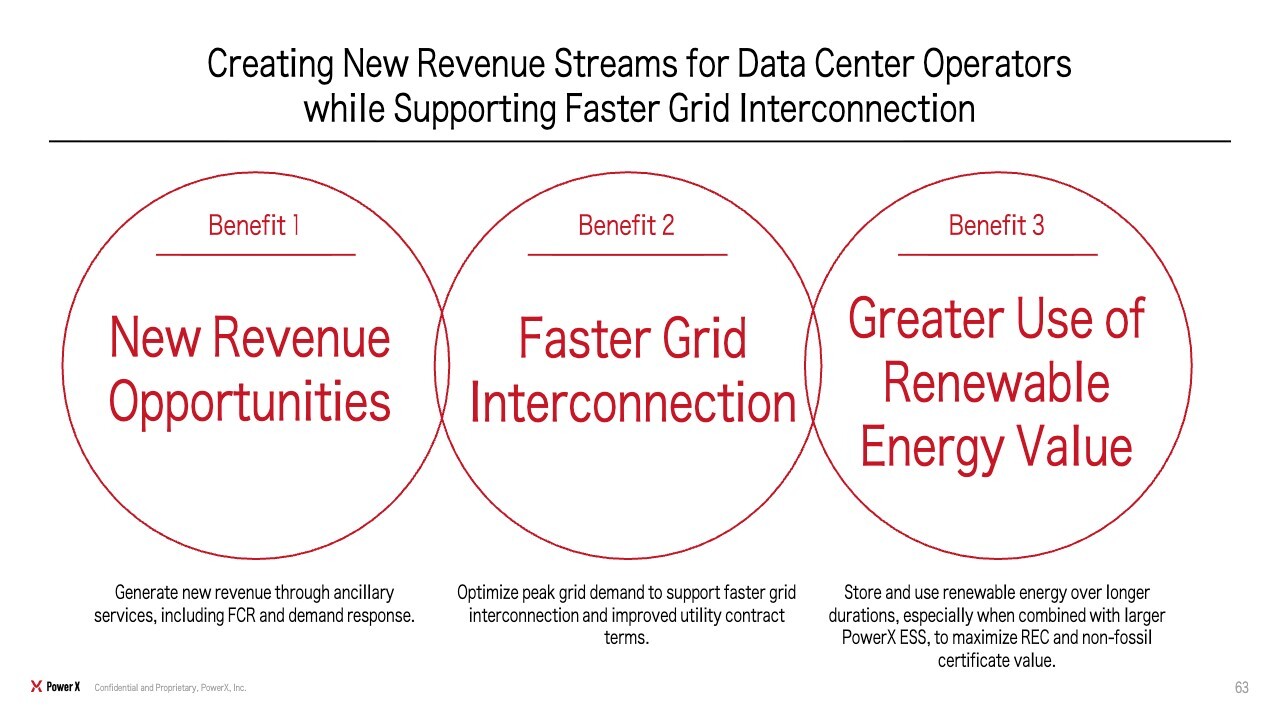
There are three key benefits we can offer our customers. While we plan to market this solution globally—not just in Japan—I will focus on Japan as the primary market for today’s discussion.
First, new revenue opportunities. As I have been discussing the balancing market, the FCR price cap dropped from ¥19.5 to ¥15, and to current ¥12—and I mentioned that we can operate even at ¥7. Data centers can apply to participate in this market as a single entity. This allows us to generate a new revenue stream that did not exist before.
At the same time, installing such battery storage systems enables data centers to reduce peak demand. This allows for grid connection under even more favorable conditions, and the contract terms themselves may also be more advantageous than before.
Furthermore, among major companies—including GAFAM—there is a growing demand to operate data centers using renewable energy. To achieve this, early adoption is necessary. For this reason as well, introduction of battery storage systems will be crucial.
New Revenue Opportunities for Existing Data Centers through Ancillary Services Market Participation
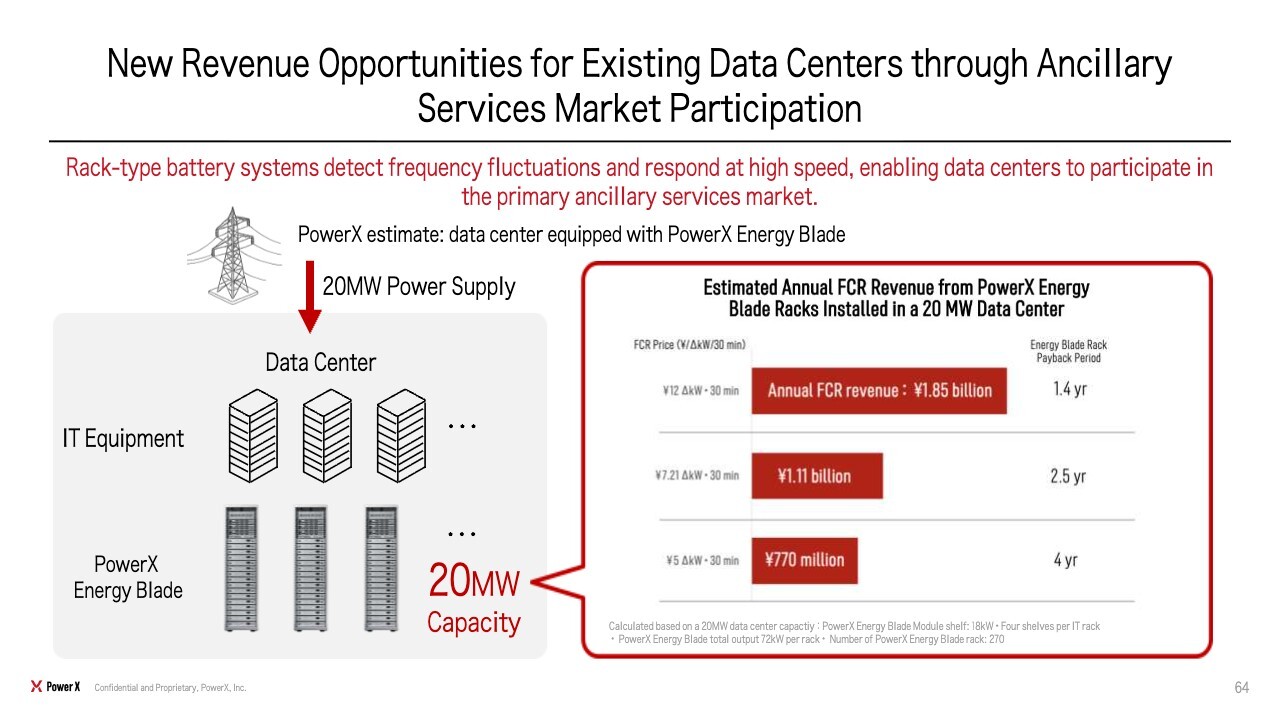
In a typical data center in Japan with a capacity of around 20 MW, it is unlikely that all racks are fully occupied. Therefore, we propose installing our PowerX Energy Blade in any vacant racks for connection to the balancing market. This will enable the data center to contribute balancing capacity—particularly at the megawatt level.
The current FCR price stands at ¥12. Based on this price, the new annual FCR revenue is estimated to be ¥1.85 billion. The capital investment can be recouped in 1.4 years. With an operational lifespan of five years, this solution is highly profitable and enables data centers to rapidly expand their revenue streams.
Even if the price of temporary balancing power were to drop to ¥7, we could expect ¥1.1 billion in revenue over 2.5 years. Even in the unlikely event that it were to fall to the extremely low level of ¥5, we would still generate ¥770 million in new revenue over four years. This can be achieved simply by converting an existing 20-MW facility into a data center.
Therefore, it can be installed when constructing a new data center, or it can be installed in an existing data center.
This business model can be expanded not only within Japan but also overseas. In particular, higher revenue can be expected in the U.S. balancing market, reflecting the severe power shortage at present.
Implementing this solution in data centers facing power supply issues will increase revenue. When used in data centers experiencing power shortages, it allows for reducing peak AI server usage and enables scaling up. Furthermore, it leads to faster grid connections.
From the perspective of “time is money,” we believe this will lead to significant business opportunities.
Service launch scheduled for 2027
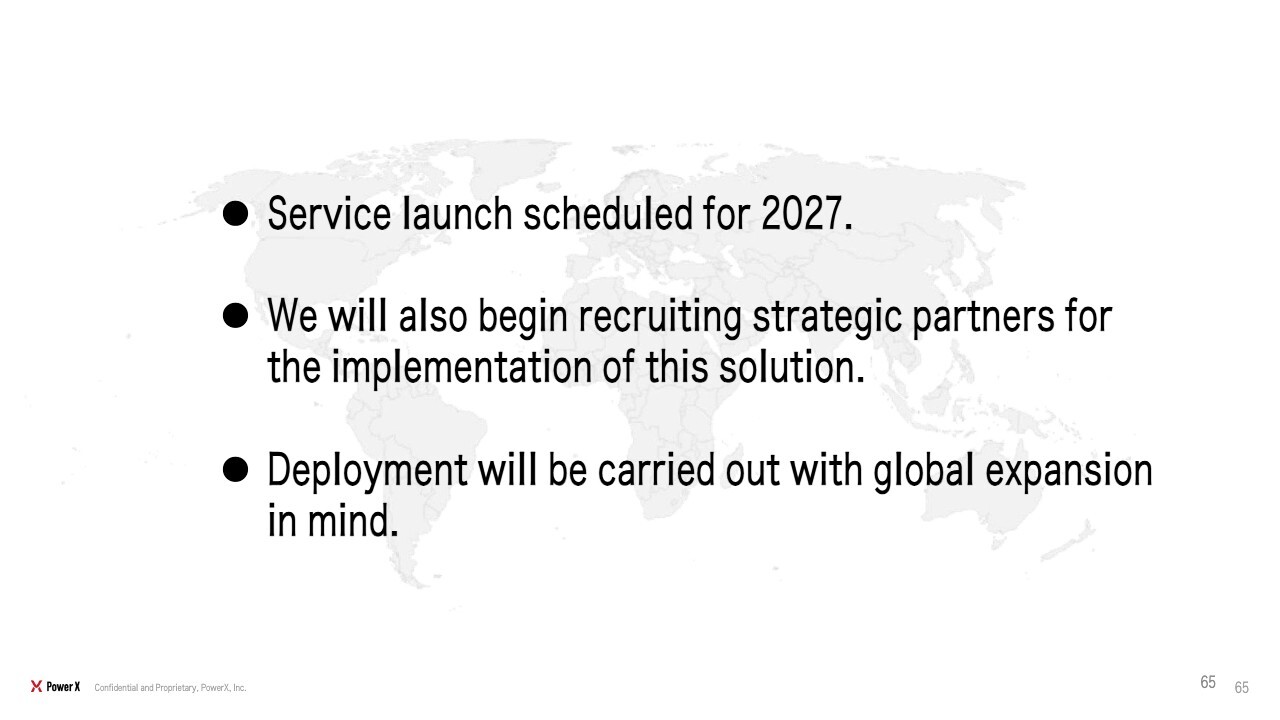
We are currently seeking collaboration partners and distributors for the PowerX Energy Blade. Our goals also include global expansion.
We are confident this is a highly attractive product, backed by numerous patents and extensive testing. We remain fully committed to launching sales in 2027.
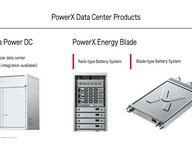
PowerX Data Center Products
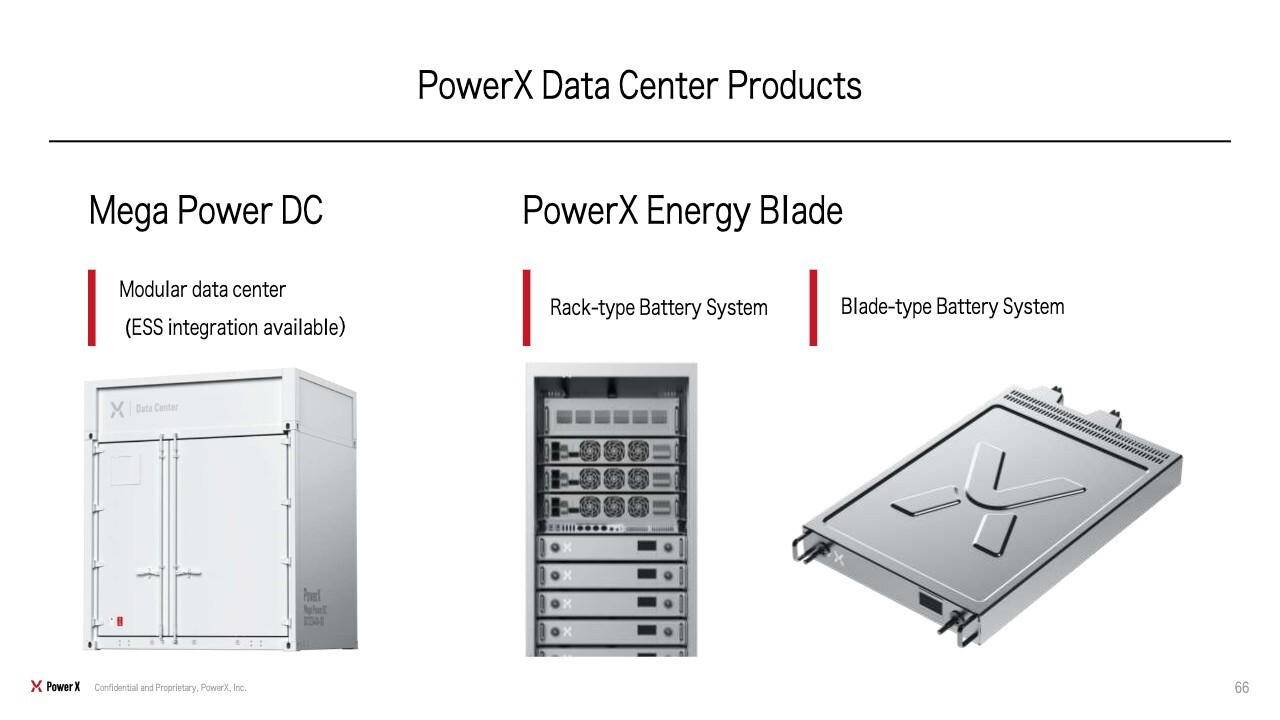
Here is the full lineup of our data center products. We will pursue the market opportunities with this complete lineup.
For the launch of this product, we are not anticipating any developments that would cause concern among our shareholders and investors. Everything is proceeding as planned within budget for the current fiscal year, and we are making appropriate investments. Please have confidence in our progress.
Greetings from Mr. Ito
Thank you for staying with us for the extended session. I sincerely appreciate the support and encouragement PowerX receives from all of our individual investors.
We have been striving to provide you with fair and transparent disclosure, aiming to deliver accurate information transparently and honestly. We have also updated our YouTube content to reflect changes in the market.
Additionally, we specifically prepared AI-ready financial results presentation material, because the original documents are extremely lengthy. If fed directly into AI systems, they could consume excessive tokens and potentially lead to misinterpretations.
The material is designed to minimize misinterpretations of the content when downloaded from the QR code for use with AI. We would appreciate any feedback you may have.
We remain firmly committed to our IR activities and look forward to your continued support.
All of our employees deeply appreciate your support. We will continue to steadily advance our business. Thank you for your ongoing support.