Contents
Colin Lee Novick (hereafter “Colin”): My name is Colin Lee Novick, Representative Director and Co-CEO of Innovacell. We will present our Quarterly Update for Q1 FY2026, covering our business progress. Thank you for joining us.
Jason Sieger (hereafter “Jason”): And I am Jason Seager, the other Representative Director and Co-CEO of Innovacell. Thank you for joining us.
Colin: Today, we will walk you through the three items on the slide: progress in Q1, the P/L update, and key milestones for this fiscal year.
IPO Overview
Colin: Let me give you an update on our business progress.
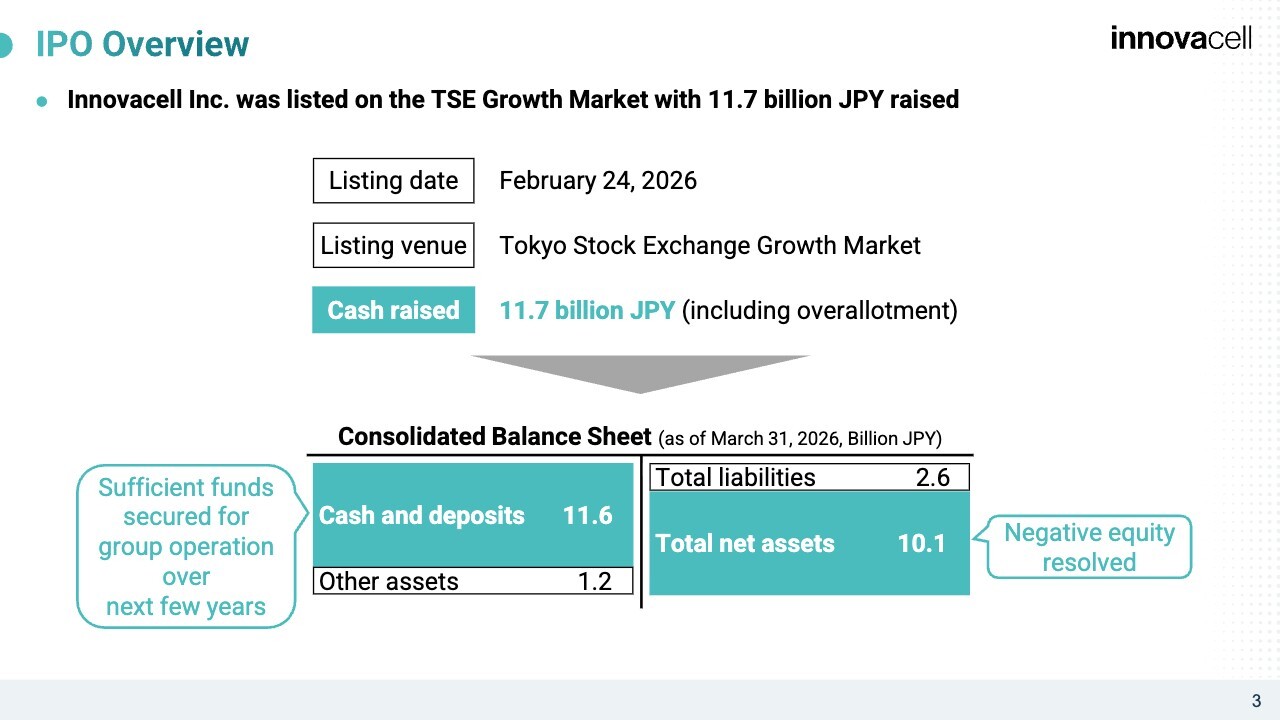
To start off, as you know, Innovacell Inc. was listed on the TSE Growth Market on February 24 of this year and raised approximately 11.7 billion JPY, including overallotment. As a result, the Company has approximately 11.6 billion JPY in cash and deposits. This secured sufficient funds to advance group operations over the next few years, allowing us to build a very solid financial foundation.
The bottom of this slide shows our consolidated balance sheet as of March 31, 2026. With cash and deposits totaling 11.6 billion JPY, our financial foundation has significantly improved. Our net assets also exceed 10 billion JPY.
Jason: Based on our research, this was the largest amount of newly raised capital by a biotech venture at the time of listing on the TSE.
Colin: Yes. Based on our research, it was the largest Japanese biotech IPO to date in terms of funds raised by the issuer.
Overview of Innovacell’s Developmental Pipeline
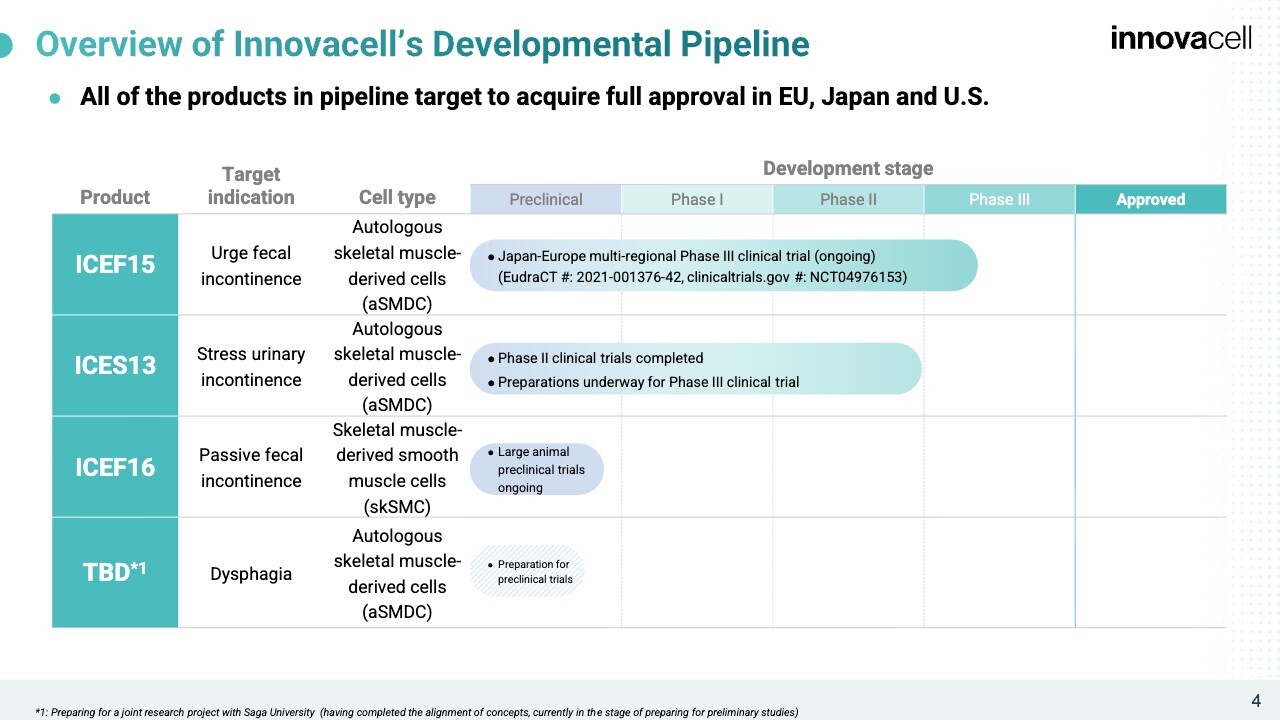
Colin: Here is an overview of our group’s pipeline. I will discuss the current status of our clinical development and the composition of the pipeline.
The slide lists four developmental products. First, I will explain ICEF15, our lead product, which is at the top.
ICEF15 is a regenerative medicine product designed to treat urge fecal incontinence. Urge fecal incontinence is a symptom caused by damage to the external anal sphincters, which can result from factors such as birth trauma or age-related muscle deterioration. Patients with this condition experience the urge to defecate, but are unable to reach the restroom in time.
A multi-regional Phase III clinical trial for ICEF15 is currently underway in a total of 12 countries, including Japan and 11 European countries. We plan to expand the scope of clinical development to include the United States, in addition to Japan and Europe. I will elaborate on this later.
For details on the clinical trial, please refer to the website “ClinicalTrials.gov” listed on the slide. ICEF15 is designed to strengthen muscle by directly administering the patient’s own cells to the external anal sphincters, where the cells engraft into the damaged muscle tissue. As a regenerative medicine product, it is intended to reduce the number of fecal incontinence episodes through this procedure.
Moving on to the second product in the pipeline. ICES13, listed second from the top, is a regenerative medicine product for stress urinary incontinence and is intended for women only. The Phase IIb trial has been completed, and preparations are underway to initiate Phase III clinical trials in Japan, the U.S., and Europe, similar to the ongoing multi-regional Phase III clinical trial for ICEF15.
Our third product in the pipeline, ICEF16, is also intended to treat fecal incontinence. However, as noted in the “Target indication” column, it addresses passive fecal incontinence rather than urge fecal incontinence. The target muscle type also differs from that of ICEF15. Rather than the external anal sphincters, it targets the internal anal sphincters, which are located inside the mascular ring of the external anal sphincters. This muscle is a smooth muscle, meaning it moves involuntarily, like the muscles of the internal organs.
Some of you may be familiar with passive fecal incontinence, a condition that causes stool to leak unexpectedly without any prior urge to defecate. We are currently conducting large animal preclinical trials for ICEF16. Once these trials are complete, we plan to begin a first-in-human clinical trial later this year.
For the item listed at the bottom, the product name has not yet been determined. In collaboration with Saga University, we are conducting basic research on the treatment of dysphagia.
Going forward, we plan to continue developing all of these products in major countries and regions, including Japan, the United States, and Europe, in the same manner as with ICEF15, and we will proceed with preparations for their launch.
Jason: Let me add some notes on the mechanisms of action of ICEF15 and ICEF16. As we mentioned, the anal sphincter consists of a two-layered ring structure. The outer ring is composed of voluntary muscle that can be controlled by conscious effort. In contrast, the inner ring is made up of smooth muscle that moves involuntarily. In other words, it functions similarly to internal organs. Since our products' mechanisms of action are based on engraftment of administered cells, the administered cells must be of the same cell type as the target muscle. Therefore, the cell types used in ICEF15 and ICEF16 differ.
Colin: I’d like to add one more point. I think many people find terms like “regenerative medicine products” and “cell therapy products” difficult to understand. A very colloquial analogy may help. The live-action film adaptation of Cells at Work!, which was a blockbuster hit last year, actually features the type of muscle we are aiming to treat.
In medical terms, the external anal sphincters are classified as muscle tissue composed of multinucleated muscle fibers. Like the rugby player portrayed by actor Wataru Ichinose in the movie, these cells work together to form a scrum and prevent the leakage of feces and urine.
On the other hand, the internal anal sphincters are composed of smooth muscle. They are described as acting like a wrestler competing alone, and are characterized as muscles that move involuntarily. For this reason, these cells are personified as sumo wrestlers in the movie. Watching Cells at Work! might be one way to deepen your understanding through this kind of metaphor.
We are developing products that involve administering a patient’s own cells into these muscle layers to strengthen them.
Jason: The number of patients with fecal incontinence in Japan is estimated to be approximately 5 million, including both passive and urge fecal incontinence. This figure is based on a survey conducted by the Japan Society of Coloproctology. However, our target population does not include all of these patients; rather, we focus primarily on those with severe symptoms. We estimate that ICEF15 targets approximately 120,000 patients.
Colin: While developing this product, we frequently receive the question, “Can’t incontinence be managed with diapers?” However, some patients who participated in the Phase IIb trials of ICEF15 experienced incontinence more than 10 times a week—and in some cases, more than 60 times. The product is designed to treat patients like this. In other words, it is intended for patients whose needs cannot be fully met by diapers alone.
Jason: Another area with a large market size is stress urinary incontinence. It is estimated that approximately 15 million women in Japan alone are affected by this condition. Although our treatment targets only a portion of this population, it is clear that the market remains very large.
ICEF15 Progress
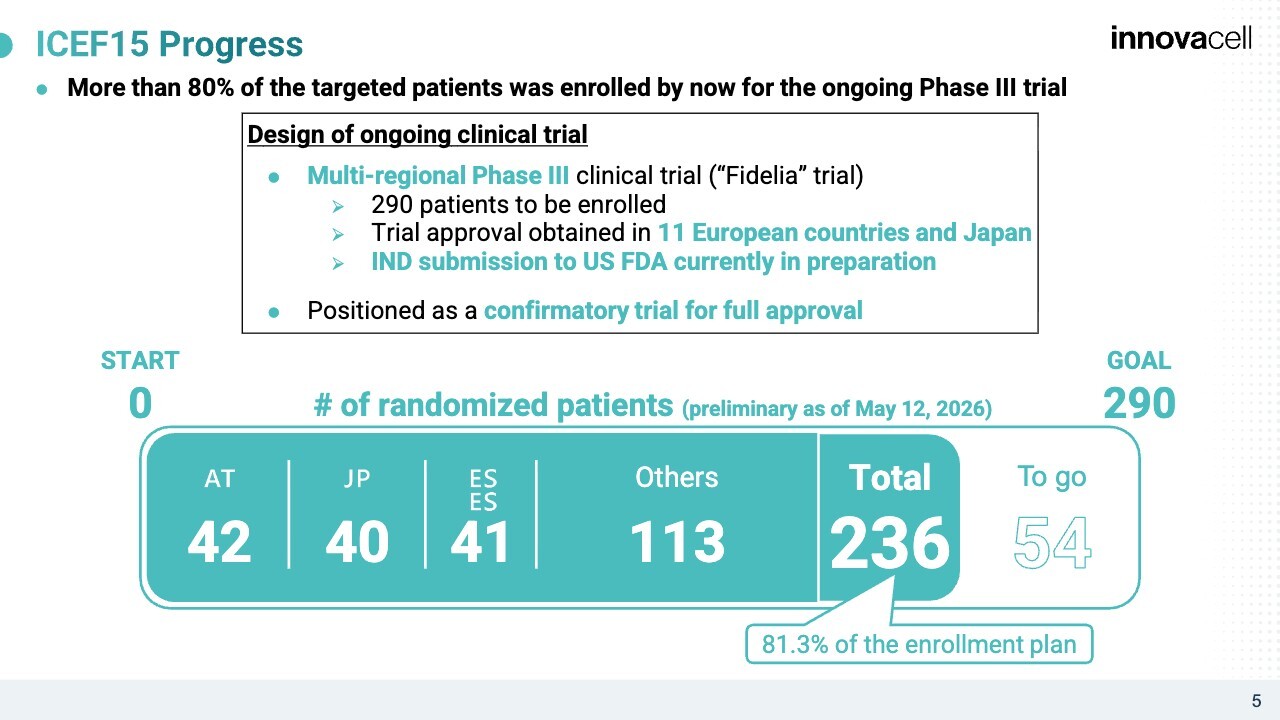
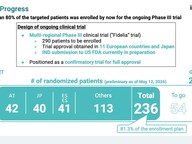
Colin: Let me give you more detail on the progress of our lead product, ICEF15. The ongoing multi-regional Phase III clinical trial represents the final stage of clinical development prior to filing for manufacturing and marketing authorization. We plan to submit the filing once the trial is completed.
As the name “multi-regional” suggests, this clinical trial is being conducted jointly across several countries and regions. A total of 290 patients need to be enrolled, and as of May 12 of this year, 236 patients have been enrolled: 40 from Japan, 42 from Austria, and 41 from Spain. An additional 113 patients have been enrolled from other countries.
In addition, we currently have 11 patients undergoing screening. Given the success rate in the current screening process, we anticipate that the total number of enrolled patients will exceed 240. Therefore, although the slide says, “54 patients to go,” the actual number remaining will likely be lower.
As indicated in the three sub-bullets listed under “Multi-regional Phase III clinical trial (‘Fidelia’ trial)” at the top of the slide, we are preparing an IND submission to the US FDA. As stated in the prospectus for our IPO, we plan to include U.S. sites in this Phase III trial. We are currently preparing the IND submission for this purpose, so please look forward to further updates.
I will go into more detail later, but once we have added the U.S. sites, we aim to reach the phase of Last Patient In, or enrolling the 290th patient, by the end of this year. Currently, enrollment is proceeding about one to two weeks ahead of schedule. Please look forward to this progress as well.
Jason: The U.S. is a very important market as it is the largest market in terms of scale. Once we receive clearance from the US FDA to begin the trial, we will start enrolling patients there. This will enable us to conduct the same clinical trial across three regions—Japan, Europe, and the U.S.—and, theoretically, seek approval in all three regions. Obtaining clearance to proceed under the IND is one factor that can accelerate our development schedule in the U.S. and represents a critical milestone.
Progress of Other Developmental Products in Pipeline
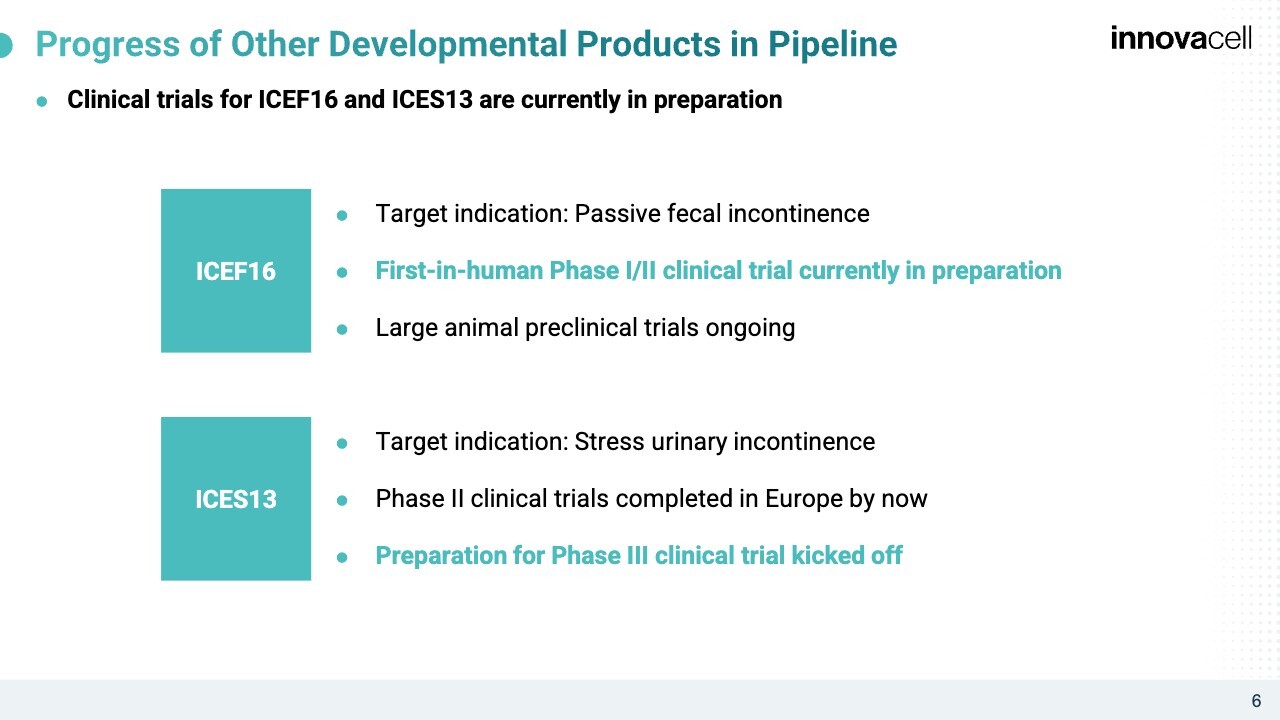
Colin: Here is a brief overview of the progress of other products that are already in the clinical development phase or are about to enter it.
ICEF16 is another developmental product designed to treat passive fecal incontinence. We are currently conducting large animal preclinical trials and plan to conduct a First-in-human Phase I/II trial later this year. We are on track with this timeline.
ICES13 is a developmental product targeting stress urinary incontinence. We are currently preparing for a Phase III clinical trial, which we plan to begin sometime next year.
I would like to present the upcoming steps in the ICEF15 development timeline. The ongoing Phase III trial is expected to be the confirmatory trial prior to submitting an application for manufacturing and marketing authorization. We plan to enroll 290 patients in the trial and conduct 12 months of follow-up with all of them. After that, we will finalize the clinical trial data.
Finalizing the data will take several months. After that, we plan to submit applications for manufacturing and marketing authorization in Japan, the U.S., and Europe. These applications will be prepared and submitted in modules, and this process is also expected to take several months. Ultimately, we plan to submit the marketing authorization applications in Japan, the U.S., and Europe. We anticipate that the review process will take approximately 12 months. Combining these timeframes gives an approximate lead time to launch. Please understand that we are proceeding on this timeline.
Innovacell’s Global Aggregation Model
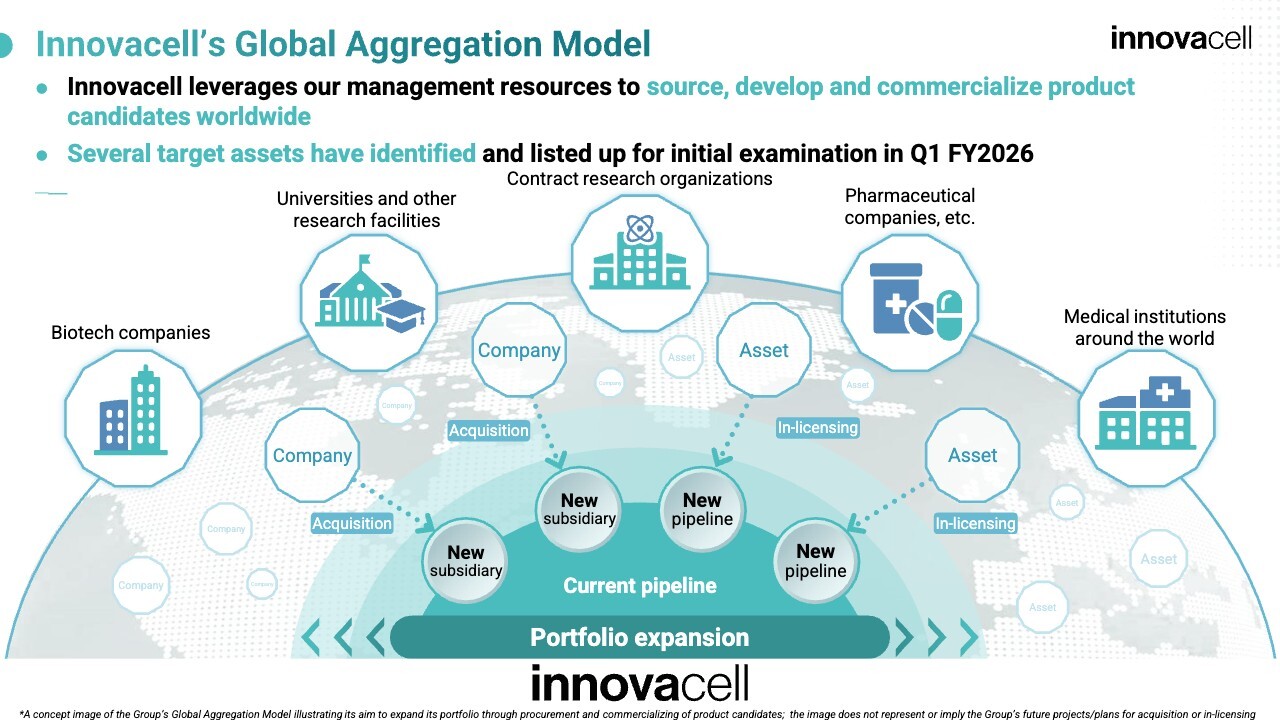
Jason: I’d like to discuss our initiatives beyond the current developmental pipeline. We have another business model known as the Global Aggregation Model. Under this model, we acquire or in-license promising but undervalued product candidates and develop them on our global development platform. Our goal is to deliver these products to patients worldwide as early as possible.
In fact, this is precisely how Innovacell Inc. was established, through the initial iteration of the model. We established Innovacell Inc. as the parent company of an Austrian company that we turned around and that is now our subsidiary. This can be viewed as the first initiative under our Global Aggregation Model. We intend to continue pursuing such initiatives.
As part of our efforts to advance the Global Aggregation Model, we have begun evaluating four technologies. Based on the results of our preliminary assessment, we have decided not to pursue one of them. However, we are continuing to evaluate the other technologies and anticipate executing one or two acquisitions or in-licensing agreements in the near future. Please stay tuned.
Colin: Through these initiatives, we are moving forward with a clear focus on expanding our portfolio over the medium to long term.
Many people may not be aware of this, but I occasionally hear concerns within the industry that Japanese-origin pharmaceutical products are gradually accounting for a smaller share of products in the global market. However, when we consider the development capabilities of Japanese universities and technologies, we see that the foundation laid between the 1980s and the early 2000s remains solid. Japan has a wealth of outstanding technologies, products, and data that are like diamonds in the rough with untapped potential. Our goal is to identify these assets in Japan and around the world and leverage them to expand our portfolio.
Jason: There are surprisingly many product candidates and companies that, despite possessing excellent technologies, struggle to secure funding and are unable to cross the so-called “Death Valley.” We will leverage the development platform we have cultivated over many years, as well as our industry network, to identify and evaluate such product candidates. We are committed to incorporating the most promising ones into our portfolio.
Impact of Paying off the EIB (European Investment Bank) loan
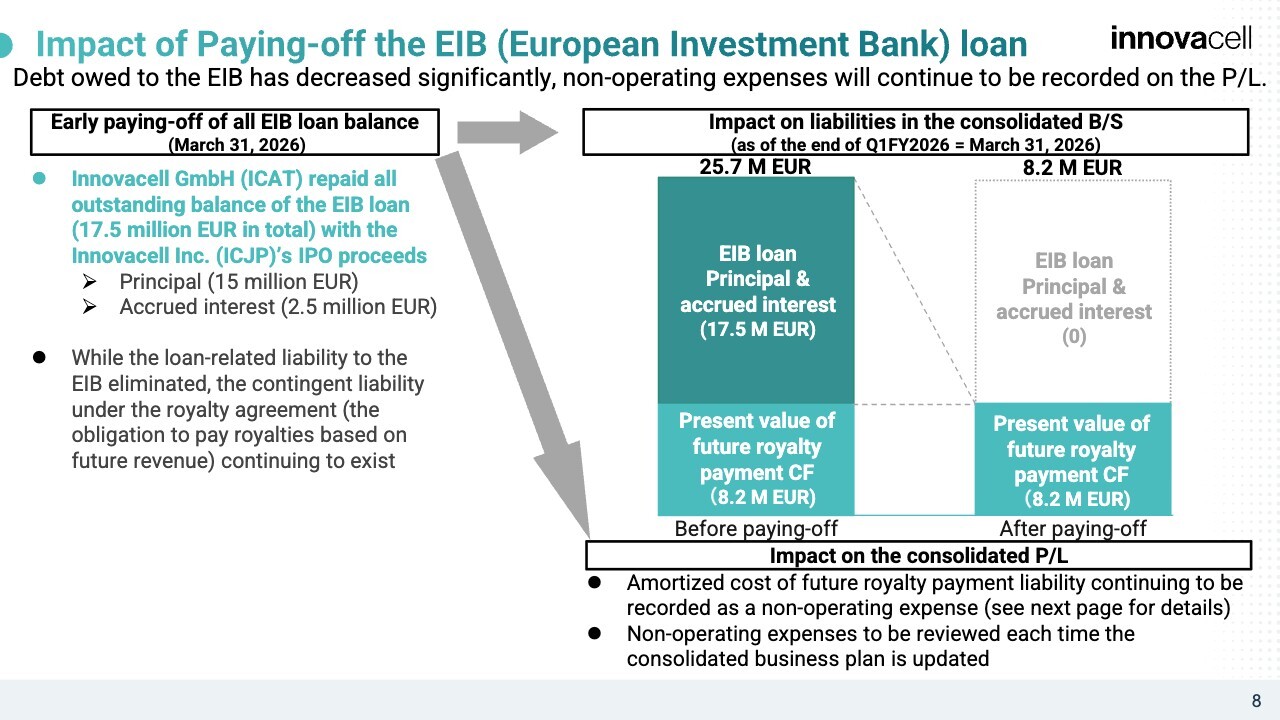
I’d like to share another update. Prior to the IPO, in 2022, our Austrian subsidiary raised 15 million EUR through venture debt from the EIB (European Investment Bank). We repaid the outstanding balance, including principal and interest, with the proceeds from Innovacell’s IPO. Specifically, we have repaid approximately 17.5 million EUR, comprising the 15 million EUR principal and interest, thereby strengthening our balance sheet.
In addition to principal and interest, this venture debt scheme includes royalty payments based on future revenue. These payments are contingent and will be triggered only once future revenue is recognized.
In the accounting process, we first prepare the financial statements of our Austrian subsidiary in accordance with Austrian accounting standards. Then, we convert them to IFRS and incorporate them into the parent company’s consolidated financial statements. When switching the accounting treatment for the EIB loan to IFRS, we apply IFRS 9, under which the loan agreement and royalty agreement are treated as a single transaction. Therefore, we must recognize the present value of future royalty payments as a liability. Please understand that this liability represents the present value of those payments.
Colin: The important point is that the present value of future royalty payments recognized under IFRS is an accounting figure that does not necessarily correspond to actual cash outflows or other cash expenditures.
FOR REFERENCE: Accounting Treatment of the EIB Loan & Future Royalty Payment
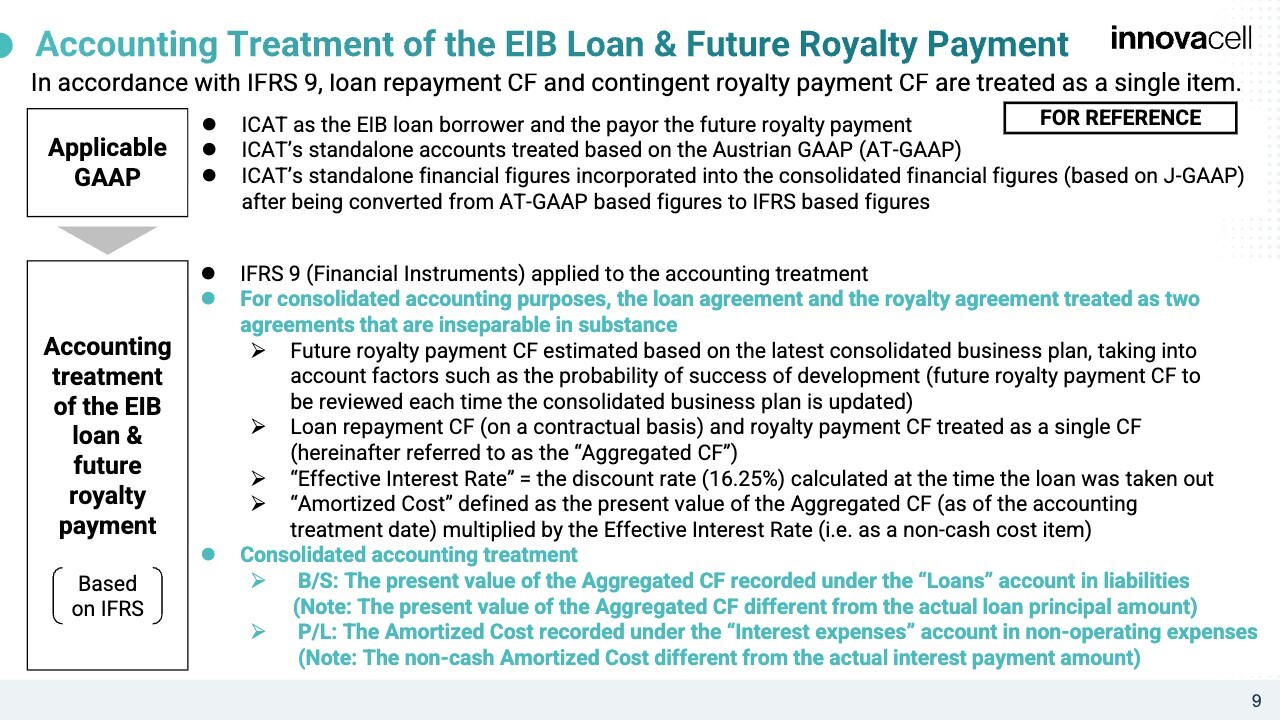
Jason: Please refer to this slide for the details of the EIB loan and future royalty payment.
FOR REFERENCE: Overview of the EIB Loan Agreement, Royalty Agreement & Guarantee Agreement
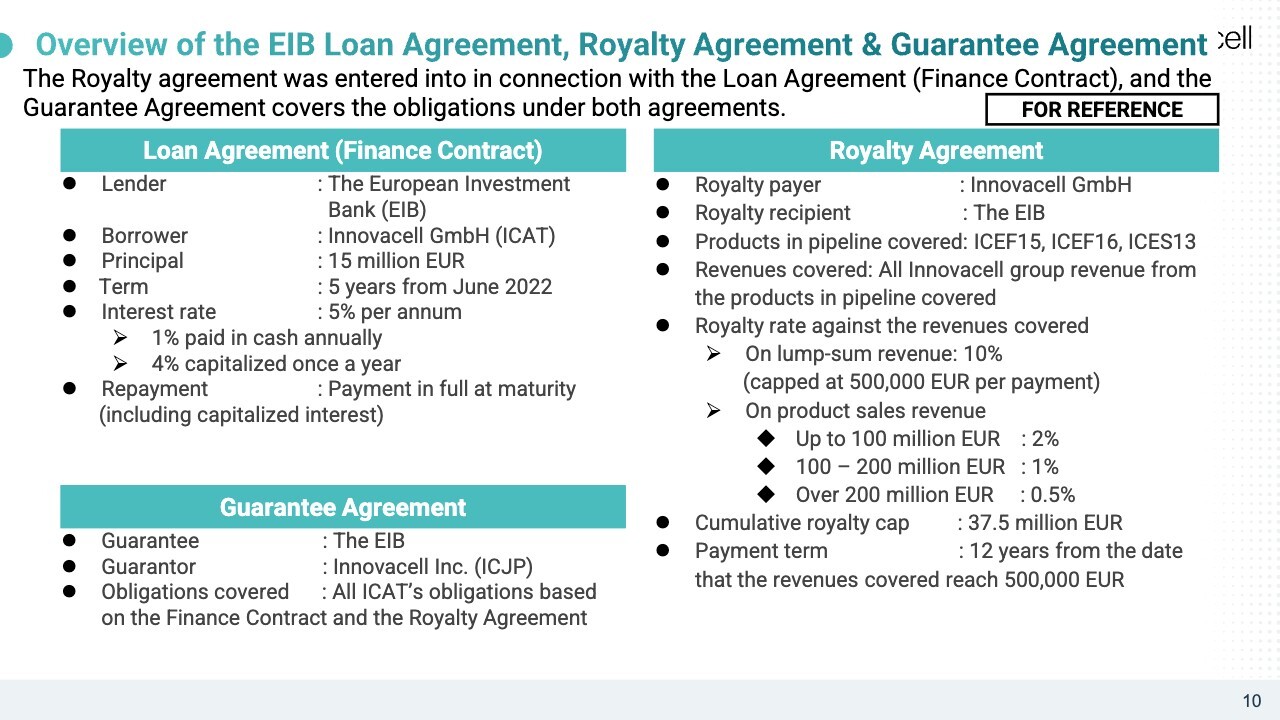
Similarly, please refer to this slide as well.
Summary of Consolidated P/L of Q1 FY2026
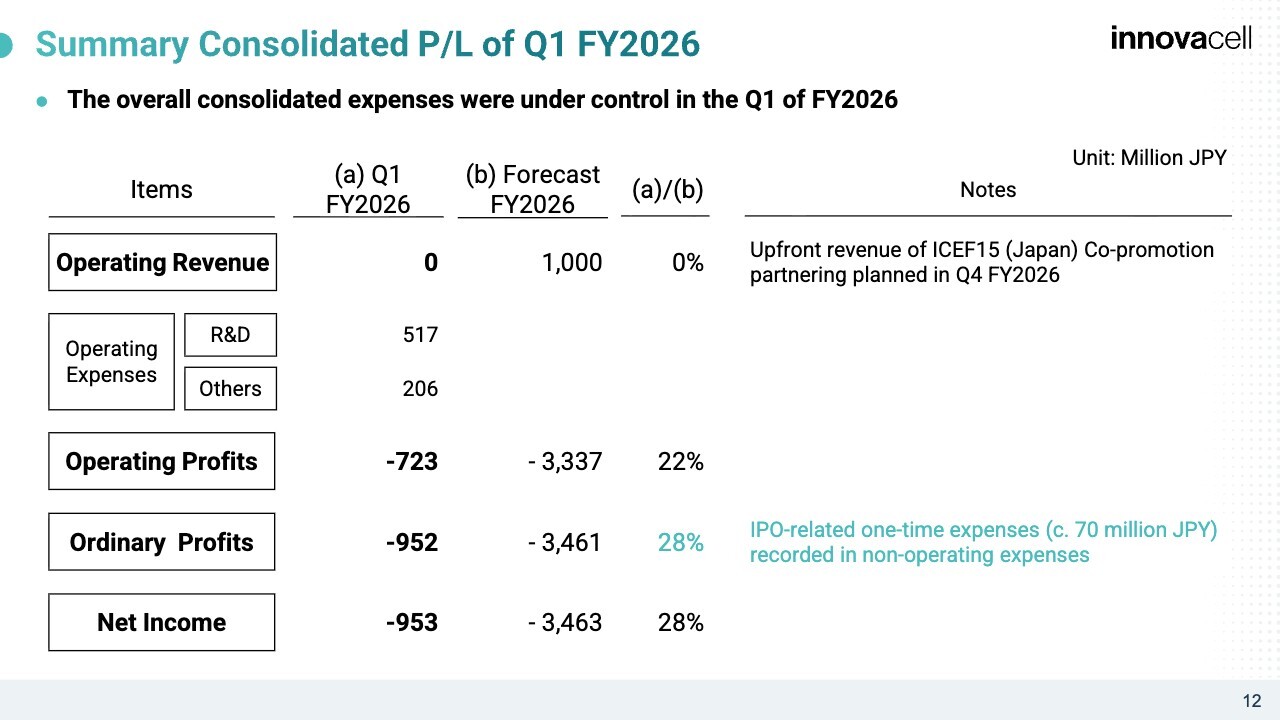
Colin: I would like to review the P/L summary for the first quarter of the fiscal year ending December 31, 2026. This slide highlights the key points on a single page. The expenses for the quarter were generally within our planned range.
Operating expenses for Q1 were relatively high. This is a natural outcome, as we are currently conducting Phase III trials, a stage in which clinical development costs typically increase. We have recorded over 500 million JPY in research and development (R&D) expenses. Other operating expenses amounted to approximately 200 million JPY. While these are not classified as R&D expenses for accounting purposes, it is safe to say they are primarily incurred to support R&D activities or cover expenses in fields adjacent to R&D activities.
As a result, the total operating loss amounted to just over 700 million JPY, and the ordinary loss was 952 million JPY. Additionally, approximately 70 million JPY in non-operating expenses was recorded as one-time expenses related to the IPO.
Comparing the actual results for this quarter (column (a) on the slide) with the previously disclosed earnings forecast for the fiscal year ending December 31, 2026 (column (b) on the slide), the progress ratios are in the range of 22% to 28%. This indicates that spending is generally proceeding in line with our plans.
Jason: Our earnings forecast for the current fiscal year includes 1 billion JPY in operating revenue. This is expected to be recorded as upfront milestone revenue under a co-promotion agreement for ICEF15 with a Japanese pharmaceutical company. Please note that, as this matter is currently under negotiation, the actual amount may change slightly.
As we mentioned earlier, clinical development is on track. However, when you look at the expenses recorded in Q1 relative to our full-year forecast, you see that they have been kept to less than a quarter of the projected amount. This suggests that costs are being managed effectively.
Key Progress Expected in FY2026
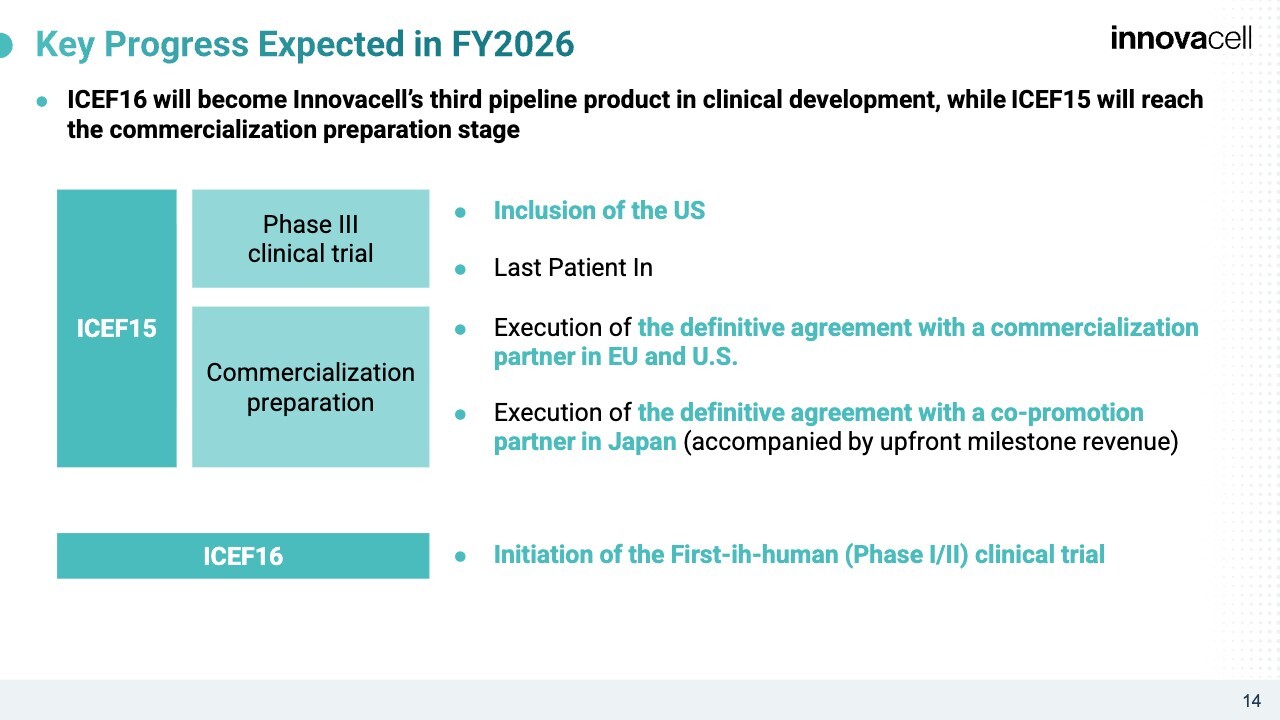
Finally, I’d like to briefly touch on the key progress expected in FY2026.
First, regarding our lead product, ICEF15, we are currently advancing a multi-regional Phase III clinical trial, and patient enrollment is progressing on a daily basis. Our next major milestones include submitting an IND application to the U.S. FDA to initiate the trial and beginning patient recruitment in the United States.
We also plan to complete patient enrollment for the multi-regional Phase III clinical trial within this fiscal year and will provide updates on its progress as they become available. At the same time, we are preparing for commercialization and are currently in discussions with potential commercialization partners in Europe and the United States regarding financial terms and other conditions. We anticipate executing a definitive agreement in the near future.
In Japan, we plan to co-promote the product with a sales & marketing partner, and we are currently in discussions with several pharmaceutical companies for co-promotion partnering. We plan to execute the definitive agreement by the end of this year, and the discussions are proceeding on schedule.
Regarding ICEF16, we believe that, if everything goes according to plan, we will be able to commence the First-in-human clinical trial—that is, administration of the product to patients—within this fiscal year. Please stay tuned.
Remarks from Mr. Colin
Colin: We would like you to see us not just as a biotech startup focused on R&D, but as a company building a business with the goal of delivering products to the global market.
As part of these efforts, I hope this presentation conveyed that our lead program, ICEF15, is nearing the final stage of patient enrollment in a multi-regional clinical trial and that preparations for commercialization are proceeding steadily.
The development of ICEF15 has entered a phase that encompasses not only clinical development but also what the industry refers to as CMC (Chemistry, Manufacturing, and Controls)—or, in more colloquial terms, the stage of establishing manufacturing systems, responding to regulatory authorities, and preparing for future commercialization. Of course, as a biotech company, we will continue to face various challenges, but we are steadily moving toward the final stage of delivering the treatment to patients.
We would appreciate your continued support of our company from a medium- to long-term perspective, and we thank you for your interest.
*The English translation above is based on a transcript of the Japanese explanatory video; it is not a transcript of the English explanatory video available at the URL below.