Nihon Nohyaku Company Profile
Hiroyuki Iwata (hereafter: Iwata): Hello everyone. I am Iwata, President and Representative Director of Nihon Nohyaku Co., Ltd. Thank you very much for taking time out of your busy schedule today to attend our Earnings Conference for the fiscal year ending March 31, 2026.
Since some of you may be attending the Conference for the first time, I will begin with a brief introduction to Nihon Nohyaku and our main business, crop protection products.
Since its establishment in 1928 as Japan's first manufacturer specializing in crop protection products, Nihon Nohyaku has developed its business with a focus on the crop protection business under the corporate motto of "Ensuring a safe and steady food supply and protecting quality of life.”
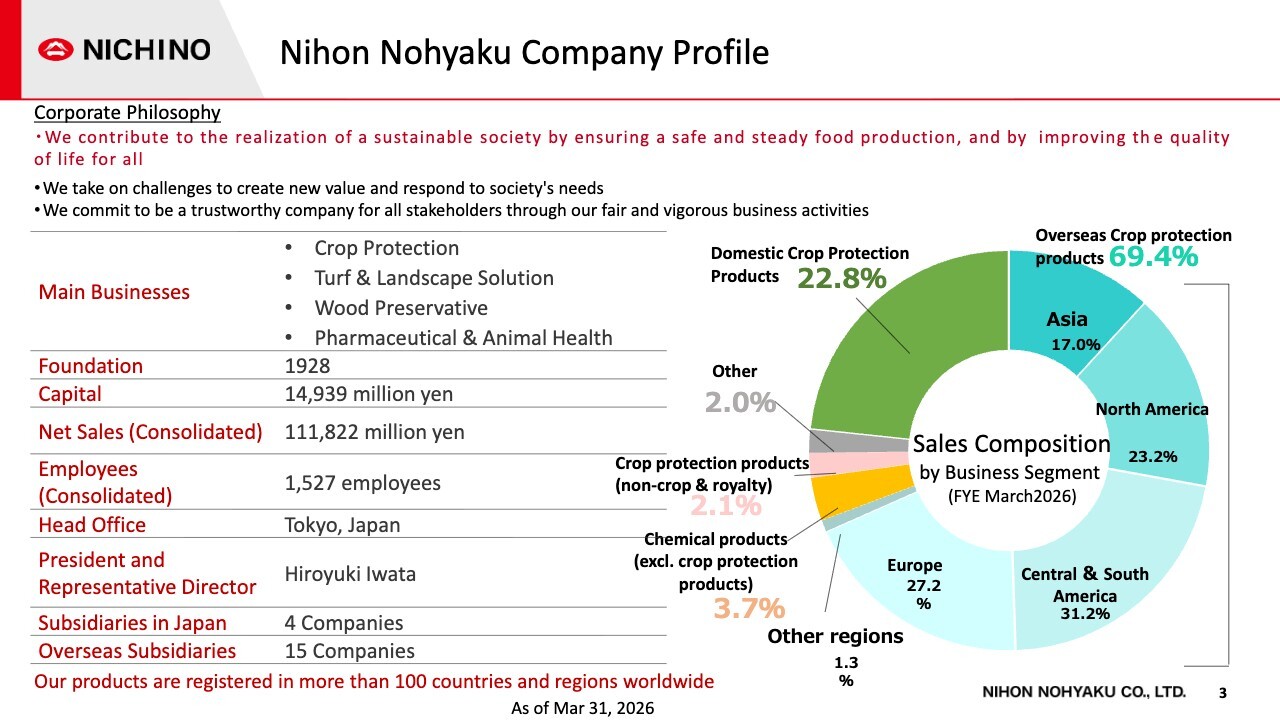
We sell our products to more than 100 countries overseas, and as shown in the pie chart on the right side of the slide, we are a global company with a sales ratio of 70% overseas and 30% in Japan.
Our Strength: Crop Protection Products Suited to Climate, Characteristics in Japan
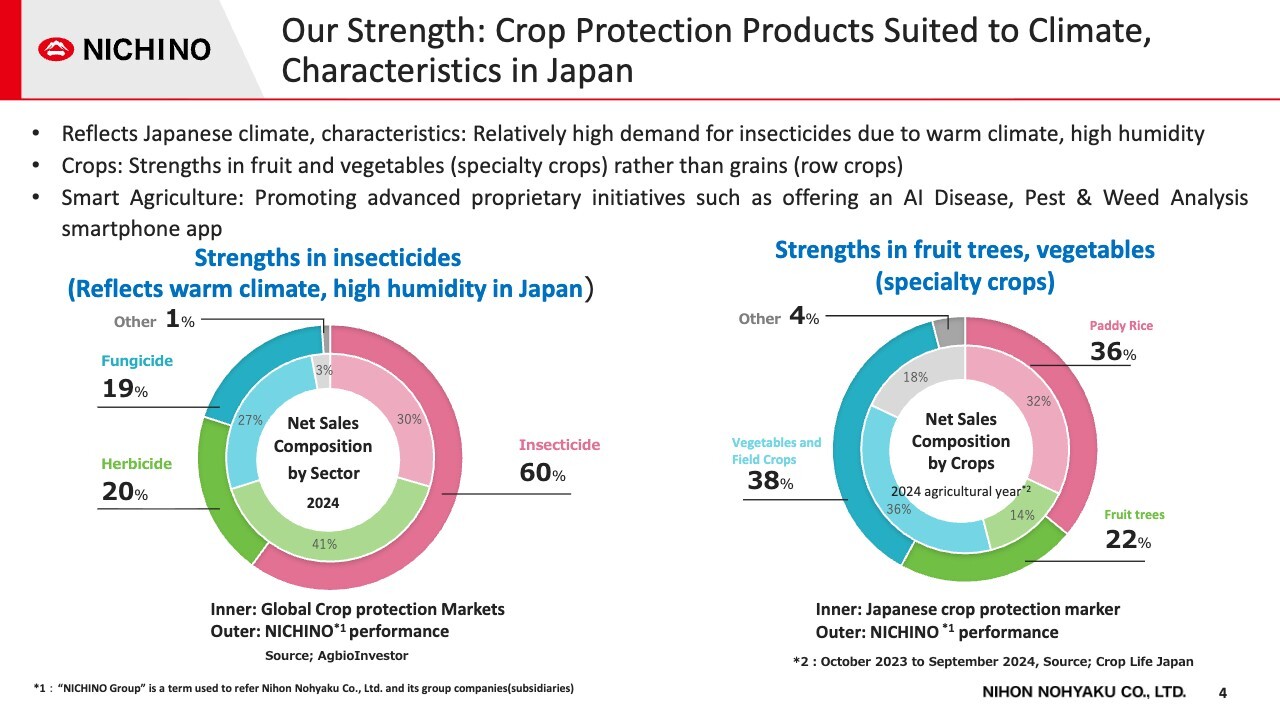
These are the strengths of our Company. We are particularly strong in insecticides, reflecting the warm and humid climate of Japan. In terms of applications, we have particular strengths in the fruit tree and vegetable (specialty crops) fields.
Social Significance of Crop Protection Manufacturers and Food Security
This section explains the social necessity of the crop protection product business.
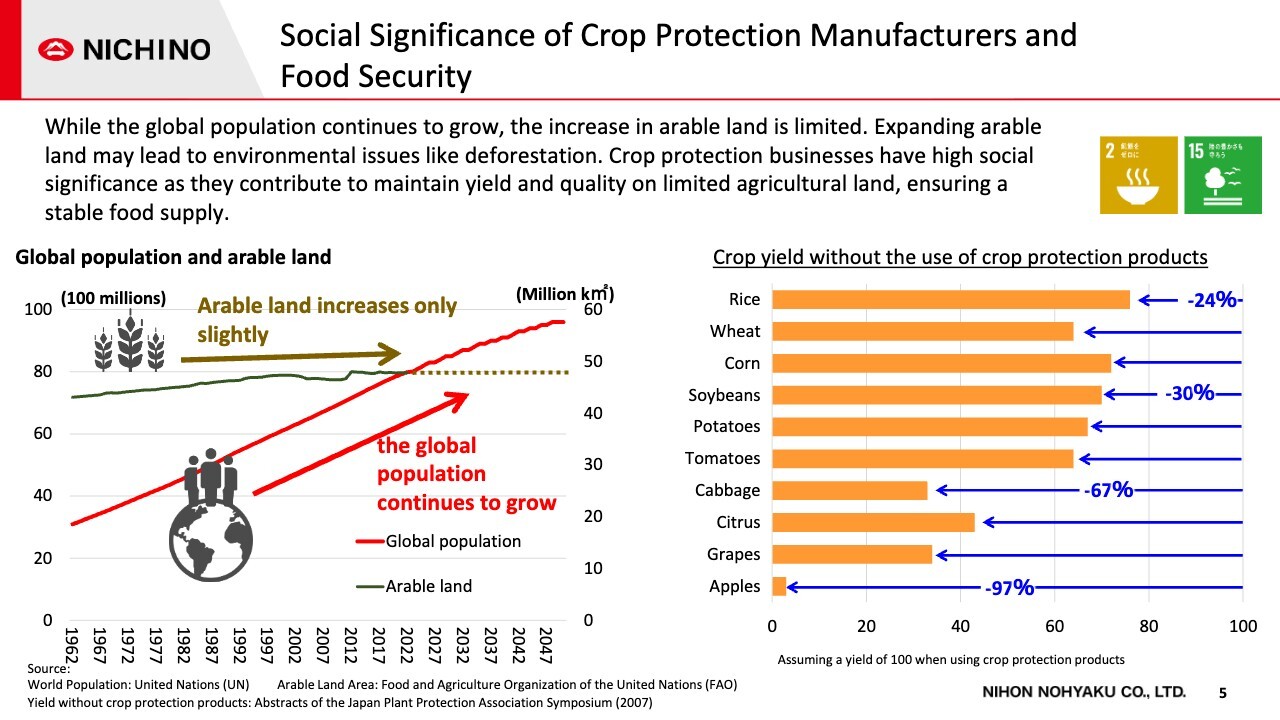
As the graph on the left shows, while the world's population continues to grow, the increase in arable land area is limited. There is a limited amount of land on the earth suitable for farming, and excessive expansion of arable land may cause other environmental problems such as deforestation.
The graph on the right also shows crop yields without the use of crop protection products. Although it varies from crop to crop, without them, the yield reduction for row crops is about 30%, and even more for vegetables and fruit trees.
The crop protection product business has a high social significance because it protects the yield and quality of harvests on limited farmland and contributes to a stable supply of food to support a growing population.
Positioning of Crop Protection Products in Food Security
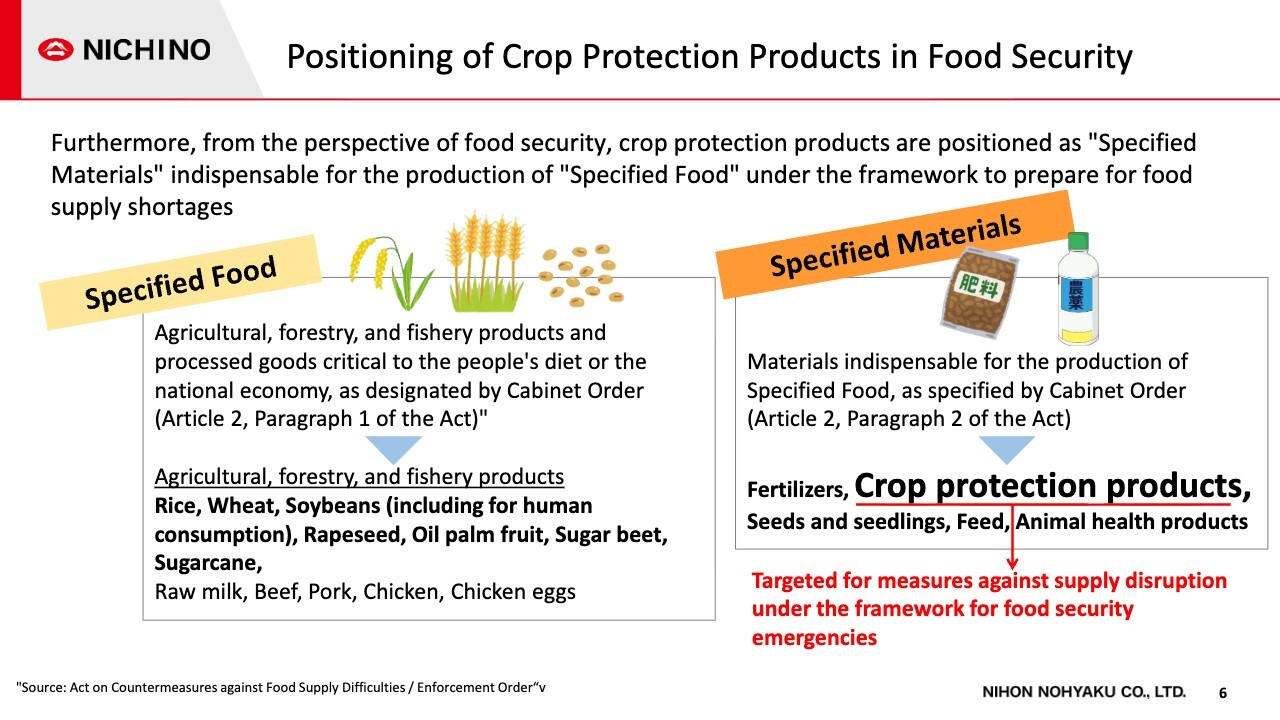
In addition, from the perspective of food security, crop protection products are positioned along with fertilizers, seeds, and seedlings as "specified materials" in Japan, as essential materials for production. In order to prepare for unforeseen circumstances, they are considered to be important materials whose stable supply should be ensured in accordance with the law.
Global Crop Protection Markets
I will now explain the main topic of today's presentation, which is a summary of our financial results. First, let's look at the global crop protection market.
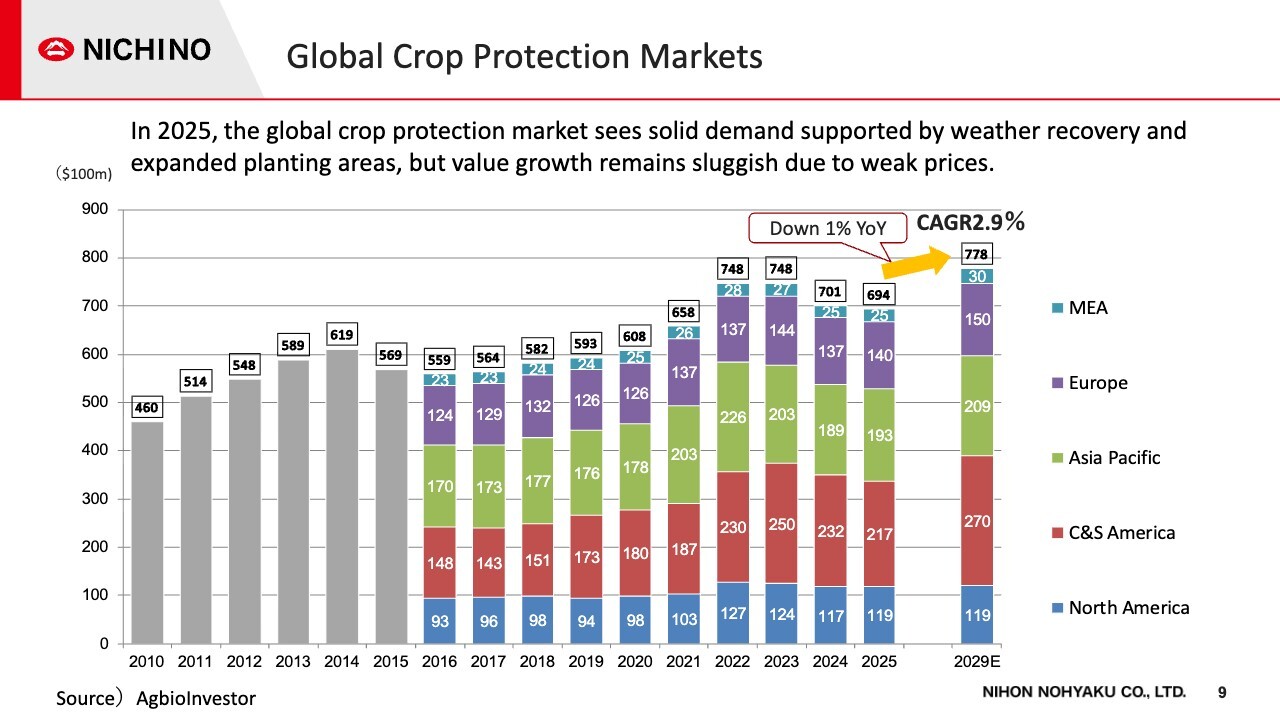
The graph on the slide shows the trend in the global crop protection market from 2010 to 2025. The global crop protection market has been on an expansionary trend for the past few years due to increased demand, especially in the Americas, but fell in 2024, significantly affected by falling prices, bad weather, and increased channel inventories.
In fiscal year ending March 31, 2025, actual demand was strong due to weather recovery and an increase in planted acreage, but prices were weak, resulting in a 1% decrease in dollar terms from the previous year to $69.4 billion.
On the other hand, the global crop protection market is expected to continue to expand in the future, as demand for food grows against the backdrop of global population growth and economic development in emerging countries.
The global crop protection market is expected to grow at a compound annual growth rate of 2.9% over the next four years to reach $77.8 billion (about ¥12 trillion) by 2029.
Global Crop Protection Market and Our Position in FYE Mar 2025
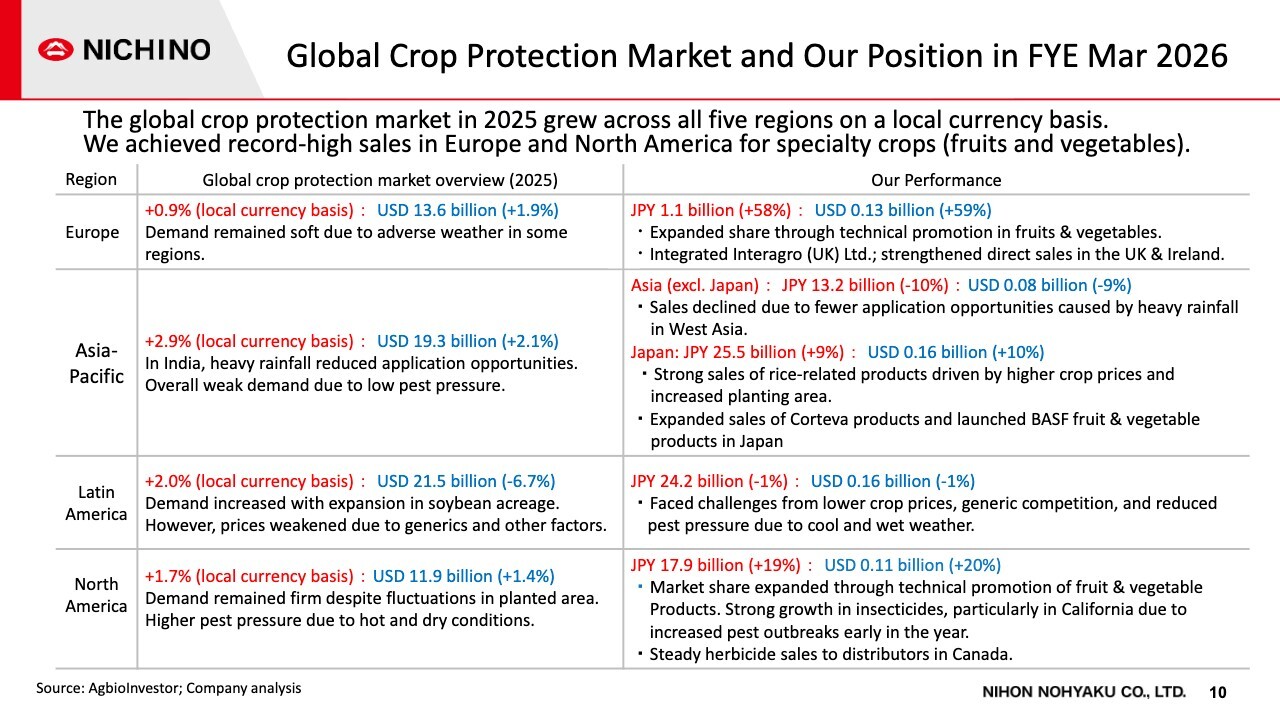
The following is an overview of the global crop protection market and our performance for the year ending March 31, 2026, by region.
In 2025, the global crop protection market declined slightly in dollar terms, but grew in all five major regions in local currency terms due to growing demand for agricultural products.
With regard to the Company's situation, the highest sales ever were recorded in Europe and North America due to expanded sales of products for "Specialty Crops" such as fruit trees and vegetables.
In Asia Pacific, the sluggish growth in Asia was compensated for by expanded sales of Corteva and BASF products in Japan. On the other hand, in Latin America, the company struggled due to the impact of weak prices for generic crop protection products.
NICHINO Group Growth
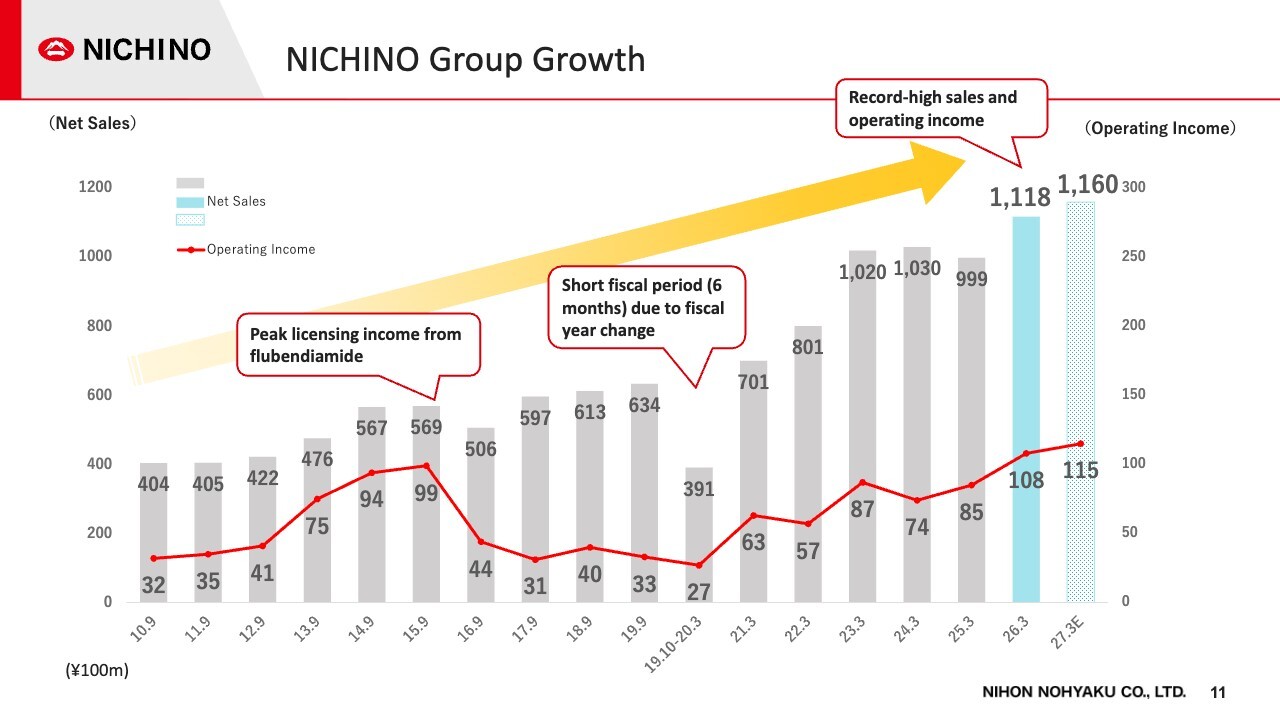
The graph on the slide shows our net sales and operating income since FY2010. As you can see, we achieved record net sales and operating income in the fiscal year ending March 31, 2026 and expect to exceed them in the fiscal year ending March 31, 2027.
Seasonality of the Crop Protection Business
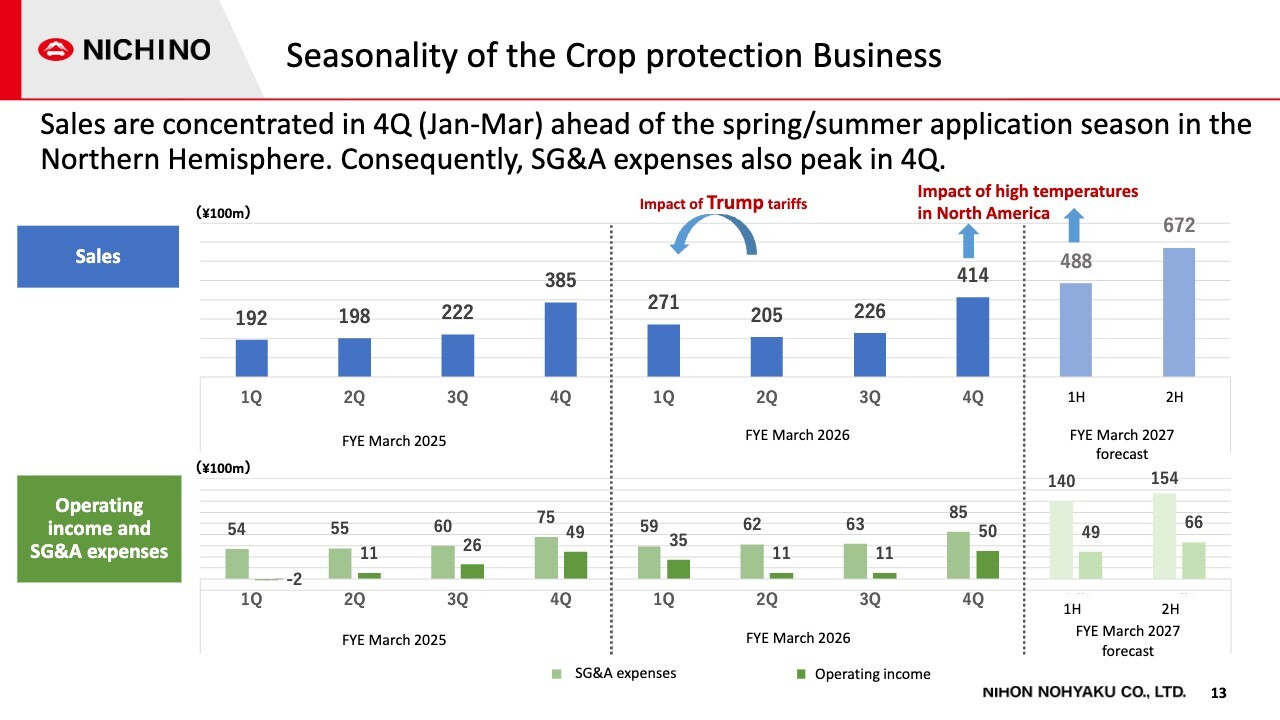
Now I would like to present our results for the fiscal year ending March 31, 2026. Before I begin, I would like to reiterate here the seasonality inherent in the crop protection business, using quarterly performance trends.
Crop protection products are used at their peak in spring and summer in the Northern Hemisphere. Since distributors and growers purchase around January through March prior to the season, our sales tend to be more heavily weighted toward the fourth quarter. Accordingly, our SG&A expenses tend to peak in the fourth quarter.
In fiscal year ending March 31, 2026, demand increased in the first quarter of the year due to the early procurement associated with the Trump tariffs and other factors.
We would like to explain the increased demand due to high temperatures in North America in more detail later in this report.
FYE March 2026 Earnings (YoY)
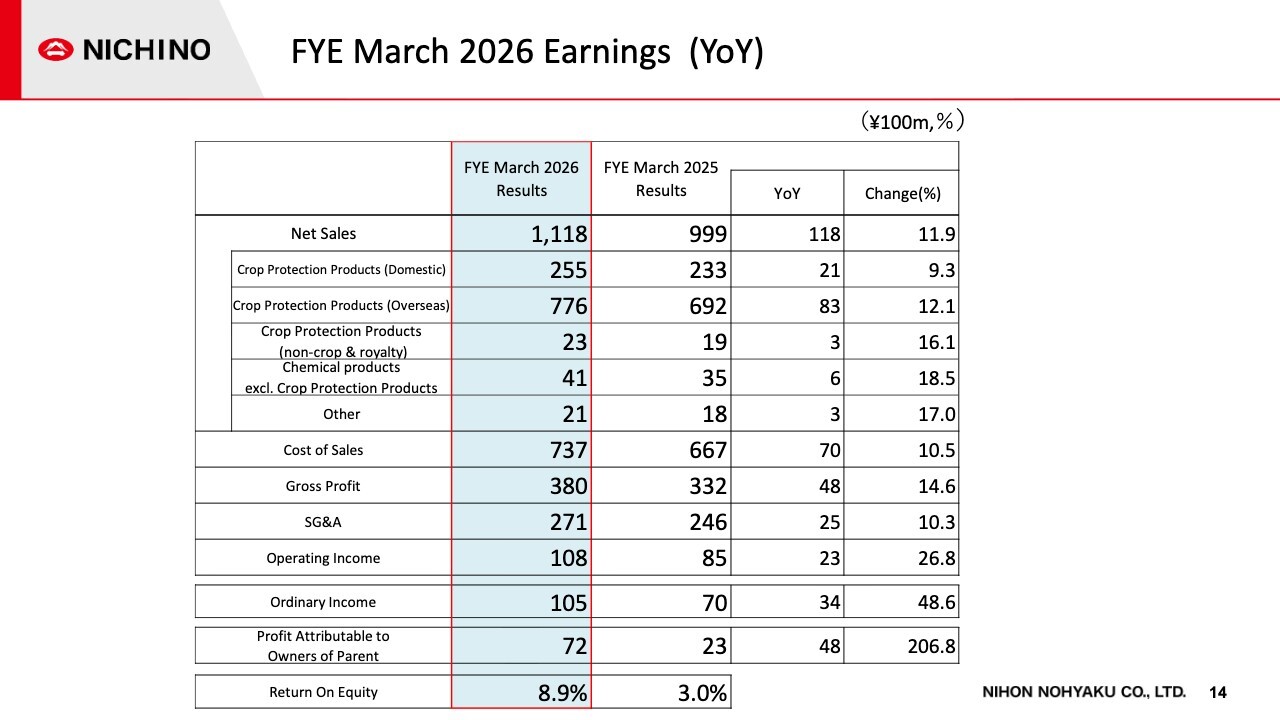
I will now explain the results for the fiscal year ending March 31, 2026.
Net sales in the core crop protection business were up more than 10% YoY, with particularly strong sales in Japan, Europe, and North America.
Operating income increased ¥2.3 billion YoY to ¥10.8 billion, achieving the target of the Medium-term Management Plan one year ahead of schedule.
Ordinary income increased by ¥3.4 billion YoY to ¥10.5 billion, mainly due to compensation income to Nichino America for the licensing of data related to the registration of crop protection products.
Net income attributable to shareholders of the parent company increased by ¥4.8 billion YoY to ¥7.2 billion, partly due to the impairment loss on Nichino India recorded in the previous year.
With regard to ROE, we achieved the target of our Medium-term Management Plan by raising it to 8.9% for the fiscal year ending March 31, 2026.
FYE March 2026 Earnings (YoY)
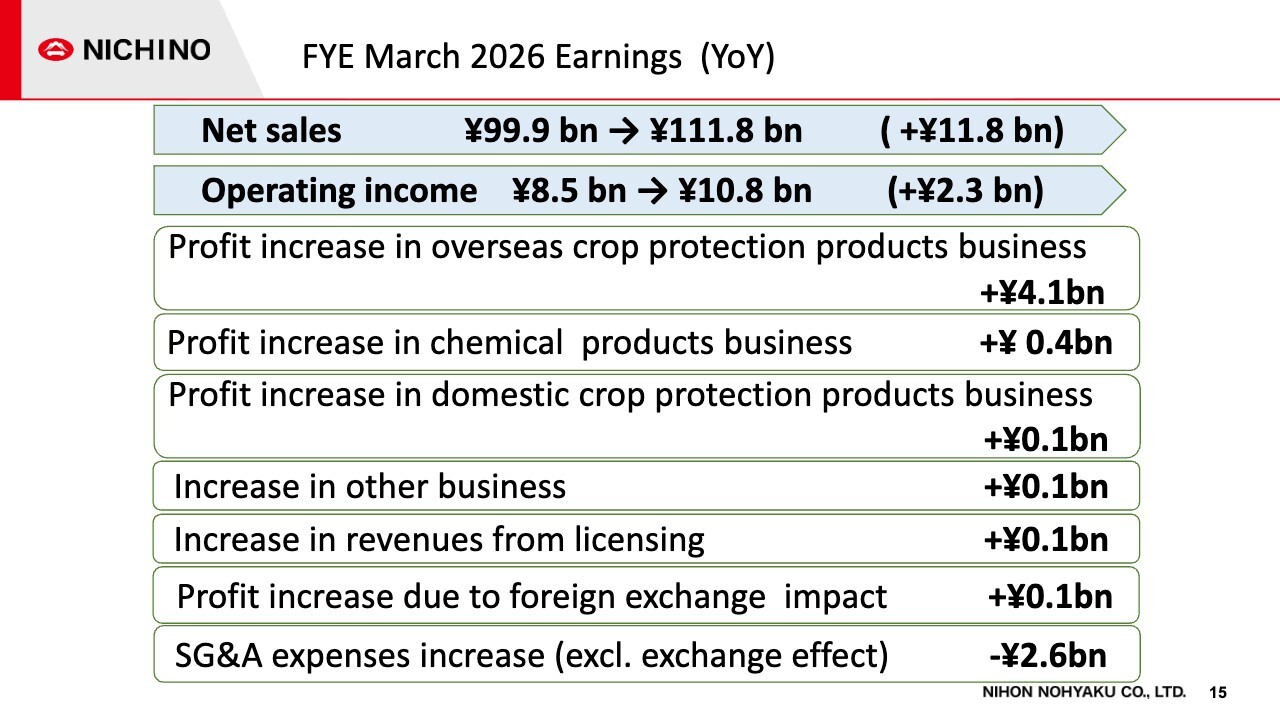
These are the factors contributing to increase/decrease in operating income. The increase of ¥4.1 billion was due to strong sales of crop protection products overseas, mainly in North America and Europe, where profit margins are high. There was also a ¥0.4 billion increase in earnings in the Chemicals business.
On the other hand, SG&A expenses increased by ¥2.6 billion due to higher personnel costs and contract research expenses, as well as the impact of the business integration of Interagro, a European subsidiary. As a result, operating income increased by ¥2.3 billion.
FYE March 2026 Earnings (vs. Forecast as of Nov 2025)
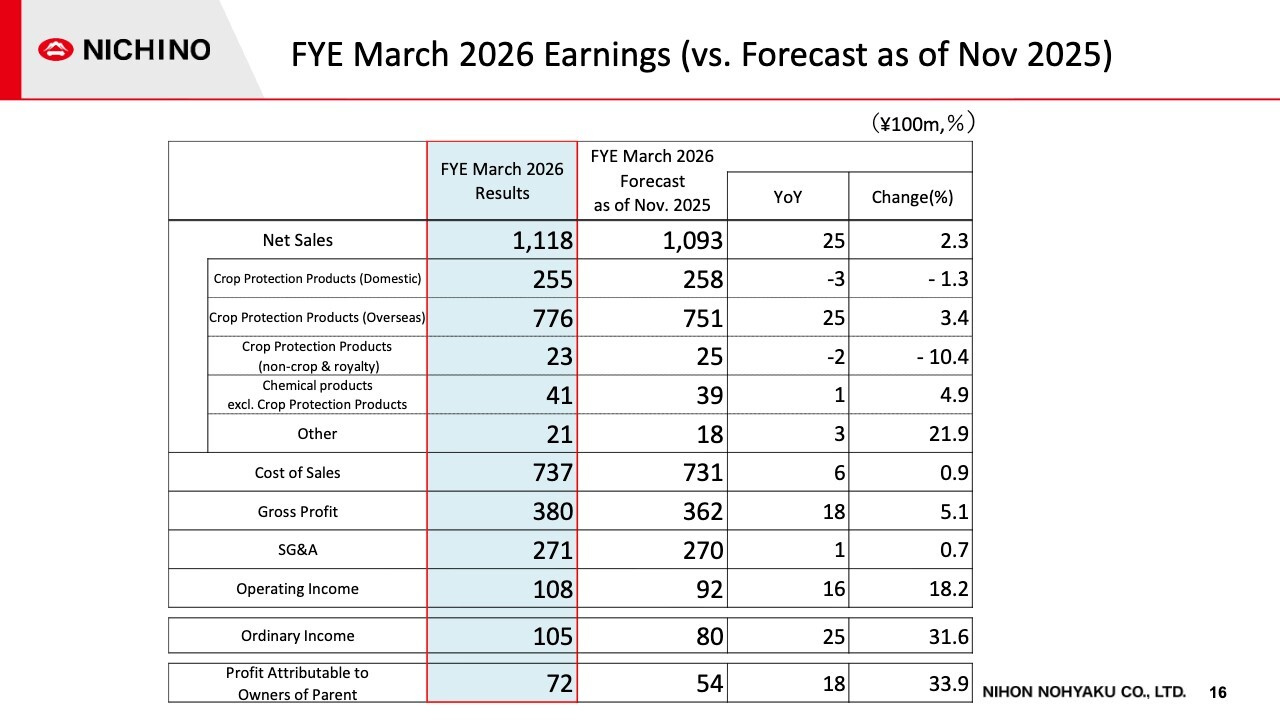
The table on the slide compares the actual results of FYE March 2026 with the forecast figures announced on November 10, 2025. Net sales exceeded the forecast by ¥2.5 billion, mainly due to increased demand in North America caused by weather factors.
FYE March 2026 Earnings (vs. Forecast as of Nov 2025)
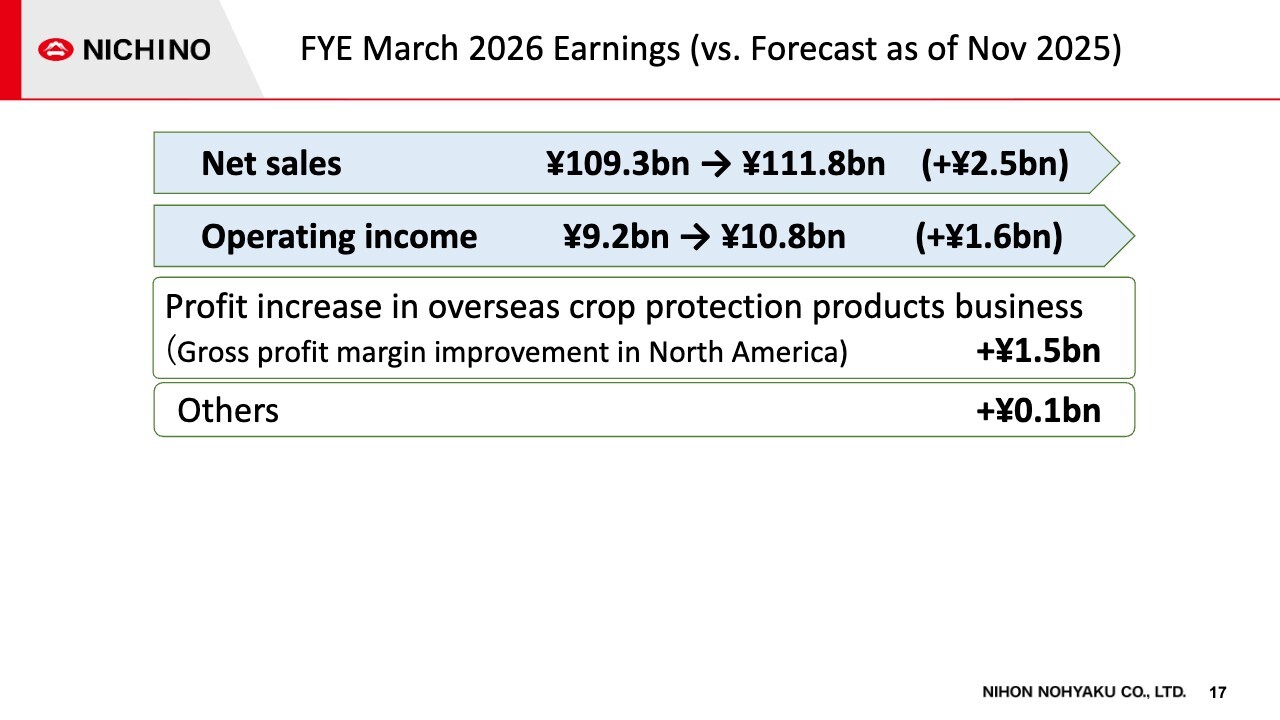
In addition, sales to the high-margin North American market were strong, and the gross profit margin improved due to a change in the item mix. As a result, operating income exceeded the forecast by ¥1.6 billion to ¥10.8 billion.
Crop Protection Products (Domestic) - Composition of Net Sales (YoY)
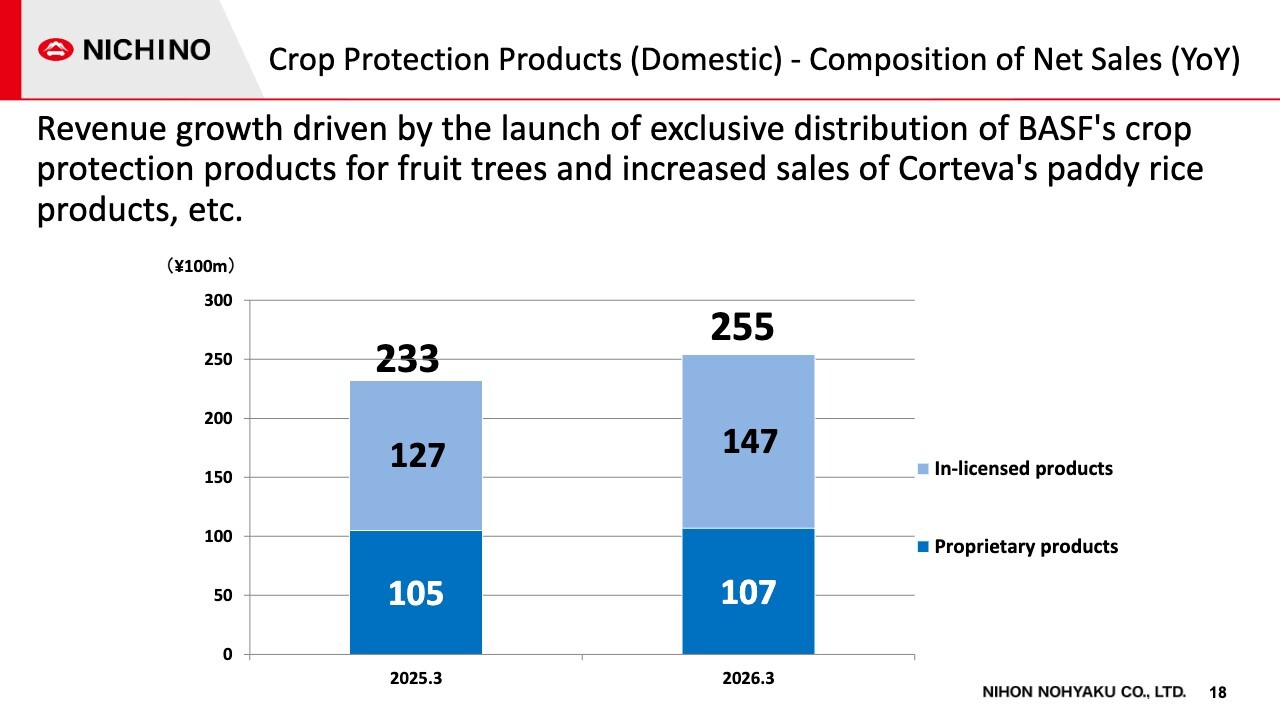
The graph on the slide shows the net sales composition of domestic crop protection sales compared with the previous year.
In the period under review, net sales totaled ¥25.5 billion, up ¥2.2 billion YoY, due to increased sales of BASF's products for fruit trees, which were launched in October 2025, as well as strong sales of Corteva's products for rice paddies.
Crop Protection Products (Overseas) - Net Sales by Region (YoY)
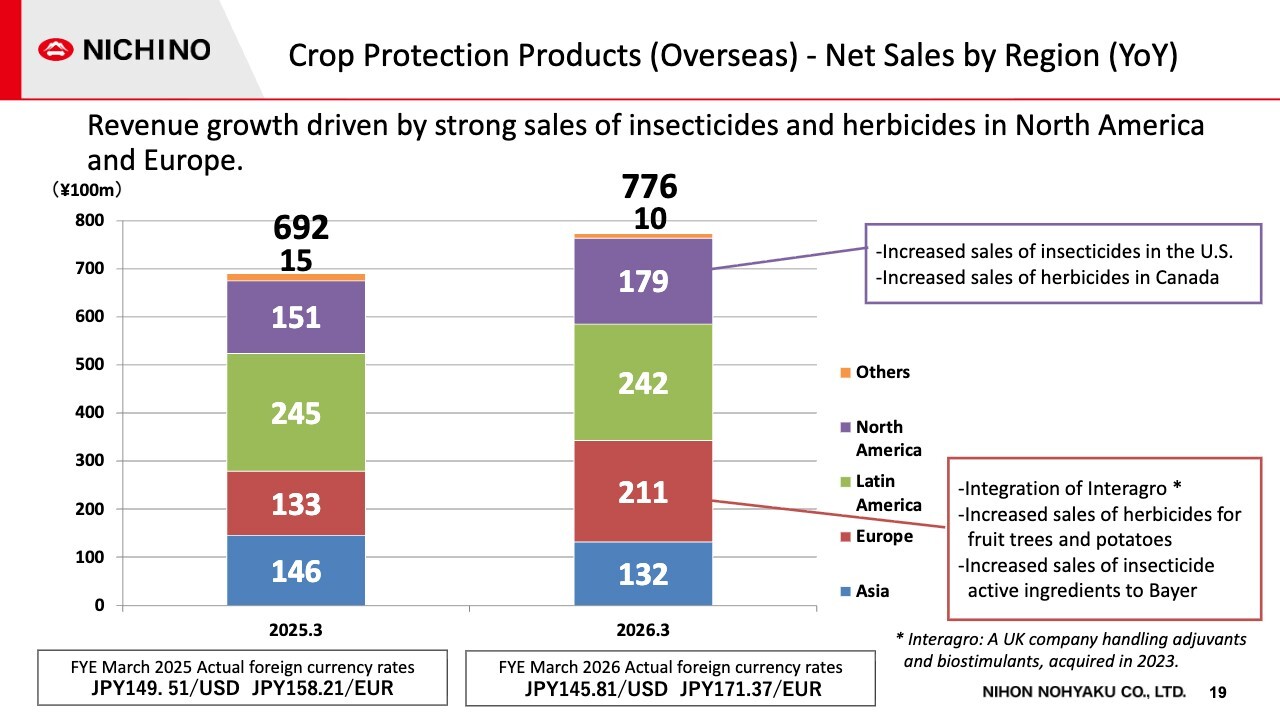
The graph on the slide shows overseas crop protection product net sales by region.
In North America, shown in purple, sales of insecticides grew significantly on the back of increased demand due to earlier crop growth caused by rising temperatures, in addition to an increase in the sales share of our products in the core fields of fruit trees and nuts. In addition, sales of herbicides for Canada were strong, resulting in a ¥2.8 billion increase in net sales.
In Latin America, shown in green, net sales decreased by ¥0.3 billion due to the impact of lower crop protection prices resulting from sluggish agricultural commodity markets and an offensive by generic products, as well as a decrease in pest infestations caused by low temperatures and heavy rainfall, despite an expansion of soybean and other crop acreage in Brazil.
In Europe, shown in red, sales of herbicides for fruit trees and potatoes were strong due to the success of our product technology promotion activities. In addition, the business integration with Interagro and strong sales to Bayer led to a ¥7.8 billion increase in net sales.
In Asia, shown in blue, while sales to other crop protection companies in Nichino India were strong, sales in West Asia were sluggish due to missed spraying opportunities caused by heavy rainfall, resulting in a ¥1.4 billion decline in sales.
As a result, overall overseas net sales of crop protection products amounted to ¥77.6 billion, an increase of ¥8.4 billion YoY. Foreign exchange results for the period are shown on the slide.
Performance of Nichino America during the spring season (Q4/Q1)
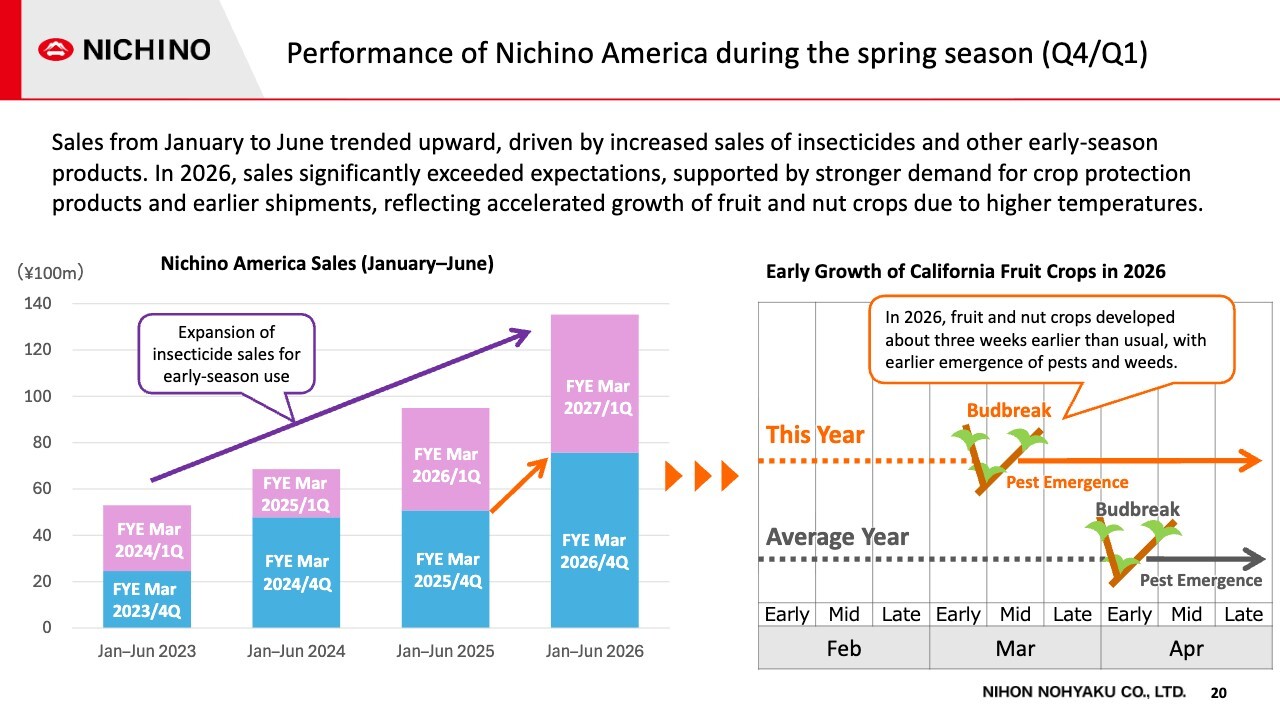
I would like to explain Nichino America's record net sales and operating income performance in detail, with a particular focus on the company's expanding spring season sales.
The company has long been working to expand sales of insecticides used in the spring and summer in fruit and nut trees. It has steadily and successfully replaced competing products, and sales from January to June, the period of its use, are on the rise. In addition, this year's temperatures rose sharply in late February, earlier than usual, caused fruit and nut trees to grow about three weeks earlier than usual.
Accordingly, the timing of insecticide application was brought forward, and with the increase in demand, cargo movement was also earlier, resulting in sales for the fourth quarter of the fiscal year ending March 31, 2026 that were much higher than expected.
In addition, the company continues to see strong demand in the current fiscal year, the fiscal year ending March 31, 2027.
Nichino Europe Performance Trends
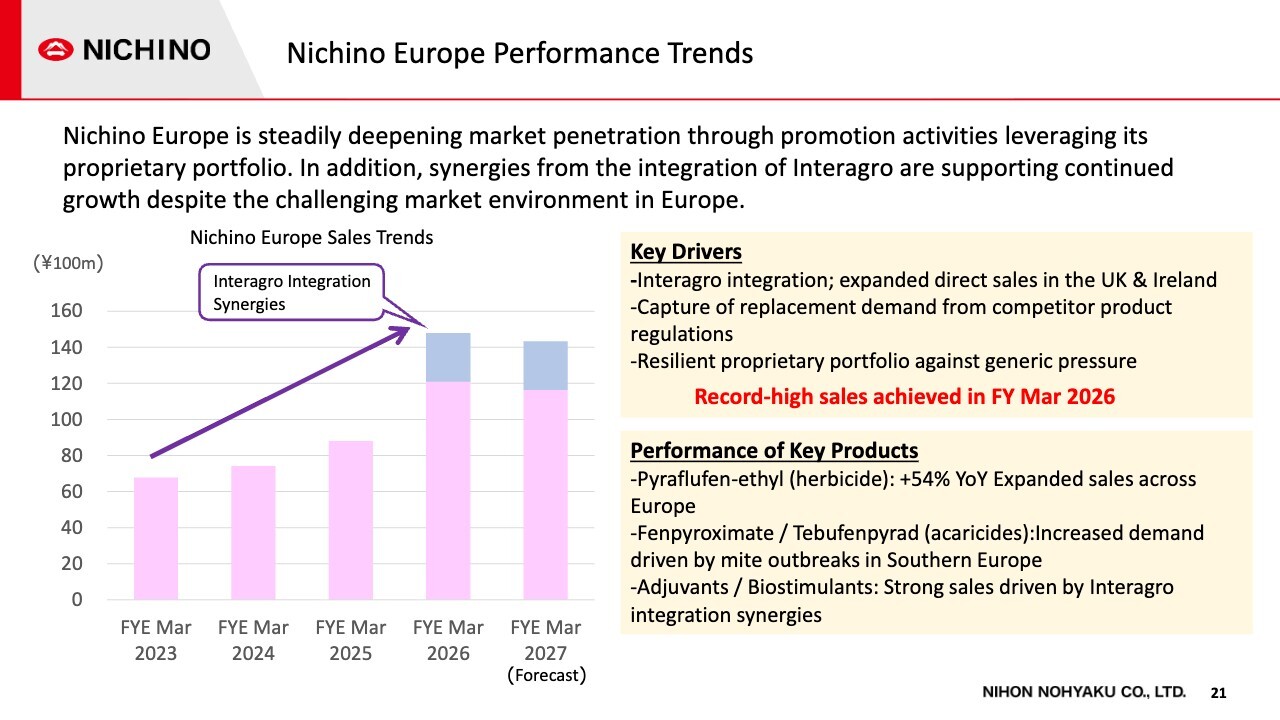
I would like to explain in detail the results of Nichino Europe, which also recorded the highest net sales and operating income ever.
In Europe, the market environment is generally challenging as regulations on chemical crop protection products become stricter year by year. In such an environment, we achieved record sales by leveraging our unique portfolio, which is less susceptible to generic price pressure, to ensure that we are able to capture the replacement demand resulting from stricter regulations on competing products, and by strengthening our direct sales structure in the U.K. through integration synergies with Interagro.
Crop Protection Products (non-crop & royalty) (YoY)
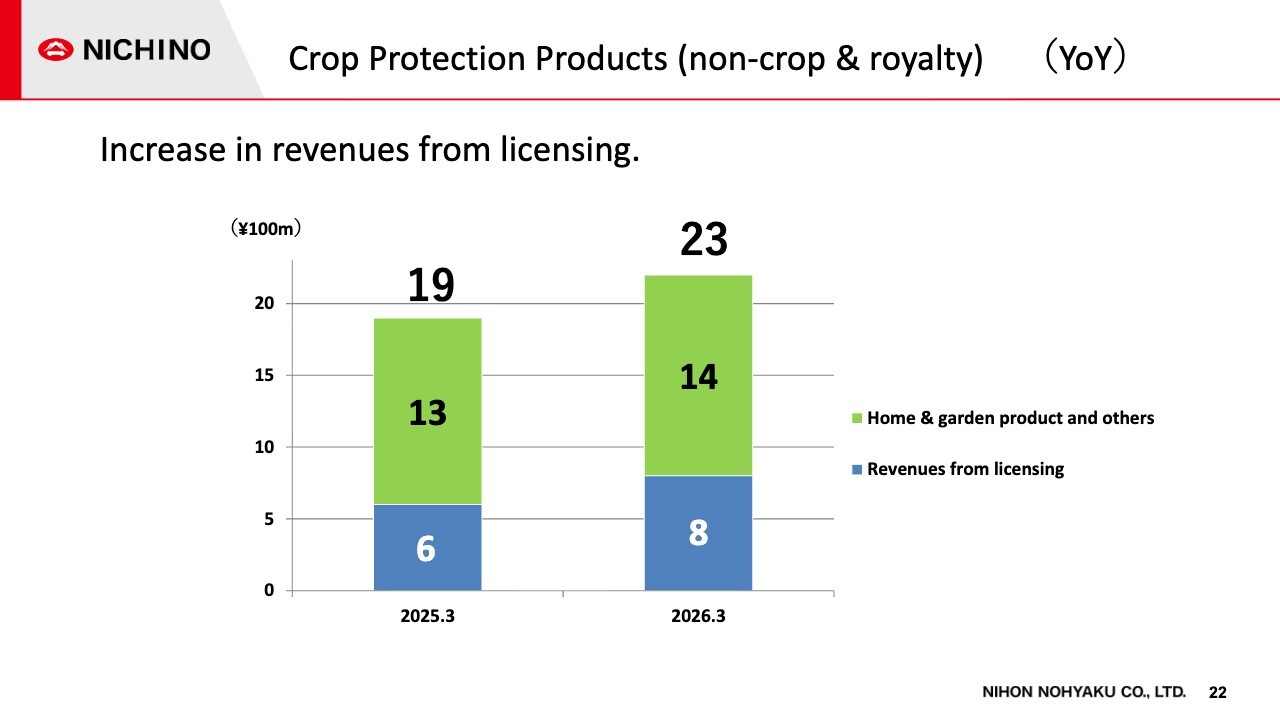
The graph on the slide shows net sales in the crop protection business other than domestic and overseas sales, categorized into revenues from licensing in blue, and home & garden products in green. In the period under review, sales of home & garden products and other products and revenues from licensing both increased.
Chemical Products (excl. crop protection products) (YoY)
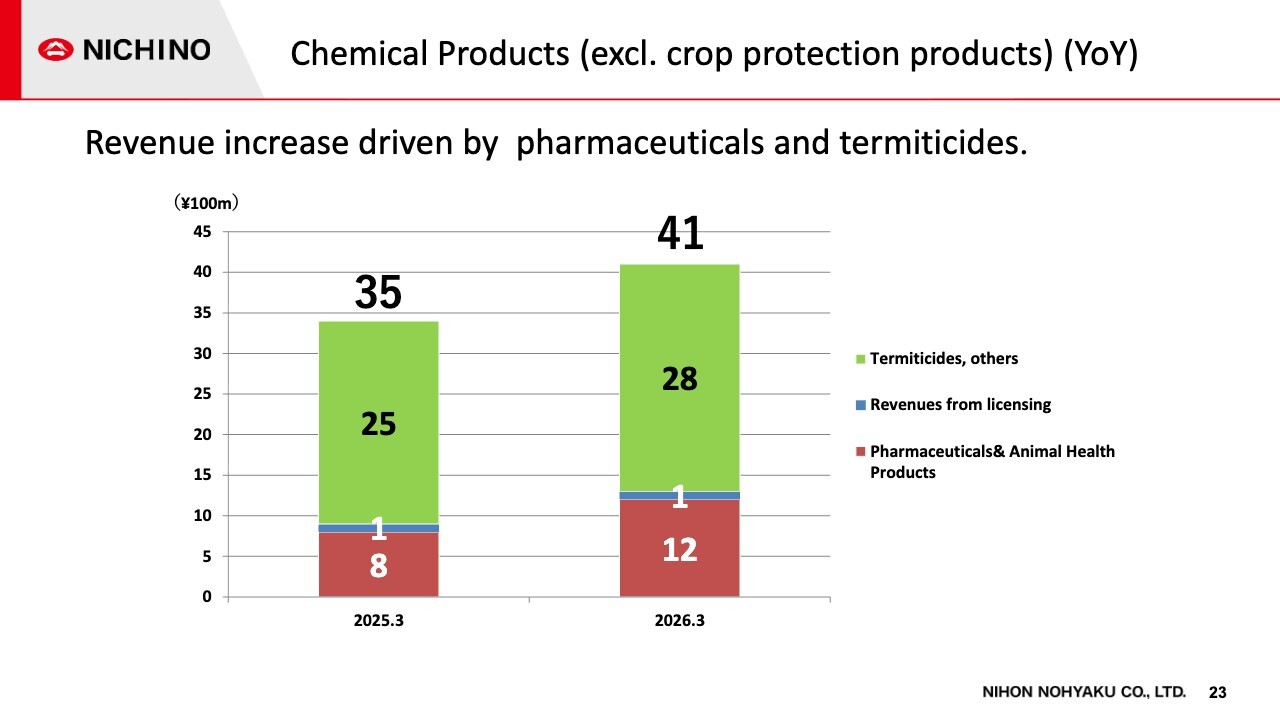
Here is a graph for the chemical business excluding crop protection products. The results are shown in the following categories: pharmaceuticals and animal health products in red, revenues from licensing in blue, and termiticides and others in green.
Net sales for the period increased ¥0.3 billion due to strong sales of termiticides and other products, and ¥0.4 billion in the pharmaceutical business due to strong sales of topical antifungal agents for nail fungus in Japan.
Major Earnings of Domestic Group Companies (YoY)
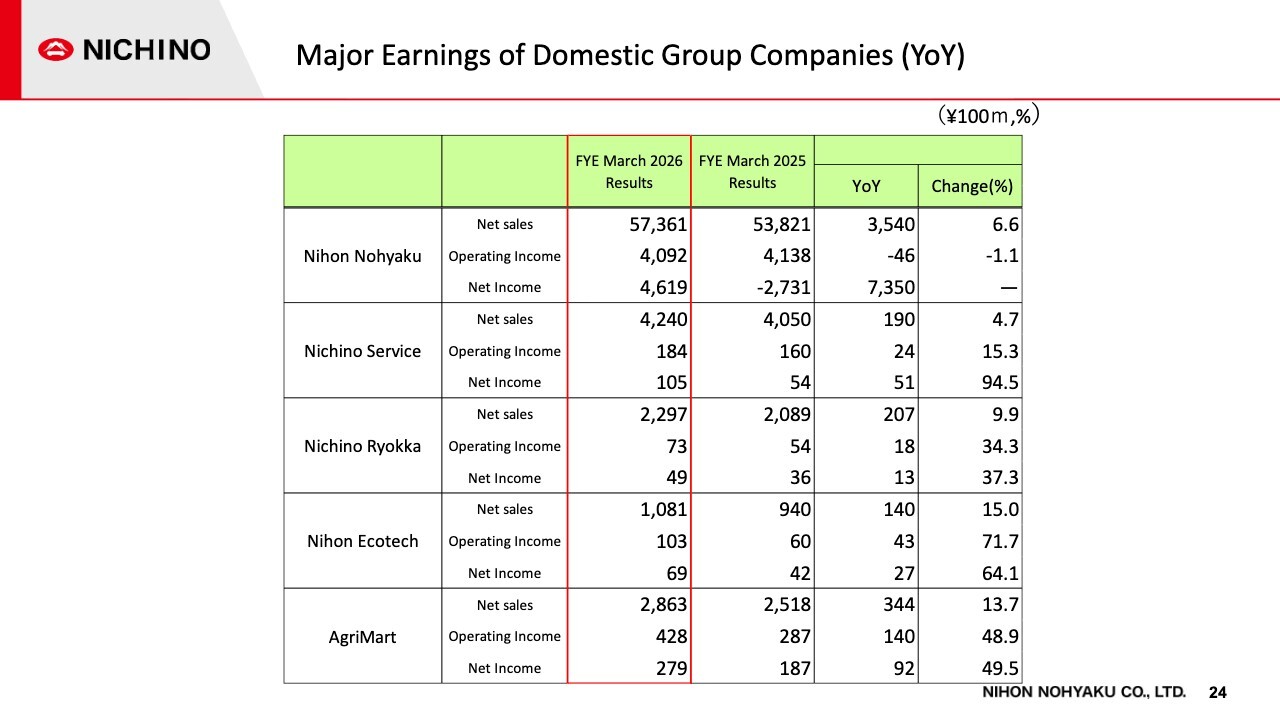
The table on the slide summarizes the performance of domestic group companies.
Major Earnings of Overseas Group Companies (YoY)
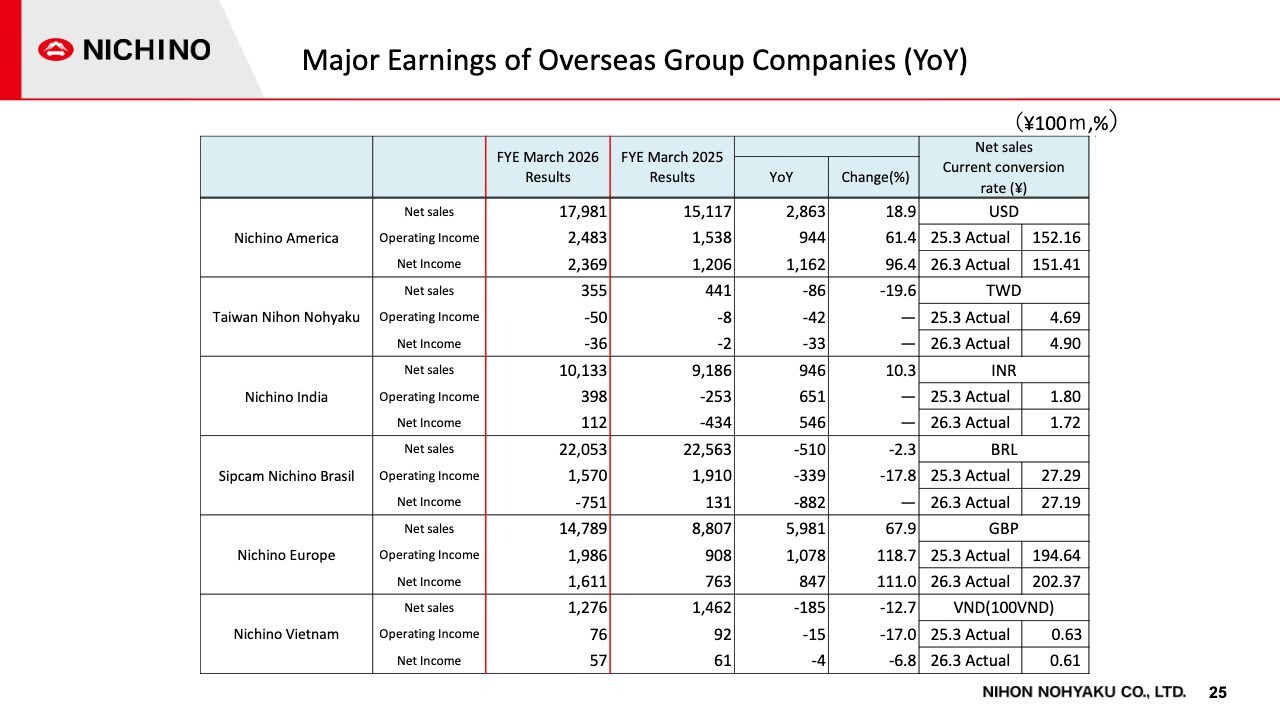
The table on the slide summarizes the performance of our overseas group companies.
FYE March 2027 Earnings Forecast (YoY)
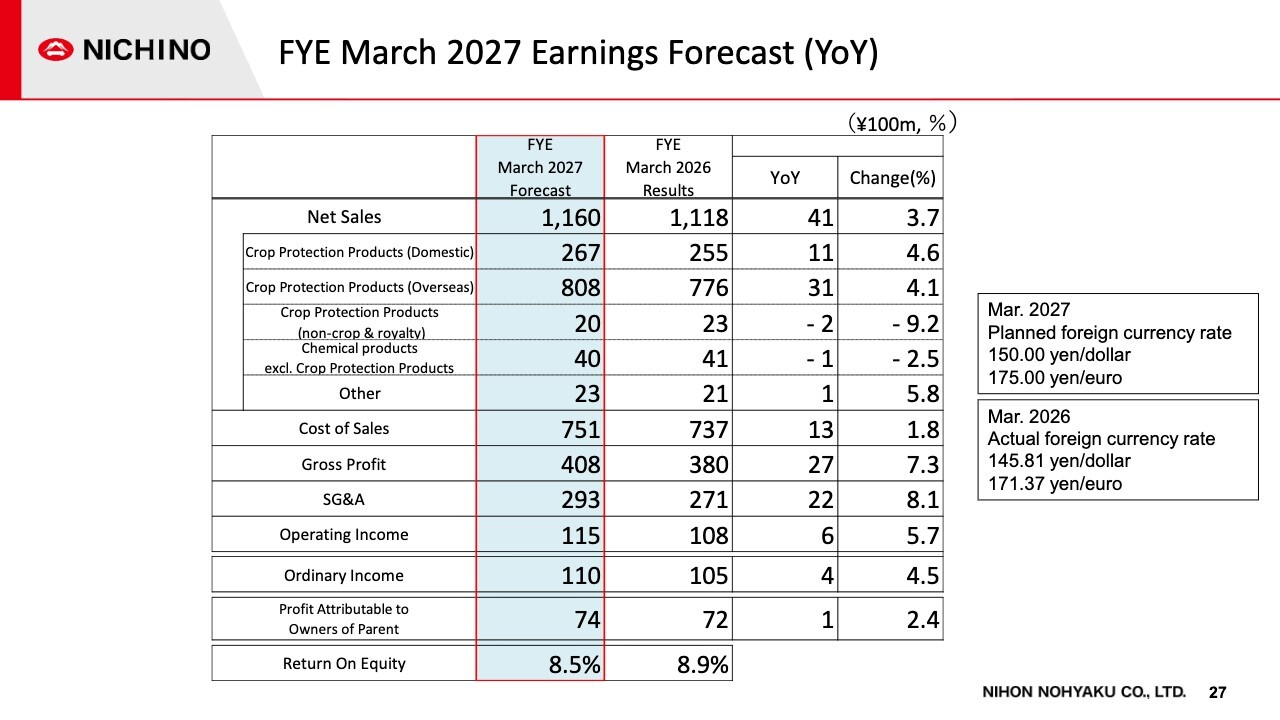
Next, I will explain our forecast for the fiscal year ending March 31, 2027.
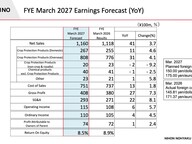
Net sales are expected to be ¥116.0 billion, an increase of ¥4.1 billion YoY, mainly due to growth in the core crop protection business. In terms of profit, we expect operating income of ¥11.5 billion, up ¥0.6 billion YoY; ordinary income of ¥11.0 billion, up ¥0.4 billion YoY; and net income attributable to shareholders of the parent company of ¥7.4 billion, up ¥0.1 billion YoY.
Although we expect to fall one step short of the ¥120 billion in net sales set forth in our Medium-term Management Plan, we expect to achieve our operating income and ROE targets.
FYE March 2027 Earnings Forecast (YoY)
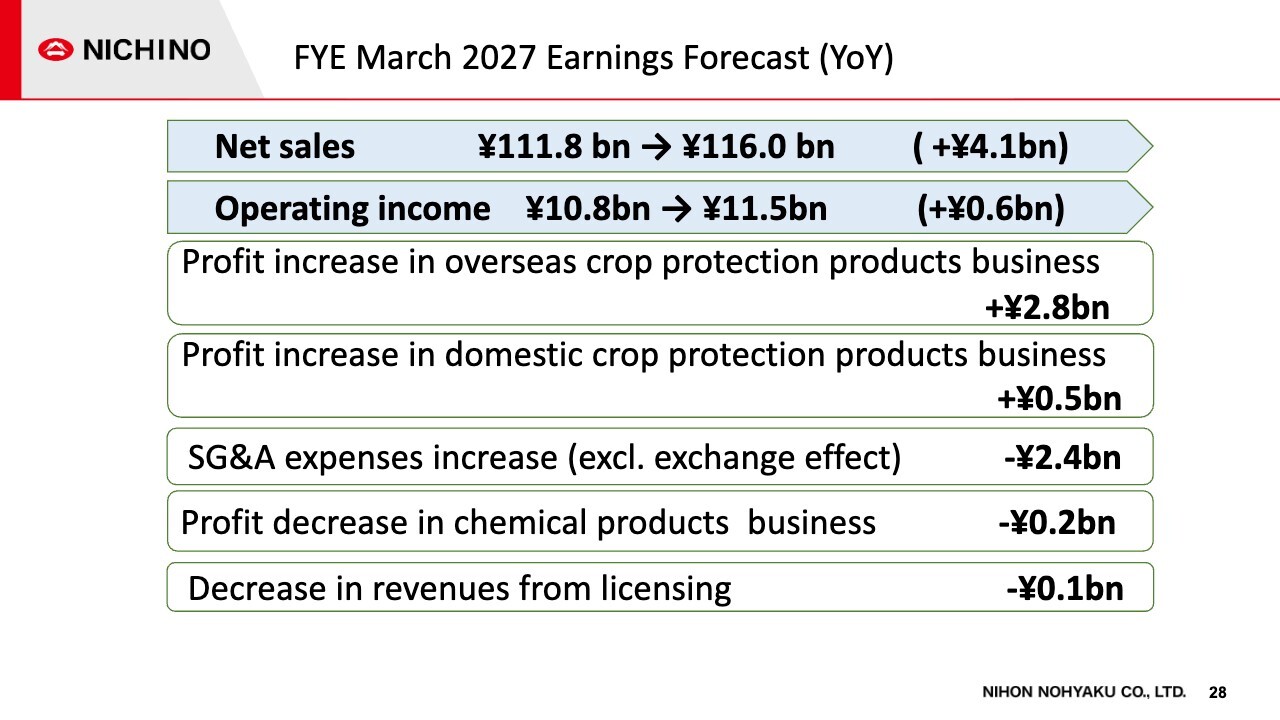
I will now explain the factors behind the increase or decrease in operating income.
Due to the recovery of sales in North America, India, and Brazil, which have remained strong since the previous fiscal year, we expect an increase of ¥2.8 billion in the overseas crop protection business, and ¥0.5 billion in the domestic crop protection business. On the other hand, an increase in SG&A expenses, including R&D and personnel costs, is expected to reduce profits by ¥2.4 billion, resulting in an increase of ¥0.6 billion.
Impact of the Situation in the Middle East on Business
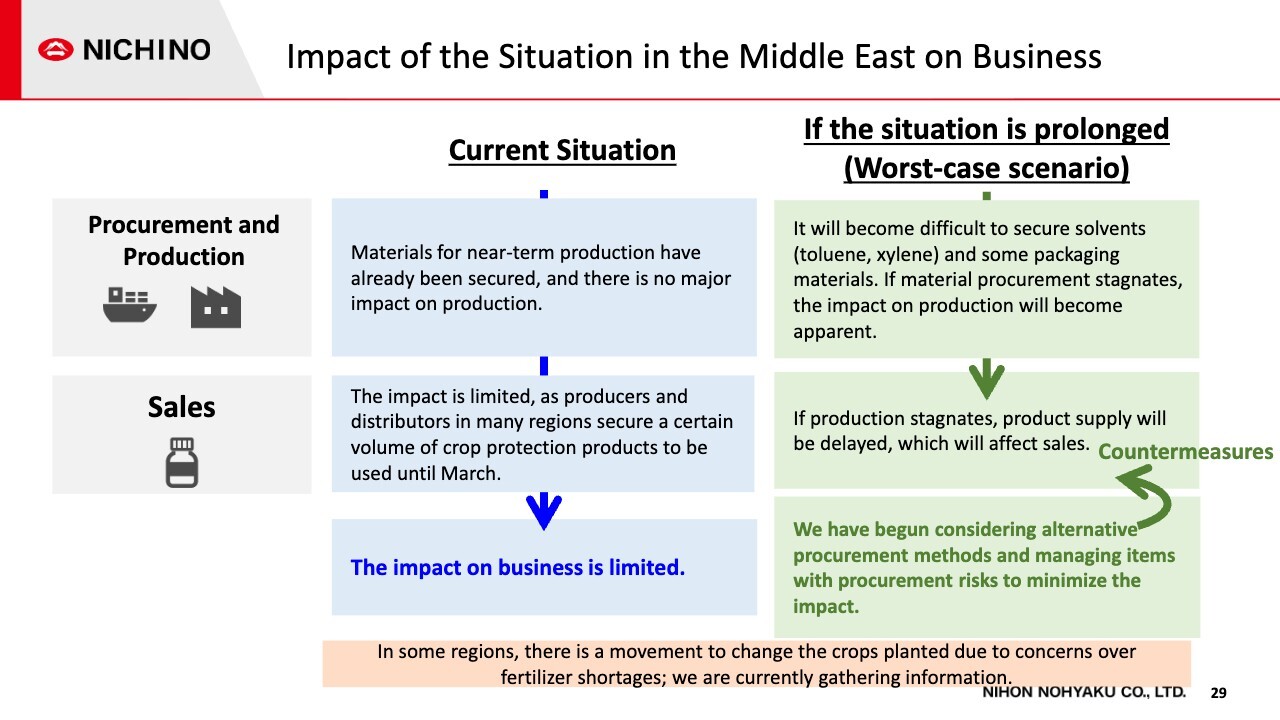
Here I will explain the impact of the recent situation in the Middle East on our business.
For the current situation, in terms of procurement and production, we have already secured the necessary raw materials for our most recent production and there is no impact on production at this time. The impact on sales is also expected to be limited at this time, as producers and distributors in many regions tend to secure a certain amount of crop protection products to be used this season by March.
On the other hand, as a worst-case scenario if the situation is prolonged, the procurement of solvents and some packaging materials may become uncertain, and if it becomes difficult to secure them, production may be affected.
As a result, stagnation in production is expected to have an impact on sales. In order to minimize the impact of a prolonged situation, we are currently considering alternative procurement methods and managing procurement risk items.
In addition, we have already factored in a certain level of cost increase risk in our forecast for the fiscal year ending March 31, 2027, which we explained earlier.
Crop Protection Products (Domestic) - Composition of Net Sales (YoY)
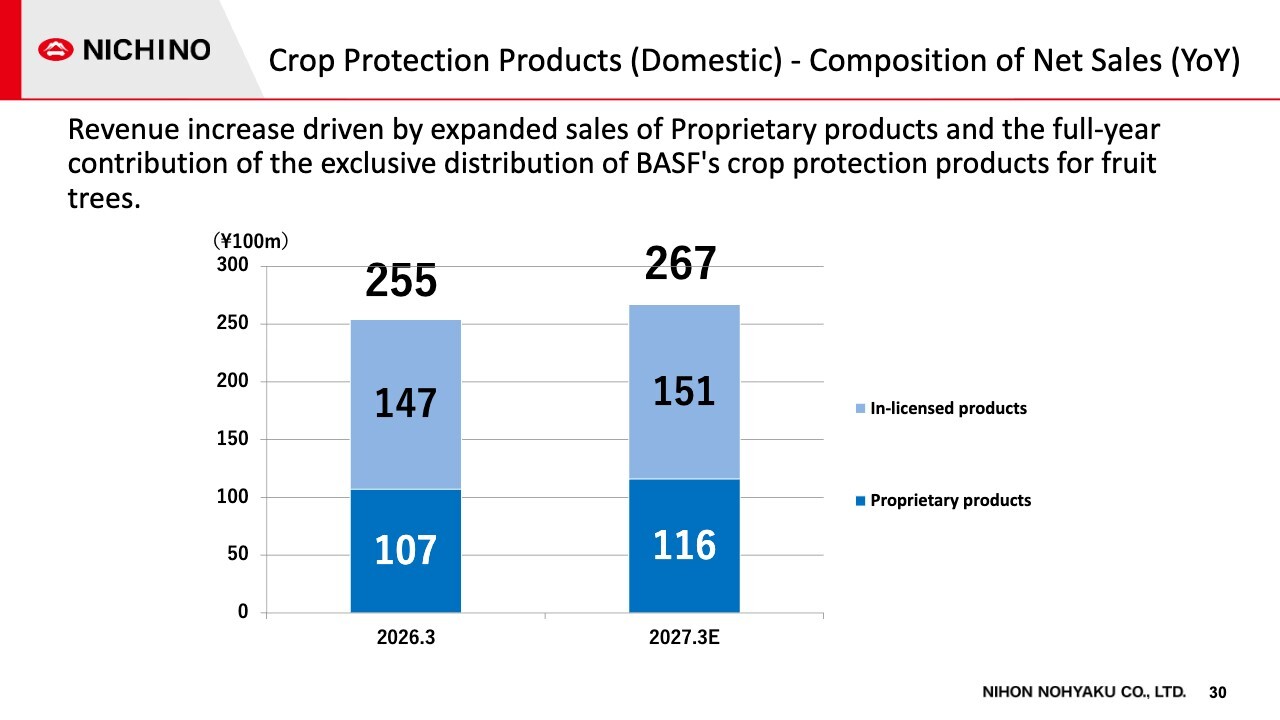
The graph on the slide shows the sales composition of domestic crop protection net sales for the current fiscal year.
For the current fiscal year, we forecast net sales of ¥26.7 billion, an increase of ¥1.1 billion YoY, due to the promotion and sales expansion of proprietary products and a full-year contribution from BASF's crop protection products for fruit trees in the gin-licensed category.
Crop Protection Products (Overseas) - Net Sales by Region (YoY)
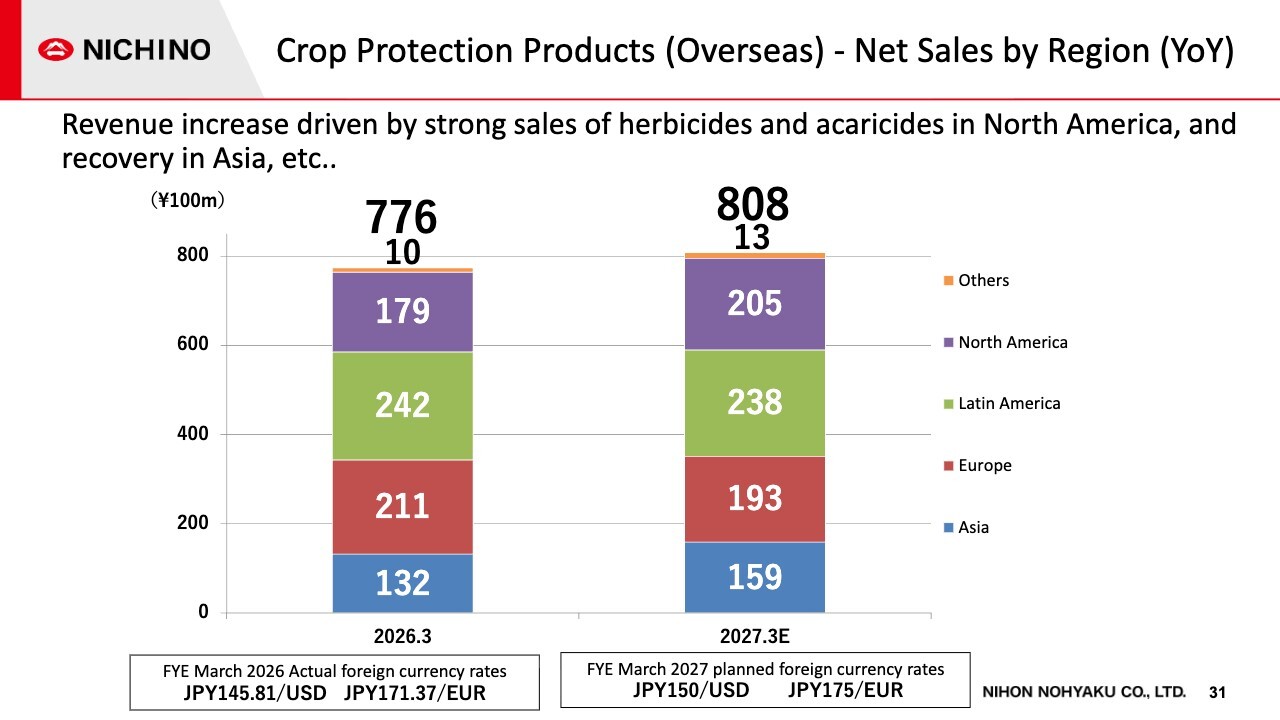
The graph on the slide shows net sales by region for overseas crop protection sales for the current fiscal year.
In North America, shown in purple, Nichino America will continue to increase sales of insecticides, which are performing well, and keep expanding demand for vegetable and fruit tree products.
In Latin America, shown in green, we plan to expand sales of proprietary products. Although sales are expected to grow on a local currency basis, the impact of foreign currency conversion is expected to result in a slight decrease in sales on a yen basis.
In Europe, shown in red, we expect a decline in demand for some items.
In Asia, shown in blue, we will implement measures to rebuild Nichino India and expand sales, mainly of insecticides.
As a result, overall overseas crop protection net sales are expected to be ¥80.8 billion, an increase of ¥3.1 billion YoY. Note that the foreign exchange rate applied to the forecast of current fiscal year is shown in the lower part of the slide.
Crop Protection Products (non-crop & royalty) (YoY)
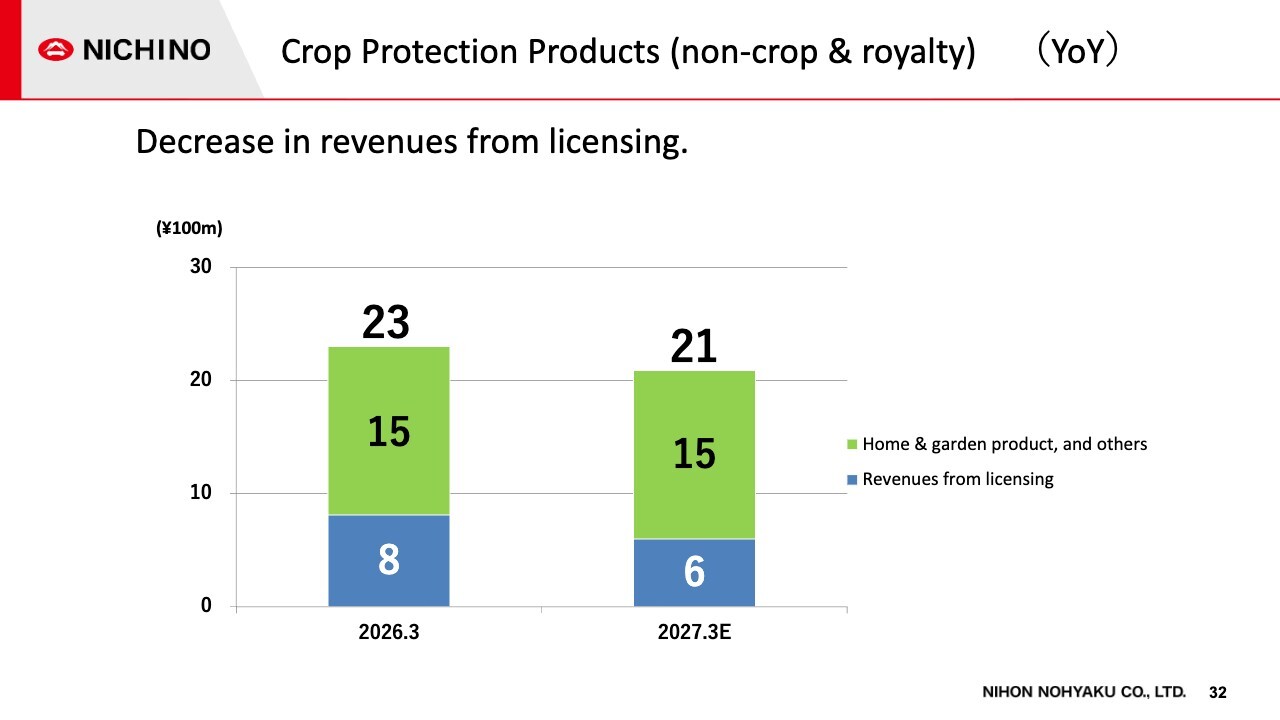
The graph on the slide shows the forecast for this fiscal year for revenues from licensing in the crop protection business and home and garden products and others. In the current fiscal year, revenues from licensing are expected to decrease from the previous fiscal year.
Chemical Products (excl. crop protection products) (YoY)
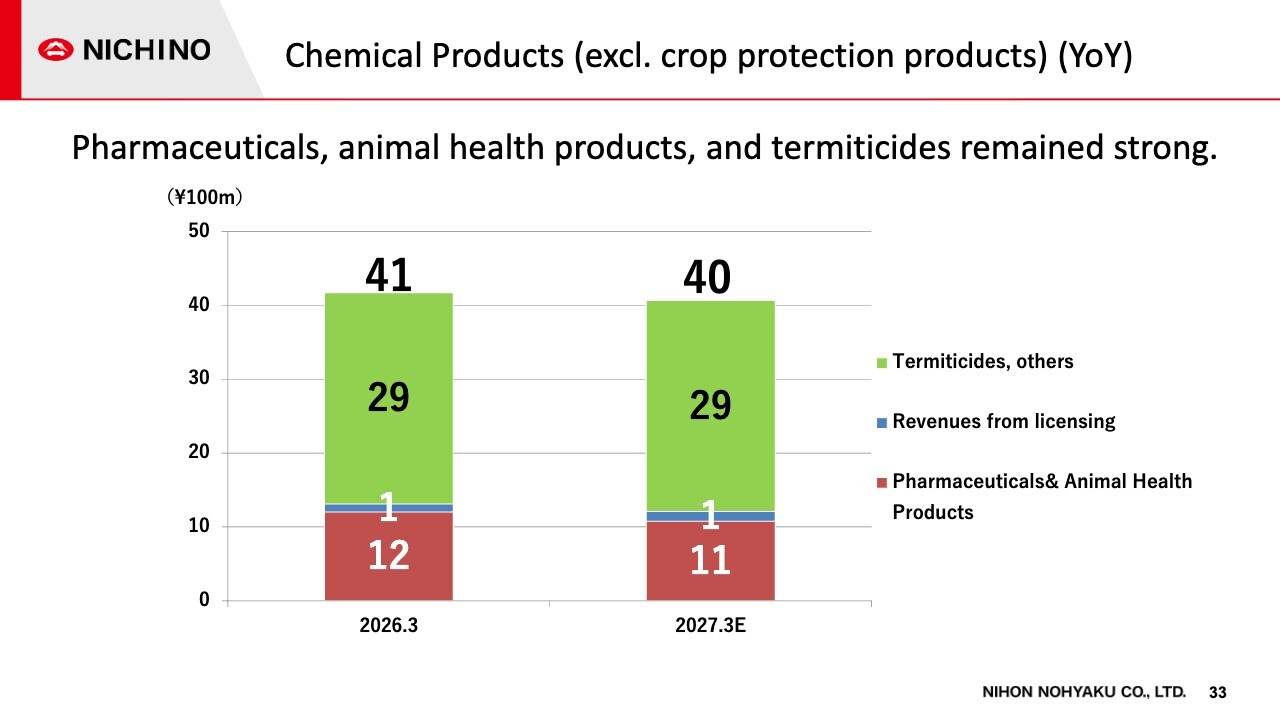
The graph on the slide shows the forecast for this fiscal year in chemicals products other than crop protection products. For the current fiscal year, sales of pharmaceuticals, veterinary drugs, and termite control chemicals remain strong.
Dividend Plan
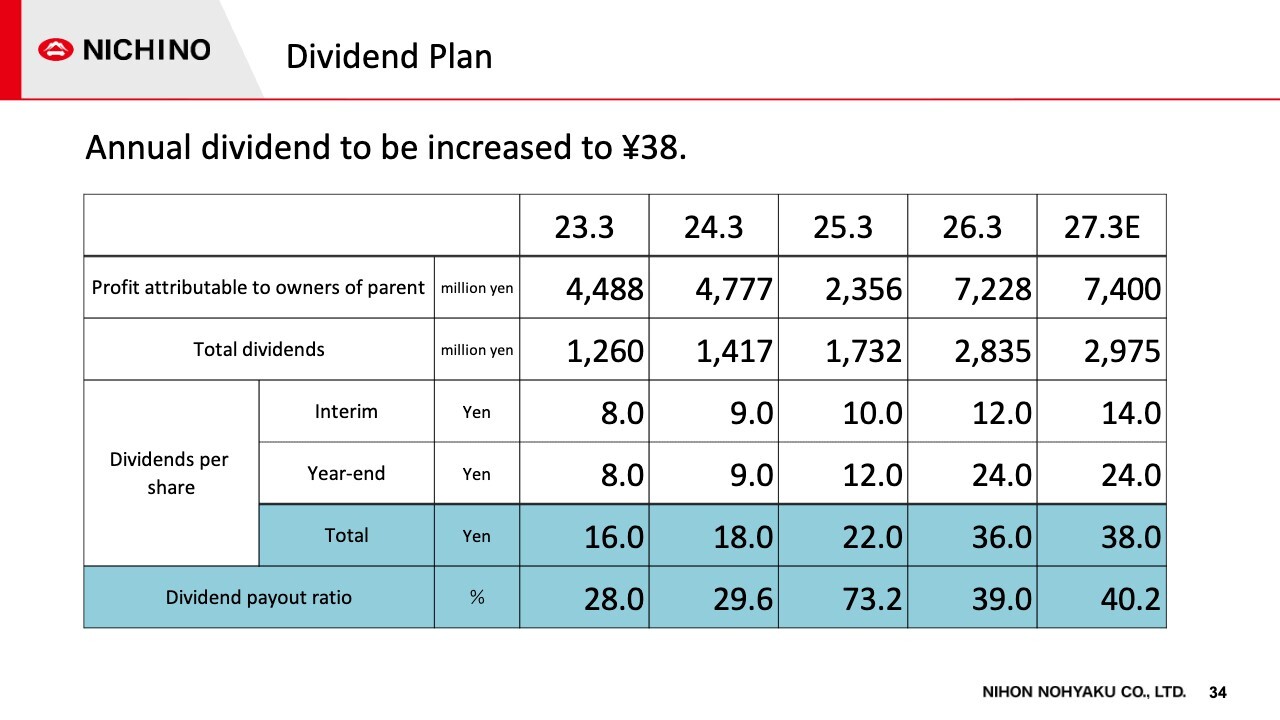
Under the dividend policy based on the Medium-term Management Plan, the dividend for the fiscal year ending March 31, 2026 was increased by ¥14 from the previous year to a total annual dividend of ¥36. For the current fiscal year, we plan to increase dividends by ¥2 from the previous fiscal year to ¥38 per share, for a payout ratio of 40.2%.
Major Earnings of Domestic Group Companies (YoY)
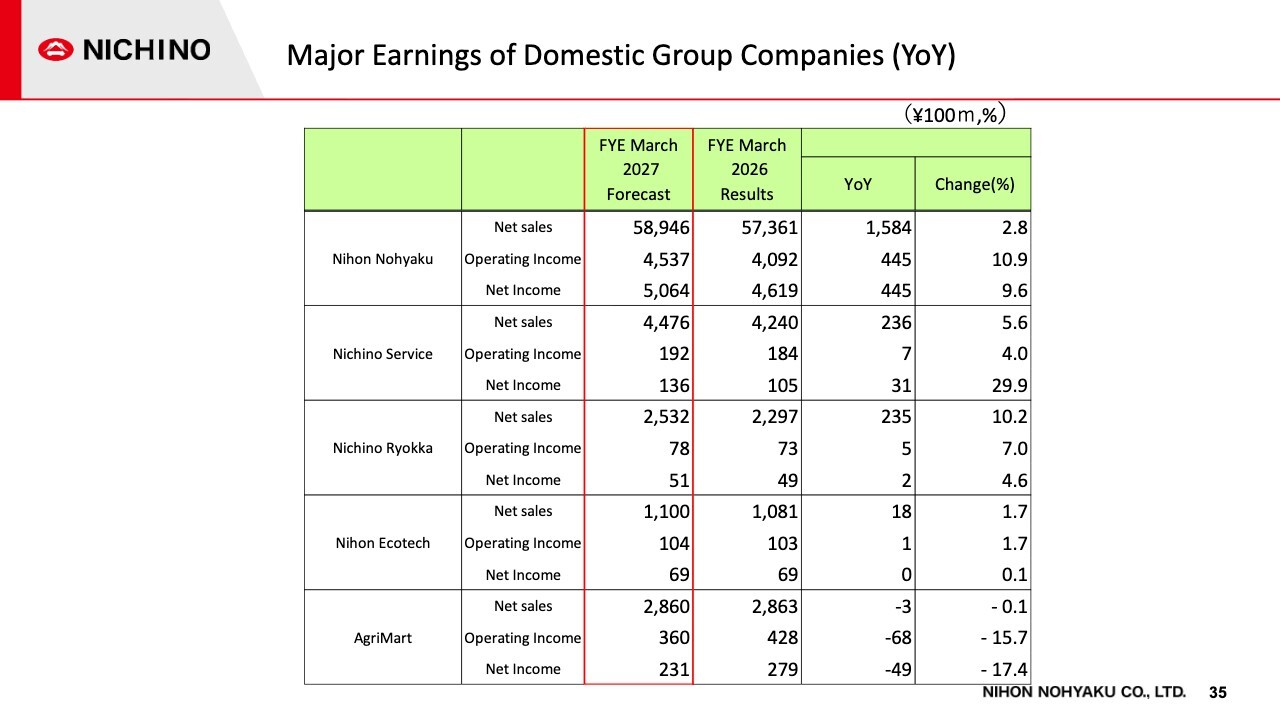
The table on the slide shows a summary of the performance of domestic group companies.
Major Earnings of Overseas Group Companies (YoY)
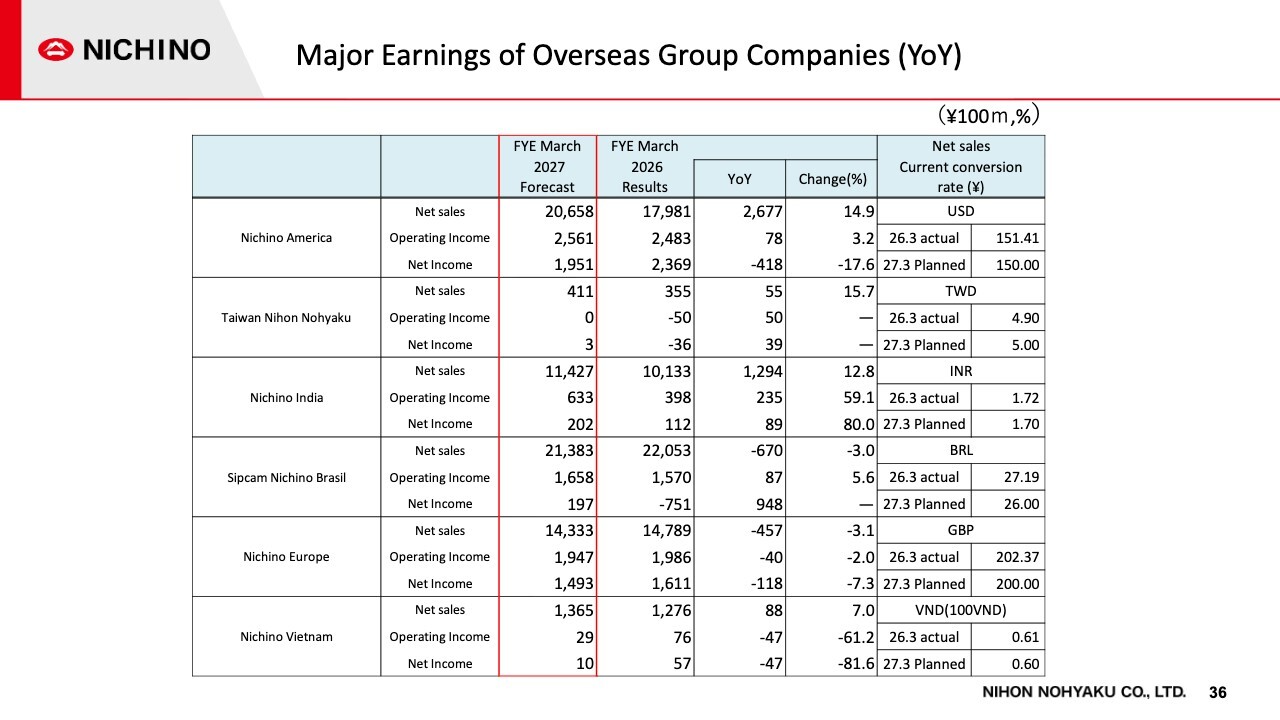
The table on the slide shows a summary of the performance of overseas group companies.
Mid-term Management Plan Growing Global for Sustainability (GGS)
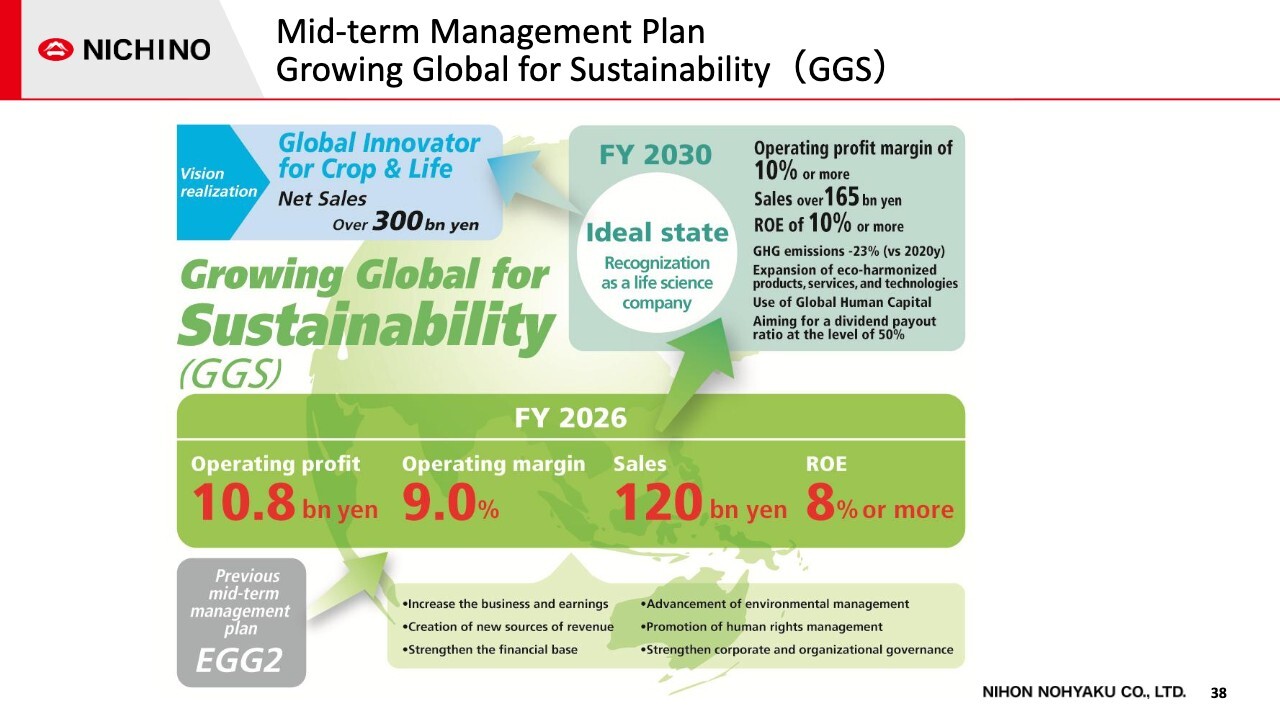
I will explain the status of our efforts toward the Medium-term Management Plan.
This fiscal year marks the final year of our Medium-term Management Plan, “Growing Global for Sustainability (GGS).” The plan calls for net sales of ¥120 billion, operating income of ¥10.8 billion, and an operating margin of 9%. In this Medium-term Management Plan, we have also set a planned value for ROE, and we are working to manage our business with an awareness of the cost of capital.
In the plan for this fiscal year, we expect to slightly miss our net sales target, but operating income, operating margin, and ROE are all expected to meet the plan.
FY2025 Achievements and Challenges
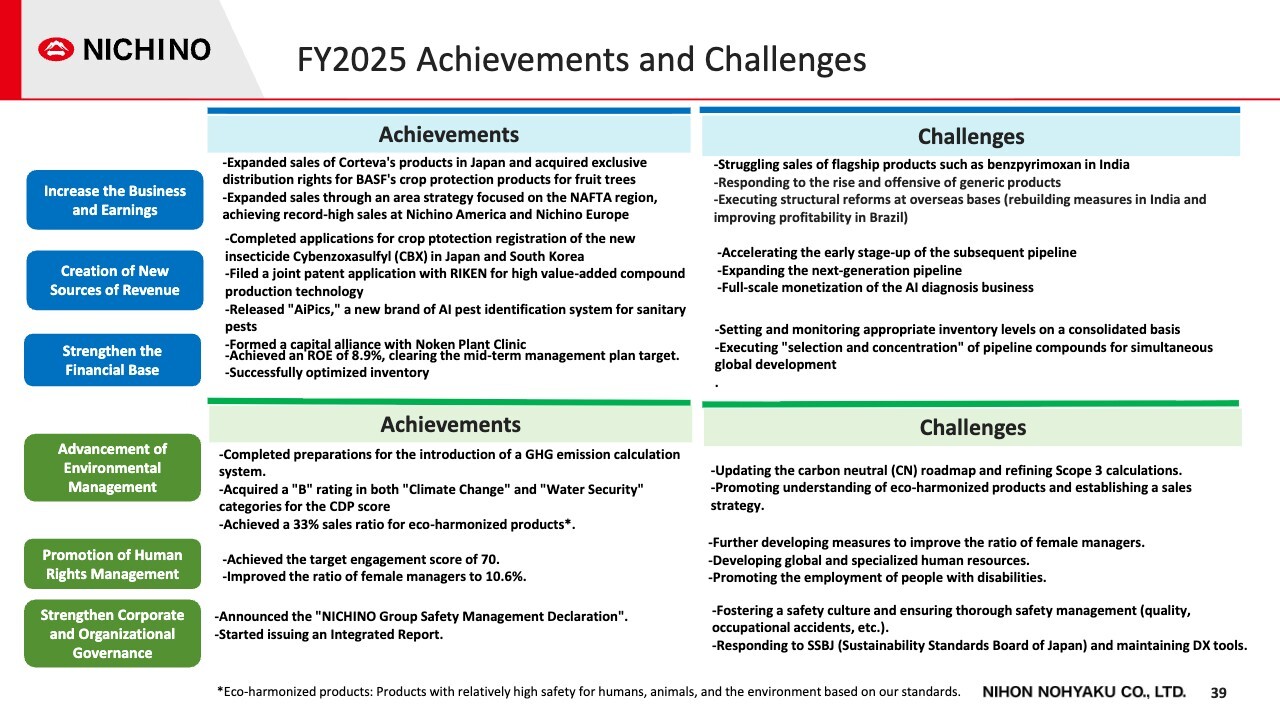
The achievements and challenges for FY2025 are shown on the slide.
Under "Increasing the Business and Earnings," while crop protection sales in Japan, North America, and Europe were strong, we identified the necessity of structural reforms in India and Brazil as a challenge, which we will explain in more detail later.
In the area of "Creation of New Sources of Revenue," we had a fruitful year with the completion of applications for registration of a new insecticide, Cybenzoxasulfyl, in Japan and South Korea, and a new initiative with RIKEN.
In "Strengthening our Financial Base," we achieved an ROE of 8.9% and promoted inventory optimization initiatives to improve both capital efficiency and profitability.
On the non-financial side, we were also able to achieve results, including meeting our employee engagement score targets and publishing our first integrated report.
Initiatives for FY2026
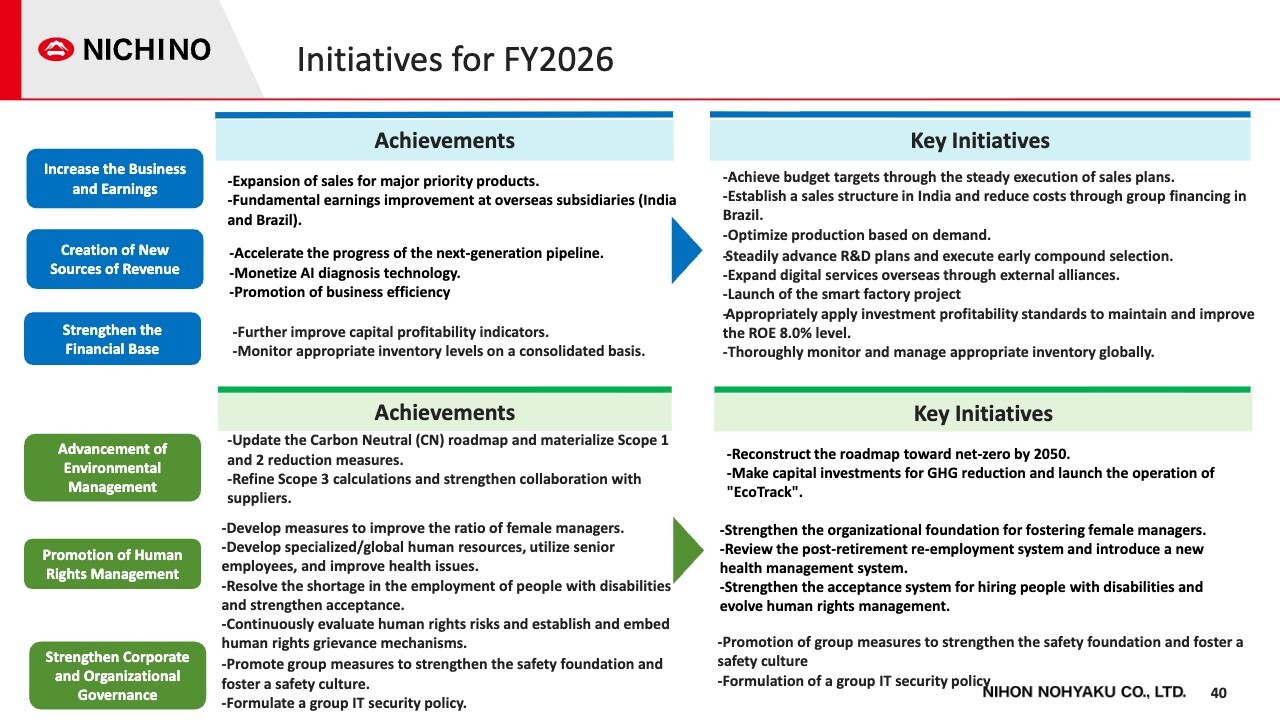
The initiatives in financial values for FY2026 are shown on this slide.
Under "Increase the Business and Earnings," we will steadily implement drastic earnings improvements at our subsidiaries in India and Brazil.
In the area of "Creation of New Sources of Revenue," we will steadily advance our R&D plans and implement initiatives to utilize our bioresources.
In the area of "Strengthening our Financial Base," we will continue our efforts to improve return on capital.
Measures to enhance corporate value (1) Overseas Group Initiatives: India Turnaround & Brazil Profitability Enhancement
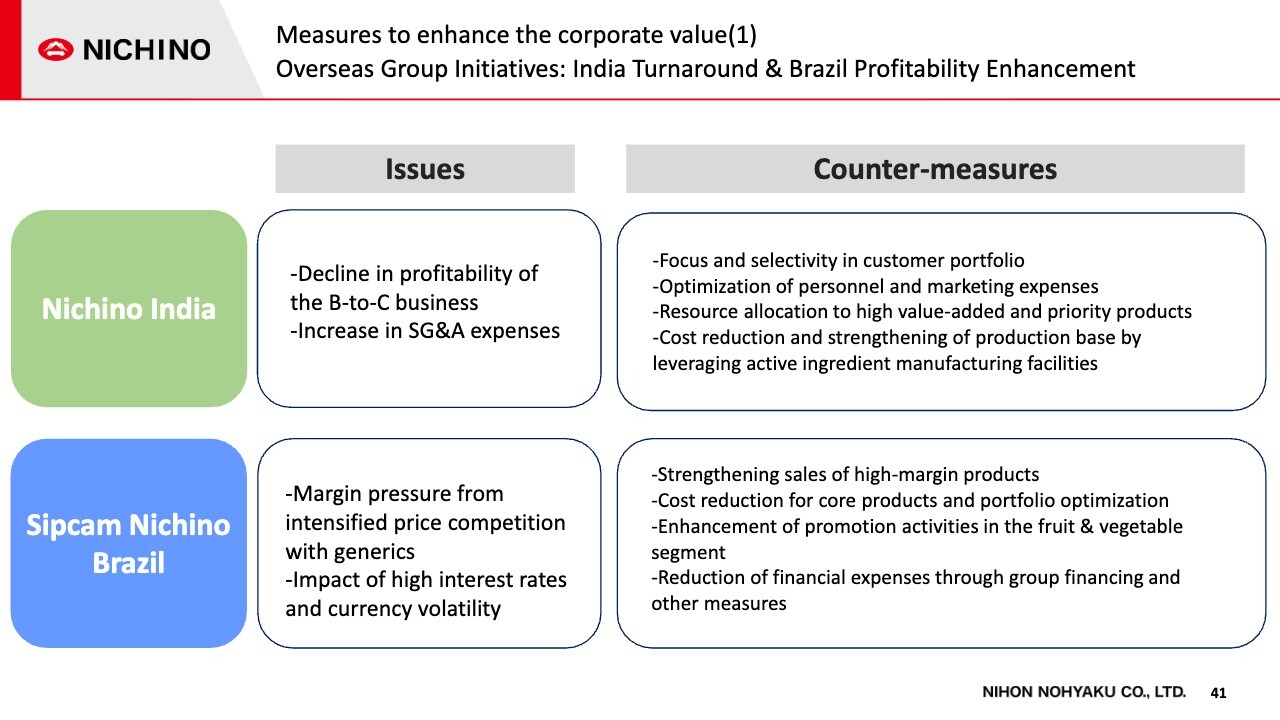
I will now explain the restructuring measures at Nichino India and the efforts of Sipcam Nichino Brazil to strengthen its profitability.
First, Nichino India's issues, shown in the upper part of the slide, are declining profitability in the B-to-C business and increasing SG&A expenses. To address these issues, we have identified the following priority measures: focus and selectivity in customer portfolio, optimization of personnel and marketing expenses, resource allocation to high value-added and priority products, cost reduction and strengthening of production base by leveraging active ingredient manufacturing facilities.
The main issues for Sipcam Nichino Brazil, shown in the lower part of the slide, are; margin pressure from intensified price competition with generics, and impact of high interest rates and currency volatility.
As priority measures to address these issues, we will improve profitability by strengthening sales of high-margin products that can be differentiated from generics, reducing procurement costs, and optimizing our portfolio.
In addition, we will further strengthen our promotional activities in the fruit tree and vegetable fields, which are our strengths. Also, we will work to reduce financing costs through the group financing and other means.
Measures to enhance corporate value (2) Domestic Sales Initiatives
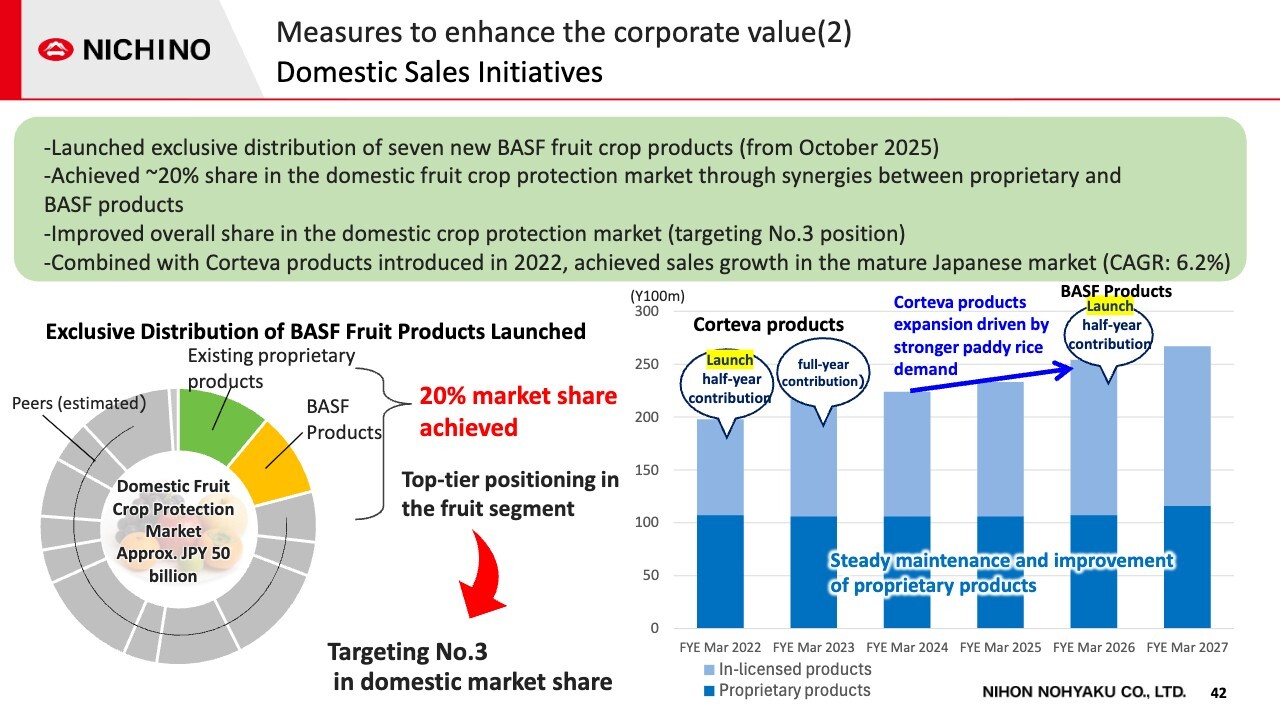
I would like to explain our efforts in the domestic crop protection business as a measure to enhance corporate value.
In October last year, we started exclusive sales of BASF's products for fruit trees in Japan. We have traditionally excelled in the fruit tree and vegetable fields, but with the expansion of our product portfolio, we expect to add approximately ¥5 billion in the future, and sales of products for fruit trees are expected to reach approximately ¥10 billion.
In the market for fruit tree products, which is estimated to be worth approximately ¥50 billion in Japan, we expect to capture approximately 20% of the market, and that our overall domestic market share will reach the third highest level in the industry.
In the maturing domestic crop protection market, we are expanding our sales, including Corteva's products, which we began selling in 2022, achieving an average annual growth rate of 6.2%.
Measures to enhance the corporate value (3) R&D Enhancement: Progress on Cybenzoxasulfyl
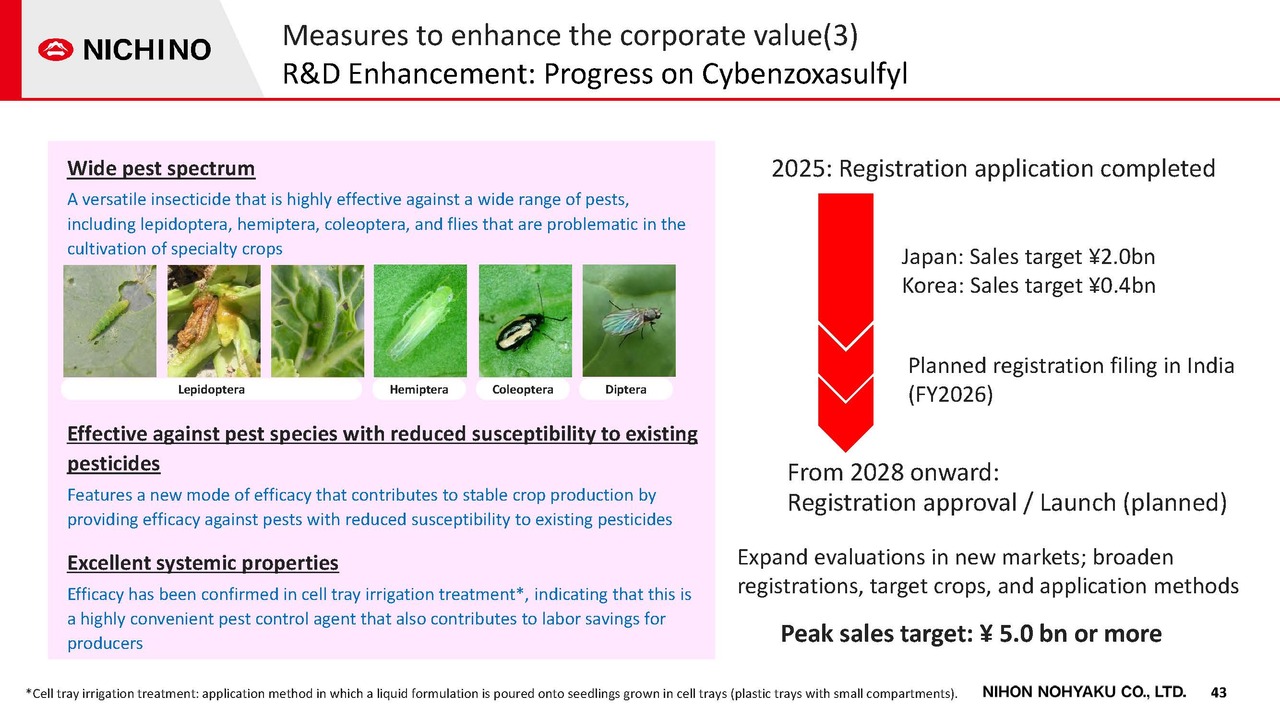
I would now like to introduce the development progress of Cybenzoxasulfyl (CBX), in connection with our efforts to strengthen R&D.
The product is characterized by its high insecticidal activity against a wide range of pest species and its novel mechanism of action. It is effective against pests that have reduced susceptibility to existing agents. In addition, its systemic properties make it an excellent in soil treatment.
We believe that the product can be highly differentiated in the fields of vegetables, fruit trees, and tea as a product with new action properties for which no prior agents exist.
The "CBX" is currently under development in Japan, Korea, and India, and is expected to sell over ¥3 billion at its peak in these countries. Applications for crop protection productsregistration have already been completed in Japan and South Korea in November last year, and applications for registration in India are expected to be filed near future.
In the future, we intend to expand the target countries/regions and applications, aiming to grow to a scale of over ¥5 billion in net sales.
Measures to enhance the corporate value (4) Progress in Smart Agriculture and AI Diagnostics
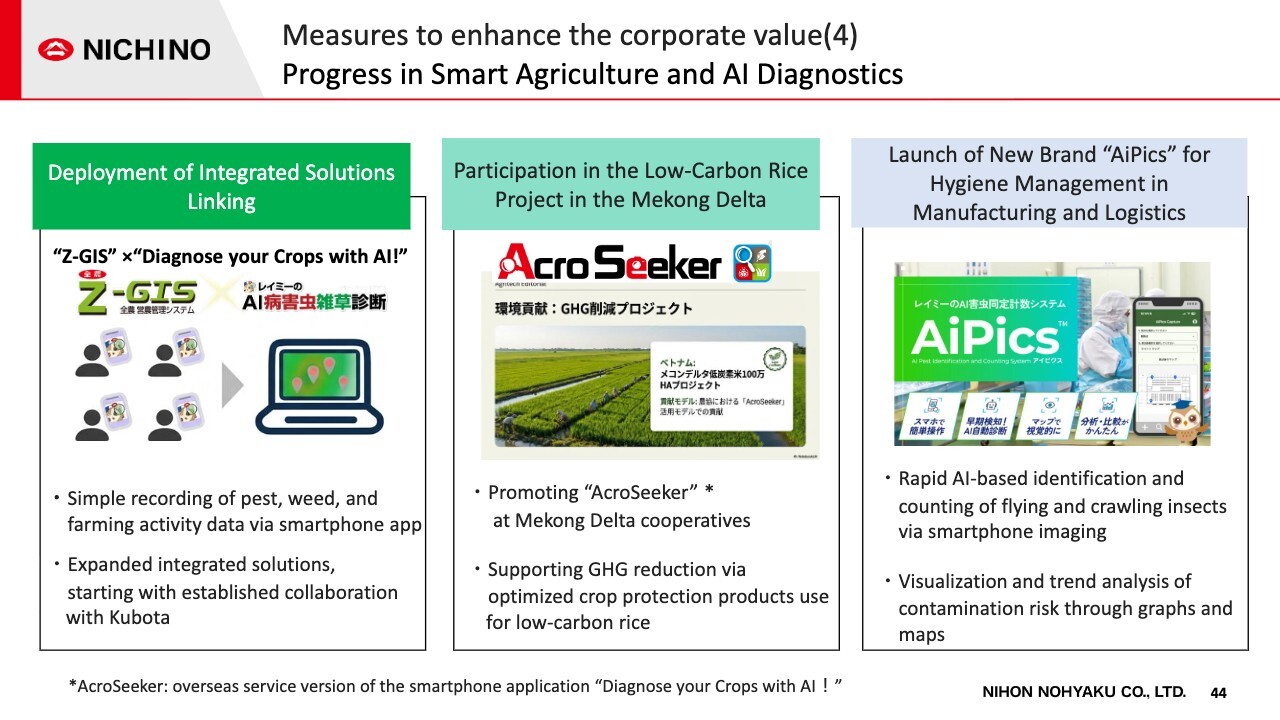
Here are some of our Smart Agriculture initiatives. We have released a new service that links “Diagnose Your Crops with AI!” with JA Zen-Noh's Z-GIS, enabling visualization of pest information and agricultural operations.
In addition to strengthening cooperation with external partners such as Kubota Corporation, we are promoting the “AcroSeeker” named for overseas market, and participating in a GHG reduction project in Vietnam.
In addition, we are developing "AiPics," a sanitary pest management tool based on AI technology, and expanding its use in new applications.
Enhancing Corporate Value of the NICHINO Group
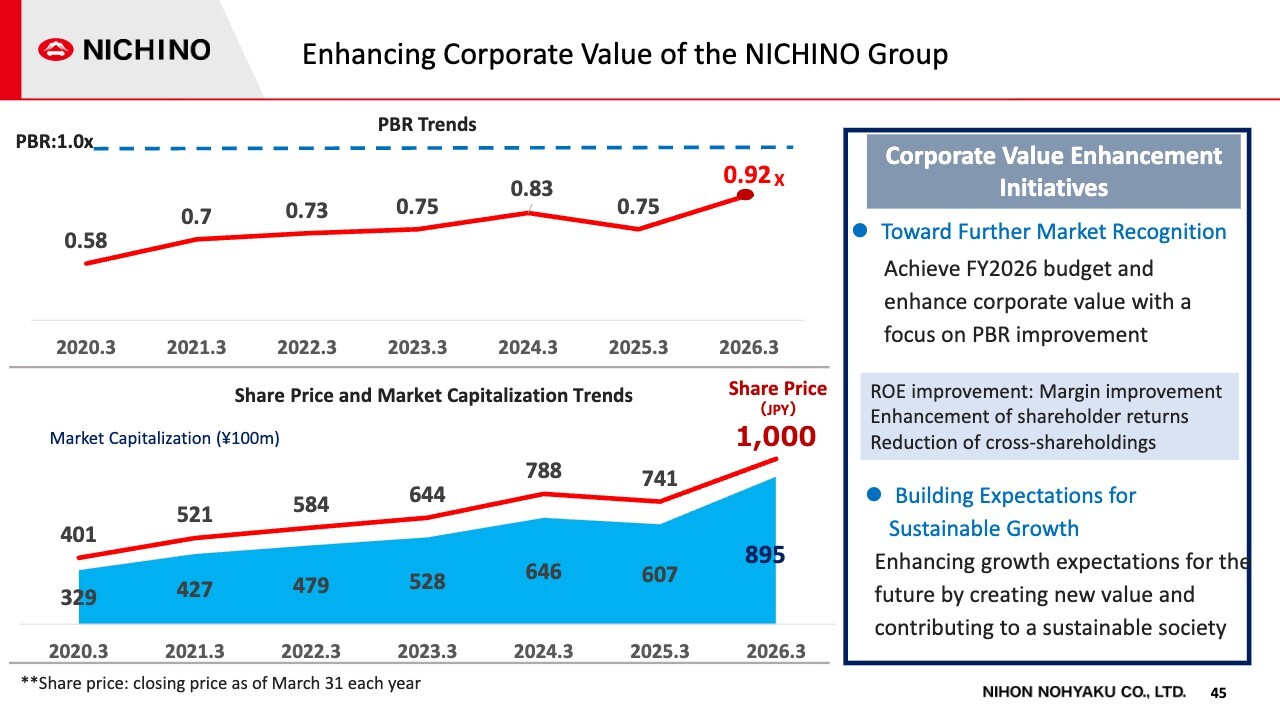
I would now like to explain our evaluation in the capital markets.
The PBR in the upper part of the slide, which was 0.58 in the fiscal year ending March 2020, has continued to improve, reaching 0.92 in the fiscal year ending March 2026, a figure close to a P/B ratio of 1.
The share price is shown in the lower part of the slide. It has increased from ¥401 at the end of the fiscal year ending March 31, 2020 to ¥1,000 at the end of the fiscal year ending March 31, 2026. Market capitalization has also increased from ¥32.9 billion to ¥89.5 billion, showing steady progress in terms of market valuation.
We will continue to enhance capital profitability by reliably achieving our sales plan and obtaining appropriate market valuations, while raising expectations for sustainable growth in the future through the creation of new values and contribution to a sustainable society.
We are also pursuing new initiatives in the areas of public relations and investor relations, with the aim of further increasing our market value.
Initiatives to Improve the Image of the Crop Protection Business
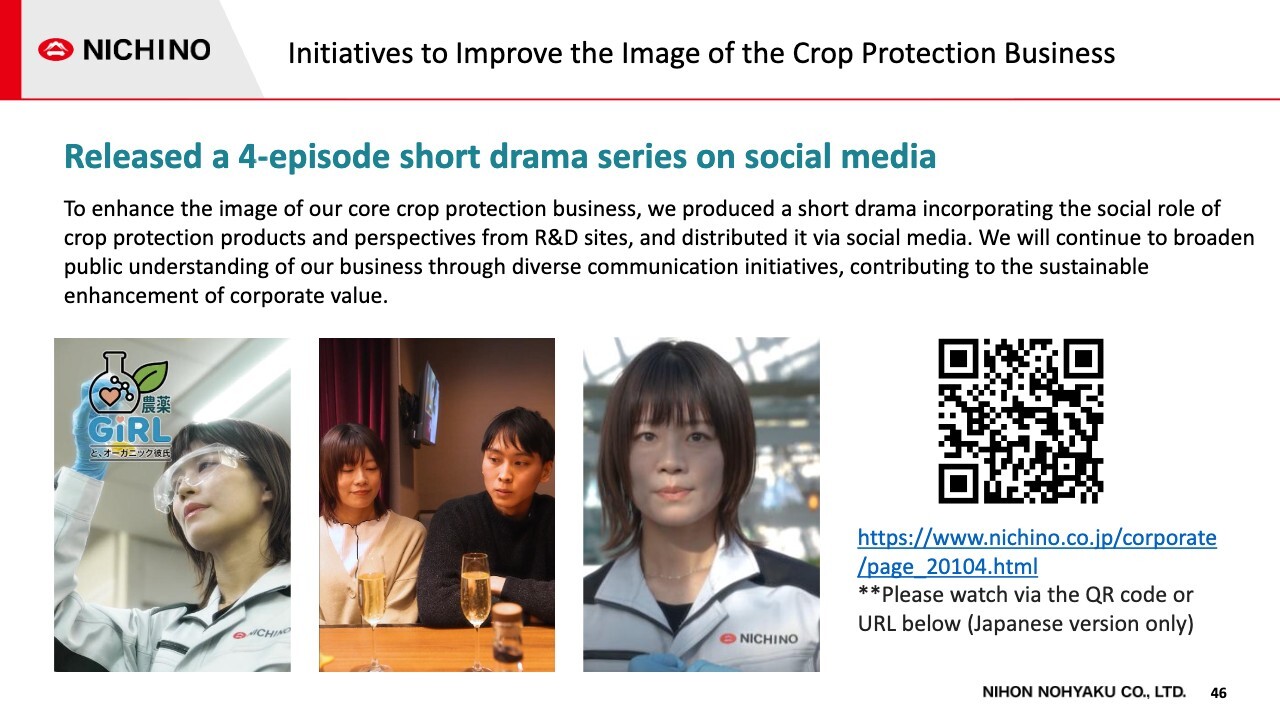
To improve the image of our core business of crop protection products, we created a short drama, incorporating the social role of crop protection products and the onsite perspective of research and development, and distributed it on social networking services.
We will continue to broaden social understanding of our business through a variety of information dissemination and strive to sustainably enhance our corporate value. Please also see this short drama.
Promoting Dialogue with Stakeholders / Issuance of Integrated Report
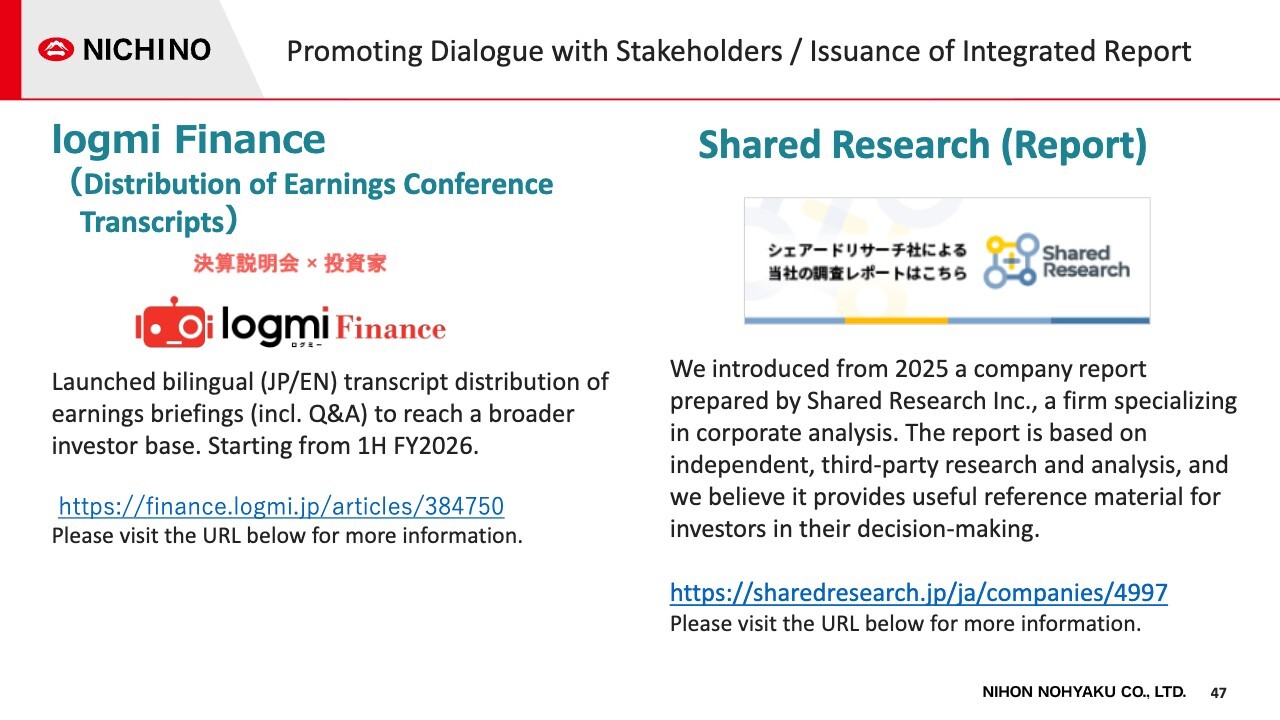
In order to reach out to a wide range of investors, from individual investors to domestic and foreign institutional investors, we are also working on new IR methods as shown on the slide. We hope you will take a look.
Message from Mr. Iwata
Since our founding, we have contributed to the stable production of food by controlling pests and weeds through our crop protection products.
The NICHINO Group will continue to provide advanced technologies to meet society's needs in a wide range of fields, including crop protection products, pharmaceuticals, and veterinary medicine, to take on the challenge of securing stable food supplies and maintaining affluent lifestyles, and to contribute to the realization of a sustainable society through the promotion of sustainability management.
This concludes my presentation. Thank you for your attention.
Q&A: Trends in rice prices in Japan and the outlook for crop protection products demand
Moderator: Here is a question: "The retail price of rice in Japan has declined. How has this affected the domestic crop protection market?"
Iwata: As you are aware, the commercial price of rice rose to ¥4,500 per 5 kilograms at one point, following the sharp rise in rice prices last year. Currently, the price is settling around ¥3,800, but still remains high compared with the past.
We currently expect paddy rice acreage to remain at last year's level, although this will depend on the new rice trend. We also recognize that producers remain highly motivated to produce.
According to CropLife Japan's provisional figures for the end of March 2026, the value of crop protection shipments is already 110.8% of the previous year's level, and we recognize that we are well ahead of schedule, including the impact of the situation in the Middle East and other factors. In addition, this year we also expect an increase in the occurrence of pests and diseases, including stink bug damage, and since we anticipate a certain level of demand for agricultural chemicals, we do not expect a major decrease in demand for the current fiscal year.
Q&A: Impact of the situation in the Middle East and how to respond to it
Moderator: Here is a question: "This is about the impact of the situation in the Middle East. What exactly do you mean by "considering alternative procurement methods and managing procurement risk items"? You mention "a movement to change the crops grown in some areas." Specifically which areas and which crops?
We would also appreciate it if you could share with us, to the extent possible, how it might affect the crop protection market and your company."
Iwata: As I mentioned earlier regarding the impact of the situation in the Middle East, we have received reports regarding proposed price increases for solvents and packaging materials. For the current fiscal year, we have already secured raw materials and do not expect any major impact. On the other hand, if this situation continues next year, we see the possibility of some impact.
As an alternative, multiple sources can be secured. Since we have a production base in India in addition to the Middle East, we intend to hedge risks by obtaining raw materials and solvents from multiple sources. We intend to avoid risk through these means, as we have traditionally worked toward the goal of securing multiple sources, including the securing of active ingredients.
Regarding crop changes, we believe that climate change is a major factor. As global warming continues, an El Niño phenomenon is predicted to occur again this year, and we intend to supply crop protection products that can respond appropriately while accurately determining the situation on the ground, such as the transition of crops in this environment and the northward expansion of cultivation areas.
Another factor that can be assumed in relation to the situation in the Middle East is the growing demand for so-called bioethanol. As a result, demand for corn and sugarcane may increase, and agricultural demand in South America is expected to grow. We will continue to monitor the situation on the ground with regard to the impact of this situation in the Middle East.
In addition, we have shared the situation with the government regarding the impact of the situation in the Middle East, and we are working together and exchanging information on the situation, including securing the supply chain. We will continue to work on securing procurement channels to minimize the impact.
Q&A: Factors behind Nichino America's profit decline and earnings outlook
Moderator: Here is a question: "With regard to the outlook for Nichino America, what factors have been factored into your forecast for an increase in operating income but a decrease in net income?"
Iwata: As you mentioned, this fiscal year we expect a decrease in final profit for Nichino America. One of the reasons for this is the approximately ¥600 million in data compensation income for crop protection products that was recorded as non-operating income last fiscal year. This revenue was one-time, and will not be recognized in the current period.
On the other hand, the company reported continued strong sales in the U.S. market and other markets, including Mexico and Canada, mainly of high-margin items. Therefore, we hope that it can be understood that the factors contributing to lower profits are only transitory. At this time, we are developing our business in a direction that will allow us to remain profitable.
Q&A Session: Impact of soaring fertilizer prices on the crop protection business
Moderator: Here is a question: "What is the impact of the fertilizer price hike on the crop protection business?
Iwata: There have already been reports in the newspapers about the rising price of fertilizers. Currently, some price increases have been observed even before the impact of the situation in the Middle East, but if the impact of the situation in the Middle East expands in the future, we expect to see further price hikes for fertilizers involving nitrogen, phosphate, and potash, which are highly dependent on the Middle East, including urea.
We recognize that there is no direct link between the high price of fertilizers and crop protection products. Of course, we believe that changes in the situation of agriculture itself could have an impact, but in terms of food security, we believe that a certain amount of fertilizers and crop protection products can be secured, as this is an essential area not only in Japan but globally as well.
However, since the economic impact on producers due to soaring prices is fully expected, we will closely monitor the current situation and scrutinize future developments.
Q&A: Progressive dividend and 40% payout ratio policy
Moderator: Here is a question: "Regarding the dividend payout ratio, the dividend payout ratio was significantly increased starting in the fiscal year ending March 2024. Please give us some background on the changes in shareholder returns.”
Iwata: As shown on this slide, our policy in the current Medium-term Management Plan is to aim for a dividend payout ratio of 40% while continuing to pay progressive dividends.
As this fiscal year is the final year of our Medium-term Management Plan, we hope to achieve a dividend payout ratio of 40% in line with this policy.
Q&A: AI Application and Business Development in Smart Agriculture
Moderator: Here is a question: "Can you share your enthusiasm for the progress of the AI diagnostics business?"
Iwata: Regarding smart agriculture including AI, the “Basic Plan for Food, Agriculture, and Rural Areas” formulated by the Japanese government states that smart agriculture will be steadily promoted to achieve highly productive agriculture. The NICHINO Group intends to firmly develop its AI-based pest and weed diagnosis business not only in Japan but also overseas, especially in the Asian market, and especially in the paddy rice-related market.
In the future, in addition to backing up agricultural production, we intend to further develop this field with an eye toward various businesses, such as the introduction of e-commerce, while also exploring global possibilities.
We have already completed the implementation of "AiPics" and started its business development in the previous fiscal year. In the future, we plan to strengthen the development of this technology, including its application in other fields in addition to agriculture. The technology of pest and weed diagnosis itself can be developed based on unique techniques, including improving the correct response rate, and we will continue to aim for its use in all situations.
Q&A Session: Business Development and Strategy in India
Moderator: Here is a question: "With respect to India, you mentioned several priority initiatives, which of these would have the greatest impact on profit growth?"
Iwata: With regard to India, business development is progressing mainly through Nichino India, with other sales companies also involved. As I explained earlier, India is not only our sales base but also our production base.
Mass-production of bulk materials is carried out in India, and we aim to mass-produce active ingredients and reduce costs on a global basis. Therefore, we continue to strengthen our so-called B-to-B business, which is expanding globally, especially in India, and promote further proprietary products containing our own active ingredients. We are developing them as a business platform with the aim of making it highly profitable in the future.
As for B-to-C business in India, as you know, India has the largest population in the world, and the population is expected to continue to grow. Therefore, we intend to strengthen our B-to-C business as well, in anticipation of robust demand for agriculture and crop protection products. We will ensure the profitability of B-to-C in addition to B-to-B through appropriate allocation of personnel, strengthening our dissemination and sales capabilities, and promoting intellectual property strategy by utilization of our intellectual property.
On the other hand, it takes a certain amount of time to improve the efficiency of B-to-C business, so we intend to make further improvements in the future.
Q&A: Demand fluctuations and outlook for the European market in the current fiscal year
Moderator: Here is a question: "You mentioned that you anticipate a decline in demand in European for some commodities, can you be more specific?"
Iwata: Earlier, I mentioned that we expect a slight decline in demand in Europe in the current fiscal year. We have received information that the planted acreage of potato will decrease by about 10% this year, and we expect this to have an impact.
The potato market in Europe fluctuates every other year, and the acreage planted the following year depends on the availability of inventory in distribution. We do not believe that this is a permanent decline, and see the decrease in planted area as a temporary decrease in demand. We expect improvement in the next fiscal year and beyond, and recognize that stable demand can be expected.
Q&A Session: Current status of capital and business alliance with ADEKA, and views on parent-subsidiary listing
Moderator: Here is a question” "Please tell us if there has been any change from the past in your company's approach regarding parent-subsidiary listings. Also, in light of the recent trend to dissolve parent-subsidiary listings, please tell us what you think about your future relationship with ADEKA.
Iwata: In 2018, we entered into a capital and business alliance with ADEKA and became their subsidiary. However, we have made it clear since that time that the capital alliance is based on the premise of independent and self-reliant management, and we are still pursuing growth strategies and synergies between the two companies based on this premise.
We are fully aware of the recent issues regarding parent-subsidiary listings. The issues associated with parent-subsidiary listings include protection of minority shareholders and conflicts of interest with the parent company, which we address by appointing a majority of independent outside directors. In addition, direct transactions with ADEKA are limited, so the risk of conflict of interest is considered to be low.
We continue to recognize that the current structure is optimal and we pursue synergies between the two. We aim to contribute to the enhancement of corporate value for both parties by deepening our collaboration in the areas of research and development, production, overseas expansion, and sustainability, with a focus on the field of veterinary medicine, which we have already initiated.
Q&A Session: Factors affecting upside and downside to the results for the current fiscal year
Moderator: Here is a question: "Other than the impact of the situation in the Middle East, please tell us what scope you envisage for upside or downside to the achievement of this fiscal year's plan.
Iwata: We believe there are a variety of factors. For example, the forecast for the current fiscal year sets the exchange rate at 150 yen to the dollar, which could naturally be affected by either a weakening or a strengthening of the yen.
Regarding demand for crop protection products being affected by global warming, we see the effects of global warming continuing in many areas, at least under current conditions. In Japan, for example, there have been reports of large outbreaks of stink bugs again this year, and we recognize that demand for crop protection products continues to grow.
Global warming tends to cause pest outbreaks and habitat expansion, as well as earlier and longer outbreaks. Under these circumstances, we see this as an opportunity to further develop our global operations in the field of insecticides, an area in which we excel.