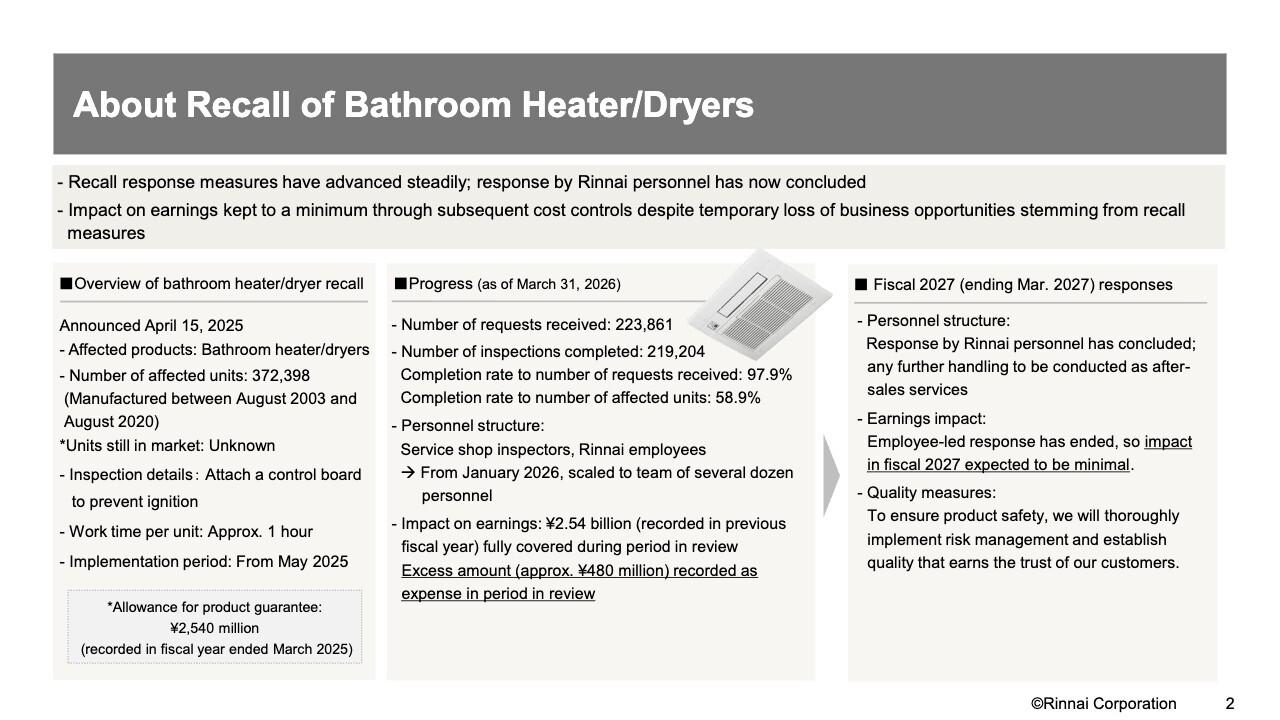
About Recall of Bathroom Heater/Dryers
Hiroyasu Naito (hereinafter "Naito"): My name is Hiroyasu Naito, Representative Director and President of Rinnai Corporation. I would like to present our year-end financial results for fiscal 2026.
Regarding the recall of the bathroom heater/dryers that caused significant inconvenience to our customers, we dispatched approximately 300 personnel from the head office, and the response was largely completed in December of last year. Since then, we have reduced the number of human resources, and any further handling is being conducted as part of our after-sales services.
There were approximately 220,000 cases received, but approximately 219,000 have already been addressed, so the situation is now nearing conclusion. In fact, the number of units produced exceeded 300,000, but because this figure includes older units that are no longer in use, the number of reported cases has remained at around 220,000.
The completion rate for the number of requests received is 97.9%. The completion rate to number of affected units produced is 58.9%, as the number of units remaining in the market is lower than the number of units actually sold.
We will continue to pay close attention to quality and work to prevent any recurrence of such issues.
Fiscal 2026: Consolidated Performance Overview
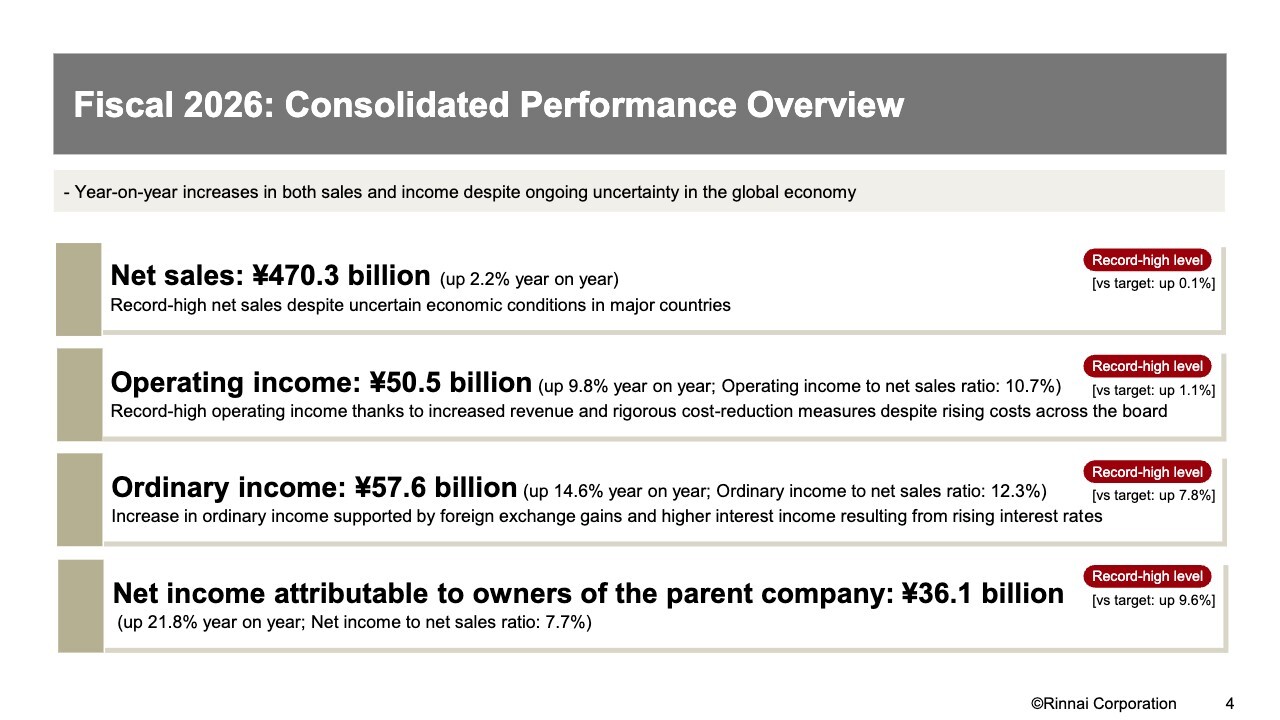
Next, I will speak about the main points of fiscal 2026 consolidated financial statements. Despite ongoing uncertainties in the global economy, we achieved an increase in sales and income. Net sales totaled ¥470.39 billion, up 2.2% year on year, and we achieved record sales despite the uncertain economic environment in major countries.
Operating income was ¥50.53 billion, up 9.8% year on year, with an operating income to net sales ratio of 10.7%. Despite rising costs across the board, record-high operating income was achieved thanks to increased revenue and rigorous cost-reduction measures.
Ordinary income was ¥57.68 billion, up 14.6% year on year, with an ordinary income to net sales ratio of 12.3%. In addition to foreign exchange gains, greater interest income driven from higher interest rates contributed to the increase in income.
Net income attributable to owners of the parent company was ¥36.16 billion, up 21.8% year on year, with a net income to sales ratio of 7.7%. Net sales, operating income, ordinary income, and net income all reached record highs.
Fiscal 2026: Consolidated Financial Results
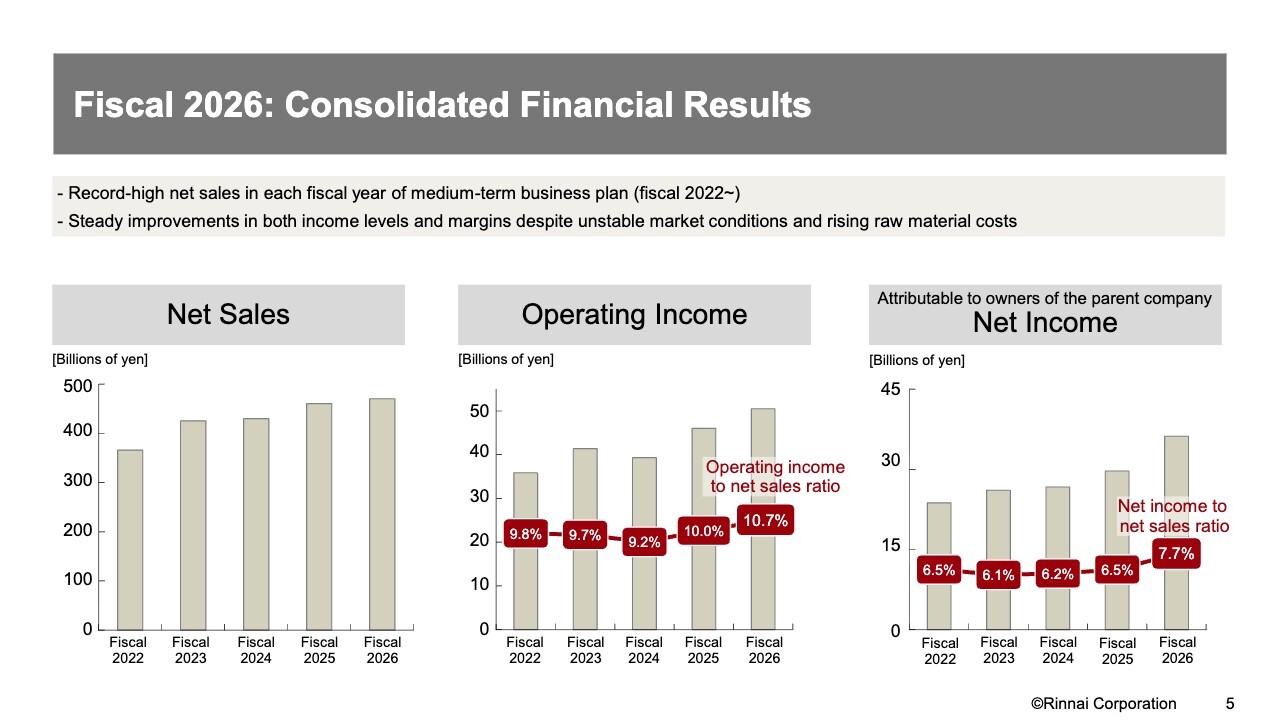
Our consolidated financial results for fiscal 2026 are shown here. Net sales have increased steadily by approximately ¥100 billion from the level of about ¥360 billion to ¥370 billion recorded five years ago. Operating income has also been growing steadily, with the operating margin exceeding 10% and reaching 10.7% in fiscal 2026.
Net income has also increased, with the net profit margin for the previous fiscal year reaching 7.7%.
Fiscal 2026: Net Sales by Product
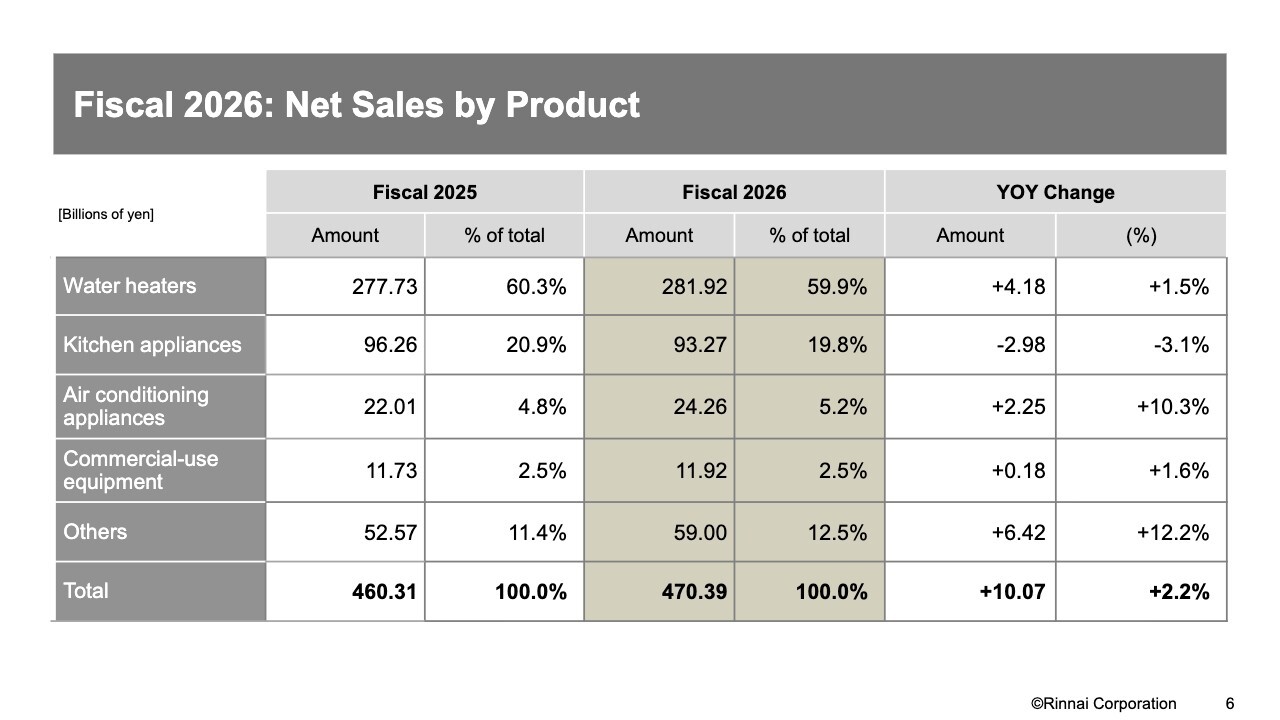
Next, allow me to speak about net sales in detail.
"Water heaters" accounted for approximately 60% of total sales, with net sales totaling ¥281.92 billion. Next is "kitchen appliances." It had net sales of ¥93.27 billion and a year-on-year decrease of 3.1%. A noteworthy entry is "Others," which saw net sales of ¥59.00 billion and year-on-year growth of 12.2%.
Fiscal 2026: Consolidated Sales/Income Results
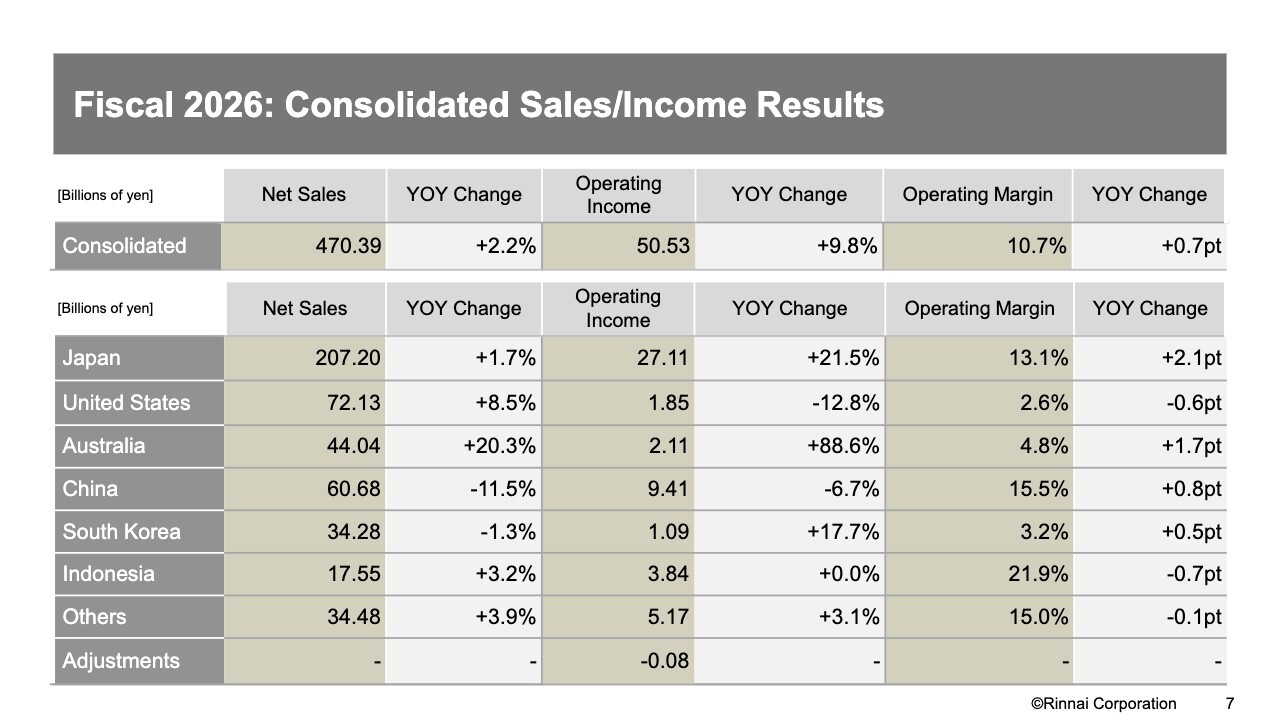
Next, I would like to explain sales by region. Company-wide net sales were ¥470.39 billion. Net sales in the Japan segment totaled ¥207.20 billion, with an operating income of ¥27.11 billion and an operating margin of 13.1%. Net sales in the U.S. segment totaled ¥72.13 billion, with an operating income of ¥1.85 billion and a very low operating margin of 2.6%.
Despite sales growing in the U.S. segment, operating income declined. Net sales in the Australia segment were ¥44.04 billion and operating income was ¥2.11 billion, representing a significant improvement. In particular, operating income increased nearly 90% compared to the previous year.
Net sales in the China segment were ¥60.68 billion and operating income was ¥9.41 billion. Although sales declined more than 10% year on year, operating income declined by only 6.7%. In addition, the operating margin remained at a very high level of 15.5%.
In the China segment, declining sales and intensifying price competition have pushed many companies into the red. However, despite Rinnai's sales declining approximately 10%, we have maintained an operating margin of 15.5%, and I would say this demonstrates our competitiveness.
Sales in the South Korean segment have remained largely flat and operating margins are not high. Sales in the Indonesia segment increased by 3.2%, and operating income was ¥3.8 billion. The operating margin is very high at 21.9%. We hold roughly a 70% share of the tabletop cookers market, and the fact that a single company holds approximately 70 to 80% of the market has contributed to our high operating margin.
Fiscal 2026: Consolidated Operating Income Analysis
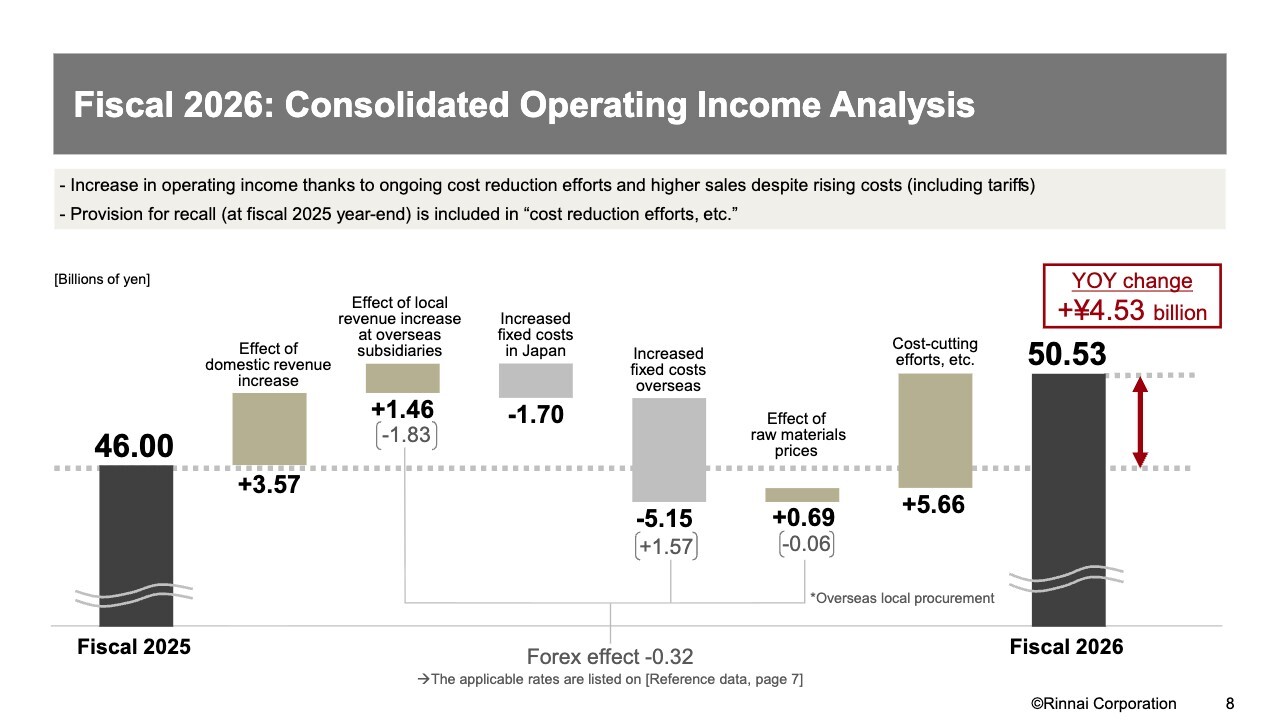
Here is the analysis of our consolidated operating income for the fiscal year under review. Operating income was ¥46.00 billion for fiscal 2025.
The factors contributing to this figure were the effect of domestic increase in sales of ¥3.57 billion, the effect of an increase in sales at overseas subsidiaries of ¥1.46 billion, increased fixed costs in Japan of -¥1.70 billion, and increased fixed costs overseas of -¥5.15 billion.
One positive impact was a slight decrease in raw material prices. Additionally, cost-cutting efforts and other factors resulted in an increase of ¥5.66 billion.
Combined, these factors resulted in a total of ¥50.53 billion, which is a ¥4.53 billion year on year increase.
Japan, Fiscal 2026 Results
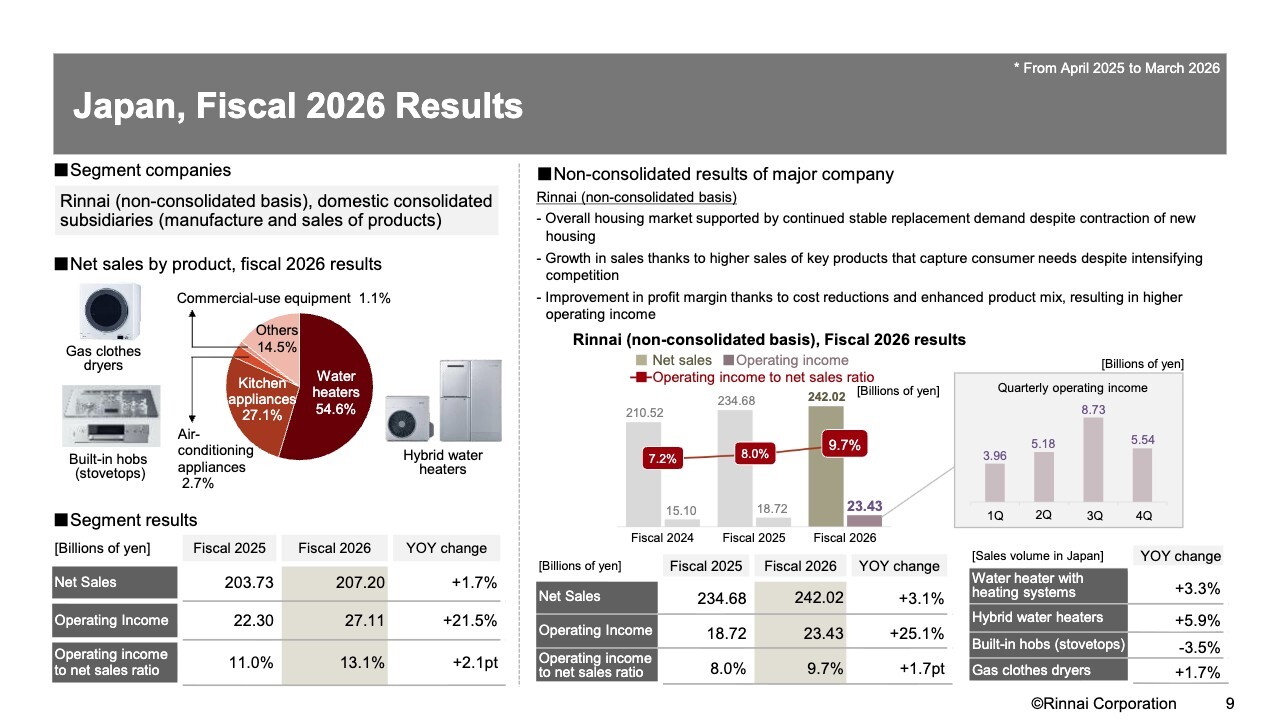
I would now like to discuss individual segments. First is the Japan segment.
Rinnai's net sales on a non-consolidated basis totaled ¥242.02 billion. Water heaters with heating systems, hybrid water heaters, and gas clothes dryers boosted performance of financial results, while built-in hobs (stovetops) under kitchen appliances, which did not perform well, saw a 3.5% year on year decrease in sales.
Operating income was ¥23.43 billion.
United States, Fiscal 2026 Results
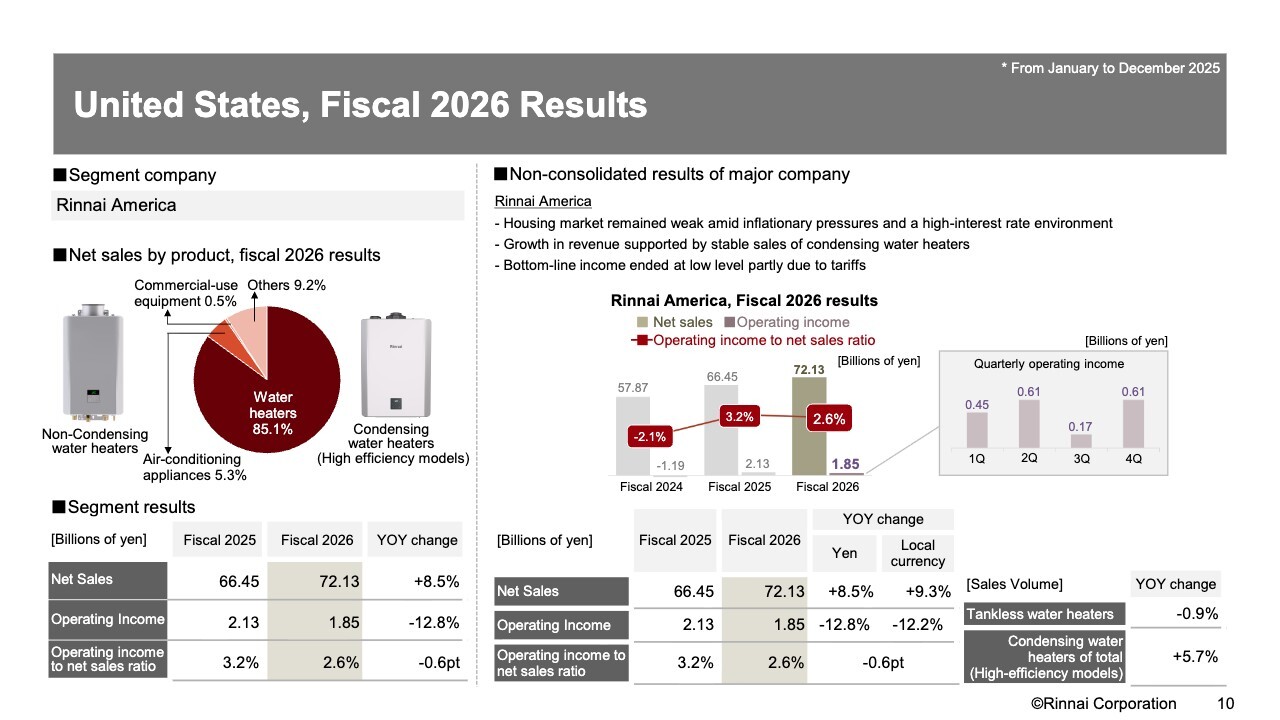
Next, I would like to speak about the United States segment. Net sales for Rinnai America was ¥72.13 billion and operating income was ¥1.85 billion. This resulted in a very low income to net sales ratio.
Tankless water heaters accounted for the bulk of sales, although they were largely flat with a slight decline. Among them, high-efficiency condensing water heaters grew by 5.7% year on year, despite their high price.
United States Topics: Tariff Impact in 2025
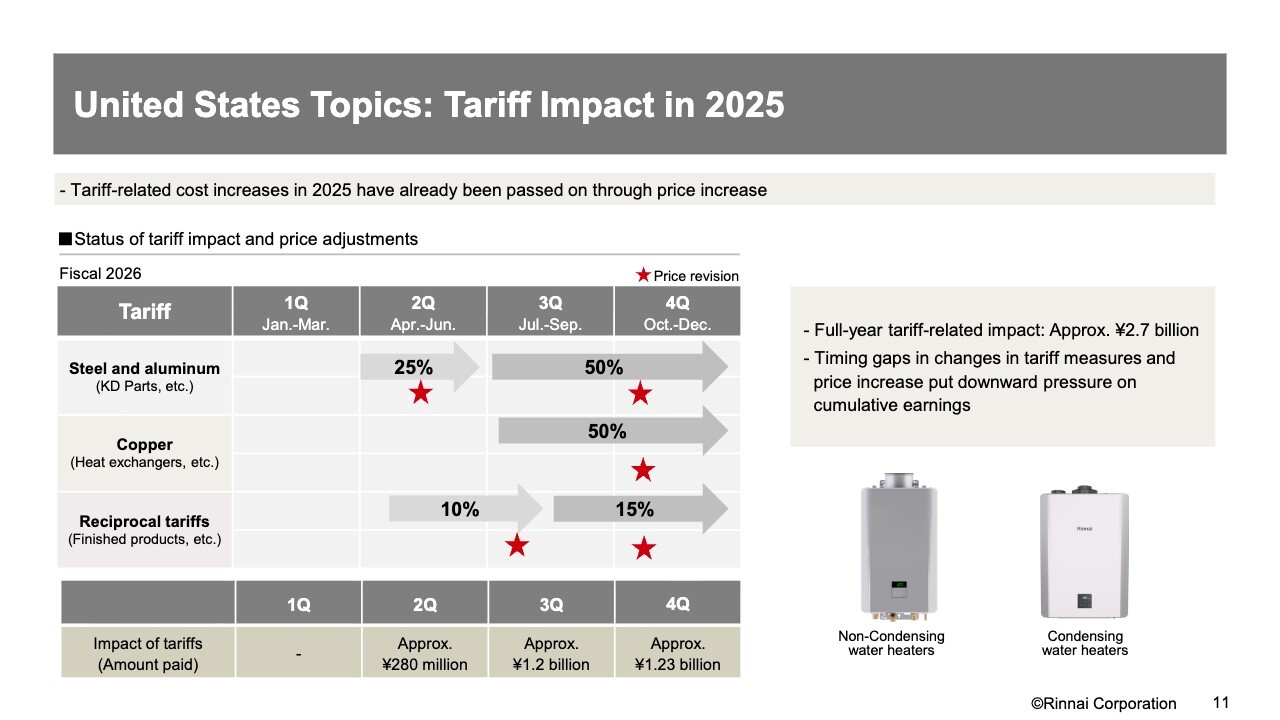
Regarding the impact of the U.S. tariffs, we believe there was no significant disruption as related cost increases were passed on through price increases. The full-year tariff-related impact stands at approximately ¥2.7 billion.
China, Fiscal 2026 Results
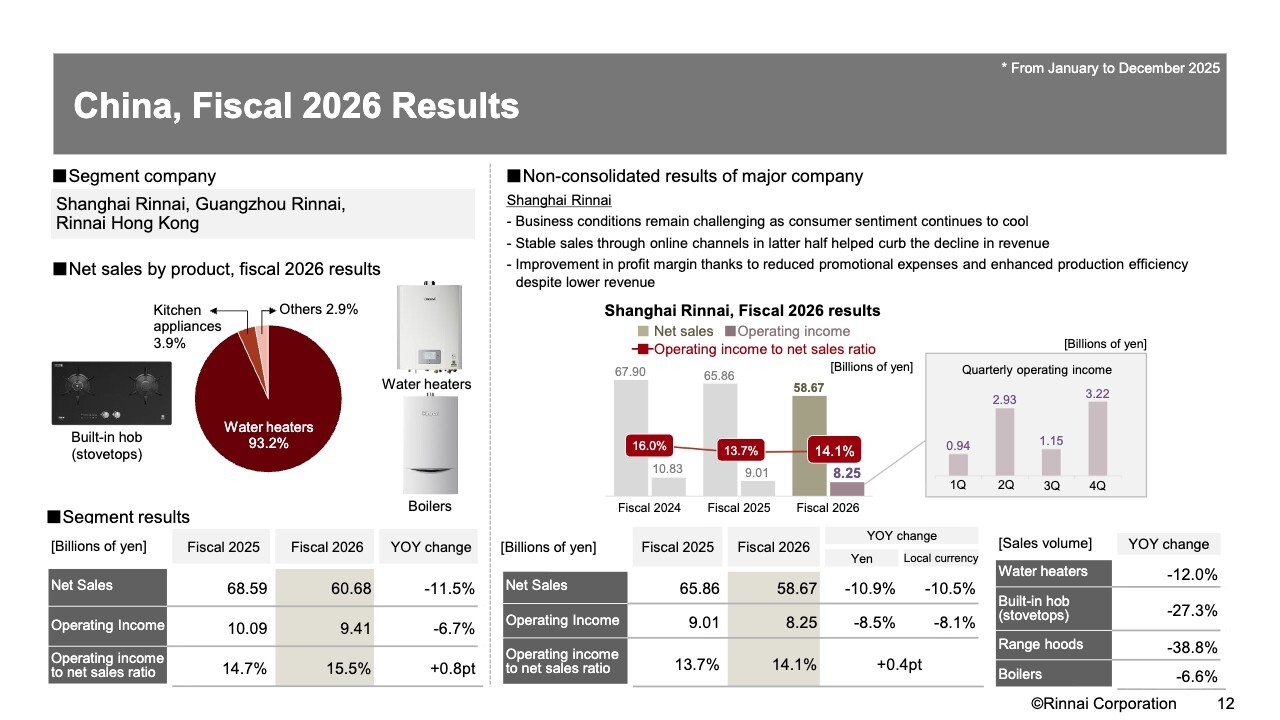
This next slide is about the China segment. Business conditions remain challenging in China, as economic recovery has yet to be seen. Net sales fell 10% to ¥58.67 billion, down from ¥65.86 billion last year. Operating income was ¥8.25 billion and operating income to net sales ratio was 14.1%.
The key products were water heaters, and the proportion of built-in hobs (stovetops) is low. In terms of sales ranking, the order is water heaters, boilers, built-in hobs (stovetops), and range hoods. In both cases, full-year performance was negative due to weak economic conditions.
Australia, Fiscal 2026 Results
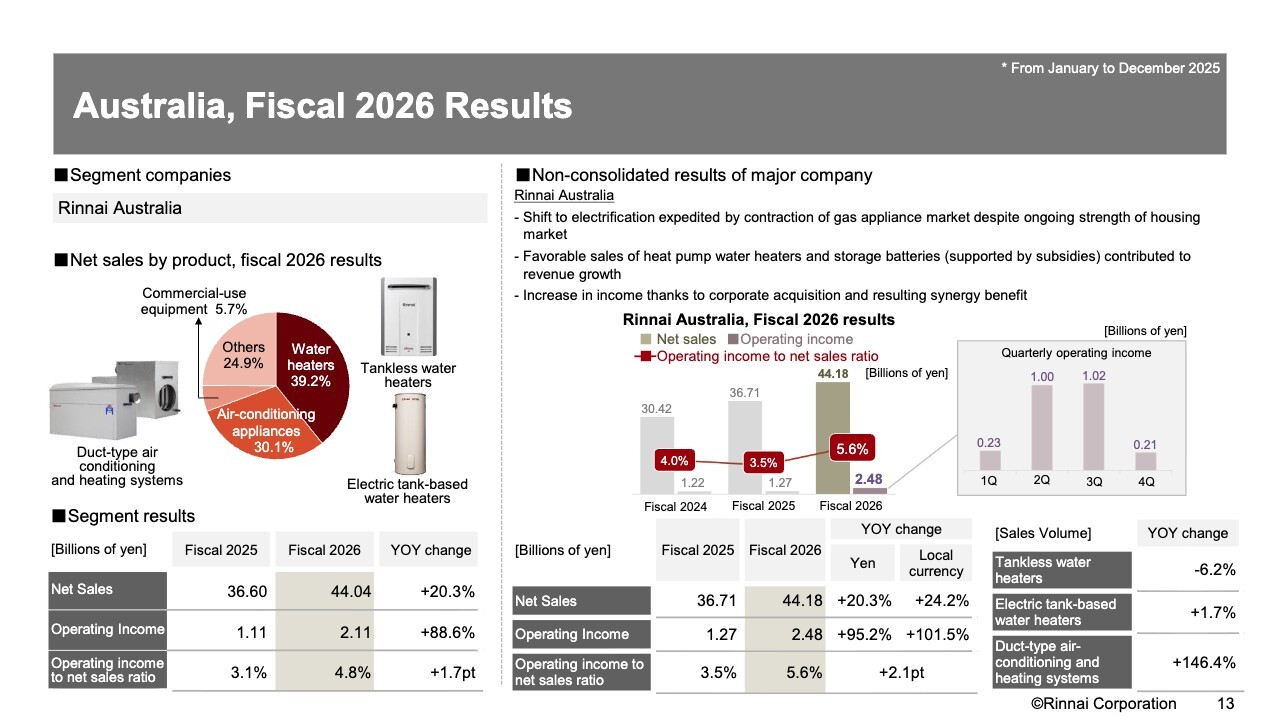
Next up is the Australia segment. In Australia, there are very strong headwinds against gas, and although the housing market is strong, the gas appliances market is in a challenging environment.
In particular, regulations prohibit the installation of new gas lines when building homes in Victoria. Even in instances where a gas water heater breaks down and replacement is being considered, regulations are expected to prohibit the replacement of gas equipment and mandate a shift to electric appliances, presenting a headwind for the company.
As a company, we have been offering heat pump water heaters for some time. Sales of these have been strong, supported by subsidies, resulting in an increase in sales. Additionally, the acquisition of Smart Energy contributed to an increase in sales and the synergy benefits also contributed to an increase in income.
Net sales were ¥44.18 billion, operating income was ¥2.48 billion, and the operating income to sales ratio was 5.6%. We believe that we are successfully riding the wave of a major shift from the gas water heater market to the electric water heater market.
South Korea, Fiscal 2026 Results
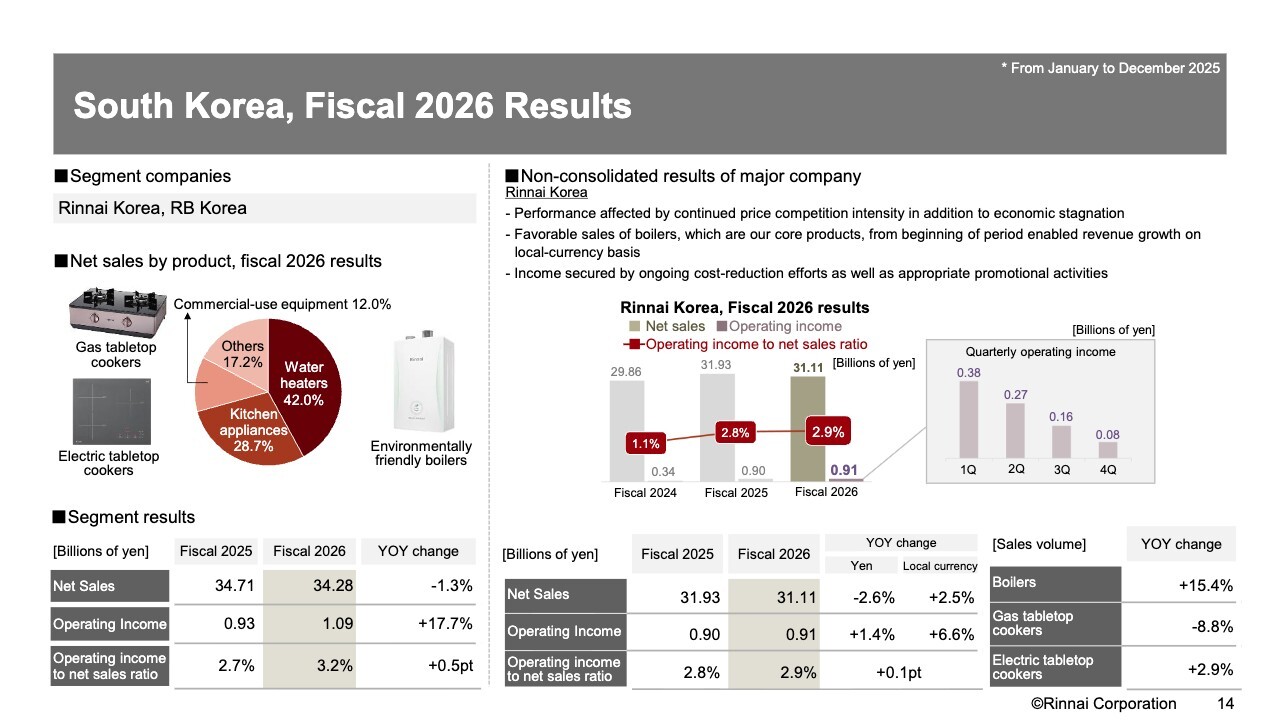
Next is the South Korean segment. The South Korean market is declining, and the operating income to net sales ratio is below 3%, resulting in an unfavorable situation. The majority of our sales come from boilers.
Indonesia, Fiscal 2026 Results
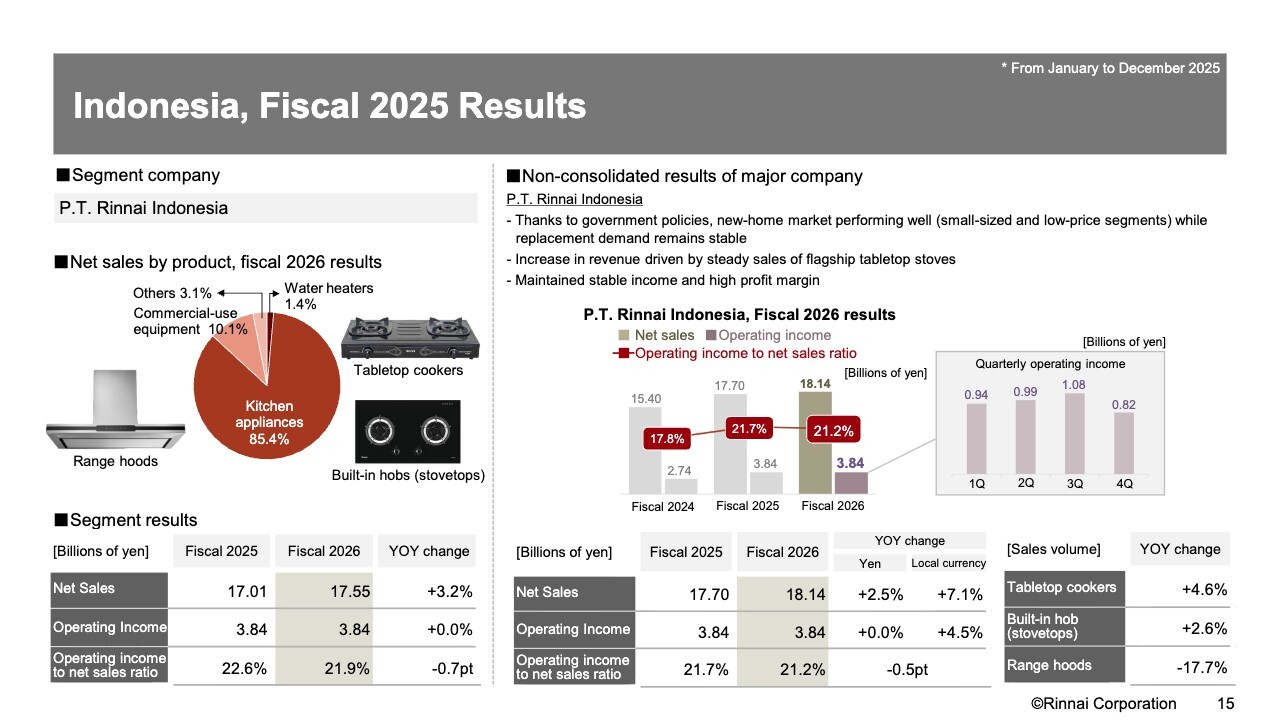
Finally, we have the Indonesia segment. In Indonesia, we account for 70% to 80% of the tabletop cooker market, and sales grew slightly. Operating income remained almost flat, with our operating income to net sales ratio at a very high level of 21.2%. With an operating income of nearly ¥4 billion, Indonesia is an extremely valuable overseas subsidiary.
Sales are mainly driven by tabletop cookers, but going forward, we plan to focus higher-end products such as built-in hobs (stovetops), which have higher unit prices.
"The Future of Living" Created by Rinnai.
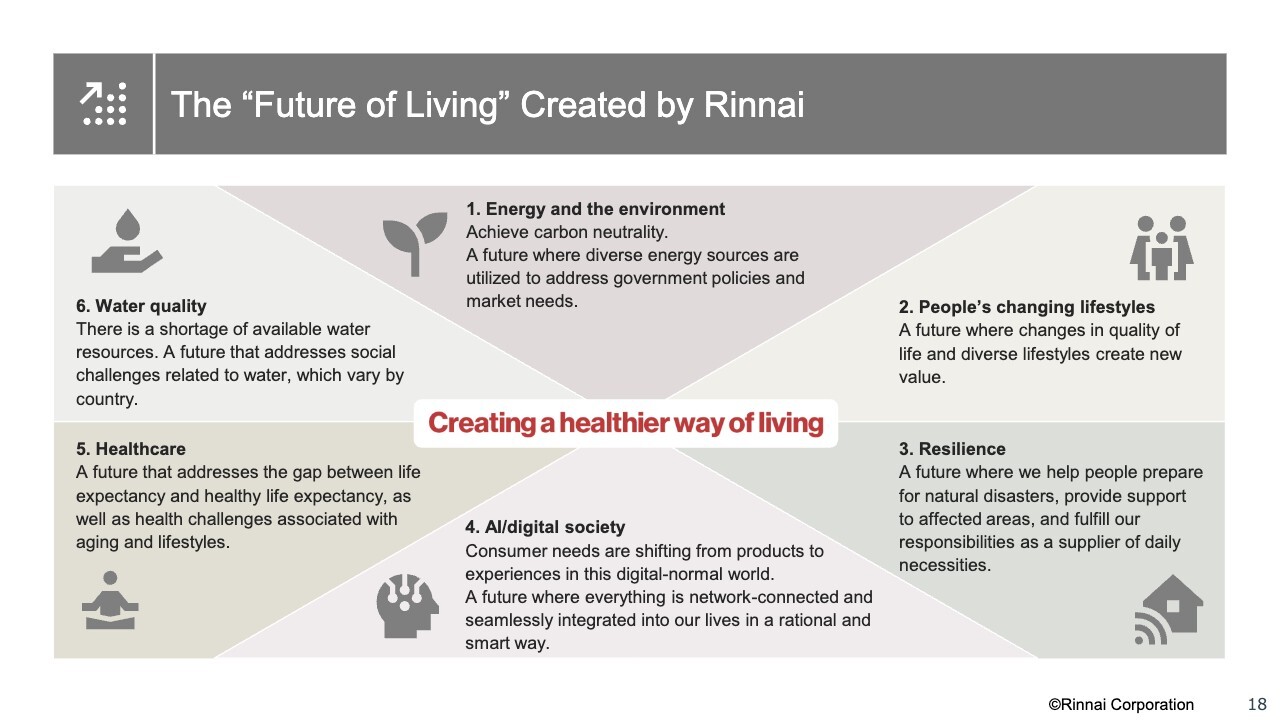
I would like to explain our medium-term business plan. Our long-term vision outlines our approach to addressing the various challenges surrounding everyday life. There is a wide range of issues we must address including energy and the environment, resilience, healthcare, water quality, and more.
Amid these issues, under our slogan of "Creating a healthier way of living," we are fully committed to addressing them.
Where Rinnai Can Make a Difference
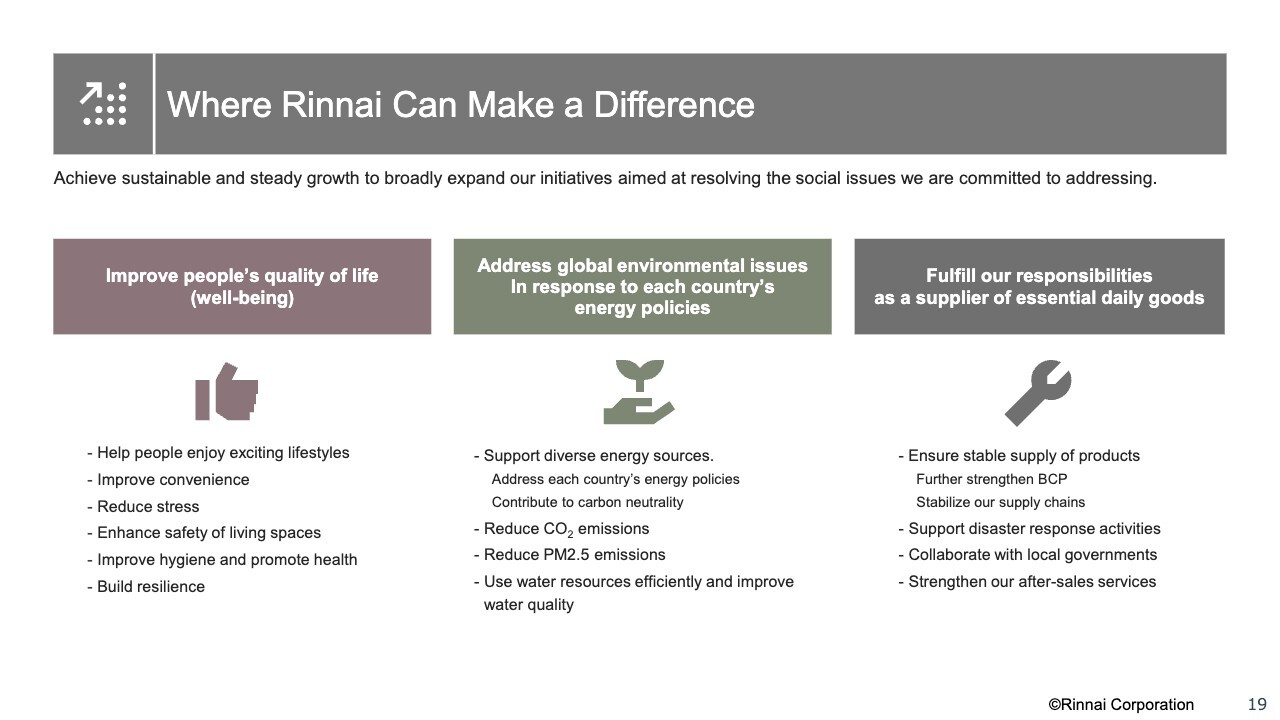
Our goals are to improve people's quality of life (well-being), help people enjoy exciting lifestyles, improve convenience, and contribute to society through carbon-neutral initiatives and reduced CO2 emissions. As a manufacturer, we believe these to be important issues to address.
We believe that we must take proper action to ensure a stable supply of our products following the disruption across Japan two to three years ago when we were unable to supply water heaters. As our products are closely intertwined with people's daily lives, we are implementing measures such as reviewing our supply chain and increasing inventory levels.
New Medium-Term Business Plan: Name
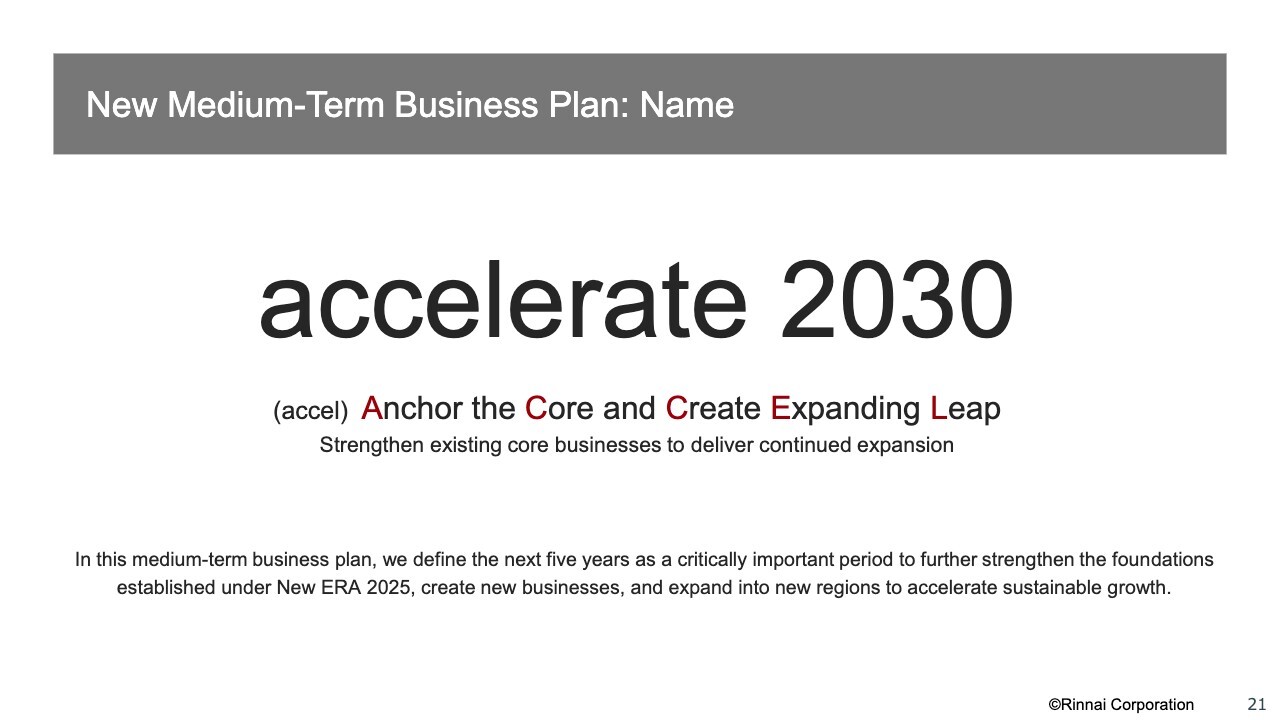
Next, I'd like to speak about our new medium-term business plan "accelerate 2030." We went with the following in English: "Strengthen existing core businesses to deliver continued expansion." We are committed to accelerating our efforts.
In this medium-term business plan, we position the next five years as a critically important period in which we further strengthen the solid business foundation established under the 2021-2025 medium-term business plan “New ERA 2025,” while taking on the challenge of creating new areas and accelerating sustainable growth.
Medium-Term Business Plan (accelerate 2030): Numerical Targets
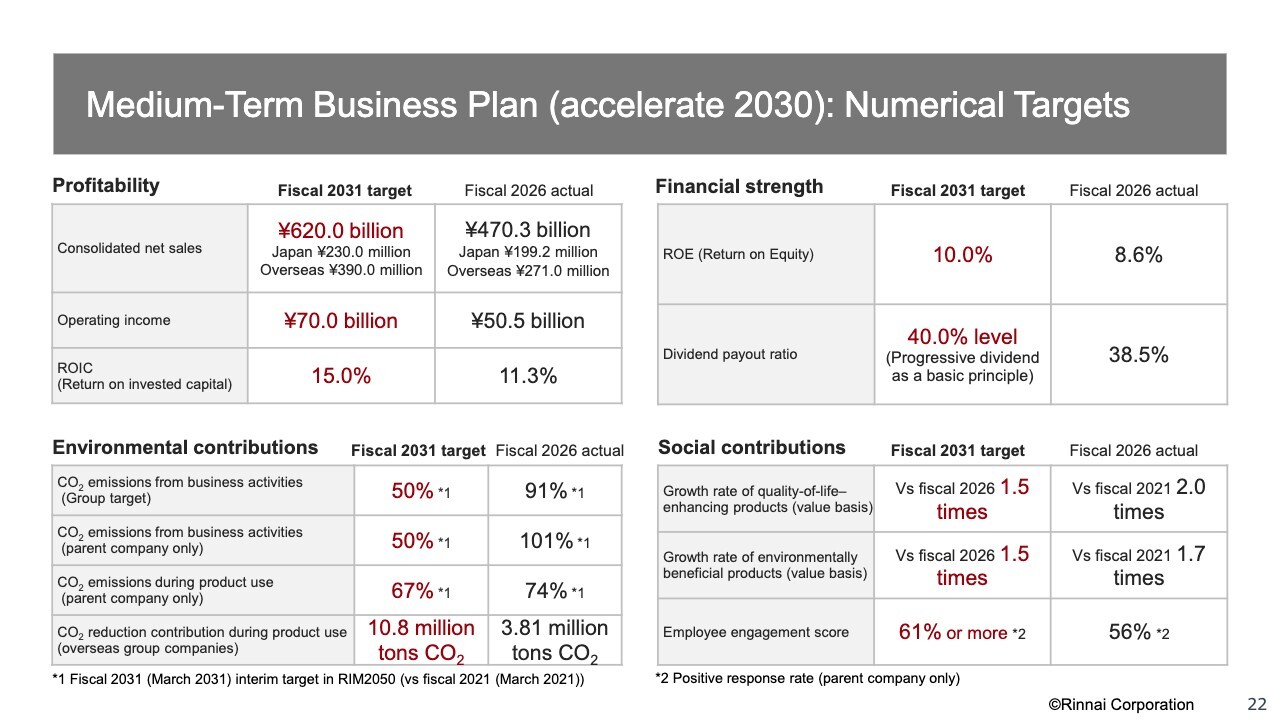
These are our key numerical targets. Net sales for fiscal 2026 were ¥470.3 billion. We aim to reach ¥620.0 billion by Fiscal 2031, five years from now. Regarding operating income, we would like to raise our operating income from ¥50.5 billion to ¥70.0 billion. We also aim to increase ROIC (return on invested capital) from 11.3% to 15.0%.
We have set detailed targets for each item, including environmental contributions and financial strength. ROE (return on equity) was 8.6% in fiscal 2026, and we aim to achieve 10% by fiscal 2031.
The dividend payout ratio was 38.5% in fiscal 2026, and we hope to maintain the 40.0% level during the new medium-term business plan period.
In terms of social contributions, the growth rate of quality of life enhancing products, such as the "Ultra Fine Bubble" and the gas clothes dryer "Kanta-kun" has doubled in fiscal 2026 compared to fiscal 2021. We aim to increase these sales by a further 1.5 times over the next five years.
As for environmental contribution products, we will expand “Eco-Jozu” high-efficiency water heaters and hybrid water heaters, aiming to increase sales by 1.5 times.
We hope to increase our employee engagement score from 56% in fiscal 2026 to 61% or more.
Medium-Term Business Plan “accelerate 2030”: Business Strategies
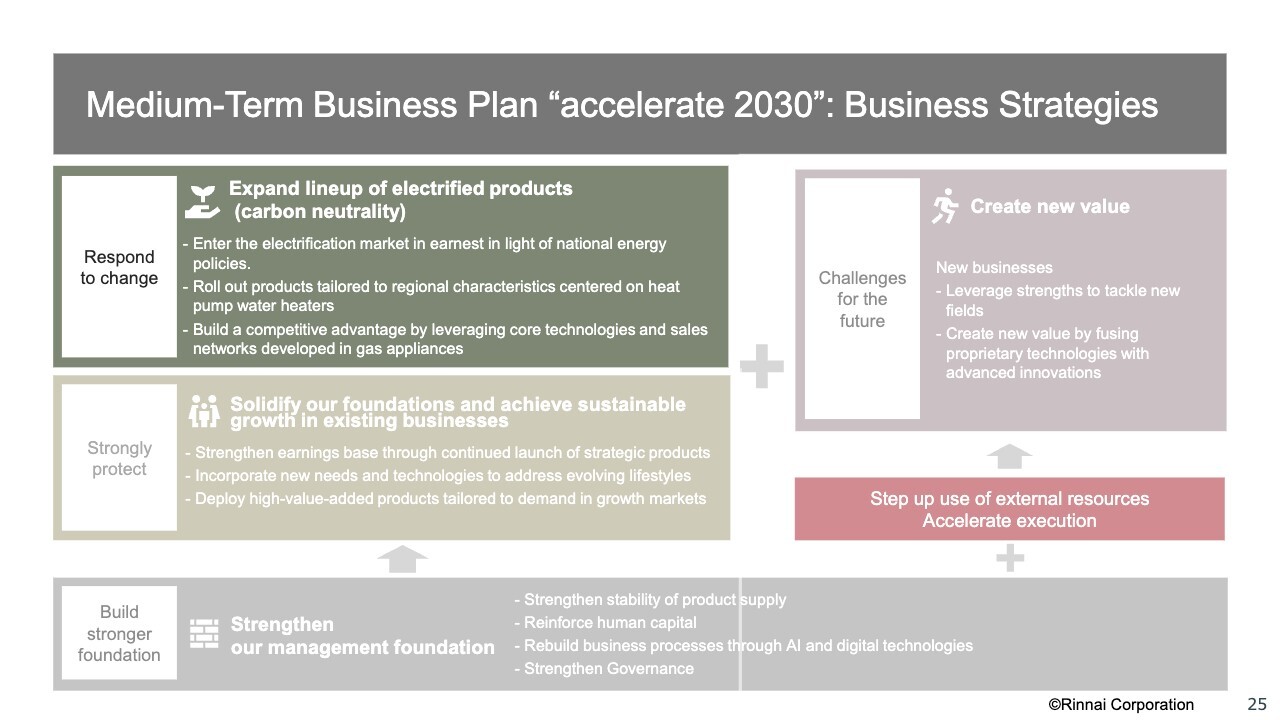
Now I'd like to speak about our key initiatives. As part of our business strategy, we want to expand our lineup of electrified products. The environments in Japan and Australia differ with regard to our points of "Entering the electrification market in earnest in light of national energy policies" and "Rolling out products tailored to regional characteristics centered on heat pump water heaters."
As an example, regulations are set to take effect where gas-to-gas replacements of water heaters will be banned in the state of Victoria, Australia.
Meanwhile, many homes are small in Japan, and since a tank cannot be installed, people tend to choose gas water heaters. As such, demand for “Eco-Jozu”, a high-efficiency water heater, has not declined. That said, the situation differs from country to country.
Despite natural gas being produced in Peru, only around 100,000 households are supplied with gas. According to an embassy official, the aim is to increase this number to 2 million in 10 years. While gas is said to be prohibited, the reality is that gas usage is expanding.
There is no doubt that heat pump water heaters will continue to become more widely adopted, particularly in developed countries. With heat pump water heaters at the core of our business, we intend to expand operations in line with regional characteristics.
Strategy for Electrified Products
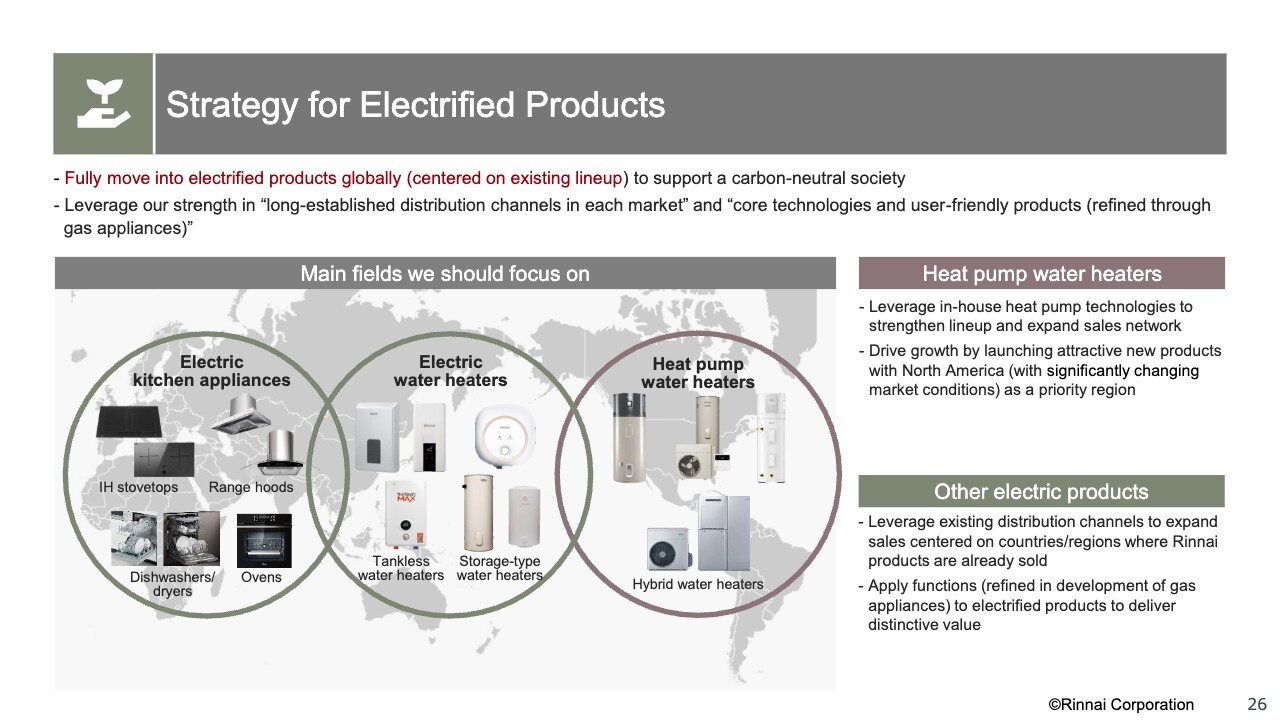
As for our strategy for electrified products, we will also develop electrified products in kitchen appliances. Gas built-in hobs (stovetops) have been the mainstream, but we can also support IH combination and IH-only products. These initiatives are already underway in South Korea.
We would like to actively work on range hood development. As for dishwashers, we hold second place of the market share for built-in dishwashers, and we aim to take the top position. Ovens are currently gas only, but we plan to support electric models in the future.
In the area of electrified water heaters, we also manufacture small electric instantaneous water heaters used in Southeast Asia. We will enter these product areas and, in the future, expand to larger water heaters, as living standards are expected to rise.
In doing so, our aim is to support both gas and heat pump water heaters.
Heat pump water heaters are expected to become more widely adopted, particularly in developed countries. They are normally electric-only, but we already offer hybrid water heaters in Japan, and are proud to be No. 1 in terms of usability and efficiency. We would very much like to expand this globally.
We already manufacture slightly larger heat pump products in Australia and handle heat pump water heaters on an OEM basis in the United States. Sales are currently increasing, and we will continue to expand, leveraging our strength in our enhanced lineup and sales network.
We will drive growth by launching attractive new products, with North America (with significantly changing market conditions) as a priority region. The North American market is undergoing significant changes, and we intend to enter the market there.
For other electrified products, we will leverage existing distribution channels to expand sales centered on countries and regions where Rinnai products are already sold, while also applying functions refined in the development of gas appliances to electrified products.
Launch Strategic Heat Pump Water Heaters in North America
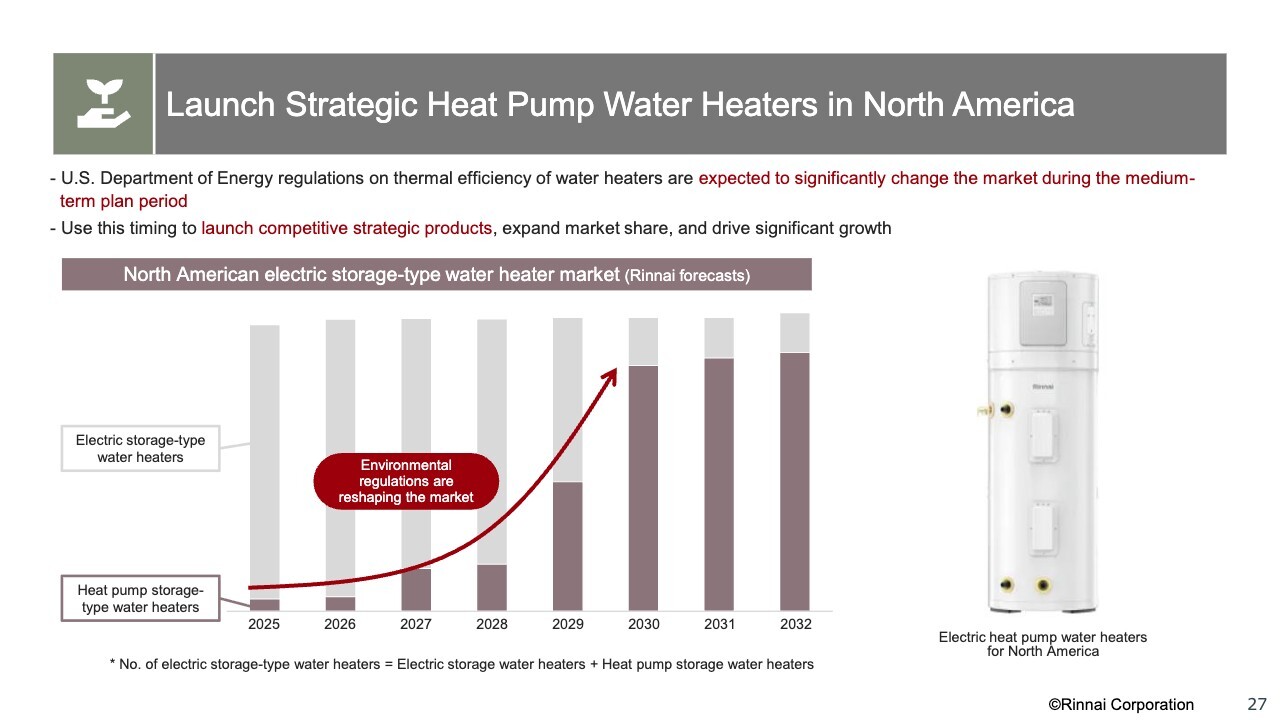
In North America, we expect the market to change significantly during the next medium-term business plan through fiscal 2031 due to the impact of the U.S. Department of Energy regulations on thermal efficiency of water heaters. In the meantime, the U.S. electric storage-type water heater market, which reaches 5 million units per year, is expected to shift toward the heat pump water heater market.
We view this as a major opportunity and intend to enter the market. We intend to use this timing to launch competitive strategic products, expand market share, and drive significant growth.
In fact, some states, such as California, have imposed very strict regulations, and sales of heat pump water heaters are already increasing.
Medium-Term Business Plan “accelerate 2030”: Business Strategies
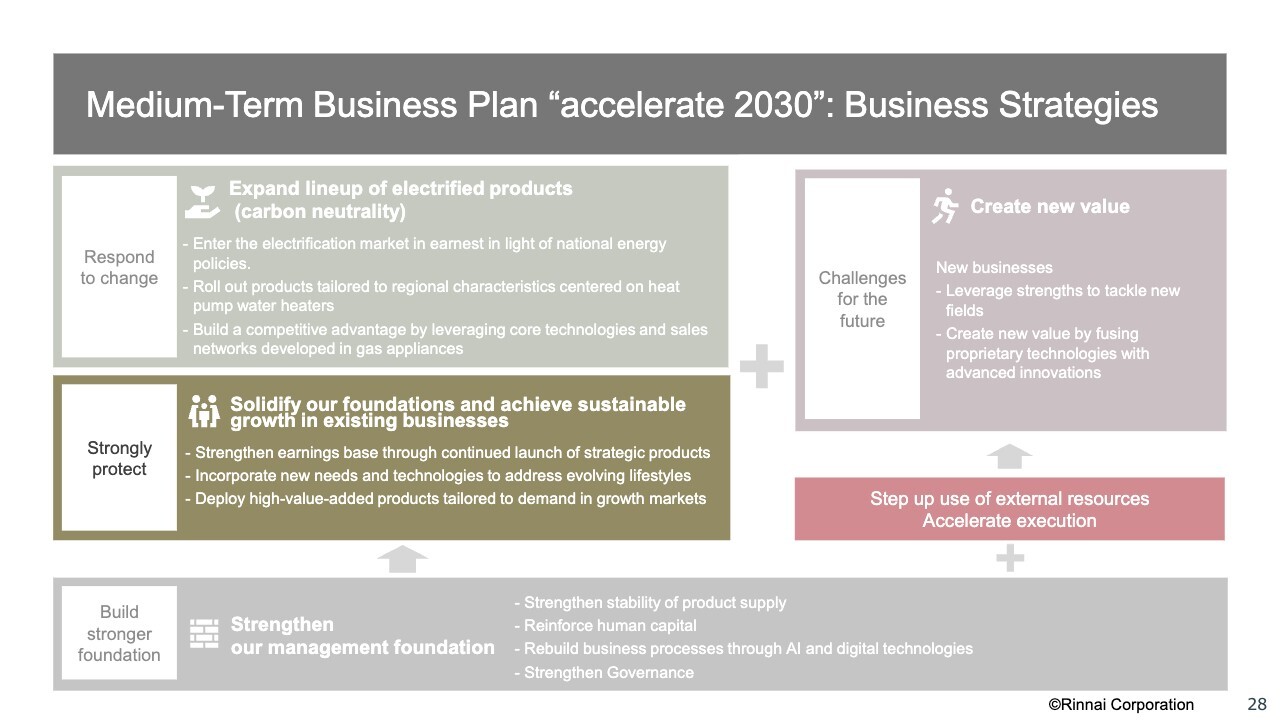
The existing business built up over the five years from 2020 to 2025 is generating solid income. We will solidify this foundation and pursue further growth.
Our Business Model and Competitive Advantages
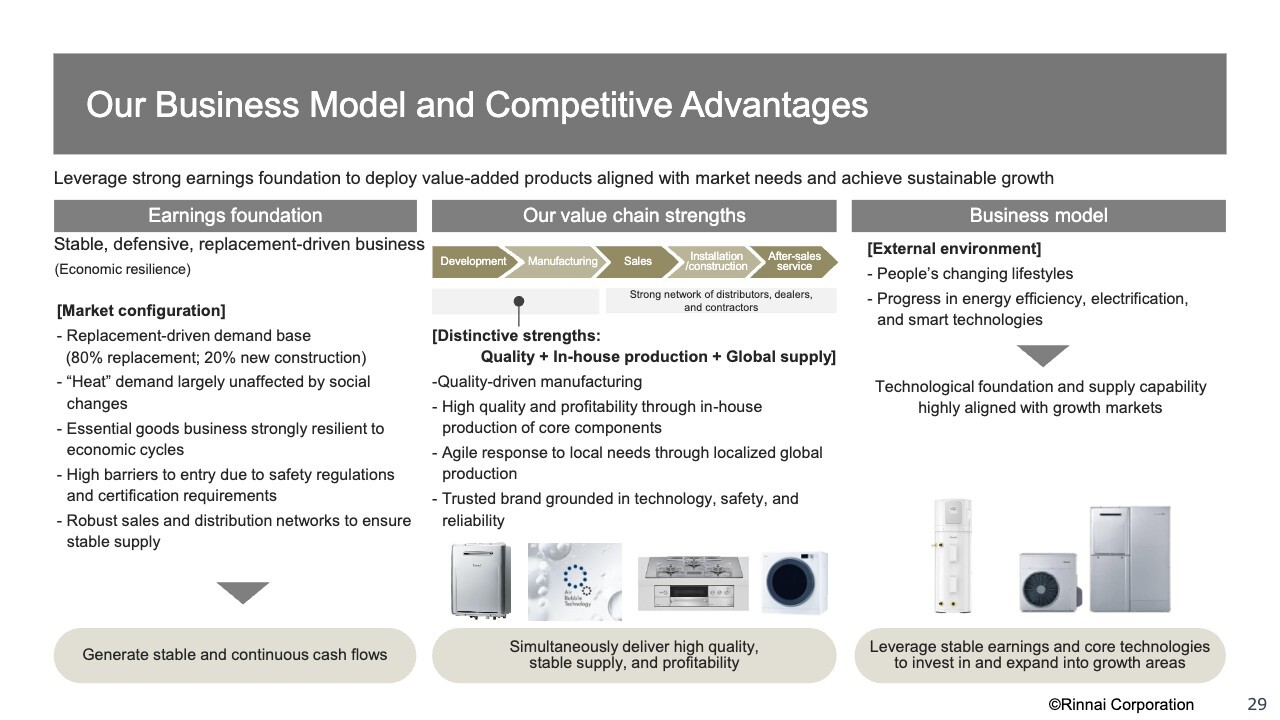
We will focus on our earnings foundation and continue to generate stable cash flow. We will also leverage our unique strength in quality and increase our in-house production ratio by producing core components in-house. We will strengthen our global supply capabilities.
This is because we would like to provide not only parts but also our expertise, both in Japan and overseas, and promote this globally.
Allow me to share an example of how responding quickly to on-site needs through global local production for local consumption has been successful in China. In China, design can now also be done locally. Although it was initially difficult due to the large amount of work involved, the skills of local team members have improved significantly.
As a result, the development burden on Rinnai itself has been reduced, allowing us to focus on other areas. This is a clear example of how a global supply of technology can be achieved.
In terms of brand strength backed by technology and reliability, we have established a strong brand recognition in China. At an event there, I exchanged business cards with the woman next to me. She was very familiar with Rinnai, and when she found out was the president of the company, she was quite surprised.
I asked her if people there have heard of us. She responded by stating that Rinnai is known as a high-end brand. I believe this is one of the reasons why we can achieve such high profit margins.
Expand Businesses Aligned with Needs of Growth Markets
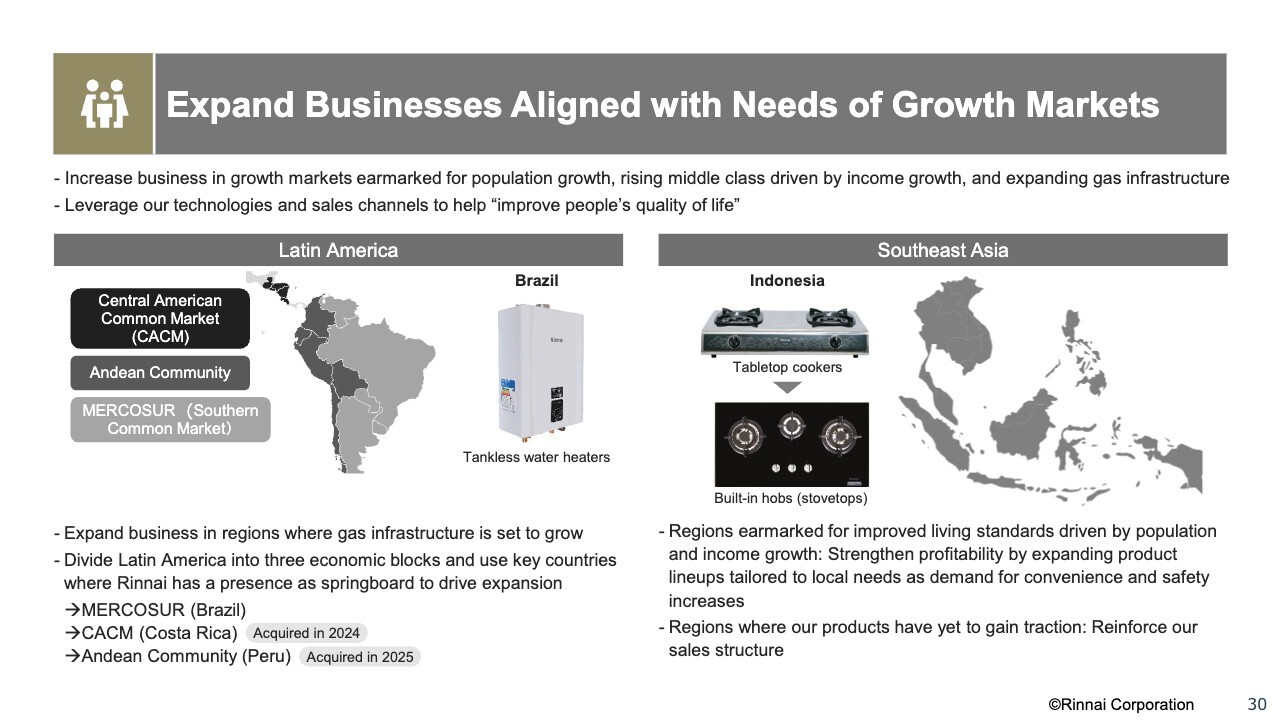
This is an area that we have not been heavily involved in. Going forward, we intend to increase business in growth markets earmarked for "population growth," "rising middle class driven by income growth," and "expanding gas infrastructure," and we will leverage our technologies and sales channels to help to "improve people's quality of life."
In Latin America, we intend to expand our business in regions where gas infrastructure is set to grow, such as the Central American Common Market (CACM), the Andean Community, and MERCOSUR (Southern Common Market). In particular, Peru produces natural gas, and the Peruvian government intends to increase gas usage to 2 million households in the future.
The Brazilian market is also expected to grow. With regard to water heaters, CF-type water heaters have been used in Brazil and Taiwan, and are quite large by today's standards for their capacity.
In contrast, the so-called FE-type (forced exhaust) uses indoor air for combustion, allowing air to be supplied by a fan and enabling a more compact heat exchanger and burner.
Initially, our recommendation to transition from CF-type water heaters to FE-type water heaters faced challenges. However, as a result of our efforts, the transition is now underway, and FE-type water heaters are selling well in both Brazil and Taiwan.
In Brazil, electric shower water heaters using nichrome wire heating elements are still in use, and electrocutions are still frequently reported. On the other hand, gas pipes are now being run to condominiums and other buildings, creating an environment for proper gas water heater installation.
As a result, we believe the situation has improved significantly. We would like to focus on these markets going forward.
In Indonesia, tabletop cookers account for 70% to 80% of the market share, but as living standards improve, the shift from two-burner cookers to built-in hobs (stovetops) is expected to continue.
We have noted a similar trend in Japan and would like to further promote the use of built-in hobs (stovetops) in Indonesia as well. We consider Rinnai's brand recognition to be very strong, but Indonesians appear to regard Rinnai as a local company.
While most people are aware of the Rinnai brand, they are often surprised to learn that it is a Japanese company. We also believe that our current 80% share of the market does not sufficiently penetrate the upper-middle class. As such, we intend to improve our brand image going forward.
Medium-Term Business Plan “accelerate 2030”: Business Strategies
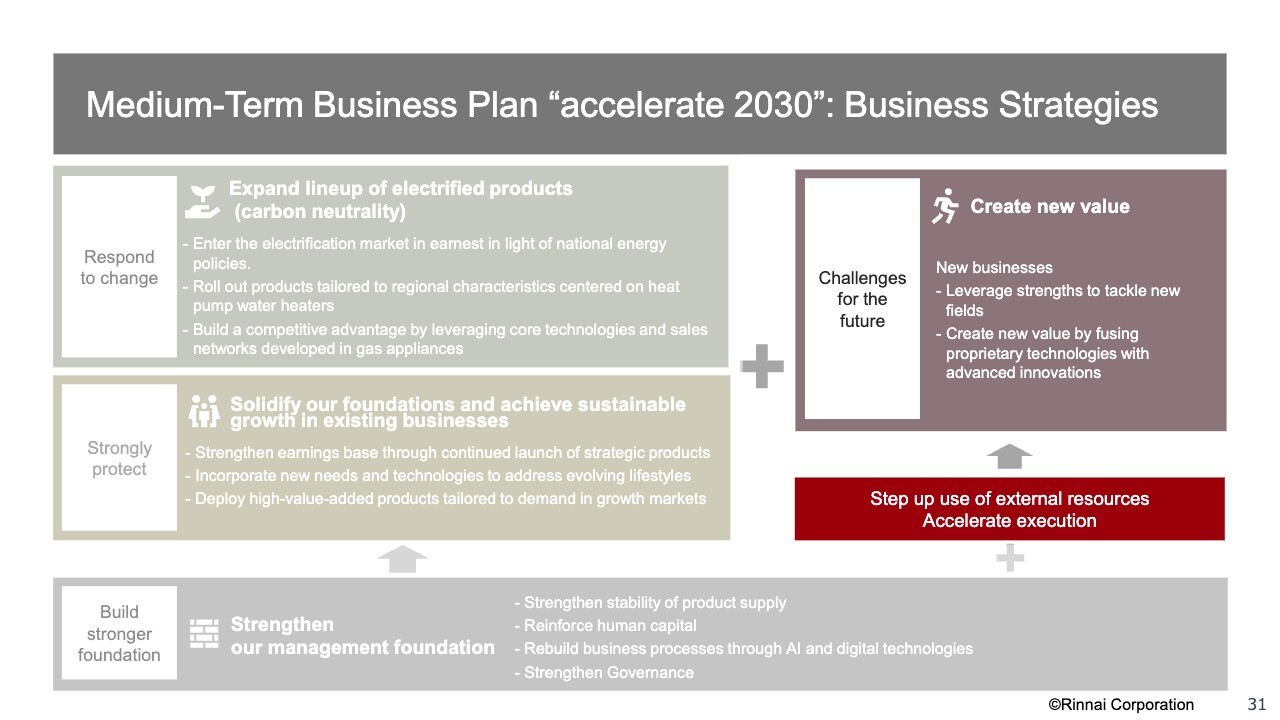
Next, I'd like to speak regarding the direction of New Value Creation.
New Value Creation: Direction
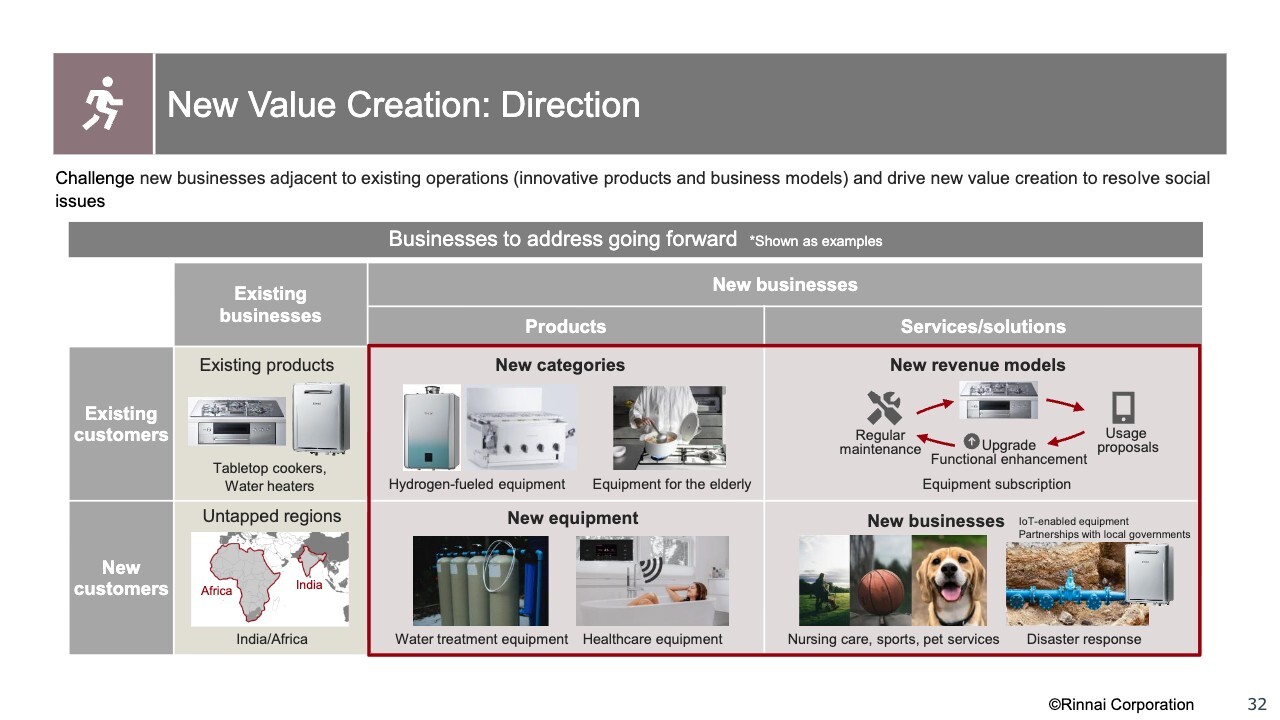
Existing products include built-in hobs (stovetops) and water heaters, but what we are currently working on is a new initiative: hydrogen-fueled equipment. Specific examples include hydrogen-fueled water heaters and hydrogen-fueled grilling equipment.
The grilling equipment is being developed in cooperation with Toyota Motor Corporation. Such initiatives are being rolled out in various municipalities, including Kitakyushu City, and we receive inquiries each time. We would also like to advance efforts to develop equipment for the elderly.
In terms of our revenue model, rather than selling individual products as in the past, we would like to move toward a so-called subscription model where our products are installed and used.
We are also considering new equipment, including water treatment systems. Even when examining air-bubble-related offerings alone, there is a wide range of benefits. We intend to further expand sales of water heaters through the added appeal of being good for the skin and having cleansing effects.
Even in the healthcare field, we are engaged in various initiatives, such as exploring whether heart rate can be automatically measured while bathing. These initiatives are being carried out in collaboration with universities, and we believe that more in-depth research will continue to advance.
Applications of these initiatives are expected not only for people, but also for pets and sports-related uses, including use in muddy situations. "Kanta-kun" can play an active role in washing and drying clothes.
In nursing homes, the Micro Bubble Bath Unit produces white bubbles, which is preferred by those who do not enjoy clear bathwater.
While this poses no problem when bathing alone, some people feel uncomfortable with clear bathwater when others are present. The microbubbles created by the Micro Bubble Bath Unit create a white cloud-like effect, which provide a sense of reassurance. By making products smarter, we are also working to improve convenience, such as enabling operation from outside the home via a smartphone.
Various applications are beginning to emerge, such as detecting when multiple water heaters are not in use and identifying areas where water is not flowing, as well as considering their use as equipment that can be utilized for disaster response.
Strengthen Business Portfolio
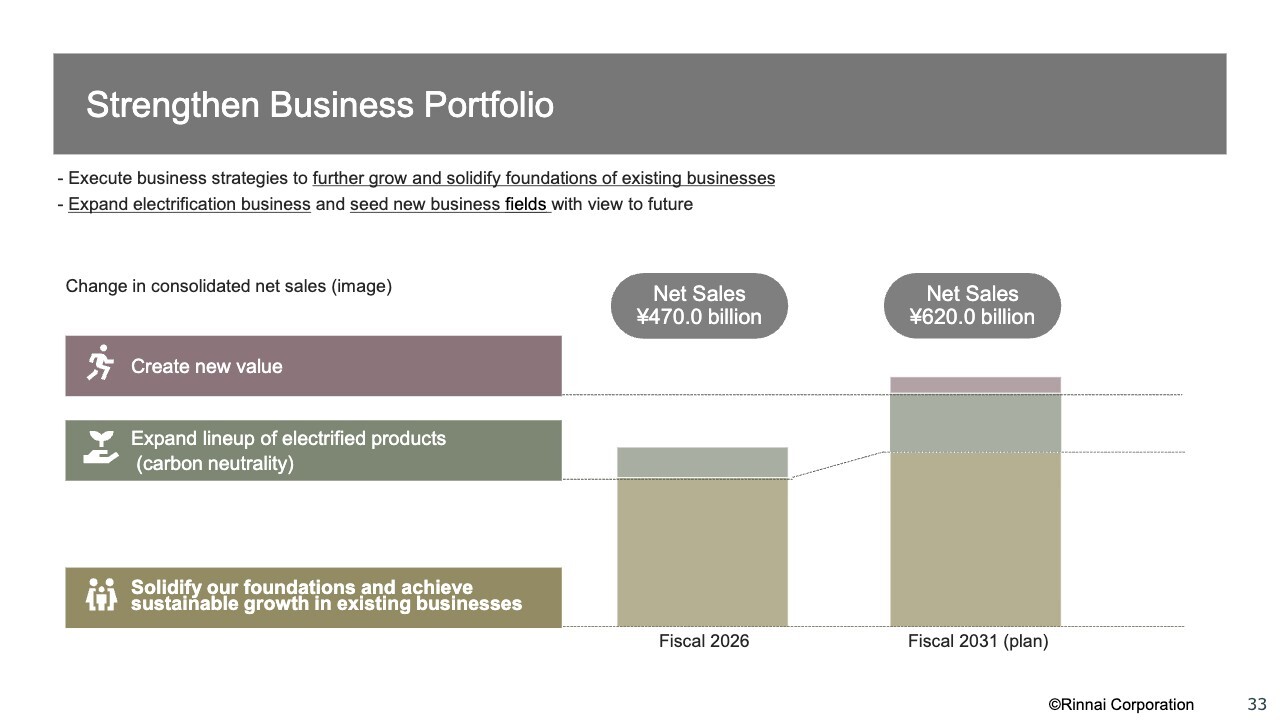
Our business portfolio will change significantly. By executing our business strategies, we will further grow and solidify the foundations of our existing businesses. With a view to the future, we will expand the electrification business and seed new business fields.
Next, allow me to speak about changes in consolidated net sales. Fiscal 2026 net sales include many existing products, and we are already selling some electrified products. As for what this will look like by fiscal 2031, while existing products will continue to grow, we anticipate a significant increase in sales of electrified products.
With the addition of products that will create new value, we aim to increase net sales from ¥470.0 billion to ¥620.0 billion.
Medium-Term Business Plan “accelerate 2030”: Business Strategies
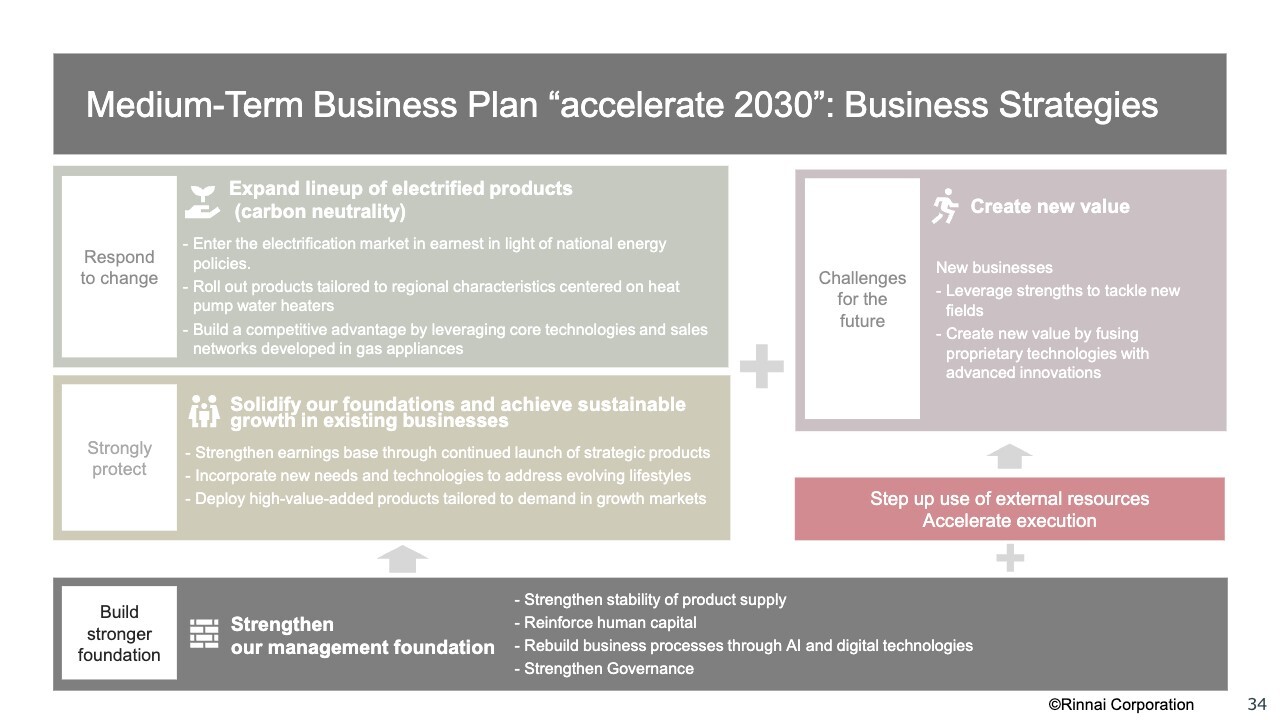
Next, I will speak about strengthening our management foundation.
Strengthen Stability of Product Supply
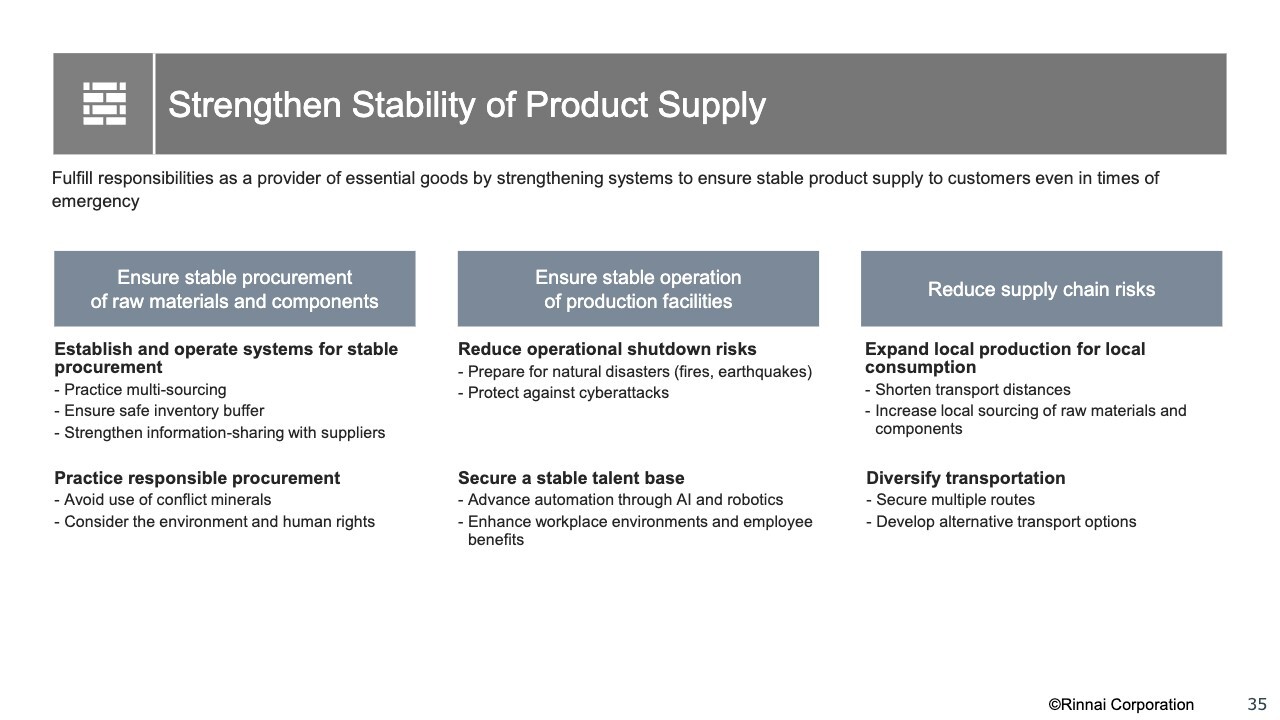
Two or three years ago, as suppliers of essential daily-use products, we, together with the industry as a whole, had shortcomings that we should reflect on, having caused a great deal of inconvenience to many people. We sincerely apologize for the inconvenience caused by the continued difficulty in product supply.
Taking into account what we've reflected upon, we have implemented several measures as part of strengthening our management base. First, it is necessary to establish stable procurement sources and suppliers. We are promoting measures such as practicing multi-sourcing and increasing inventory levels by reviewing what had previously been extremely low inventory holdings.
While prioritizing stable supply presents some challenges in terms of management efficiency, we will strengthen information-sharing with suppliers and maintain close coordination to prevent incorrect information from being communicated.
Furthermore, we intend to avoid the use of parts and materials from conflict-affected countries and continue practicing responsible procurement by considering the environment and human rights.
We are working to ensure stable operation of production facilities and reduce operational shutdown risks. We are also mindful to prepare a response for natural disasters.
With regard to cyberattacks, although it is difficult to prevent them completely, we have received favorable evaluations compared with companies of a similar size in the same industry when factoring in the risk of vulnerabilities being targeted. While not perfect, we have been evaluated as being at a reasonably solid level.
Next, I want to speak to our efforts to secure a stable talent base. We have been paying special attention to employee benefits as of late, and we believe that efforts to enhance workplace environments are progressing.
With regard to reducing supply chain risks and expanding local production for local consumption, we are promoting local production and local sales not only for parts but also for products themselves.
For example, Shanghai Rinnai produces most of its components in China and sells assembled products in China. On the other hand, in Japan, we do not import or use parts manufactured in China. Rinnai has long been committed to local production for local consumption through local production and local sales. We are also working to secure transportation routes.
Reinforce Human Capital
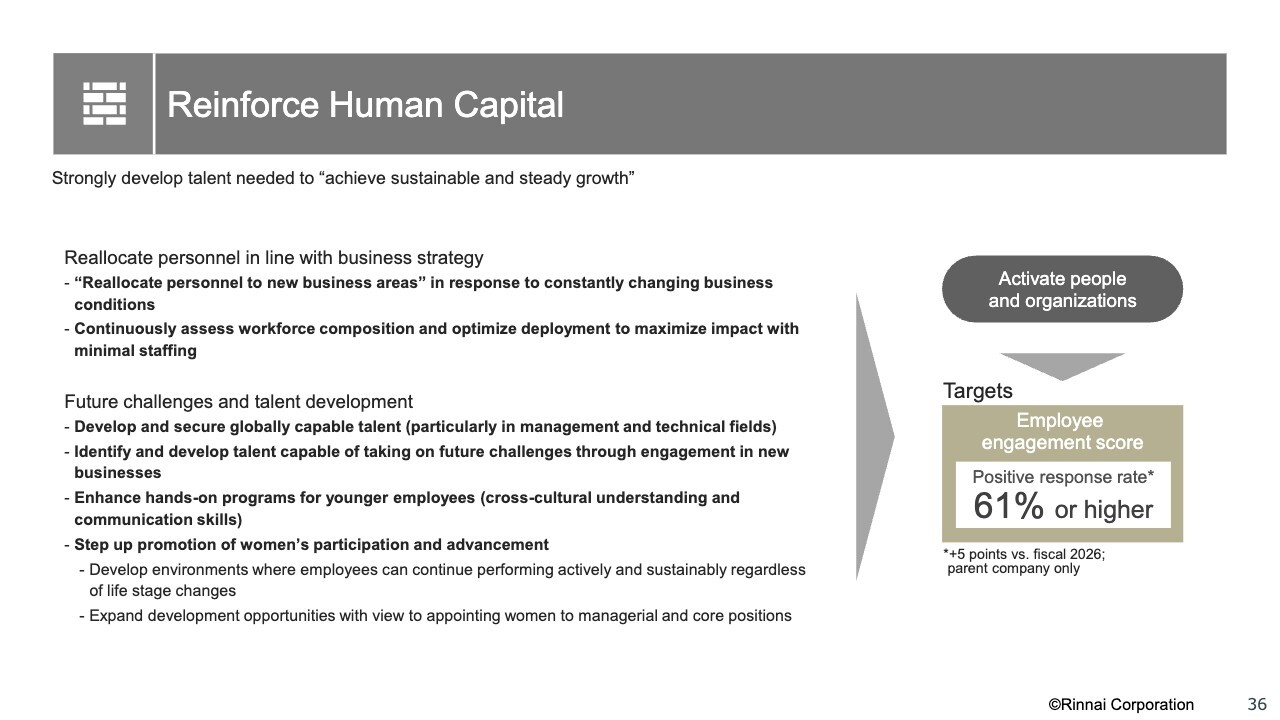
Human capital is something we take very seriously. In particular, for a company to continue to achieve sustainable and steady growth, it is necessary to strongly promote the development of talent. This includes reallocating human resources in line with our business strategy, deploying human resources to growth areas, and reallocating personnel to new business areas.
By continuously assessing workforce composition and optimizing deployment, we aim to maximize impact with minimal human resources.
Next, I would like to speak about the promotion of women's participation and advancement. Although at first glance our company may not appear to be making significant progress, we have actually seen a considerable increase in the number of women who are one step away from management positions. We expect the number of female managers to increase significantly over the next few years.
With regard to employee engagement scores, we aim to raise them to 61% or higher. Currently, they stand at around 56%, which is not a particularly high level, we intend to continue improving them.
Capital Management Policy
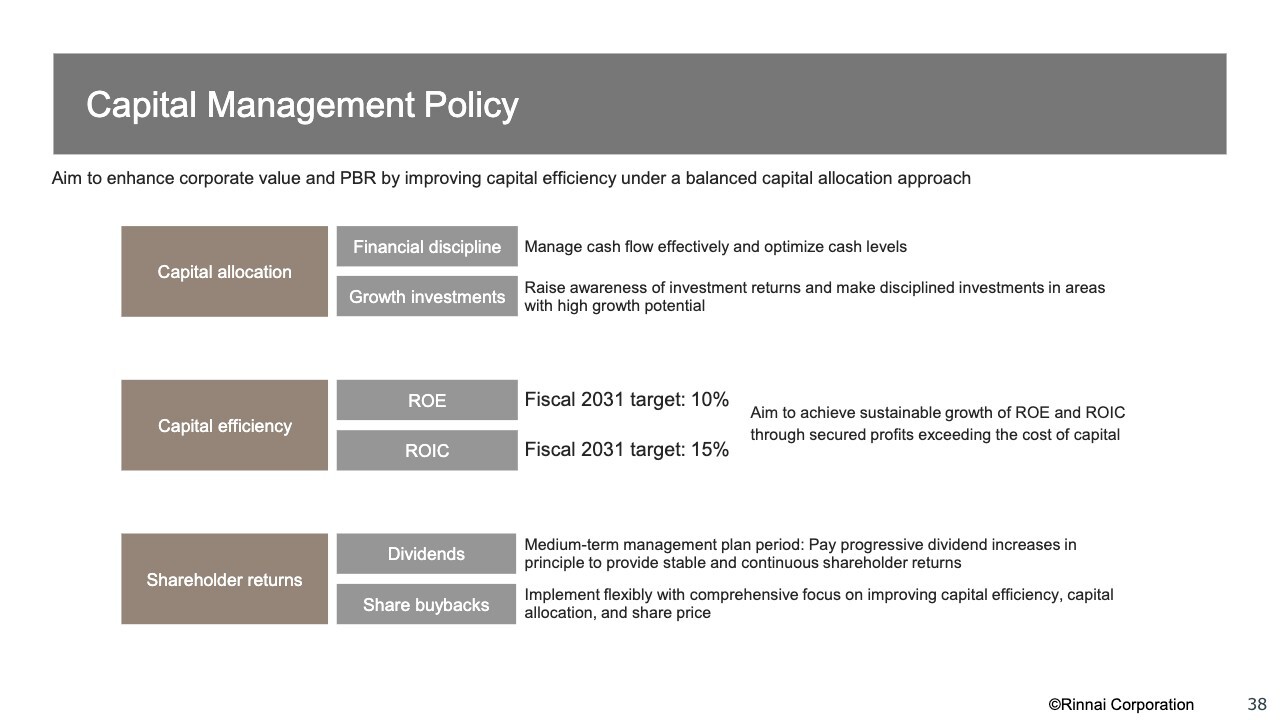
This slide concerns our capital policy. We aim to enhance corporate value and PBR by improving capital efficiency under a balanced capital allocation approach. With regard to capital allocation, we will manage our cash flow effectively and aim to optimize cash levels.
We are raising awareness of investment returns and making disciplined investments in areas with high growth potential.
Capital efficiency, or ROE, was 8.6% at the end of fiscal 2026, but we aim to raise it to 10% by fiscal 2031. And as for ROIC, we aim to improve it from 11% to 15% by fiscal 2031.
As part of shareholder returns, we are promoting dividends and share buybacks. Regarding the dividend payout ratio, it used to be below 30%, but has now reached around 40%. The total return ratio, including share buybacks, has averaged approximately 70% over the past five years. This represents a significant departure from the past.
Required Levels of Cash
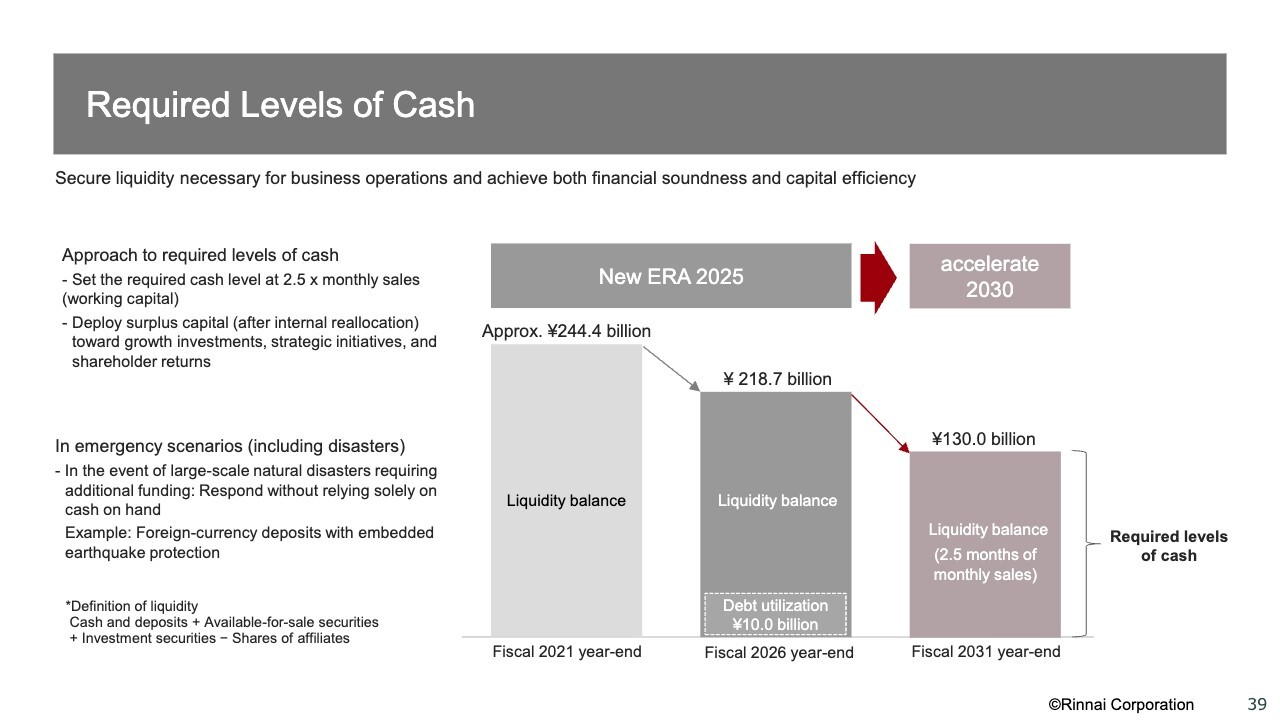
This slide talks about our required levels of cash. Five years ago, the liquidity balance stood at ¥244.4 billion, which was a relatively high level, but it has now declined to ¥218.7 billion.
Our policy is to reduce it further going forward. While there may be differing views as to whether 2.5 months of monthly sales is the appropriate required cash level, we intend to consistently maintain this at ¥130.0 billion as a benchmark.
Capital Allocation
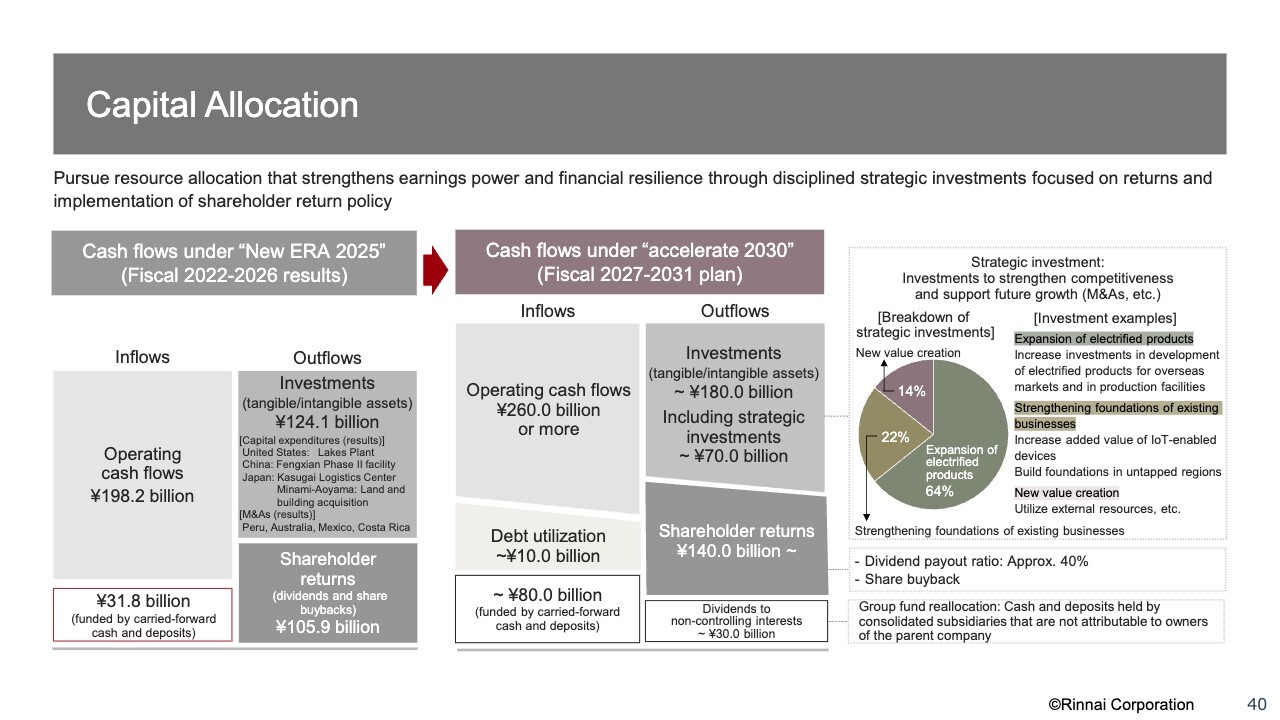
Next, I'd like to explain our position on capital allocation. Our policy is to make disciplined strategic investments with an awareness of returns.
Debt utilization refers to borrowing from banks. While utilizing debt, we intend to steadily advance our investments while also pursuing shareholder returns.
ROE and ROIC Targets
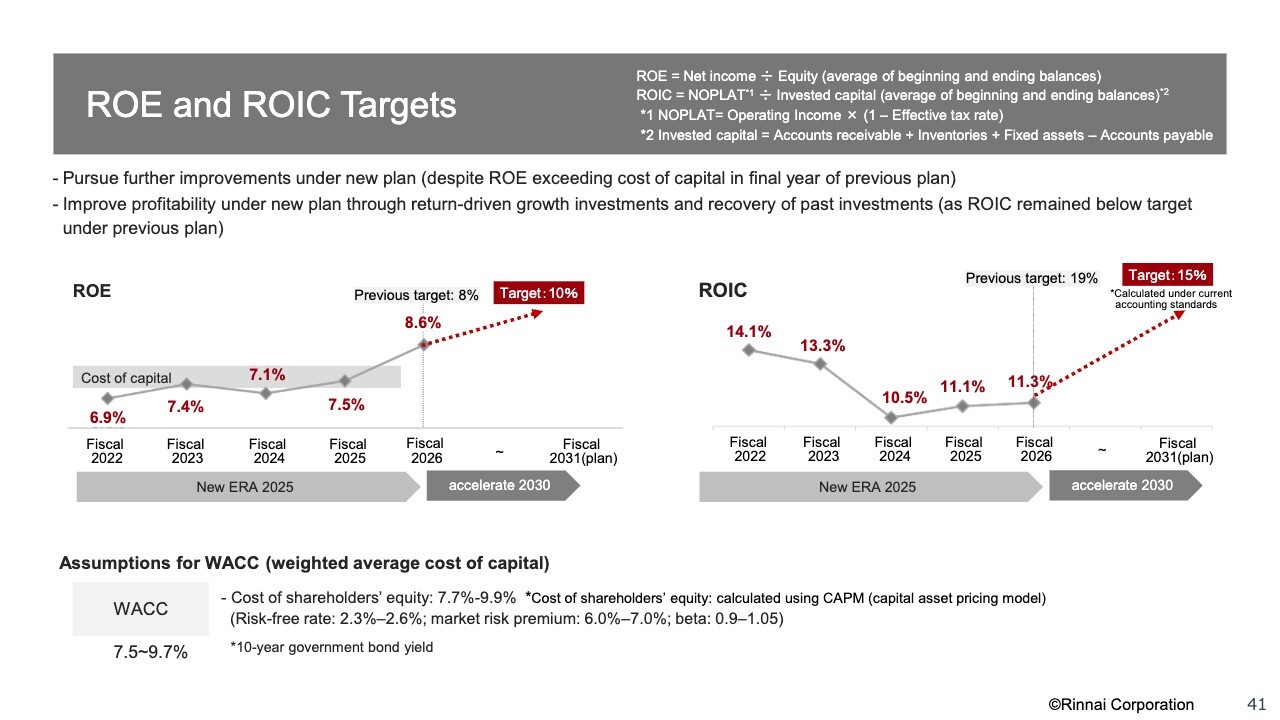
ROE has increased steadily over the past five years. While ROIC declined slightly, this was due to the water heater shortage that occurred during that period, and which prompted us to begin increasing inventory holdings. Going forward, we aim to achieve an ROIC of 15%.
Capital Policy: Measures to Improve Capital Efficiency (ROIC improvement)
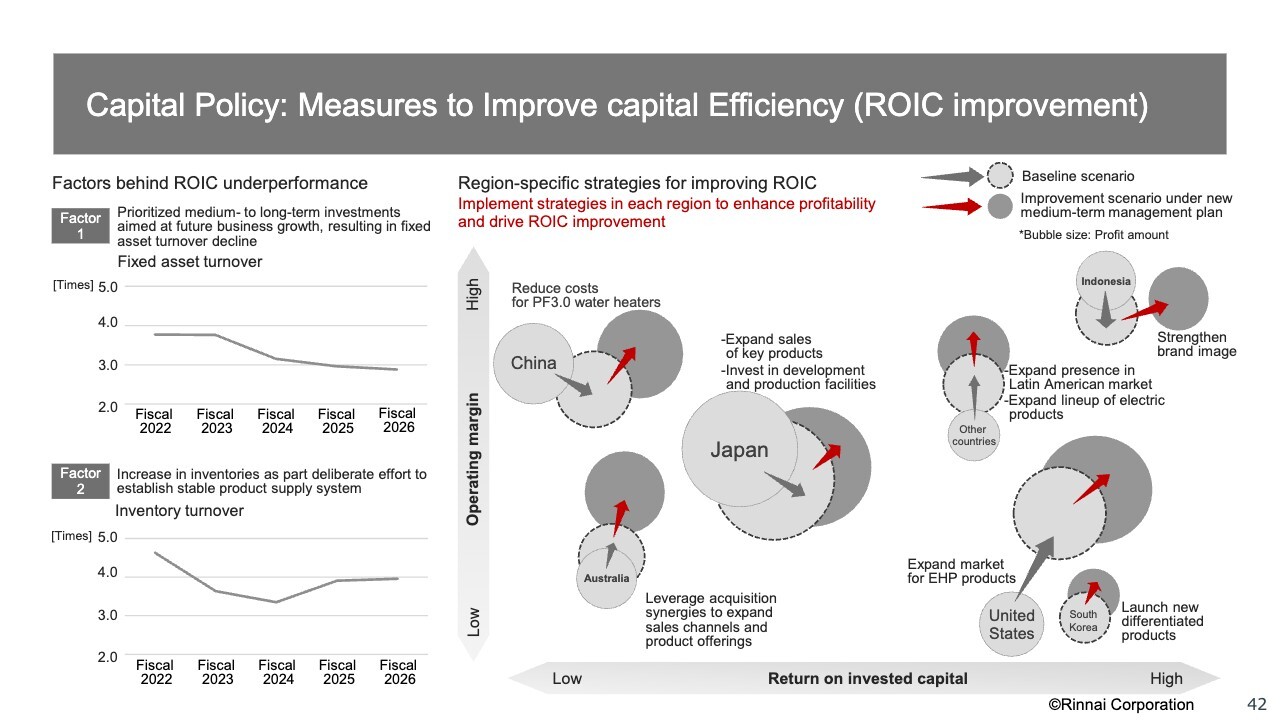
This slide shows measures to improve capital efficiency. We will keep ROIC in mind at all times as we strive to improve it.
Return to Shareholders
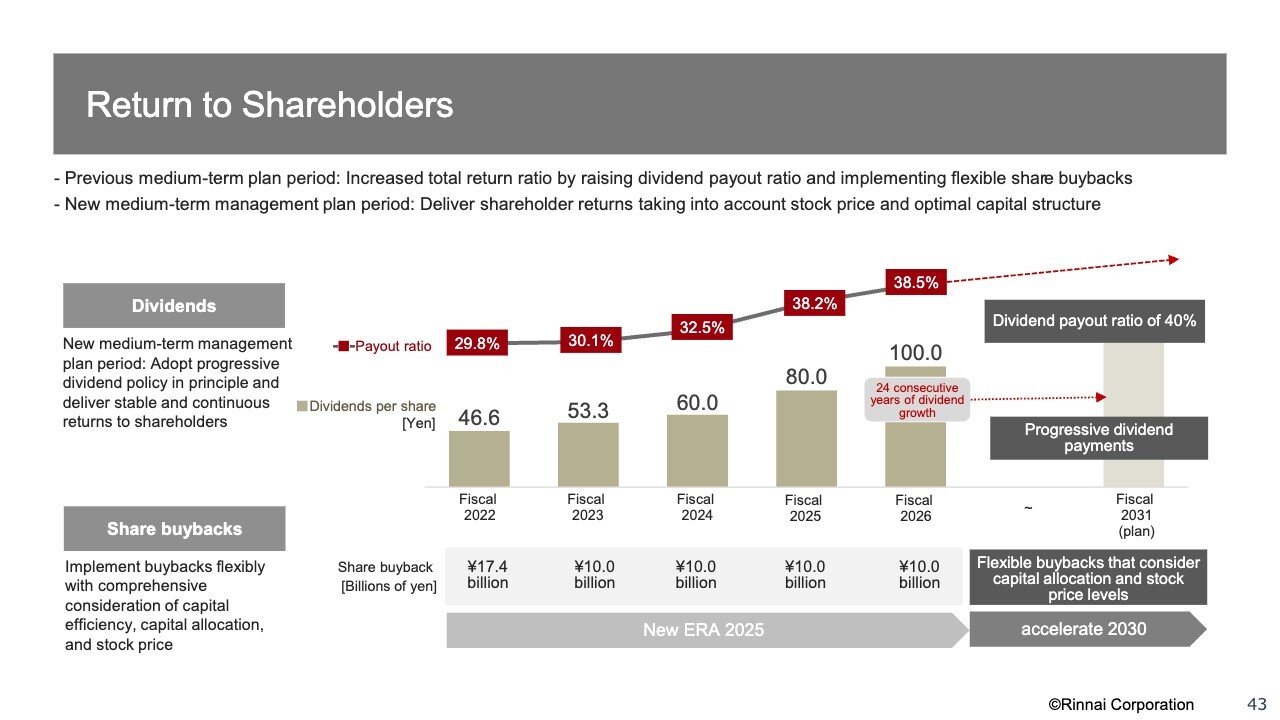
This slide concerns our approach to return to shareholders. In our planning for fiscal 2027, we are aiming for a dividend payout ratio of 40%. We also intend to carry out flexible share buybacks.
Impact of the Middle East Situation
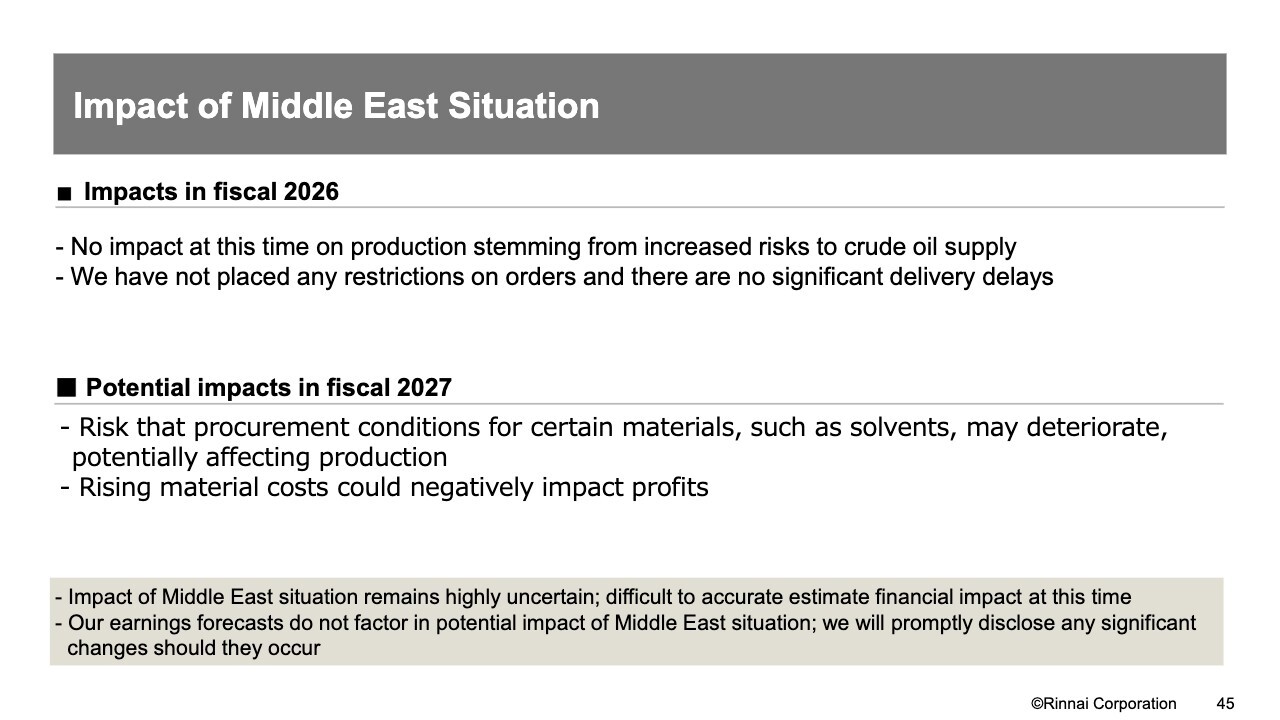
Next, I will speak about our plans for fiscal 2027. At present, there is no situation in which risks related to the impact of fiscal 2026 are increasing. We have not placed any restrictions on orders, and no significant delivery delays have occurred to date.
As for potential impacts in fiscal 2027, there are concerns over the procurement of certain minerals, particularly solvents and thinners. Should there be a shortage of these materials, procurement conditions may deteriorate, potentially affecting production.
Rising material costs may also have a negative impact on profits. The impact of the Middle East situation remains highly uncertain, and it is difficult to accurately estimate financial impact at this time. Our earnings forecasts do not factor in this impact, and we will promptly disclose any significant changes should they occur.
Fiscal 2027: Consolidated Sales/Income Plan
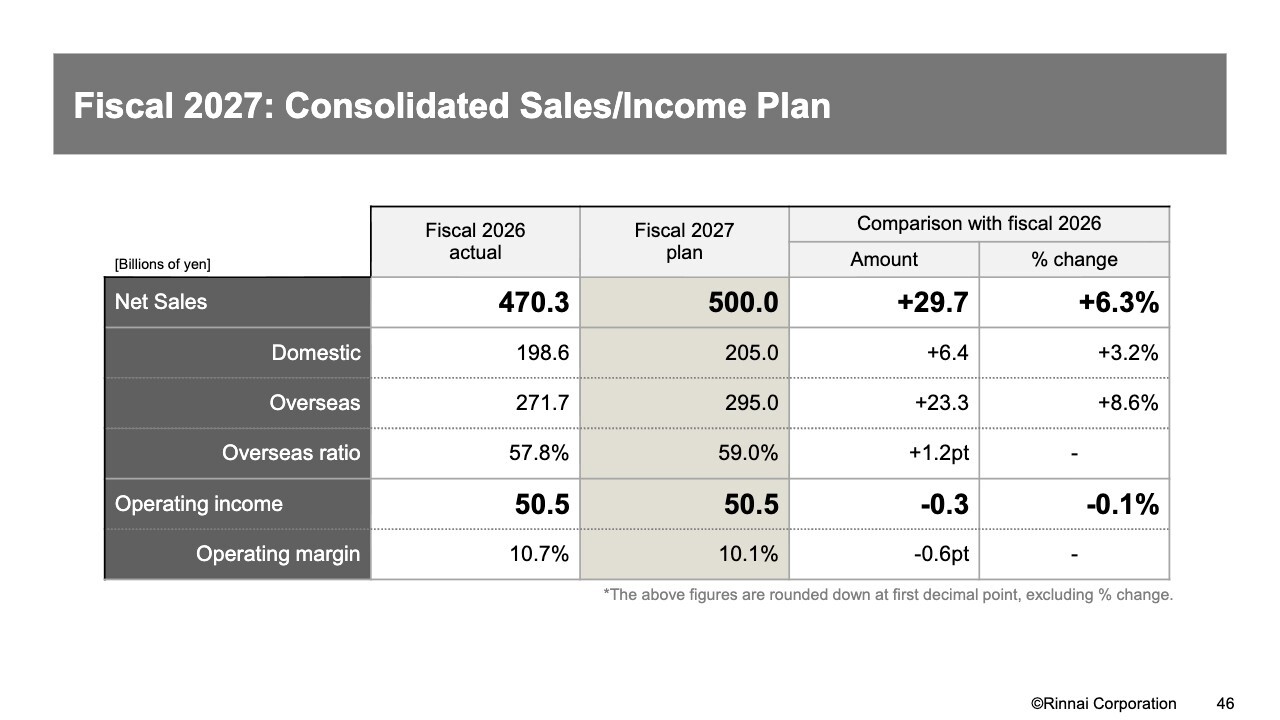
Based on the targets outlined above, we aim to increase net sales by ¥30 billion to ¥500.0 billion. The breakdown is ¥205.0 billion from the domestic market and ¥295.0 billion from overseas markets, with overseas sales expected to account for 60% of the total.
Operating income is targeted at ¥50.5 billion. Although rising material costs will put pressure on profits, we may need to pass on price increases for any portion that cannot ultimately be absorbed. At this stage, we cannot state exactly how this will happen, but we aim to achieve an operating income of ¥50.5 billion through our efforts.
Fiscal 2027: Consolidated Operating Income Plan
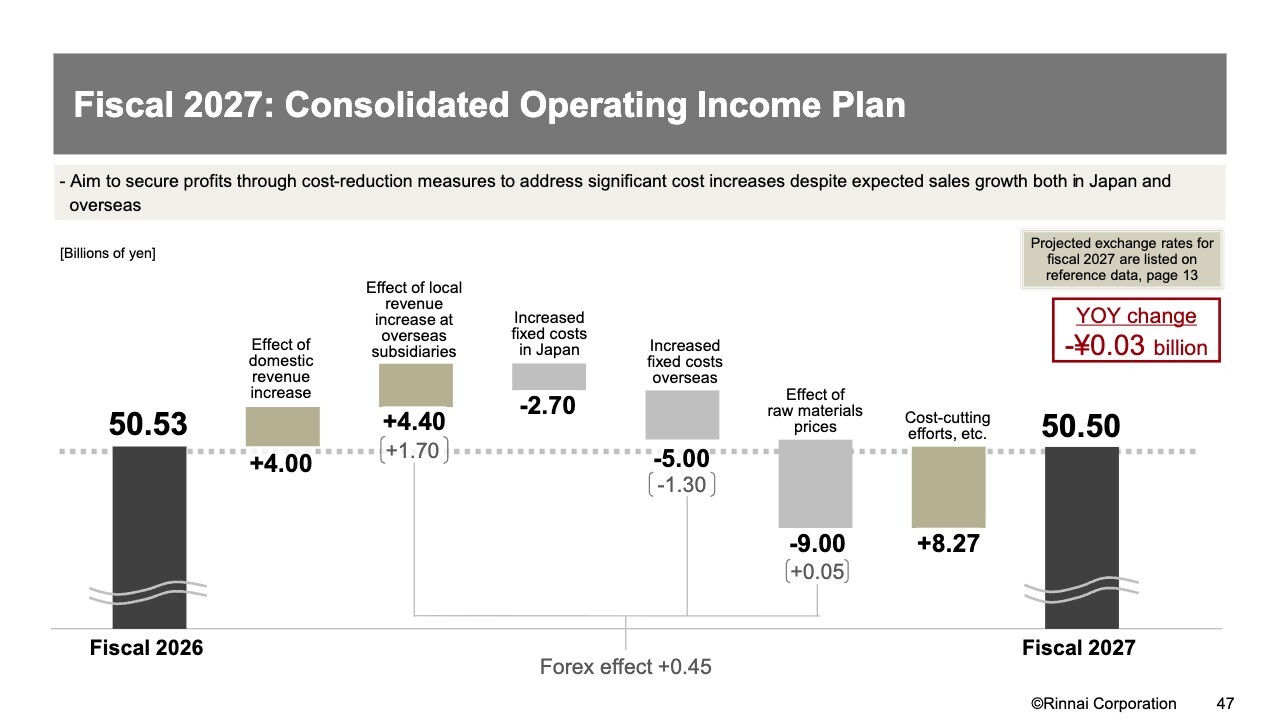
Planned changes in operating income are shown on the slide. These figures do not factor in the impact of the situation with Iran.
As for raw material prices, we anticipate that material costs will increase by ¥9 billion under current conditions. Due to these rising prices, including copper materials, the cost burden is expected to increase by ¥9 billion. In response, we will pursue cost reductions and other initiatives, aiming for an operating income of ¥50.5 billion.
Major Group Companies: Fiscal 2027 Plan
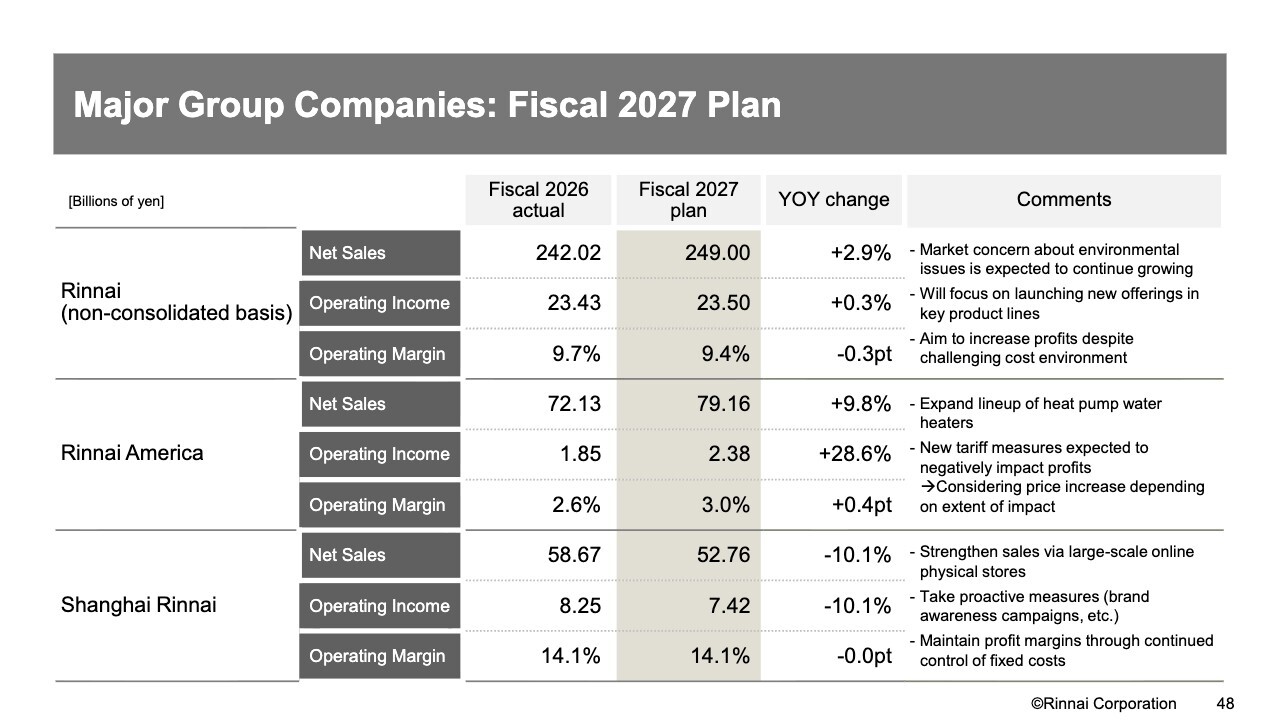
Rinnai's net sales on a non-consolidated basis are expected to be ¥249.00 billion, with Rinnai America at ¥79.16 billion, and Shanghai Rinnai at ¥52.76 billion.
Major Group Companies: Fiscal 2027 Plan
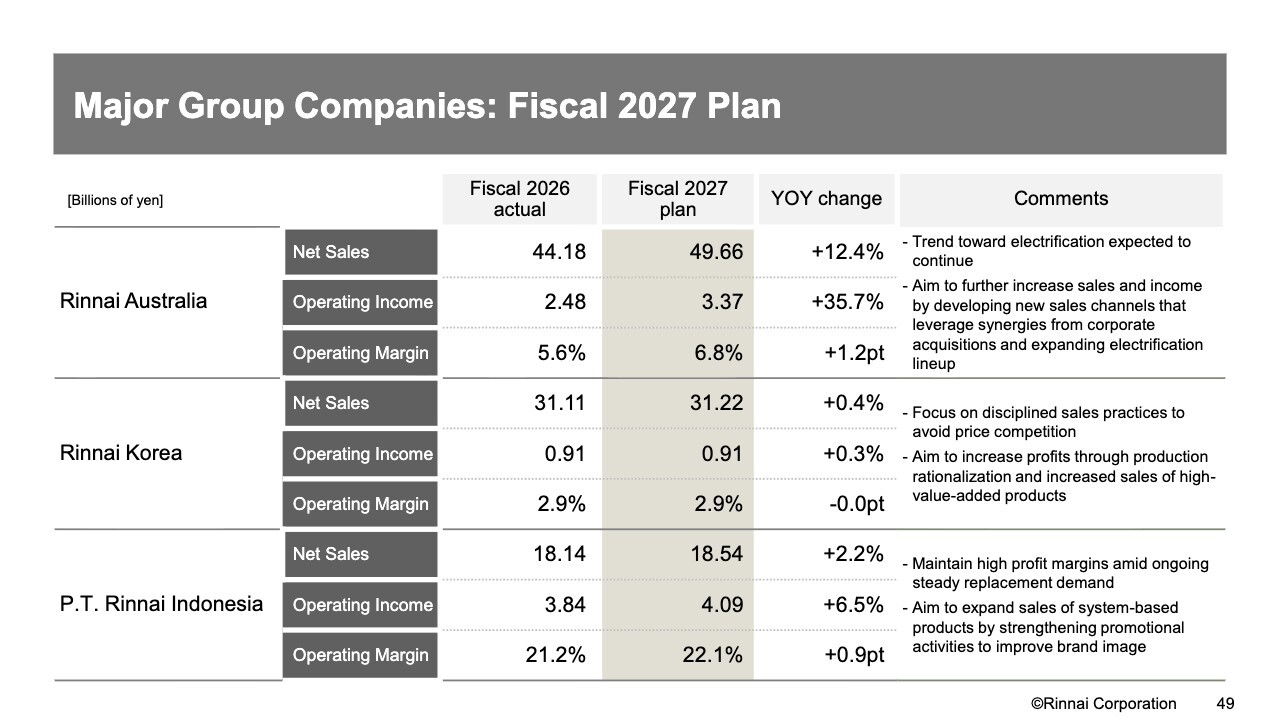
Rinnai Australia, Rinnai Korea, and P.T. Rinnai Indonesia's net sales are expected to be ¥49.66 billion, ¥31.22 billion, and ¥18.54 billion, respectively.
Capital Investment and R&D
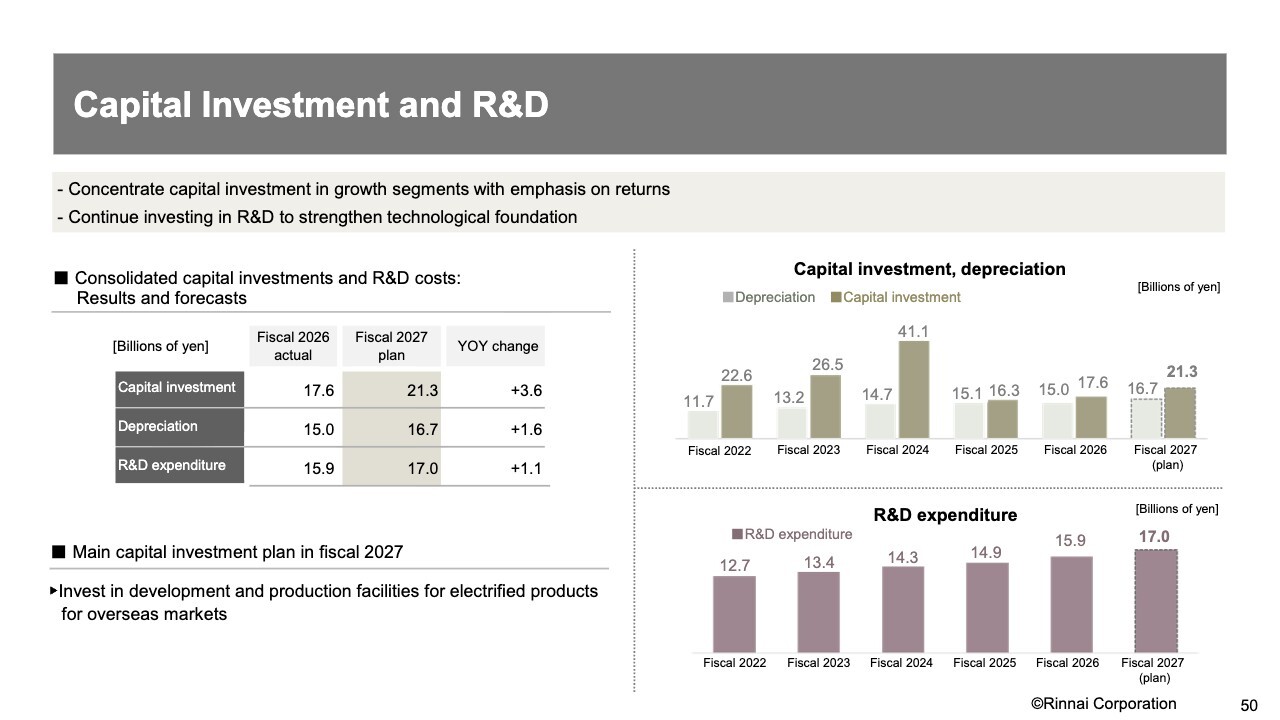
We expect capital investment to be ¥21.3 billion, depreciation to be ¥16.7 billion, and R&D expenditures to be ¥17.0 billion.
Return to Shareholders
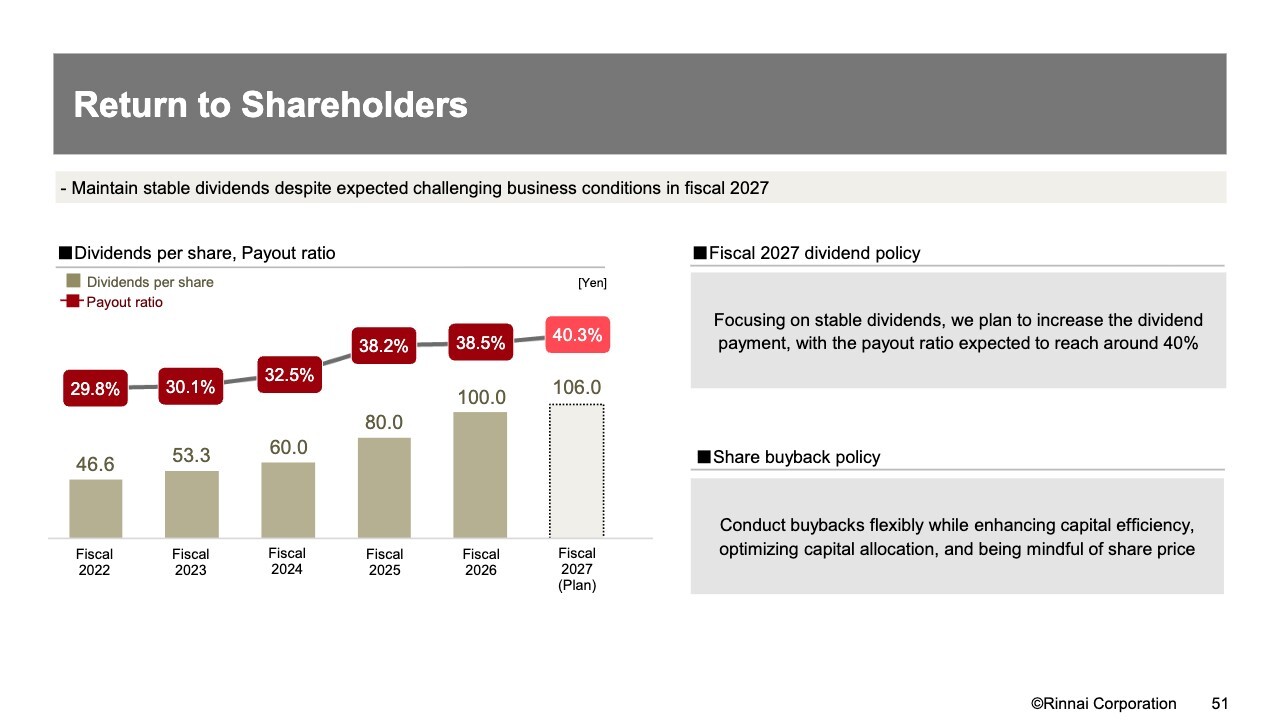
This slide concerns our approach to return to shareholders. We will aim for a payout ratio of around 40%. And the company intends to conduct share buybacks flexibly.
Q&A: Capital allocation policy and impact of rising material prices
Questioner: During the period of the previous medium-term business plan, you conducted share buybacks every year, totaling approximately ¥57 billion. However, there was no announcement of share buybacks this time.
On the other hand, I believe the capital allocation table presented earlier indicated that shareholder returns during the new medium-term business plan period will exceed ¥140 billion.
Assuming a 40% payout ratio, this would imply share buybacks of around ¥70-80 billion, depending on income levels. Is my understanding of this correct?
Also, you mentioned "flexible," but could you go into detail about what sort of flexible response you are considering? Given the current situation, including developments in the Middle East, are shareholder returns being temporarily withheld? Also, could you please explain what conditions you are assuming?
Naito: With regard to our shareholder returns policy, we have achieved a shareholder return ratio of approximately 70% over the past five years, including share buybacks. The slide states that we will conduct them in a "flexible" manner, but does not specify a concrete amount.
Essentially, our policy is to proceed with share buybacks. However, we also have growth investments, and we expect to allocate some funds toward those as well. Although it is not clear at this stage how much and to what extent we will allocate to buybacks, our policy of proceeding with them remains unchanged.
"Flexible" does not refer to a specific timing, but rather means that we will carry out share buybacks when we deem appropriate.
Takuya Ogawa (hereinafter "Ogawa"): My name is Takuya Ogawa, Managing Executive Officer and Chief of Corporate Administration Headquarters. Currently, we are planning a growth investment project for fiscal 2027, but it has not yet been announced. In addition, we anticipate a challenging business environment at the start of fiscal 2027, such as developments in the Middle East and rising material costs.
As of May, we have not made any announcements regarding share buybacks. However, this does not mean that we have decided not to implement share buybacks in fiscal 2027. Therefore, our intent is to make a "flexible" decision while monitoring the situation.
Q&A: Impact of Rising Material Prices
Questioner: The price of copper, a key raw material, has been rising. What price per kilogram or per ton are you assuming in your financial plan? Also, please tell us about the price of copper in the previous fiscal year and the price of copper in this fiscal year.
My understanding is that your policy was to respond with price increases, but am I correct in understanding that the price increases are not factored into your financial plan? If so, what is your policy regarding future price increases, and could you explain planned timing and range?
Hirohisa Ooi (hereinafter "Oi"): My name is Hirohisa Ooi, Senior Managing Executive Officer and Chief of Corporate Planning Headquarters. Regarding the base price of copper, we presently assume ¥2,100 per kilogram. We use prices determined by the London Metal Exchange (LME).
As of today, the price is above ¥2,200 per kilogram, but for the full year, the current outlook is approximately ¥2,100 per kilogram.
Ogawa: The annual average for fiscal 2026 is ¥1,695. The assumption for fiscal 2027 is ¥2,100, so we have factored in an increase of approximately ¥400 compared with the previous year.
Questioner: Is it correct that while you have factored in the rise in copper prices, you haven't factored in any price increases? Could you tell us what your thoughts are regarding price increases?
Oi: Our plan does not explicitly factor in price increases. We believe that the most important priority is to ensure stable supply to our customers amid the ongoing situation in the Middle East, including Iran.
Four years ago, when we experienced a parts procurement issue, our customers strongly requested confirmation of whether stable procurement was possible, and we treated this as our responsibility and responded accordingly. At the time, copper prices were highly volatile, but we began by focusing on securing stable procurement prospects.
Currently, with the situation in the Middle East highly uncertain, we are not factoring in price revisions at this stage and are prioritizing securing stable supply.
However, given the current situation of rising prices and significant uncertainty surrounding oil supply, there is a possibility that we could see an impact. In such cases, we would need to consider price revisions.
Q&A: Impact of the situation in the Middle East
Questioner: You stated that, essentially, you did not factor in rising copper prices into your earnings forecast, but in the event that the situation in the Middle East were to have an impact, would the impact mainly be on cost of sales? Or would it also have some impact on the top line?
Naito: It is very challenging to assess the impact of the situation in Iran.
Therefore, without taking certain conditions into account, we cannot easily provide a forecast figure. As it is difficult to determine what should be used as a basis, we have not included it in our forecast.
Q&A: Factor analysis of raw material price increase
Questioner: Regarding the forecast for the fiscal year ending March 31, 2027, you state that you expect a ¥9 billion negative impact from raw material prices. Could you break down this impact by factors such as copper, steel, electronic components?
Oi: We mentioned that the impact would be roughly ¥9 billion, and we believe that slightly more than half of this will come from nonferrous metals.
In our case, aluminum is another factor affected in addition to copper. As for aluminum, prices have begun rising due to procurement difficulties due to the current situation in Iran. This may have an impact as well.
Even prior to this issue, aluminum prices were already beginning to rise gradually. With these factors in mind, nonferrous metal materials account for slightly more than half of the total impact.
The remaining portion of the impact consists of electronic components and general purchased materials.
Q&A: Reasons for the decline in Rinnai America's operating margin and measures for improvement
Question: This is about Rinnai America's operating margin. The president previously stated at a briefing that Rinnai America is aiming for an operating margin of 5%. However, for the new fiscal year, the plan assumes 3%.
Could you please explain why the operating margin for Rinnai America remains at this 3% level? Also, could you please reiterate the pace at which you intend to improve operating margins for Rinnai America, and what measures you intend to implement going forward?
Naito: Regarding Rinnai America, I previously stated "at least 5%," but I believe that will be difficult to achieve in the near term.
However, as heat pump water heaters become more widely adopted going forward, it becomes very challenging to assess profitability at any given moment in time. As price competition intensifies, the trade-off between pricing and market share will inevitably arise.
Our policy is to aim to secure at least a 5% margin, but the outlook remains difficult to predict.
Questioner: Rinnai America seems to be improving its operating margin somewhat more slowly compared to past performance results. Could you please explain where the gap is coming from?
Naito: We are not fully satisfied with why things did not go well, and while there are instances where we have raised our concerns with the management of the local subsidiary, the reality is that there were several unavoidable circumstances. One was when we were unable to load vessels at a critical time due to COVID-19, causing us to run out of inventory completely.
At the same time, our competitors had sufficient inventory, so it appears that there was some misjudgment in anticipating such circumstances.
Even when shipped from Japan, loading cargo vessels was difficult. What used to be transported via Japan began to be shipped directly from China to the U.S., bypassing Japan.
And even when vessels approached the U.S., the reality was that there was a four or five kilometers long-line of dozens or even hundreds of vessels anchored offshore, unable to unload their cargo at the port due to port strikes. Then, after finally docking at port, cargo could not be offloaded due to a shortage of dock workers.
Despite that issue finally being resolved, we were faced with other issues for a period of time, such as the upcoming truck drivers' strike, and the situation remained difficult.
Going forward, we plan to recover from these issues by launching new heat pump water heaters in the market.
Q&A: Progress and outlook on achieving the Medium-Term Business Plan's operating income targets
Questioner: I would like to know about how operating income will increase under the medium-term business plan. Could you please tell us which countries you primarily expect to see a linear increase in income from the next fiscal year onward, or whether the increase will be more concentrated in the second half of the plan? Also, could you also give us an overall picture of the expected trajectory?
Ogawa: We are moving forward with the goal of achieving ¥70 billion in operating income over the next five years, and the second half will be particularly important.
Naito: I think the outcome largely depends on the success of our business in the U.S. This is a key point, as if the U.S. market performs well, we believe profits will increase significantly.
Another important factor is the pace of economic recovery in China. This is a key factor that will have a significant impact on overall results. We are also generating a certain level of income in regions such as Australia and Taiwan, and we believe it is important to add contributions from other markets such as Indonesia.
Looking at the performance of these regions as a whole, we do not anticipate large fluctuations overall, but rather a gradual, linear increase in income over time.
Q&A Session: Timing of Heat Pump Launch in the U.S. Market
Questioner: What is the timing of the launch of heat pumps in the U.S. market? If possible, I would like clarification regarding this.
Naito: I apologize, but I must refrain from providing detailed comments. It would not be in our best interests to reveal our hand to our competitors. The fact is that starting in Fiscal 2030, only heat pump water heaters will be permitted for sale in the electric storage-type water heater market. Given this reality, we are considering a variety of responses.
Q&A: Regarding income projections for fiscal 2027
Questioner: There is an income projection chart listed on page 12 of the reference data for the financial results of Financial Results of Fiscal 2026, ended March 31, 2026. The total income projections for the parent company, domestic subsidiaries and overseas subsidiaries is approximately ¥53,891 million, a 5.9% year on year increase. Can you please explain why total income remains flat?
Ogawa: In building the plan for fiscal 2027, we initially start with a simple aggregation approach. However, as we have discussed from the outset, the business environment remains uncertain and difficult to forecast in many areas.
Therefore, we believe it is necessary to take a slightly more conservative view of subsidiary income, and the final plan comes to ¥50,500 million.
Questioner: Normally, there should be some variance in the event that these three items are achieved. I recall the variance was ¥500 million for the previous fiscal year, but this time the difference is more than ¥3,000 million. Is it correct to assume that you are incorporating a buffer in case of unforeseen circumstances?
Ogawa: I believe that could be a fair interpretation of what I have just explained.