Website:https://www.toa-const.co.jp/eng/
Medium-term Management Plan Briefing:https://www.toa-const.co.jp/eng/ir/mid_briefing/
Medium-term Management Plan <2026-2028> Briefing Session
Akira Kimura (hereafter, “Kimura”): I am Kimura, Deputy Chief of Corporate Management General Headquarters. Thank you for taking the time out of your busy schedule today. Let me start today’s presentation.
We have just announced our medium-term management plan covering FY2026 to FY2028. Our previous medium-term management plan for FY2023 to FY2025 outlined a vision for growth achieved by integrating our business strategy with our human resources strategy. The Medium-term Management Plan <2026–2028> presents a vision for growth achieved by aligning our human resources with our business operations while responding to societal demands.
To foster a company-wide understanding of our commitment to further integrating our business strategy with our human resources strategy, we made this announcement in March instead of waiting for the financial results announcement in May. So, the purpose of this announcement is to start the internal communication in March and to get a head start on the initiatives.
Contents
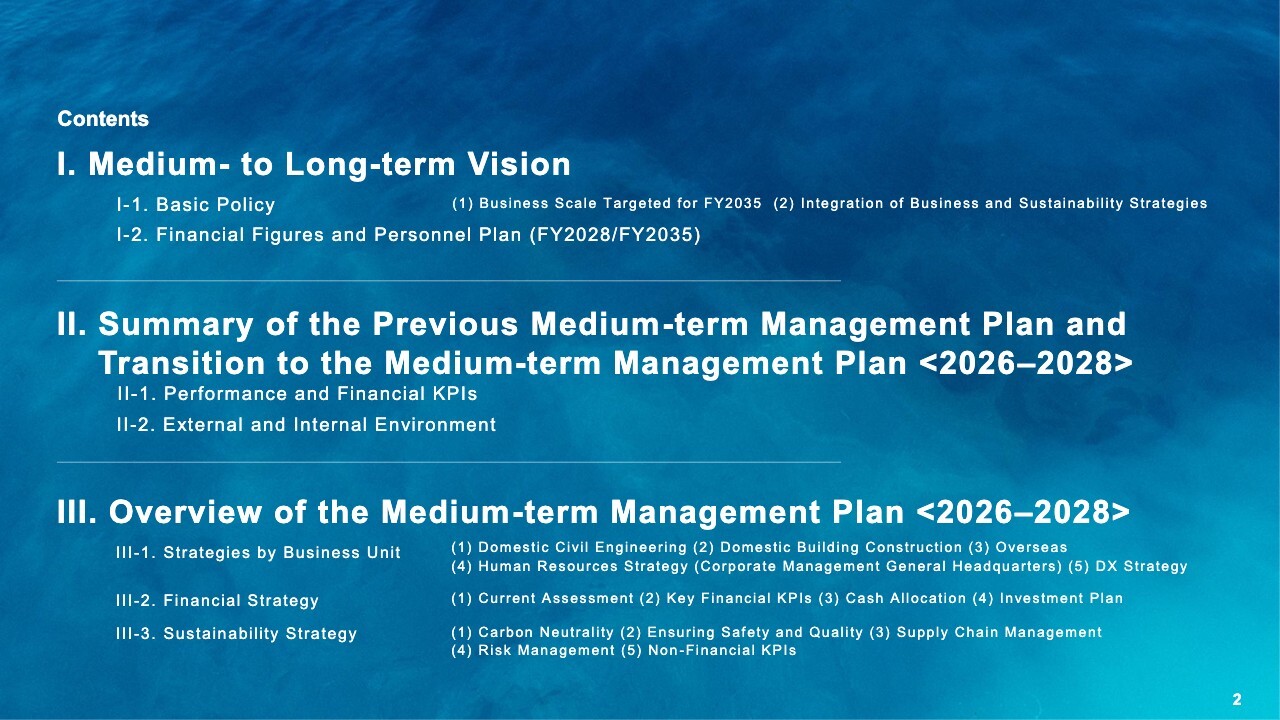
This slide outlines the topics I will be explaining today.
I-1. Basic Policy (1) Business Scale Targeted for FY2035
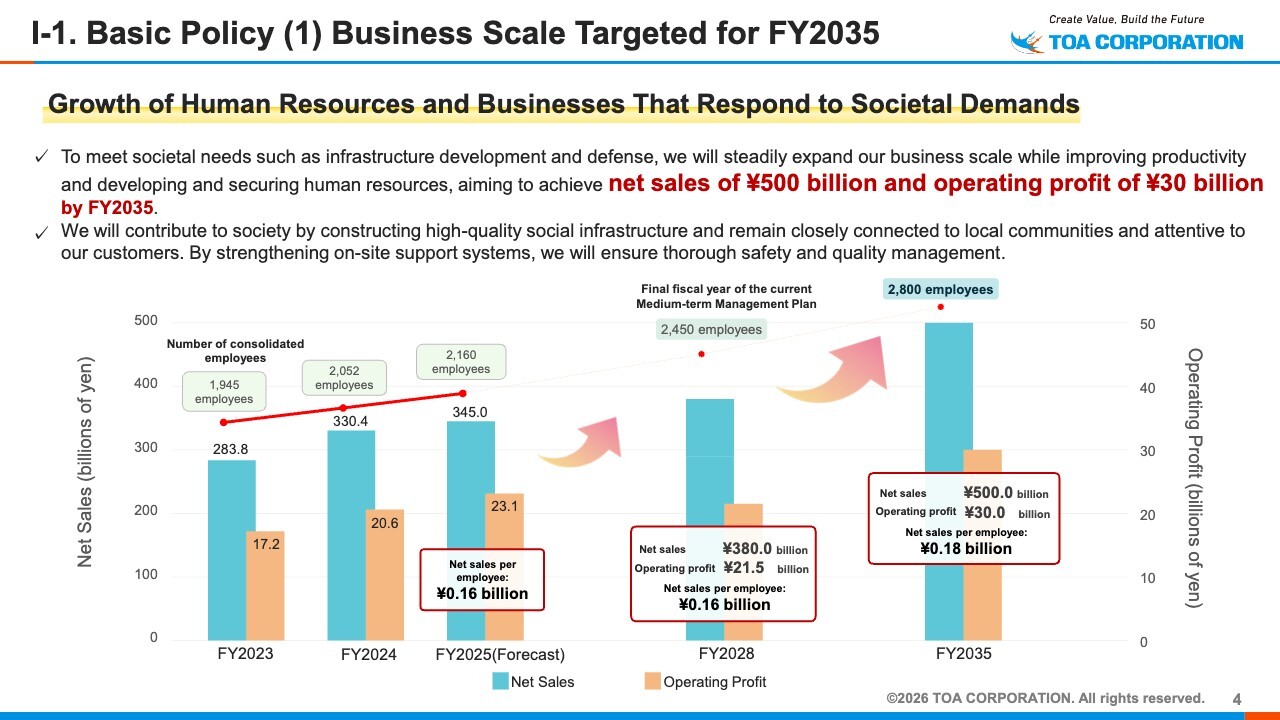
First, let me discuss the business scale we aim to achieve ten years from now in FY2035, which is the fiscal year ending March 2036. Over the three-year period from FY2023 to FY2025, the number of consolidated employees increased from 1,945 to 2,160 and net sales grew from ¥283.8 billion to ¥345.0 billion, substantially exceeding our plans.
As shown on the right side of the slide, we aim to increase the number of consolidated employees to 2,800 by FY2035, and to grow net sales to ¥500.0 billion and operating profit to ¥30.0 billion. Our ultimate goal is to raise net sales per employee from approximately ¥0.16 billion in FY2025 to ¥0.18 billion.
A key milestone for us is to increase the number of consolidated employees to 2,450 and boost net sales to ¥380.0 billion by FY2028, the final year of the Medium-term Management Plan.
As pillars of our specific policy, we will steadily expand our business scale by developing and securing human resources while increasing our workforce and improving productivity. To ensure we achieve profits as planned without causing major problems, we will contribute to society by constructing high-quality social infrastructure while remaining closely connected to the local community and attentive to our customers. Furthermore, by strengthening our on-site support system, we will ensure thorough safety and quality management.
I-1. Basic Policy (2) Integration of Business and Sustainability Strategies
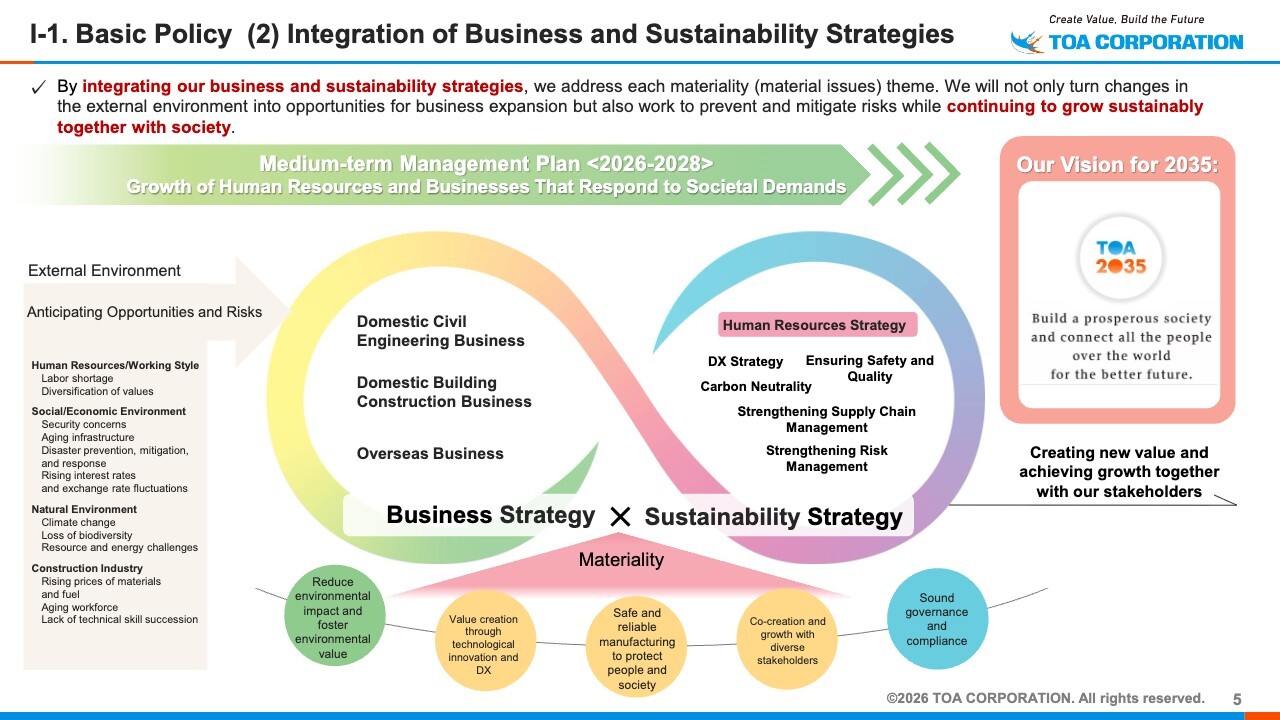
We believe it is also necessary to integrate our business and sustainability strategies. As shown on the left side of the slide, changes in the external environment include security concerns and aging infrastructure and others that will serve as tailwinds for the company.
On the other hand, changes in the external environment also include factors not necessarily favorable to us, such as labor shortages, rising interest rates and exchange rate fluctuations, as well as the construction industry’s specific challenges of an aging workforce and a lack of technical skills succession. We must carefully assess the risks inherent in these conditions.
Against this backdrop, we will address each materiality (material issue) by integrating our business and sustainability strategies. Given the particular importance of our human resources strategy, we have marked the text in color to highlight it. At the same time, we consider our Digital Transformation (DX) strategy, ensuring safety and quality, and other sustainability strategies to be equally important. Details are provided in the latter part of this presentation material; please reference them as well.
Ultimately, we aim to connect the growth of our human resources with the growth of our business while responding to societal demands.
I-2. Financial Figures and Personnel Plan (FY2028 / FY2025)
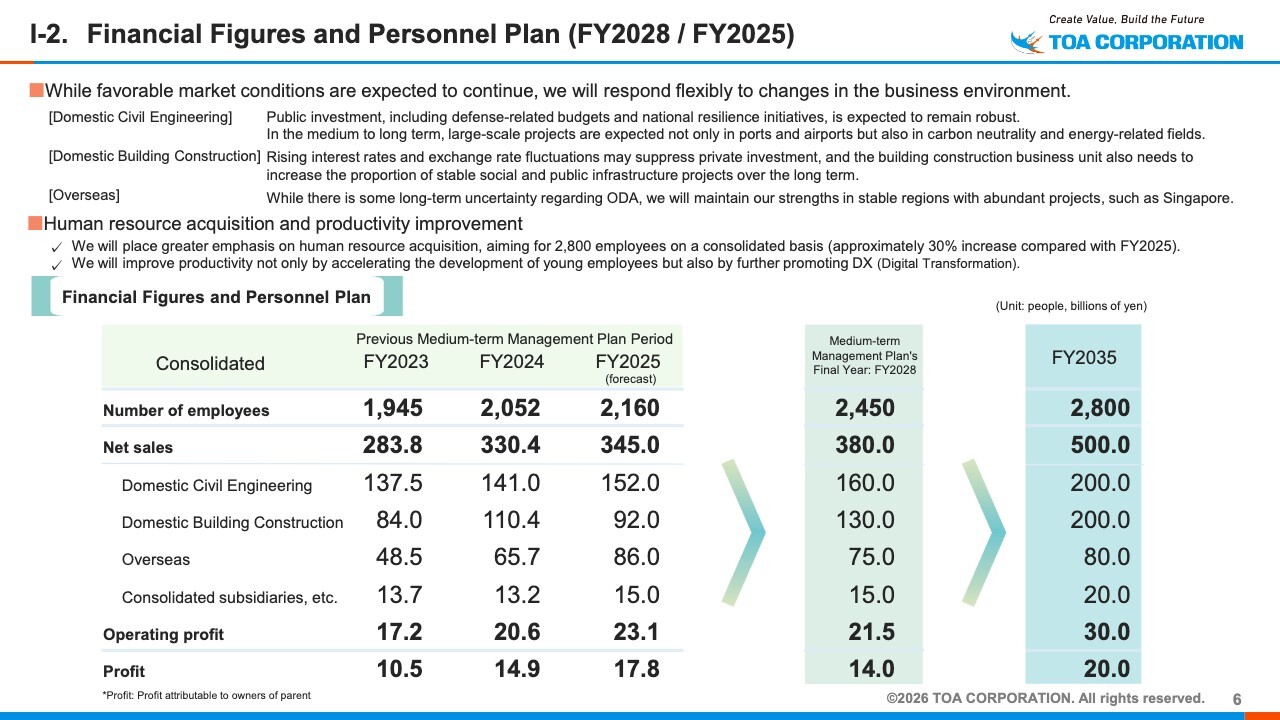
Here are the financial figures and personnel plan we are aiming for. The market conditions are favorable. In the Domestic Civil Engineering Business, public investment, including defense-related budgets and national resilience initiatives, is expected to remain robust. In the private sector as well, large-scale projects are expected in the civil engineering field related to carbon neutrality and energy-related fields.
On the other hand, in the Domestic Building Construction Business, rising interest rates and exchange rate fluctuations may suppress private investment. For this reason, we believe it is necessary to increase the proportion of long-term, stable social and public infrastructure projects within the domestic building construction field, which has been primarily driven by private construction projects.
While Official Development Assistance (ODA) accounts for a certain proportion of the Overseas Business, there are some long-term uncertainties. Therefore, we believe it is necessary to strengthen our operations in markets such as Singapore, where we can secure a stable volume of business, and maintain our strengths in areas with abundant projects.
Amid such market environment, we will strive to acquire human resources and improve productivity. Our plan for the number of consolidated employees is as I mentioned earlier. In addition to accelerating the development of young employees, we will further promote DX to improve productivity.
Furthermore, under the Medium-term Management Plan, we aim to achieve net sales of ¥200.0 billion in the Domestic Civil Engineering Business, ¥200.0 billion in the Domestic Building Construction Business, and ¥80.0 billion in the Overseas Business, with consolidated net sales of ¥500.0 billion for FY2035. For FY2028, the final year of the Medium-term Management Plan, we are targeting net sales of ¥160.0 billion in the Domestic Civil Engineering Business, ¥130.0 billion in the Domestic Building Construction Business, and ¥75.0 billion in the Overseas Business.
II-1. Summary of the Previous Medium term Management Plan:
Performance and Financial KPIs
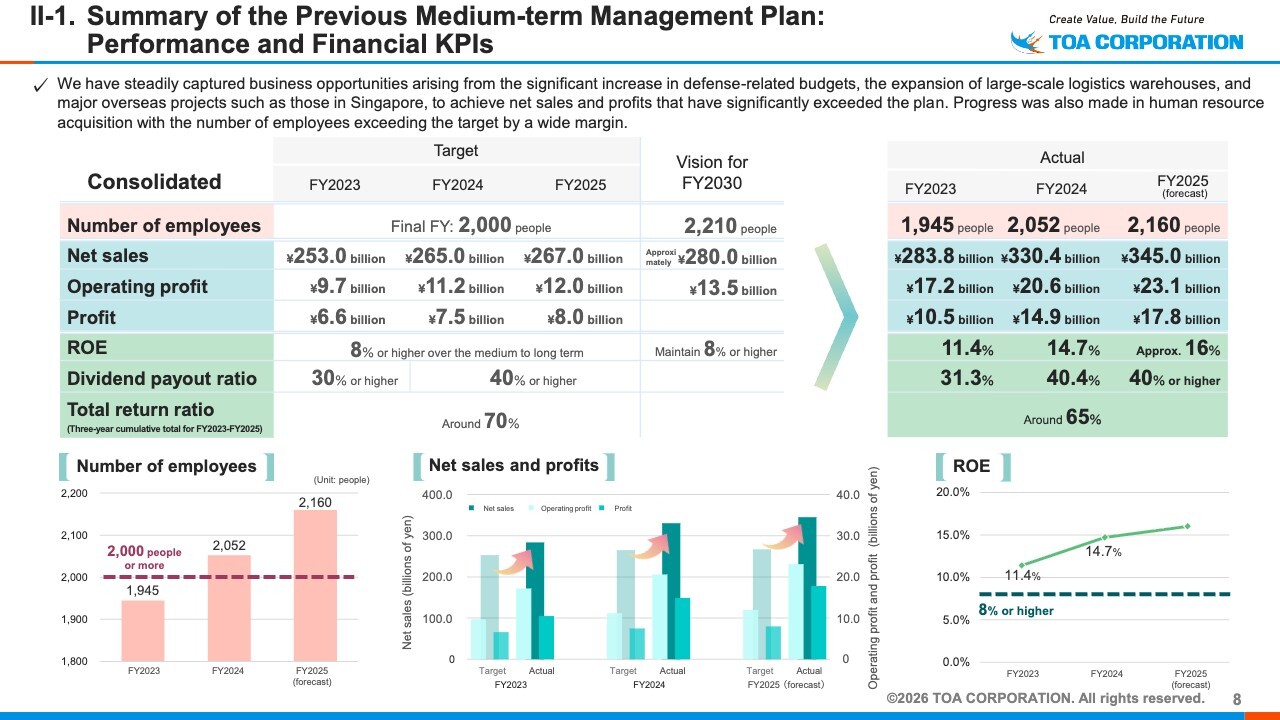
I will now summarize the previous medium-term management plan and explain how the external and internal environments, which drove our performance to significantly exceed our plan, will shape the Medium-term Management Plan <2026–2028> covering FY2026 through FY2028.
As shown on the slide, the number of employees is forecast to be 2,160, significantly exceeding our target of 2,000. The forecast for net sales, operating profit, and profit are ¥345.0 billion, ¥23.1 billion, and ¥17.8 billion, respectively, significantly exceeding the targets of ¥267.0 billion, ¥12.0 billion, and ¥8.0 billion.
As a result, we expect to achieve a return on equity of around 16% for FY2025, significantly surpassing our target of 8% or higher.
II-1. Summary of the Previous Medium term Management Plan:
Performance and Financial KPIs
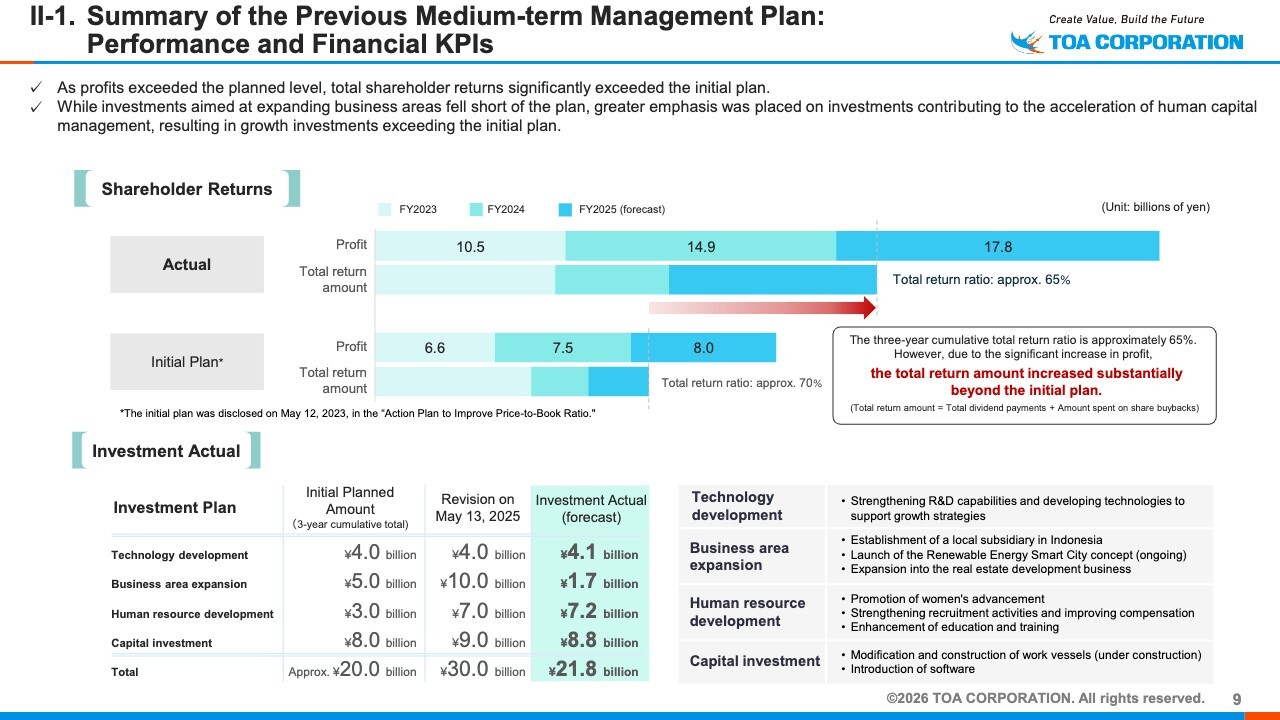
As profits exceeded the planned level, the total shareholder returns also significantly exceeded the initial plan. Our initial targets were a three-year cumulative total return ratio of approximately 70% and total returns of about ¥15.0 billion. However, we increased dividends in line with improved profits and repurchased shares to boost EPS. As a result of these combined efforts, we were able to return approximately ¥28.0 billion over the three-year period, exceeding our target by about ¥13.0 billion. We estimate the current total return ratio to be around 65%.
Regarding investments, we believe we have broadly achieved our initial plan. However, investments for business area expansion fell far short of the initial plan of ¥5.0 billion or the revised target of ¥10.0 billion announced on May 13, 2025, amounting to only ¥1.7 billion, because we were unable to secure suitable M&A projects despite our intention to pursue opportunities. On the other hand, investments in human resource development significantly exceeded the plan.
II-2. External and Internal Environment
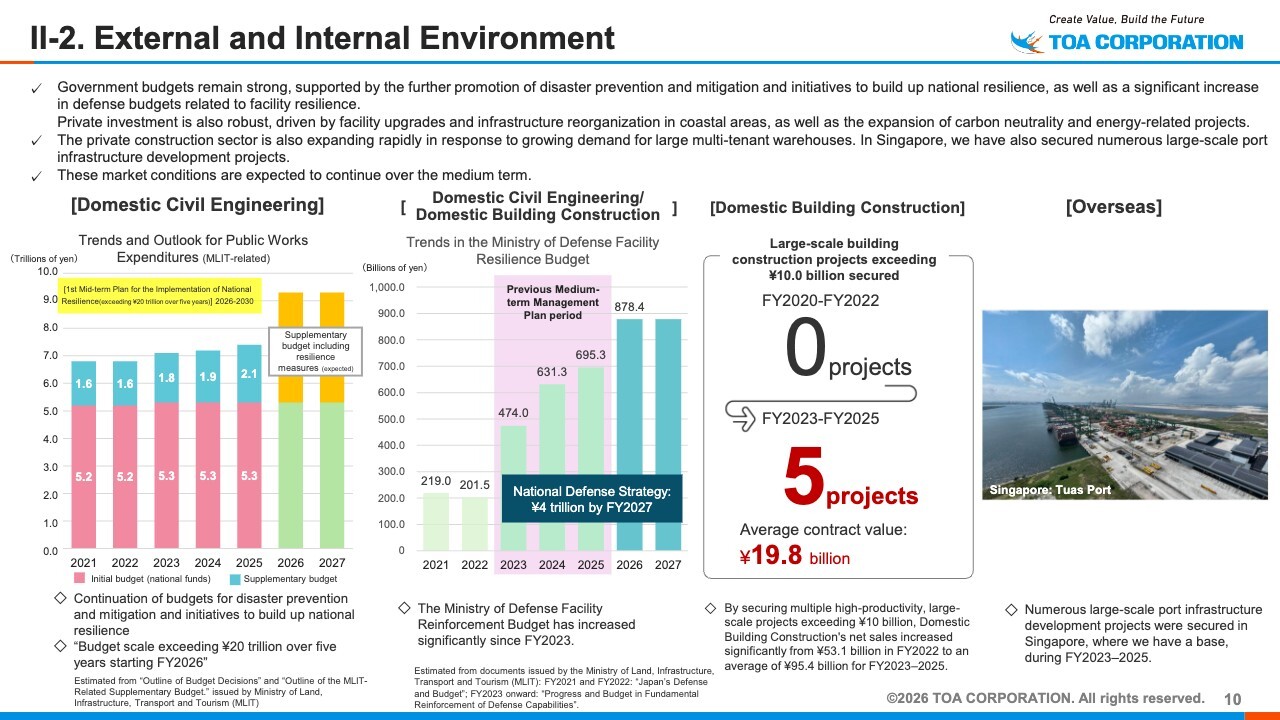
Let me explain the external and internal environment that enabled us to achieve these positive results. If you look at the graph on the left side of the slide, you can see that public works expenditures in the Domestic Civil Engineering Business have remained strong.
The 1st Mid-term Plan for the Implementation of National Resilience covers the period from 2026 to 2030, with a budget scale of about ¥20 trillion specified for the five-year period starting in FY2026. Given the previous plan’s budget scale of approximately ¥15 trillion, this plan is also expected to see a significant increase.
The Ministry of Defense Facility Resilience Budget, which involves not only the Domestic Civil Engineering Business but also the Domestic Building Construction Business, is expected to expand significantly from approximately ¥200.0 billion in FY2021 and FY2022 to ¥4 trillion by FY2027, based on the national defense strategy. This has provided a tailwind for our company.
Previously, the Domestic Building Construction Business had no track record of large-scale construction projects exceeding ¥10.0 billion; however, between FY2023 and FY2025, we secured five high-productivity, large-scale construction projects with an average contract value of slightly under ¥20.0 billion. With these multiple high-productivity projects, net sales from the Domestic Building Construction Business surged significantly from ¥53.1 billion in FY2022 to an average of ¥95.4 billion over the three-year period from FY2023 to FY2025.
For the Overseas Business, we have secured numerous large-scale port infrastructure development projects in Singapore, where we have established a base, for the period from FY2023 to FY2025.
We expect these order and market conditions to continue through to the period of the Medium-term Management Plan <2026–2028>.
II-2. External and Internal Environment
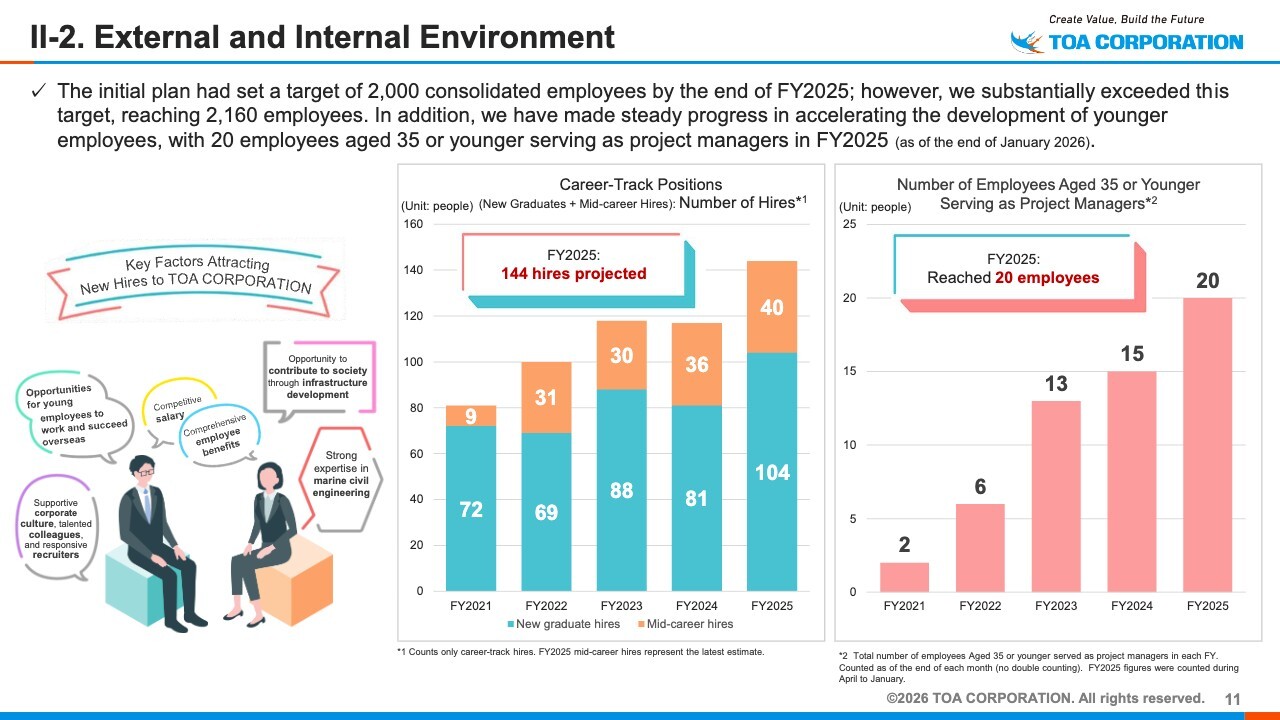
Moving on to the internal environment. As I discussed earlier, we have been able to increase our workforce. On the left side of the slide, we’ve listed how our new hires view our company. Factors such as opportunity to contribute to society through infrastructure development, opportunities for young employees to work overseas, competitive salaries, and strong expertise in marine civil engineering have served as tailwinds, and we expect to hire 144 career-track employees for FY2025.
Furthermore, we are making steady progress not only in recruitment but also in employee development, with 20 employees aged 35 or younger now serving as project managers.
III-1. Strategies by Business Unit (1) Domestic Civil Engineering: Business Strategy
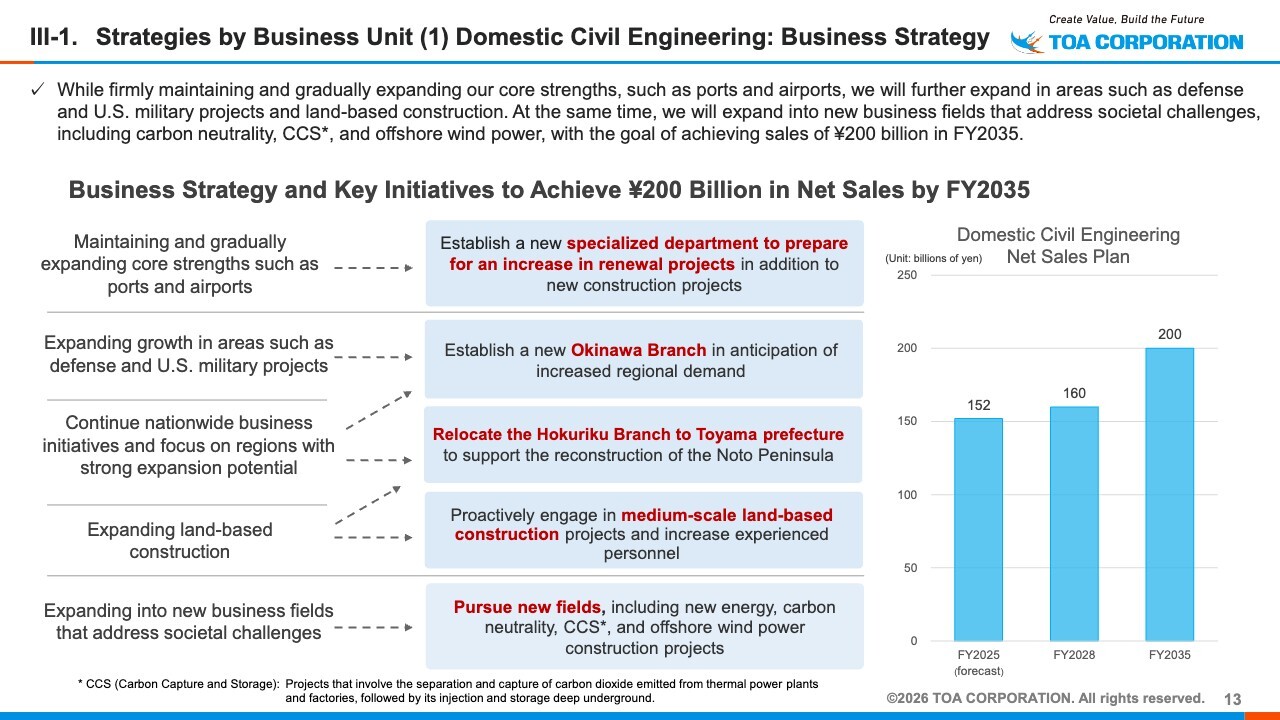
I will now explain the key points of our strategies by business unit, financial strategy, and sustainability strategy for the period under the Medium-term Management Plan <2026–2028>.
First, for the Domestic Civil Engineering Business, we anticipate our core strengths, such as ports and airports, will continue to perform solidly, partly driven by national resilience initiatives. Accordingly, we have established a new specialized department to prepare for an increase in renewal projects in addition to new projects, and we have opened a new Okinawa Branch to capitalize on growth in areas including defense and U.S. military projects.
In the long term, our strategy is to expand net sales by growing our land-based construction as well. While we have prioritized large-scale projects, we intend to proactively engage in medium-scale projects as well and build a structure for increasing experienced personnel.
We also plan to pursue new fields, including ammonia and hydrogen energy, carbon neutrality, CCS (Carbon Capture and Storage), and offshore wind power construction projects.
Through these initiatives, we aim to achieve net sales of ¥200 billion within the next 10 years, by FY2035.
III-1. Strategies by Business Unit (1) Domestic Civil Engineering:
Human Resources Strategy/Productivity Improvement Measures
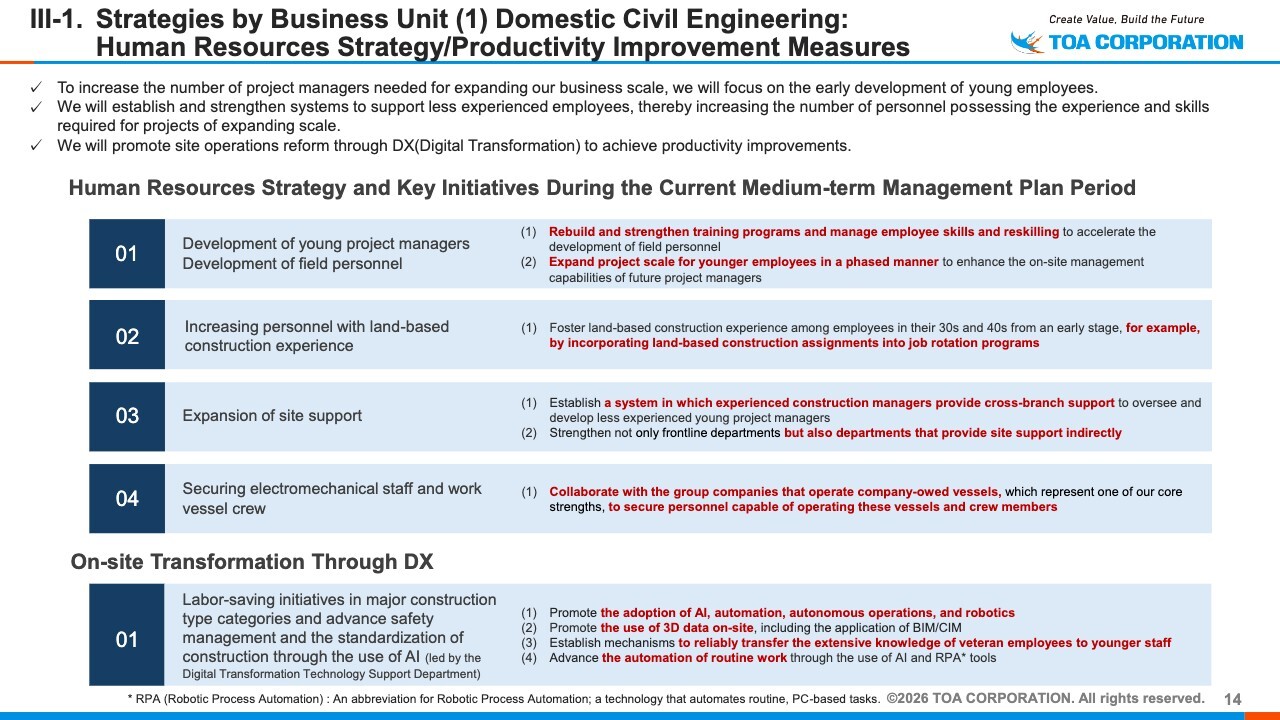
Here’s our human resources strategy for the Domestic Civil Engineering Business. We need to take a phased approach for developing project managers who oversee sites with values ranging from approximately ¥100 million to ¥500 million, ¥500 million to ¥2 billion, and ¥2 billion or more.
To improve on-site management capabilities of project managers, we will systematically develop these employees. Specifically, we will focus on developing young project managers and field personnel through measures such as rebuilding and accelerating training programs, as well as reskilling initiatives.
Furthermore, anticipating the need to undertake a certain level of projects in the future, we will increase the number of personnel with land-based construction experience.
In addition, with an expected increase in the number of young project managers, we will establish a system in which experienced construction managers provide cross-branch support to oversee and develop these less-experienced project managers.
Moreover, we will collaborate with group companies that operate company-owned vessels to secure personnel capable of operating these vessels and crew members.
Meanwhile, as part of our on-site transformation through digital transformation, we will promote labor-saving initiatives in major construction types and implement AI-driven safety and construction management to improve productivity.
III-1. Strategies by Business Unit (2) Domestic Building Construction: Business Strategy
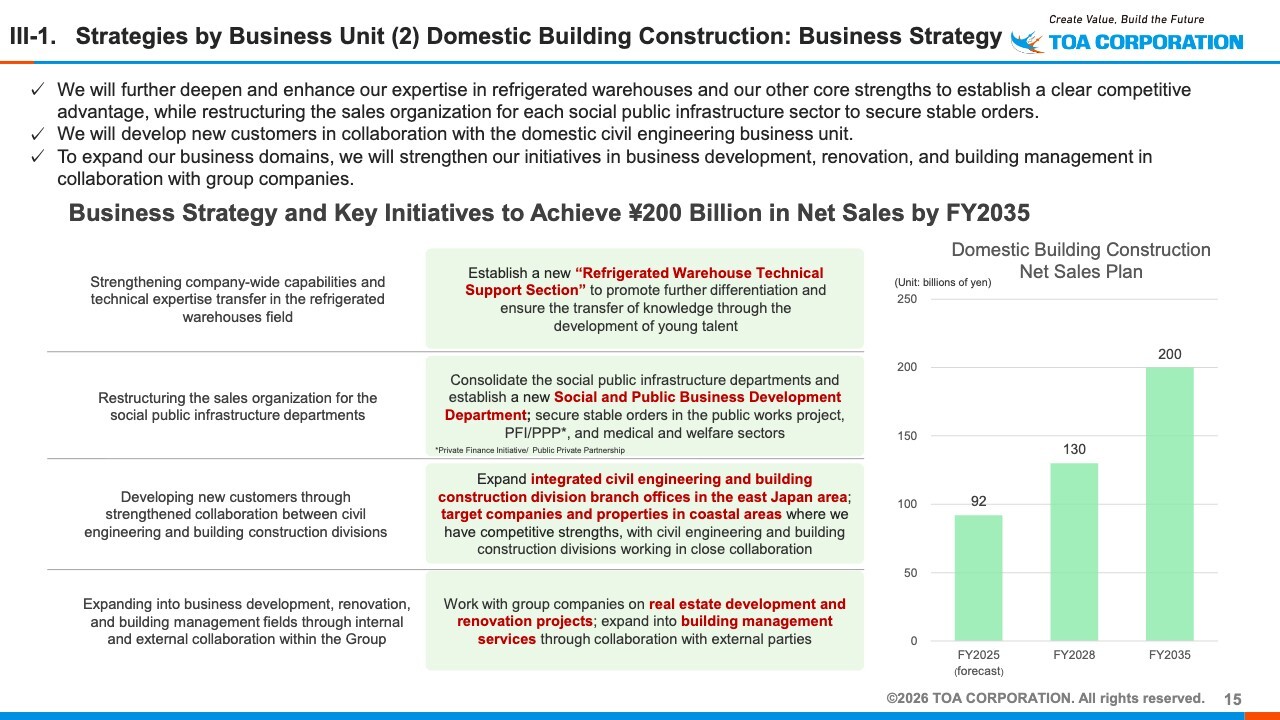
In the Domestic Building Construction Business, we will focus particularly on the refrigerated warehouses field, which is one of our core strengths. By establishing a new Refrigerated Warehouse Technical Support Section to promote further differentiation and ensure transfer of knowledge through the development of young employees, we aim to maintain this strength for the next 10 years.
For the Ministry of Defense Facility Resilience-related projects I discussed earlier, we have numerous garrison improvement projects currently underway under the Early Contractor Involvement (ECI) framework. In addition, we plan to focus on projects in the PFI and medical and welfare sectors, our areas of expertise, to secure stable orders. To this end, we have established a new Social and Public Business Development Department and are moving forward with further initiatives.
In addition, we view collaboration between the Domestic Civil Engineering Business and the Domestic Building Construction Business as a crucial foundation for the Company. In particular, by targeting companies and properties in coastal areas, where we have competitive strengths, we aim to develop new customers for building construction projects through close collaboration between these two business units.
While slightly beyond the scope of our contracting business, we also work in collaboration with our group companies to expand business domains into real estate development and renovation projects, as well as building management services through collaboration with external partners.
III-1. Strategies by Business Unit (2) Domestic Building Construction: Human
Resources Strategy/Productivity Improvement Measures
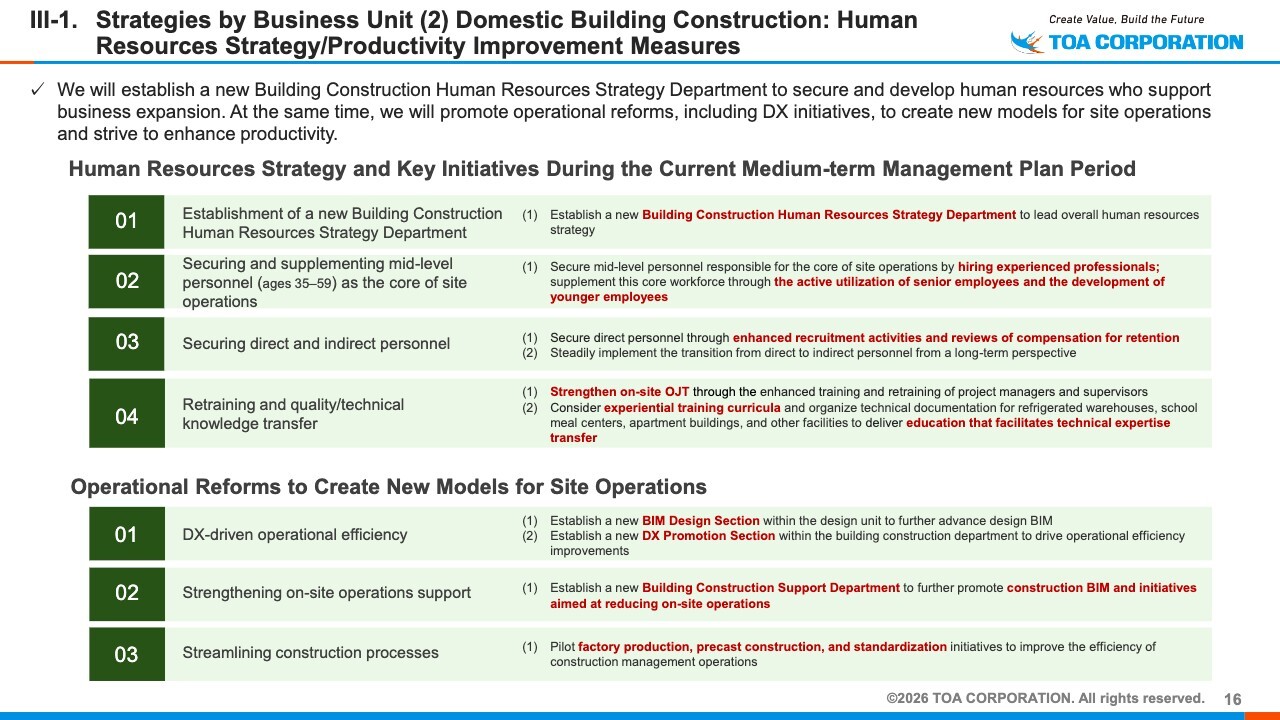
Here are the human resources strategy and productivity improvement measures of the Domestic Building Construction Business. We have established a new Building Construction Human Resources Strategy Department to lead overall human resources strategy in the business unit.
Since the Building Construction is one of the fields with the greatest growth potential, we need to build up mid-level personnel as the core of site operations. In addition to hiring experienced professionals ready to contribute immediately, we will supplement our core workforce through the active utilization of senior employees and the development of younger employees.
We will also secure both direct and indirect personnel through enhanced recruitment activities and reviews of compensation for employee retention.
Furthermore, to ensure technical knowledge transfer, we intend to strengthen on-the-job training and organize technical documentation related to refrigerated warehouses, school meal centers, apartment buildings, and other facilities, to deliver more practical training.
At the same time, we will continue to improve operational efficiency through DX, reduce on-site operations by establishing a new Building Construction Support Department, and streamline construction processes through initiatives such as factory production, precast construction, and standardization.
III-1. Strategies by Business Unit (3) Overseas: Business Strategy
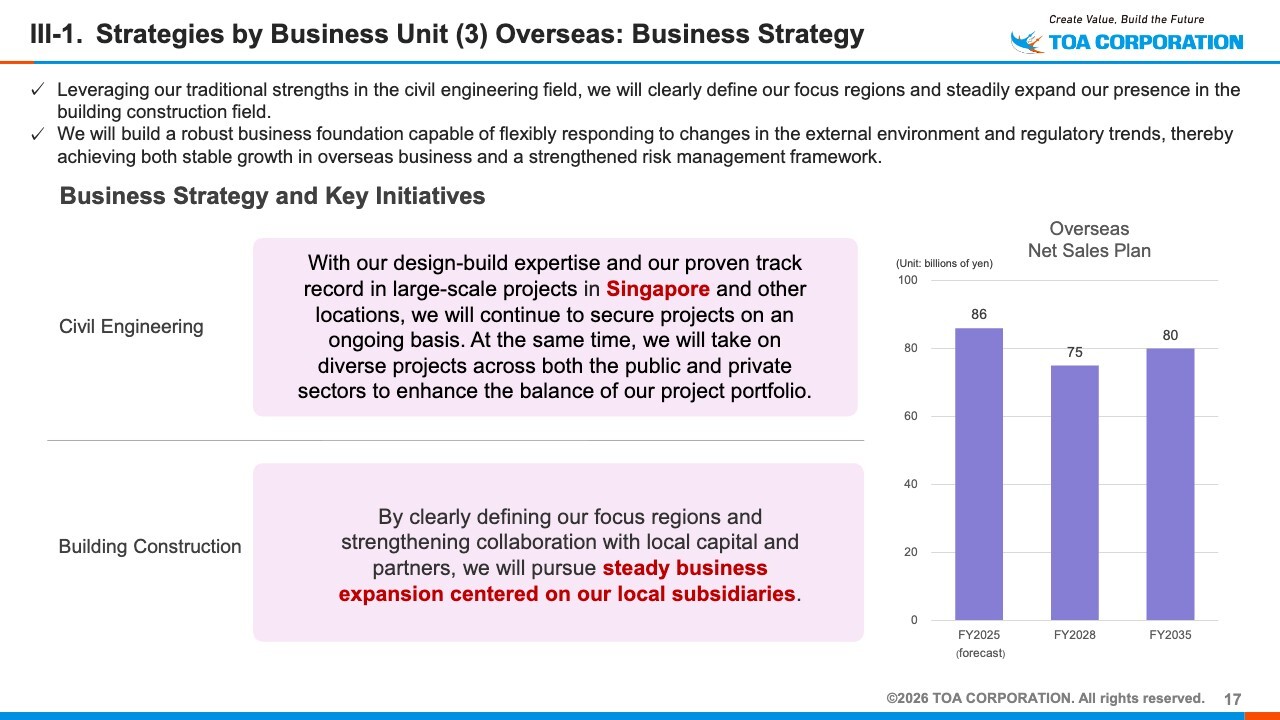
In the Overseas Business, leveraging our traditional strengths in the civil engineering field, we will clearly define our focus regions and steadily expand our presence in the building construction field. While net sales for FY2025 is projected at ¥86 billion, the figure may slightly surpass our underlying capabilities. Therefore, we aim to achieve net sales of ¥75 billion in FY2028 and ¥80 billion in FY2035 by pursuing both a strengthened risk management framework and stable growth.
Specifically, in the civil engineering field, we will maintain operations in our stronghold regions such as Singapore, while pursuing steady expansion centered on our local subsidiaries in the building construction field.
III-1. Strategies by Business Unit (3) Overseas: Human Resources Strategy/
Productivity Improvement Measures
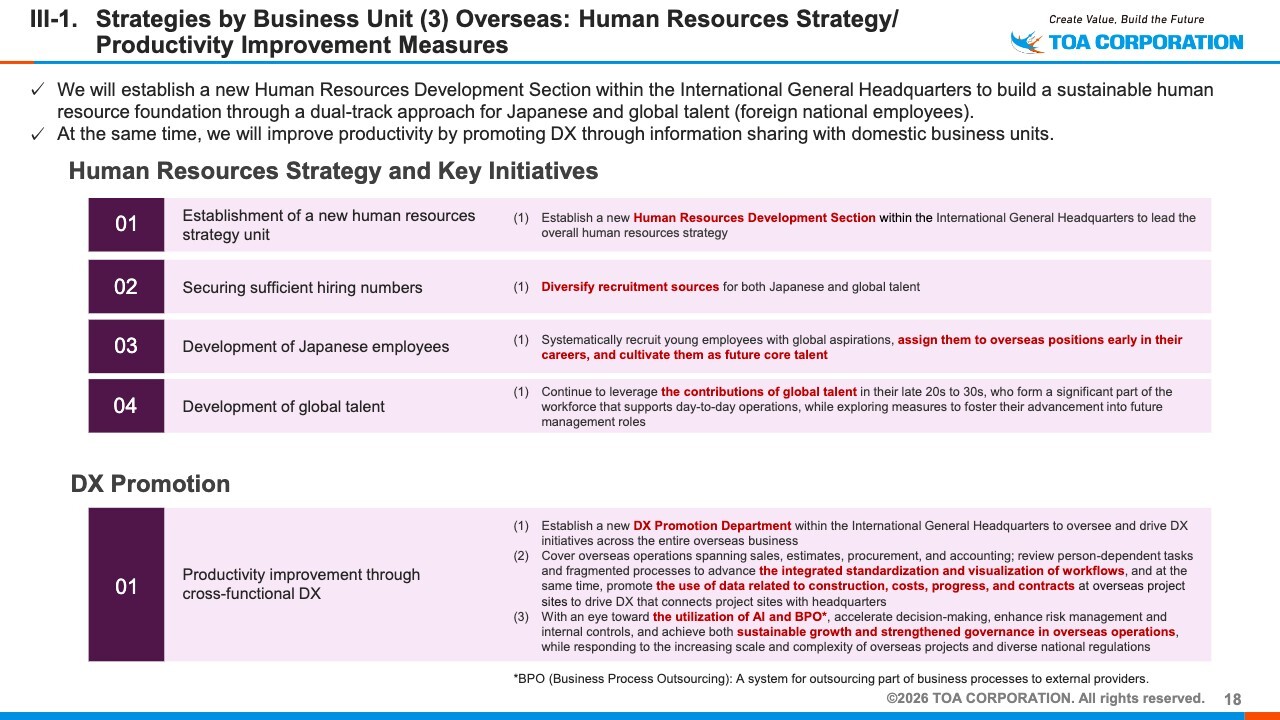
For the overseas business, we aim to build a sustainable human resource foundation through a dual-track approach for Japanese and global talent (foreign national employees). Specifically, we will establish a new human resources strategy unit to secure sufficient hiring numbers and develop both Japanese employees and global talent. Furthermore, we will work in collaboration with domestic business units to promote digital transformation and improve productivity.
III-1. Strategies by Business Unit (4) Human Resource Strategy
(Corporate Management General Headquarters)
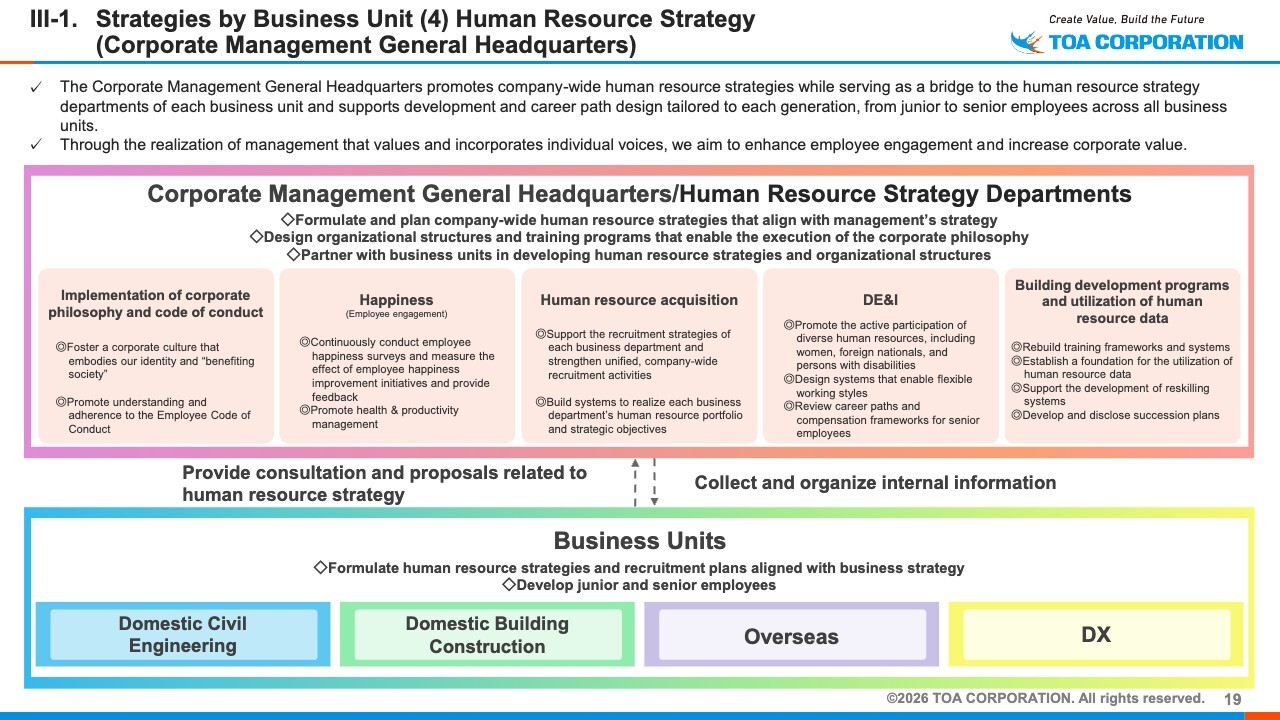
As the human resource strategy of the Corporate Management General Headquarters, we will consider the necessary human resource strategy for each business unit that aligns with the business strategy. We promote company-wide human resource strategies while serving as a bridge to the human resource strategy departments of each business unit. Specifically, we will promote Diversity, Equity, and Inclusion (DE&I) and facilitate the active participation of diverse human resources, including women, foreign nationals, and persons with disabilities. Additionally, the Human Resources Strategy Department of the Corporate Management General Headquarters will lead the review of career paths and compensation frameworks for senior employees, implementing these as company-wide initiatives.
We will also aim to enhance employee engagement and increase corporate value.
III-1. Strategies by Business Unit (5) DX Strategy
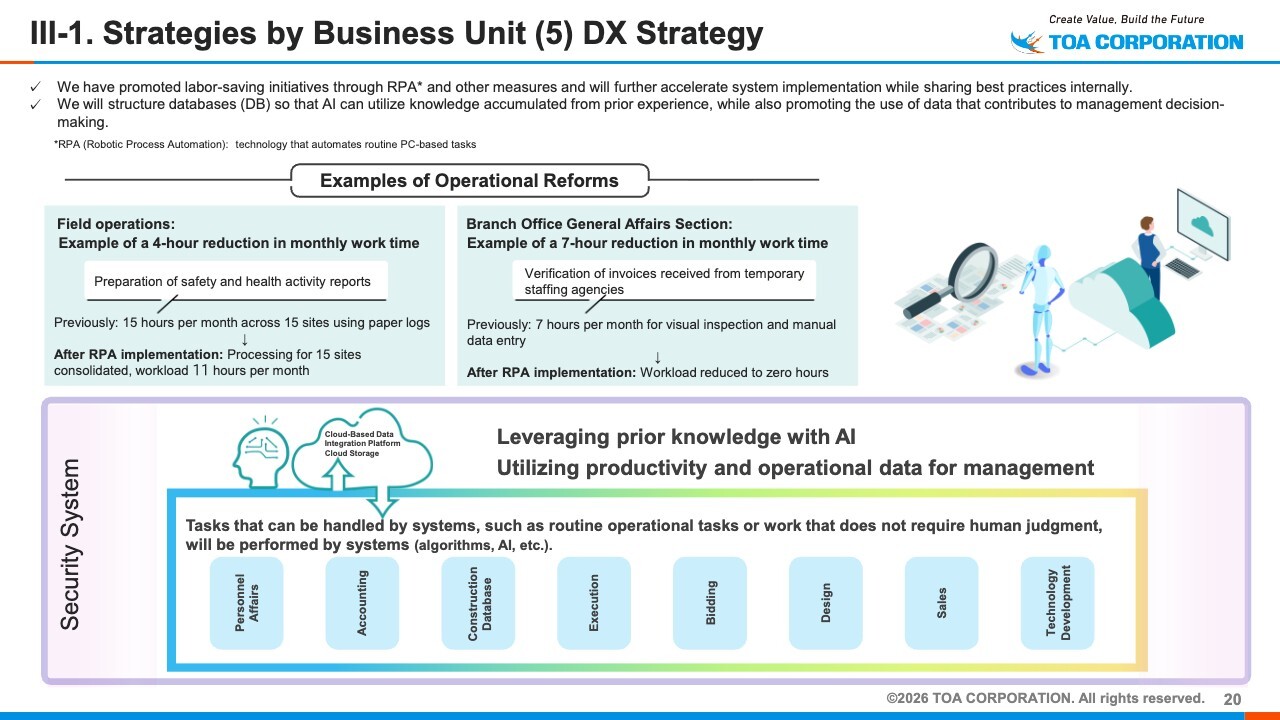
Here’s our DX strategy. Let me share examples of operational reform: Previously, it took 15 hours per month to prepare paper logs for 15 sites. By implementing Robotic Process Automation (RPA) for this task, processing for the 15 sites now takes 11 hours per month, successfully reducing the workload by 4 hours each month.
In the Branch Office General Affairs Section, verification of invoices received from staffing agencies previously required 7 hours per month of visual inspection and manual data entry. With RPA, the work time was reduced to zero hours.
In this way, we have promoted savings in various forms across our locations and are internally sharing and rolling out these best practices. We intend to further advance our operational reforms through RPA.
In addition, we will structure our database to enable us to leverage prior knowledge with AI, while also further promoting initiatives to utilize productivity and operational data for management.
III-1. Strategies by Business Unit (5) DX Strategy
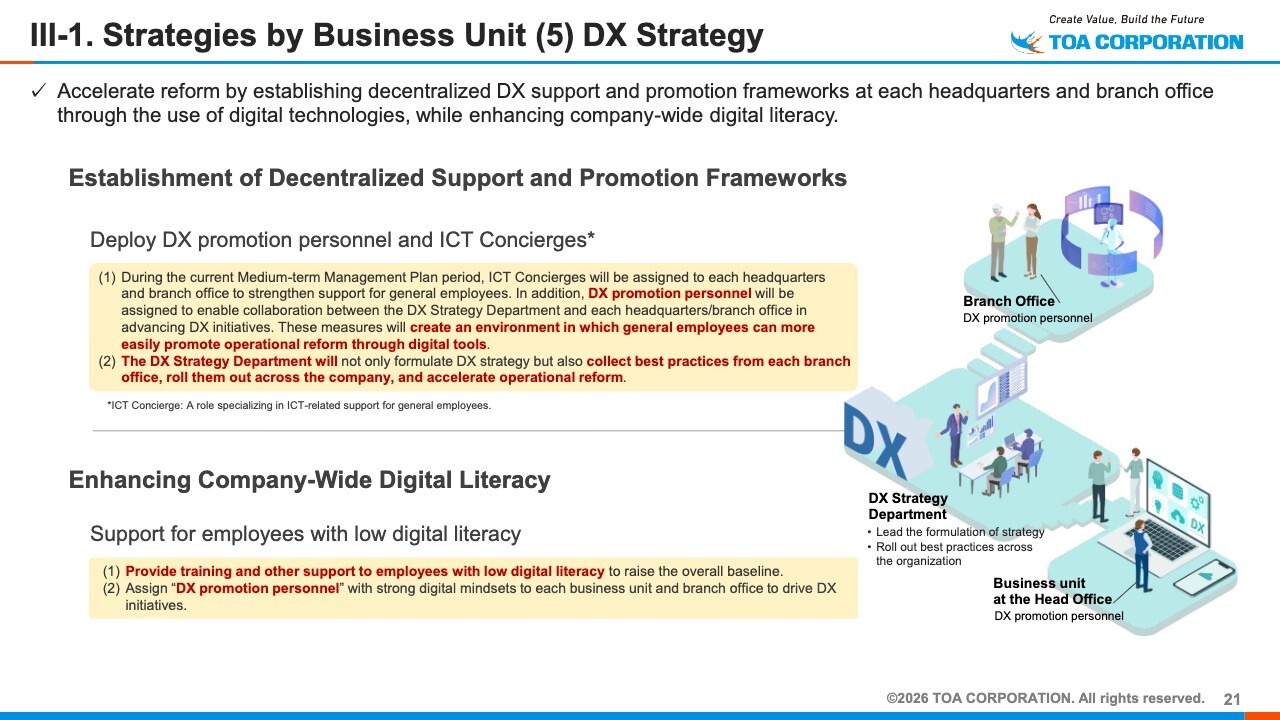
I will now introduce our specific initiatives. As shown in the illustration on the right side of the slide, the DX Strategy Department not only formulates strategies but also assigns DX promotion personnel to each branch and business unit at the Head Office. By gathering best practices from these locations and rolling them out across the organization, we aim to establish a decentralized support and promotion framework to accelerate our activities.
We are also working to enhance overall digital literacy. While we provide support for employees with lower digital literacy through training and other means, we identify highly motivated employees and appoint them as DX promotion personnel to further drive our DX initiatives.
III-2. Financial Strategy (1) Current Assessment
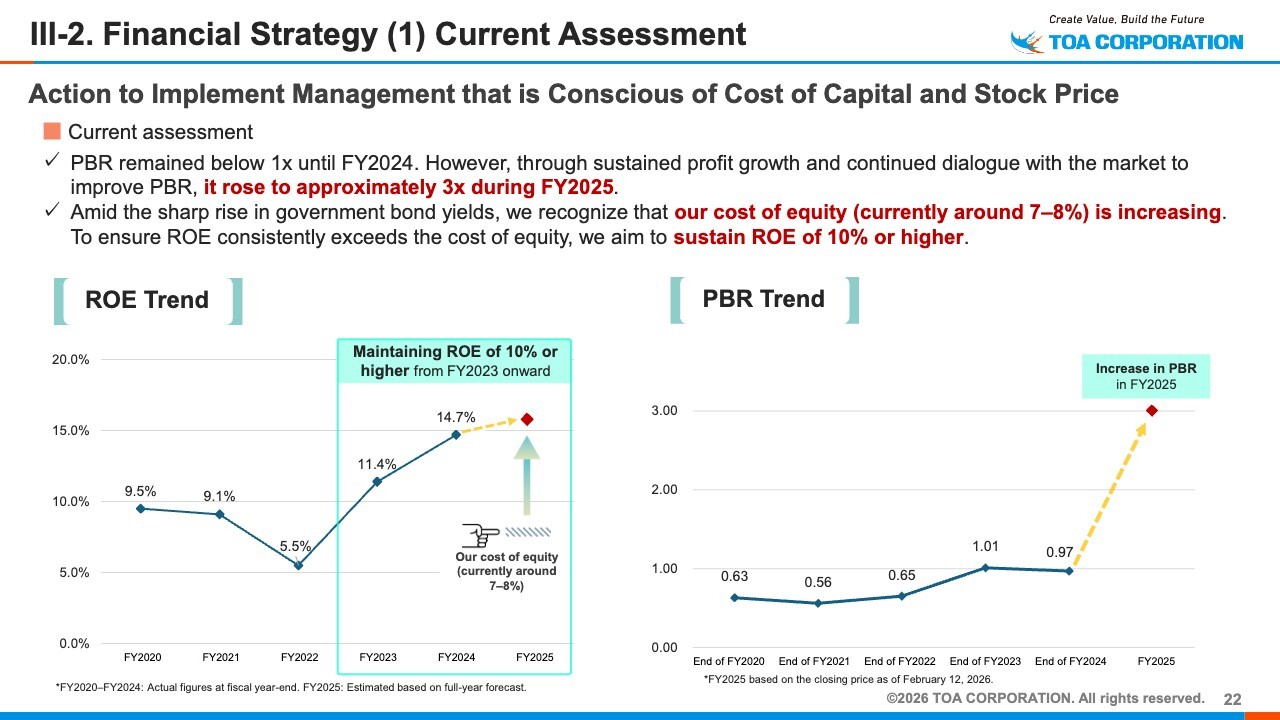
I will explain our current assessment of the financial strategy. We are conducting various analyses regarding the cost of equity and other factors to achieve management that is conscious of cost of capital and stock price.
While the PBR had remained below 1x, it has risen to around 3x during FY2025 through sustained profit growth and continued dialogue with the market for improvement. Although the level is somewhat low at present, we see this improvement as a result of increased analyst coverage and growing market recognition.
Furthermore, amid the sharp rise in government bond yields, we recognize that our cost of equity has increased to roughly 7% to 8% at present. To ensure that ROE consistently exceeds the cost of equity, we aim to sustain ROE of 10% or higher and reinforce our areas of weakness.
III-2. Financial Strategy (2) Key Financial KPIs
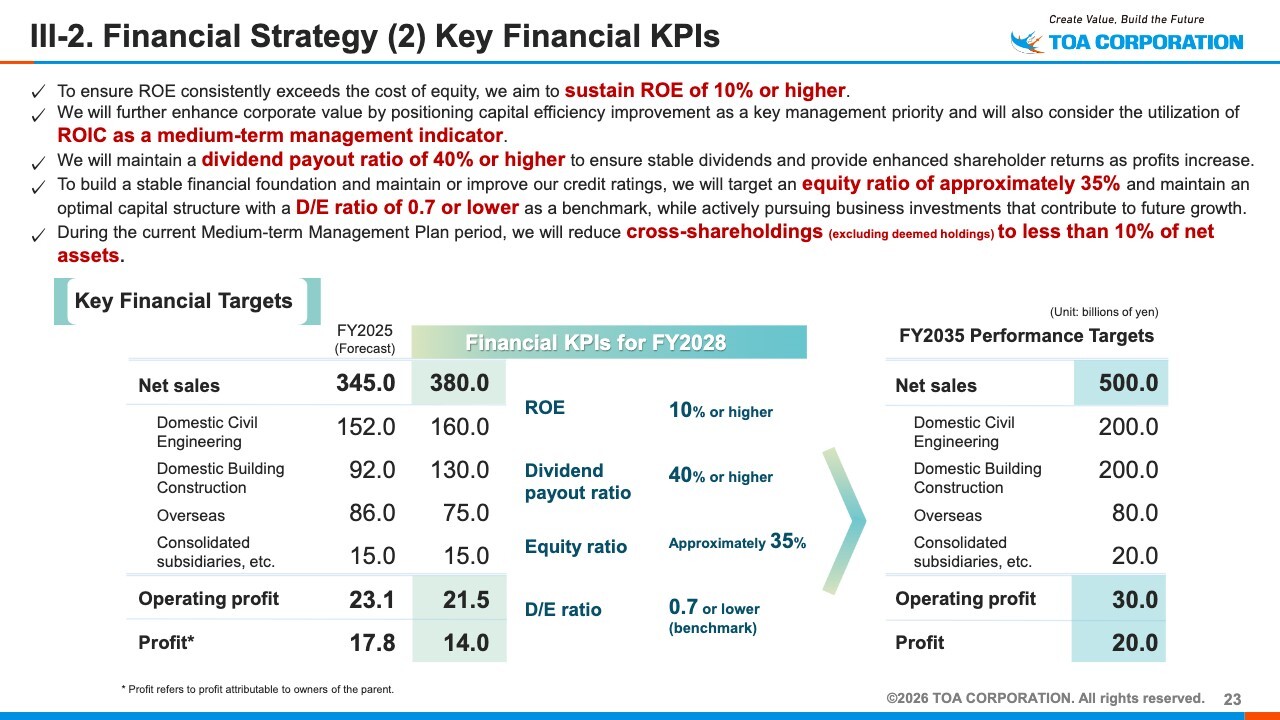
Of our key financial KPIs, I have already discussed ROE. To ensure stable dividends, we will maintain a dividend payout ratio of 40% or higher, and we intend to provide enhanced shareholder returns when profits increase.
Regarding the equity ratio, after reviewing the situations of companies in the construction industry, we have determined that maintaining a ratio of around 35% would be appropriate. We have also set a target to maintain our corporate bond ratings.
For the D/E ratio, we set a benchmark of 0.7 or lower, while also considering efforts to accelerate payment terms to our partner companies, and will maintain an optimal capital structure. On that basis, we intend to actively pursue business investments that will lead to future growth.
We have systematically reduced our cross-shareholdings. Although stock prices have risen more than anticipated, we will continue to reduce these holdings, maintaining our target to bring the ratio of these holdings to consolidated net assets below 10% during the period of the Medium-term Management Plan.
III-2. Financial Strategy (3) Cash Allocation
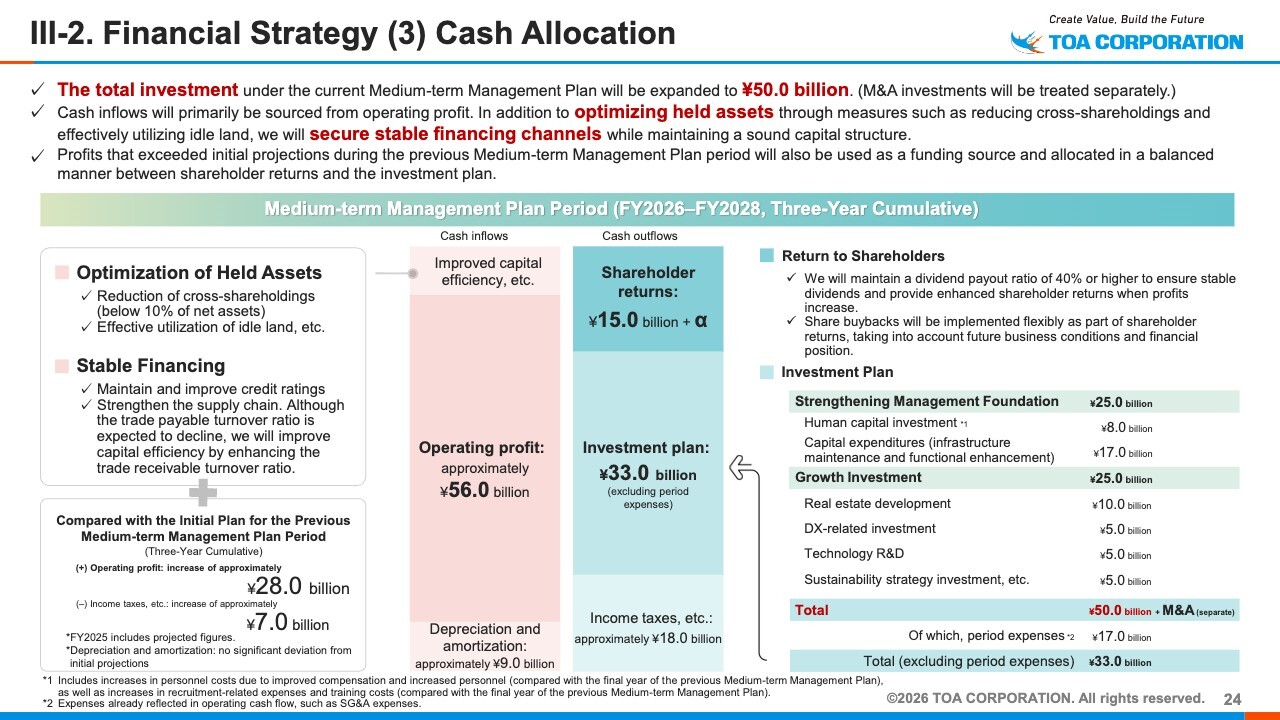
This is our cash allocation plan. The total investment under this Medium-term Management Plan will be ¥50.0 billion, of which ¥17.0 billion is planned as period expenses. Excluding the period expenses, we anticipate a balance sheet of ¥33.0 billion.
Cash inflows will primarily be sourced from operating profit. In addition to optimizing our asset portfolio through measures such as reducing cross-shareholdings and effectively utilizing idle land, we plan to secure stable financing channels while maintaining a sound capital structure. Furthermore, we intend to utilize profits that exceeded initial projections during the previous Medium-term Management Plan period as a funding source, allocating them in a balanced manner between shareholder returns and the investment plan.
Among the shareholder return initiatives listed on the right side of the slide, we are considering the second item, share buybacks, to be implemented flexibly as part of our shareholder returns, taking into account future business conditions and financial position.
III-2. Financial Strategy (4) Investment Plan
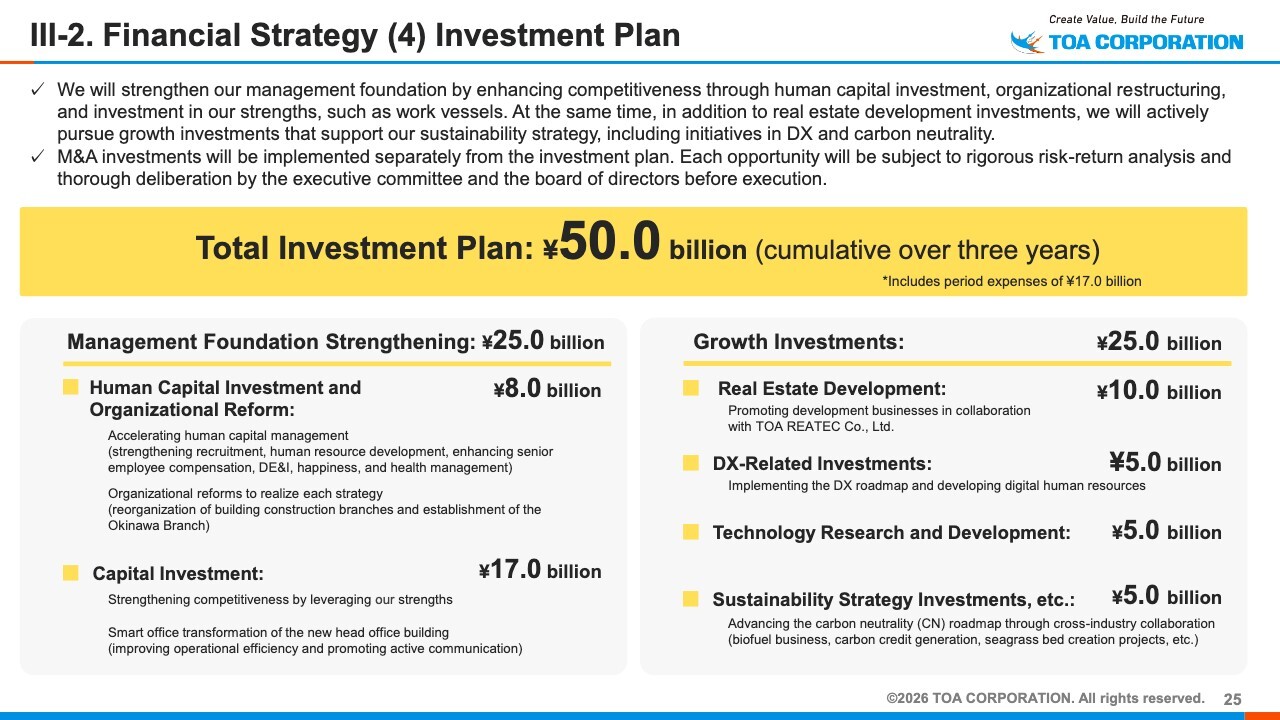
I’ll discuss our investment plan. Of the ¥50.0 billion, we plan to allocate ¥8.0 billion to human capital investment and organizational reform. In addition, we intend to invest ¥17.0 billion in capital investment, including measures to enhance our competitiveness by leveraging our strengths such as work vessels.
Furthermore, factoring in real estate development, DX-related investments, technology research and development, and sustainability strategy investments, we plan to allocate ¥25.0 billion to growth investments and ¥25.0 billion to management foundation strengthening, targeting a cumulative ¥50.0 billion investment over three years.
We intend to implement M&A investments separately from the investment plan, after rigorous analysis of risks and returns for each opportunity and thorough deliberation.
Investment Plan (R&D Investment) (1) Seabed Resource Development
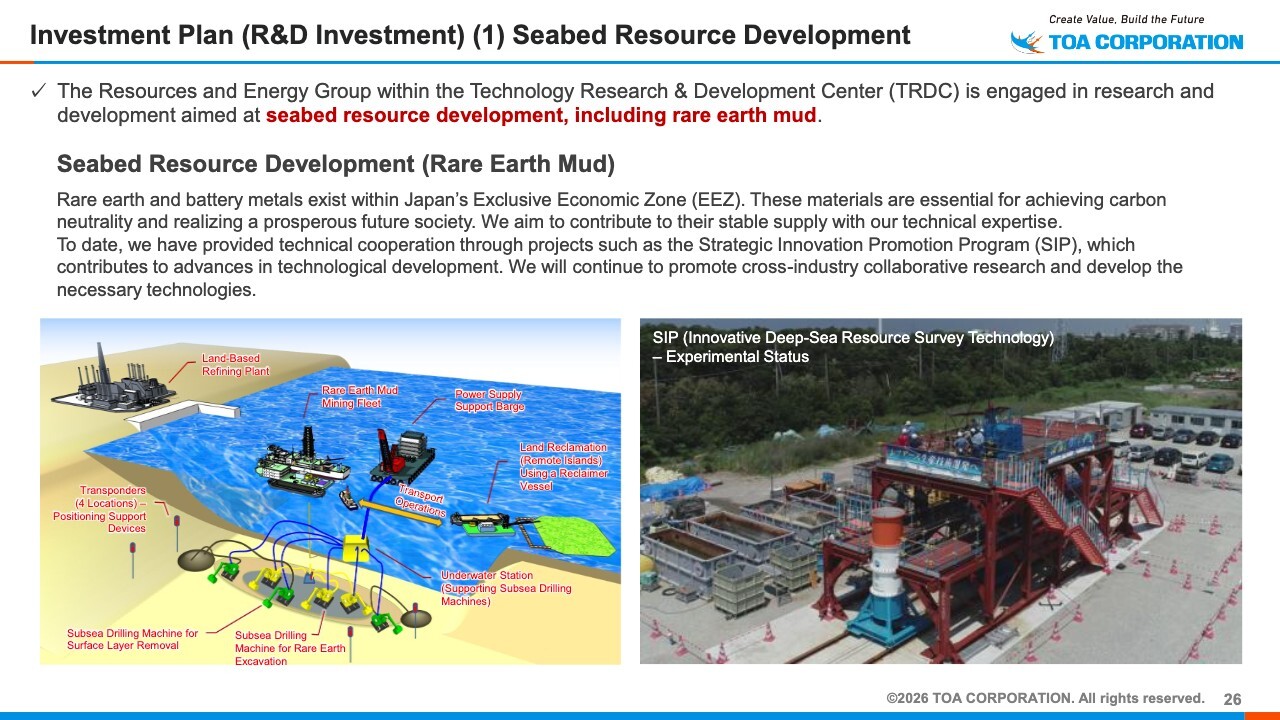
Let me break down the R&D investment. The Resources and Energy Group within the Technology Research & Development Center (TRDC) is engaged in research and development aimed at seabed resource development, including rare earth mud.
Investment Plan (R&D Investment) (2) Productivity Improvement
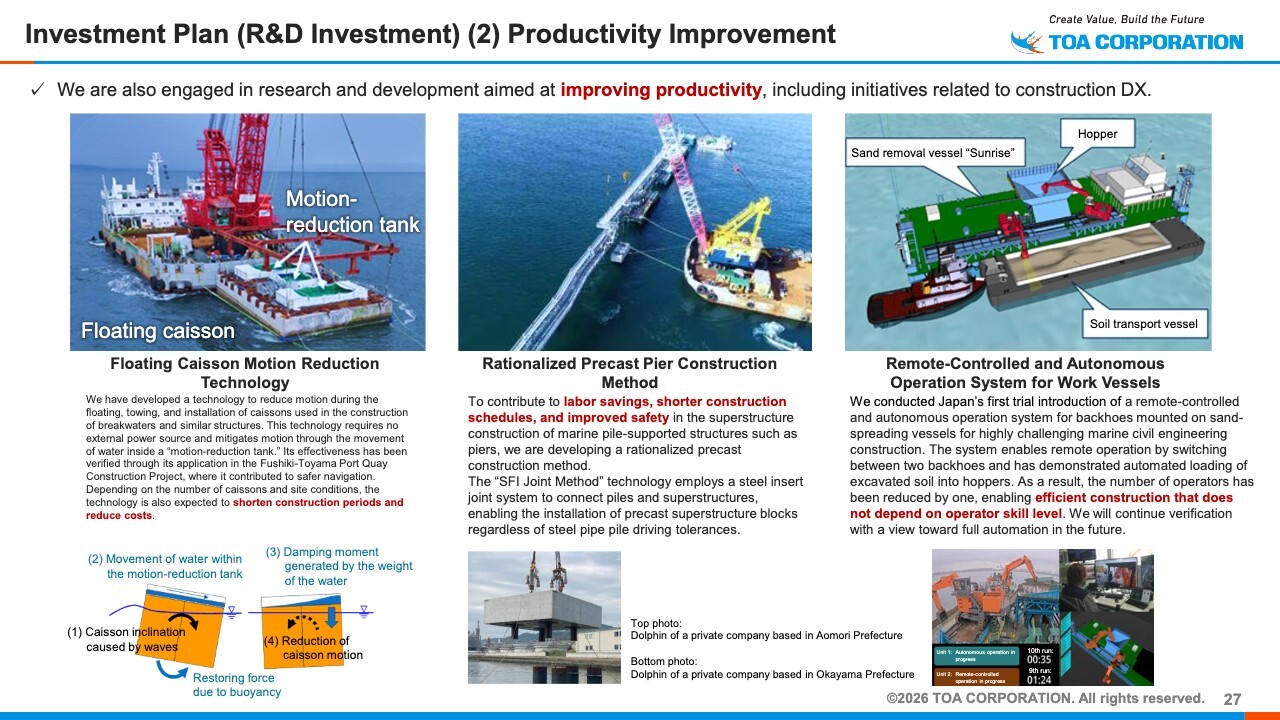
Productivity improvement is another key focus area. We are also engaged in research and development aimed at improving productivity, such as floating caissons motion reduction technology, a rationalized precast pier construction method, and a remote-controlled and autonomous operation system for work vessels, as shown on the slide.
III-3. Sustainability Strategy (1) Carbon Neutrality
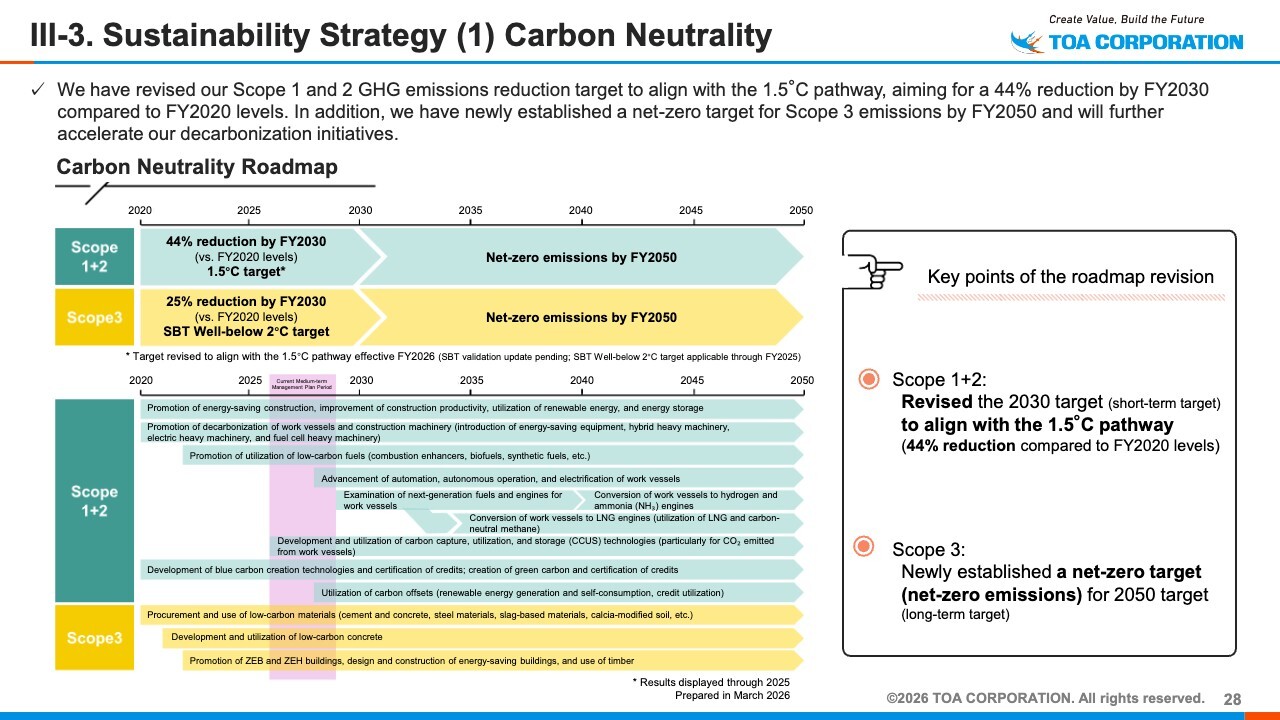
Here is our sustainability strategy. First, I will explain our carbon neutrality targets. We have revised our Scope 1 and Scope 2 GHG emissions reduction target for FY2030 to align with the 1.5°C pathway. With this, we aim to achieve a 44% reduction compared to FY2020 levels. Additionally, we have newly established a net-zero target for Scope 3 emissions by FY2050.
III-3. Sustainability Strategy (1) Carbon Neutrality
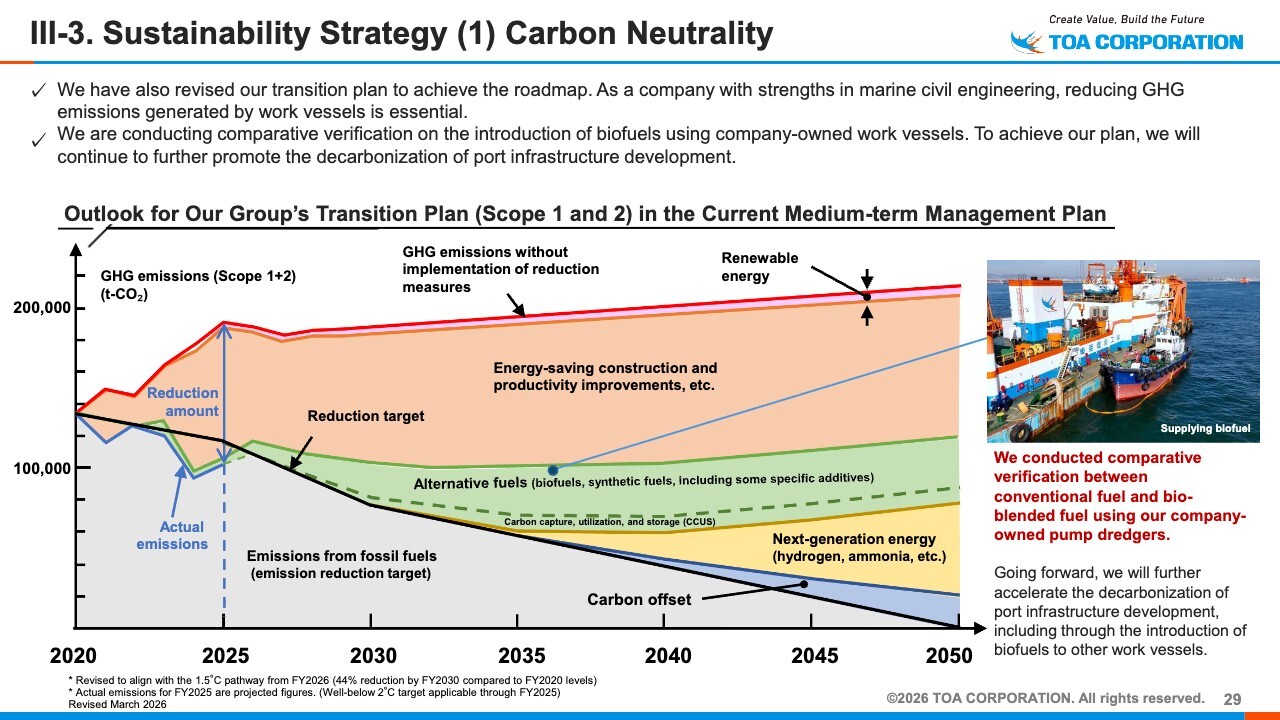
Let me discuss the transition plan for achieving the roadmap. As shown in the graph on the slide, we have previously relied on energy-saving construction and productivity improvements. However, as indicated on the right side of the slide, we aim to ensure the success of this transition plan by further increasing the proportion of alternative fuels, through steps such as conducting comparative verification between conventional fuel and bio-blended fuel using our company-owned pump dredgers.
III-3. Sustainability Strategy (2) Ensuring Safety and Quality
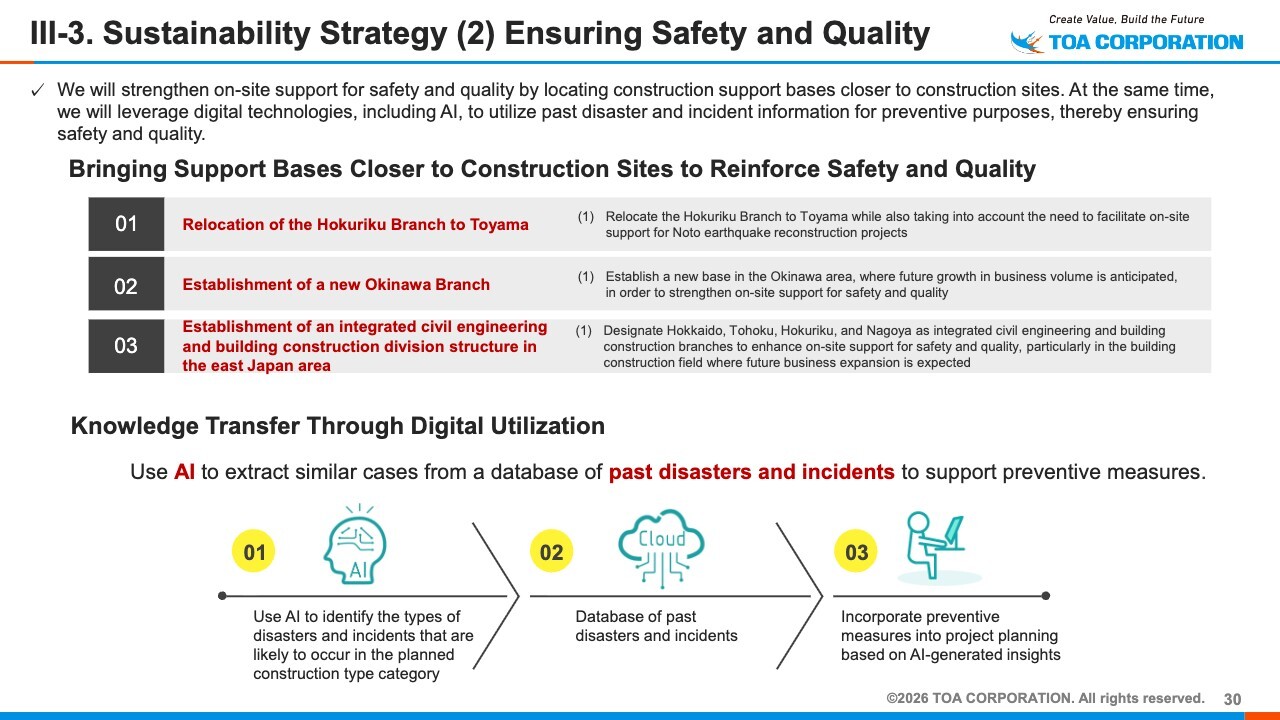
We believe that ensuring safety and quality is a critically important priority. We will strengthen on-site support for safety and quality by locating construction support bases closer to construction sites. Additionally, we will leverage digital technologies, including AI, to utilize past disaster and incident information for preventative purposes, thereby ensuring safety and quality.
The slide shows three examples of how we have brought our support bases closer to construction sites. First, we relocated the Hokuriku Branch to Toyama while also taking into account the need to facilitate on-site support for Noto earthquake reconstruction projects. Second, we established a new Okinawa Branch. Third, we established an integrated civil engineering and building construction division structure in the east Japan area.
In addition, as part of our efforts to transfer knowledge through digital utilization, we have compiled a database of past disasters and incidents and use AI to extract similar cases to support preventive measures. These cases are increasingly becoming a valuable asset for the company.
III-3. Sustainability Strategy (3) Supply Chain Management
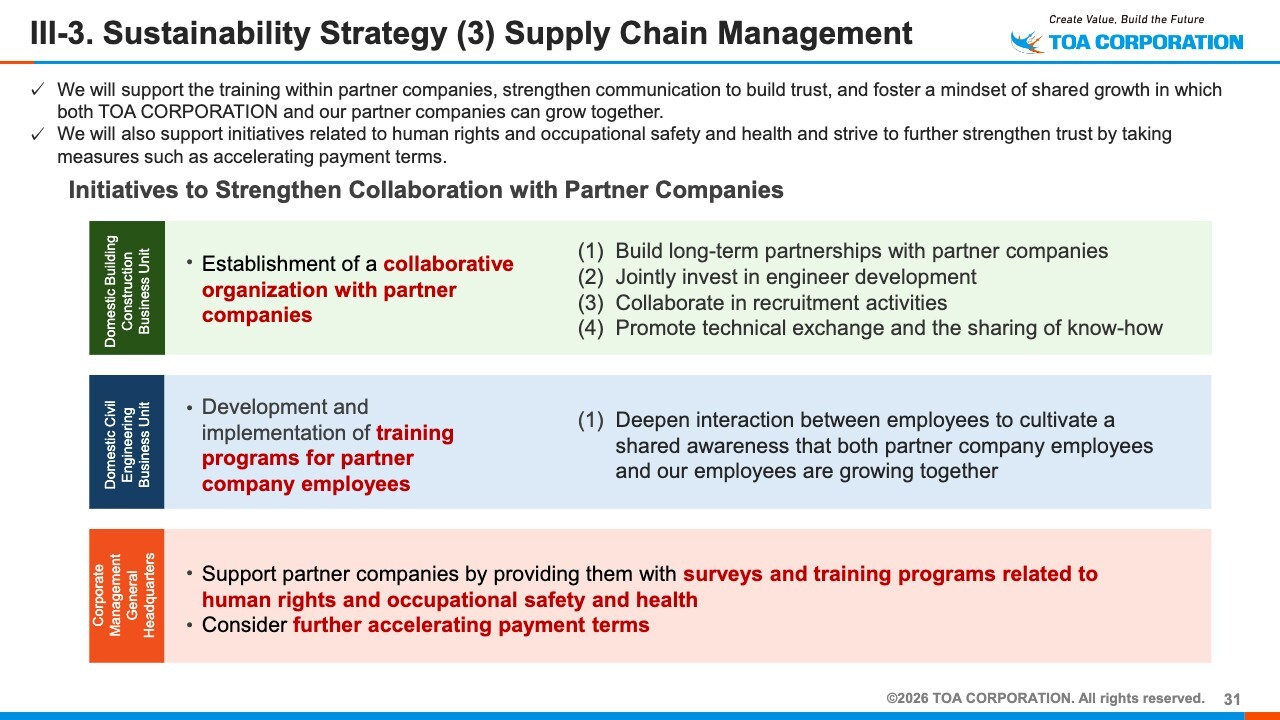
Regarding supply chain management, we believe that relationships with our partner companies are extremely important. For this reason, in the Domestic Building Construction Business, we have established a collaborative organization with partner companies and are working to build long-term partnerships and jointly invest in engineer development. We also aim to take a step further in areas such as collaboration on recruitment activities, technical exchange, and the sharing of know-how.
In the Domestic Civil Engineering Business, we aim to deepen interactions among employees to cultivate a shared awareness that both employees of partner companies and our employees are growing together, through the development and implementation of training programs for partner company employees.
The Corporate Management General Headquarters aims to support partner companies by providing them with surveys and training on topics such as human rights and occupational safety and health, and to build trust through measures such as accelerating payment terms.
III-3. Sustainability Strategy (4) Risk Management
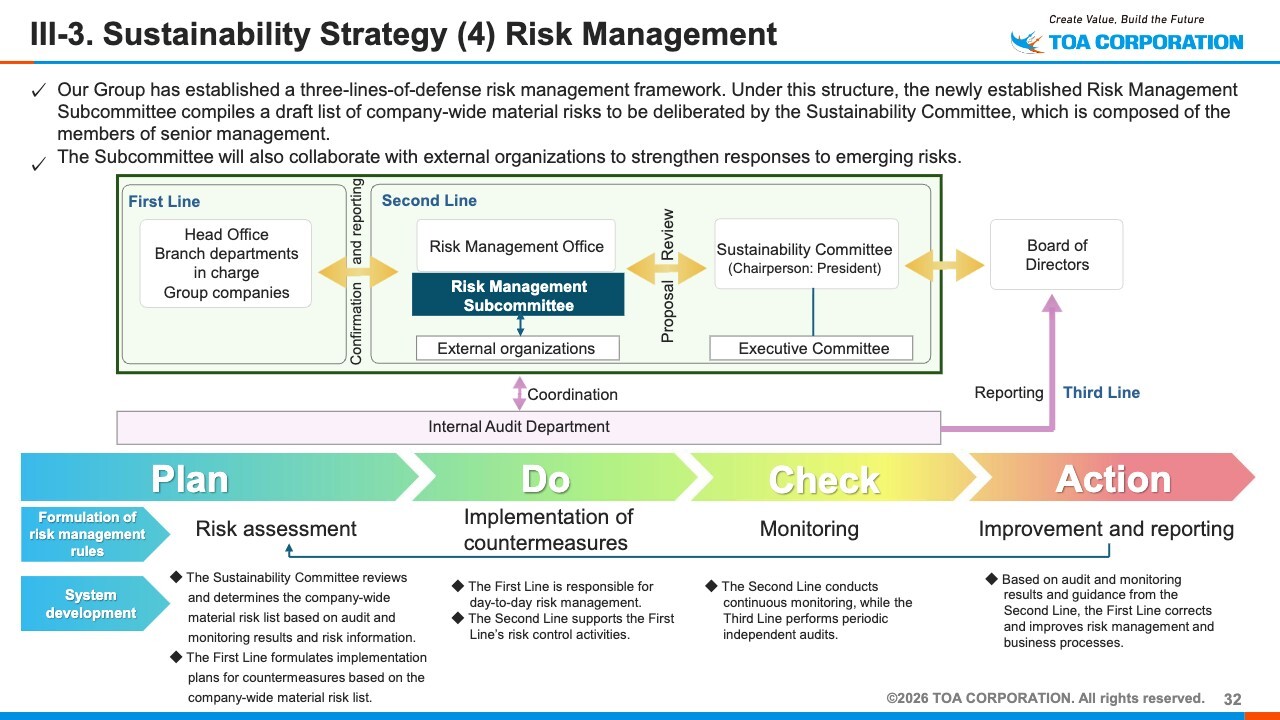
I will explain our risk management. Since several years ago, our business scale has been growing rapidly. Against this backdrop, we have reviewed risks associated with this business expansion through diverse governance mechanisms, such as having a majority of outside directors on the Board of Directors, with an outside director serving as Chair.
We believe that we need to further deepen our commitment to risk management. Our Group has built a three-lines-of-defense risk management framework, as shown on the slide. Specifically, we have established a new Risk Management Subcommittee, creating a system to compile a draft list of company-wide material risks to be deliberated by the Sustainability Committee. The Risk Management Subcommittee will also collaborate with external organizations to strengthen responses to emerging risks and address risks associated with business expansion.
III-3. Sustainability Strategy (5) Non-Financial KPIs
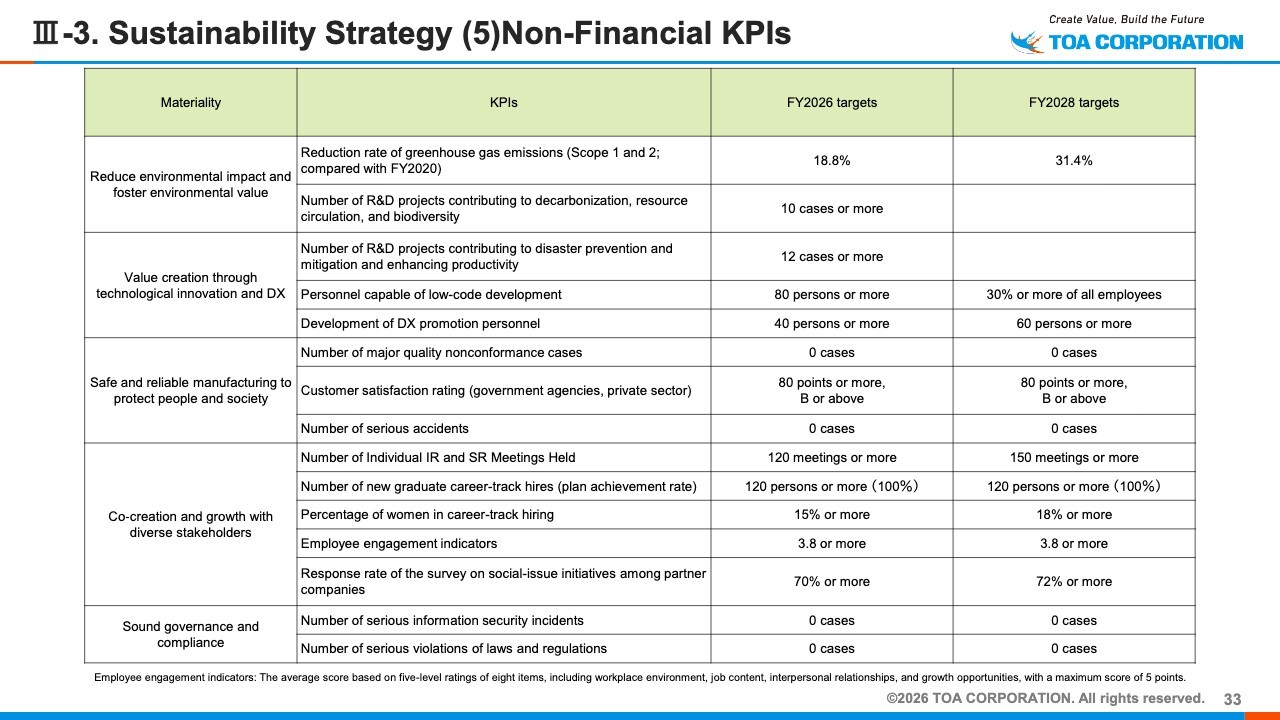
Starting with this Medium-term Management Plan, we have used the Japanese term meaning “pre-financial” instead of “non-financial.” While these items are not yet reflected in our financial statements, they will definitely be incorporated into our financial statements eventually. We intend to establish sustainability metrics as KPIs and drive various initiatives forward. Please review the details later for further information.
Thank you very much for your kind attention.
Q&A Session: Factors Causing Stagnation in Operating Profit Margin
Questioner: I would like to ask about your profit targets. Given that the level in FY2025 may have been somewhat unusually high, I assume you expect them to decline slightly by FY2028. However, even more concerning is the operating profit margin target of 6% for FY2035, which falls below the levels of FY2023, FY2024, and FY2025.
What is preventing the operating profit margin from improving despite your efforts to boost productivity? Is this due to the increasing proportion of the Domestic Building Construction Business? Or are there other factors at play?
Kimura: The operating profit margin for FY2025 benefits significantly from two exceptional, large-scale, high-margin projects which close in this fiscal year: one in the Domestic Civil Engineering Business, and one in the Overseas Business.
On the other hand, our forecasts for the future are conservative, based on the assumption we will have no similar large-scale, high-margin projects. For this reason, the operating profit margin is not necessarily increasing.
Q&A Session: M&A Strategies
Questioner: Regarding M&A, what is your M&A strategy given the various developments we’re seeing across the industry?
Kimura: While our current growth strategy focuses on increasing headcount and improving productivity, this does not mean we are ruling out M&A.
Previously, we have not set aside large amounts of funds for M&A, based on the approach that even small-scale local companies would be acceptable targets. Going forward, our policy is to continuously target carve-out deals involving companies with strong compliance awareness or listed companies whose parent companies are not in the construction business. Therefore, we anticipate that the transaction value per deal may be larger than before.
That said, this Medium-term Management Plan does not incorporate such M&A projects and instead focuses on organic growth. Our M&A policy is to constantly monitor the market and consider suitable opportunities when potential targets arise. Because we believe funding will be sufficient to cover these needs, we have positioned M&A outside the scope of this Medium-term Management Plan.
Q&A Session: M&A Targets
Questioner: In terms of M&A targets, are you looking at areas that can reinforce the Domestic Building Construction Business?
Kimura: The Domestic Building Construction Business is a business we must grow substantially, and where the gap is currently the largest. Therefore, we aim to target that sector whenever possible.
Diverging from the context discussed earlier, however, we believe it will be necessary to consider M&A opportunities involving overseas equipment suppliers as well when we aim to expand the Overseas Business in the building construction area; in such cases, small-scale companies could be one option.
Q&A Session: Operating Profit Margins for Each Business Segment in FY2028
Questioner: I’d like to ask about the operating profit margin you explained earlier. On what operating profit margin assumptions are you basing your medium-term targets for FY2028 respectively for the Domestic Civil Engineering Business, the Domestic Building Construction Business, and the Overseas Business?
Also, with that in mind, I would like you to explain the gap you just mentioned. While it’s difficult to evaluate without knowing the underlying assumptions, I appreciate it if you could indicate specific areas in each business segment you are conservatively estimating, given that you anticipate improvements.
Kimura: I will withhold specific figures for the operating profit margins of each business segment. However, for the Domestic Civil Engineering Business, our projection excludes the specific high-margin projects I mentioned earlier, and we do not expect it to decline significantly from the current trajectory.
On the other hand, we expect the figure to slightly increase for the Domestic Building Construction Business, because we anticipate that negotiations with customers will continue to proceed in our favor.
As for the Overseas Business, please understand that we are taking a fairly conservative view, considering that the results for FY2025 may have been beyond our underlying capabilities.
Questioner: Given that the planned operating profit margins for FY2025 are 14% for the Domestic Civil Engineering Business, 10.5% for the Domestic Building Construction Business, and 8% for the Overseas Business, is it reasonable to understand that for FY2028, the operating profit margin for the Domestic Civil Engineering Business will remain roughly the same, the Domestic Building Construction Business will exceed the FY2025 plan, and the Overseas Business will be lower?
Kimura: I would say that understanding is correct.
Q&A Session: Timeline for the Commercialization of the Rare Earth Business
Questioner: I would like to ask about rare earth mud shown on the slide. In the field of rare earths, which has been attracting attention recently, what potential business opportunities do you see for your company? Also, if you are currently considering securing projects, what timeframe do you anticipate?
Kimura: We believe full-scale commercialization requires a long-term perspective, such as 10 years from now. At that time, we will need to consider not only developing the business of rare earths themselves but also various initiatives, such as disposal of residue from Minamitorishima. We believe such operations will generate profits once land reclamation and similar activities become fully operational in such locations. However, we currently view that as still a long way off.
In the near term, various projects are underway; however, I would appreciate your understanding that we cannot disclose details due to confidentiality obligations on some projects and for reasons related to our sales strategy.
Q&A Session: Details of Capital Investment and Real Estate Development Investment
Questioner: The slide lists capital investment of ¥17.0 billion and real estate development investment of ¥10.0 billion. I would like you to provide details on specific projects planned for each of these investments.
I assume capital investment includes costs related to the new head office building. What types of properties are you considering for real estate development investment?
Kimura: While the capital investment includes the smart office transformation of our new head office building, I would say we focus more on work vessels for our core Civil Engineering Business. Specifically, we recognize the need to upgrade the equipment on these vessels; rather than spending tens of billions of yen all at once, we plan to make multiple investments of several billion yen each. I believe these will be the main components of capital investment.
For real estate development investment, we are undertaking development projects with our group company, TOA REATEC, though the scale is not particularly large. Specifically, TOA REATEC partners with developers to acquire land, and our company takes on the construction work for the acquired sites.
TOA REATEC employs a business model in which it shares profits with developers from subsequent development projects. Therefore, we plan to allocate ¥10.0 billion for real estate development investment, focusing on land and property purchases.
Questioner: Regarding capital investment in vessels, is it correct to understand that you are considering entering the offshore wind power sector in the future? Or have you not yet made concrete plans that far ahead?
Kimura: For example, we are considering investments to expand the operational scope of our SEP vessel. Such investments may well lead to offshore wind power opportunities as well.
In any case, we recognize the need to implement various measures for vessel and related areas, but nothing beyond that has been finalized yet.
Q&A Session: Business Strategies for the Domestic Civil Engineering Business and the Domestic Building Construction Business
Questioner: You have listed four to five initiatives each for business strategies in the Domestic Civil Engineering Business and the Domestic Building Construction Business. Could you please elaborate on the particularly promising categories?
Kimura: We believe the defense-related sector will be a very important target for both the Domestic Civil Engineering Business and the Domestic Building Construction Business. Additionally, while not mentioned on the slide, the Domestic Civil Engineering Business is expected to see continued infrastructure development over the next decade or so.
As for large-scale projects at this time, we have secured an order for the Hanshin Expressway Osaka Wangan Road west extension project in FY2025. Furthermore, regarding expressway expansion into the coastal areas, projects such as the Keiyo Expressway in Chiba Prefecture and the Shimonoseki-Kitakyushu Road are beginning to emerge. Looking at a 10-year timeframe, I believe the Haneda Airport E Runway project will also come into view.
For the time being, our focus is on defense-related projects, but over a 10-year horizon, we believe social infrastructure will also become an important part of the Domestic Civil Engineering Business.
In the Domestic Building Construction Business, we expect the proportion of defense-related projects to increase. For example, there are garrison improvement projects currently being carried out under the ECI framework. These projects span approximately 10 years, with each garrison project budgeted at around ¥50 billion to ¥100 billion.
This type of project has the advantage of providing a stable stream of orders. Although we have not yet secured these contracts, we are exploring several opportunities. Prospective projects remain abundant, and we view these as future targets.
We already have orders lined up for multi-tenant dry warehouses for the next two years or so. Beyond that, the outlook is somewhat uncertain due to the impact of interest rates. Meanwhile, we believe the refrigerated warehouse sector will remain robust, partly because the clients differ from those for multi-tenant warehouses. Projects valued at over ¥10 billion are also expected to continue.
Our policy is to steadily pursue these projects that are already in view.
Questioner: I understand there are many aspects of defense-related projects in the Domestic Civil Engineering Business that you may not be able to discuss, but I would appreciate it if you could share whatever you can.
Kimura: While I cannot discuss specific timelines, there are still large-scale projects remaining, such as the relocation of the Naha Military Port.
Additionally, the work on Camp Schwab has just started and will likely continue for another seven to eight years. I also anticipate a fair number of projects related to the Nansei Islands.
Q&A Session: Current Status of SEP Vessel
Questioner: I’d like to ask about your work vessels. I understand your company and Obayashi Corporation jointly built a self-elevating platform (SEP vessel). Please update us on its current status.
Kimura: Due to confidentiality obligations, I cannot disclose specific details. However, we are currently focusing primarily on operations and maintenance (O&M). While the vessel built jointly by Obayashi Corporation and us is not large-scale, there is considerable need for medium-sized SEP vessels for tasks such as replacing blades damaged by lightning strikes, for example, and conducting wind condition monitoring. Therefore, while we are expanding our sales activities through multiple channels, we also plan to modify the vessel for coastal use so that we can extend our services beyond offshore wind power to remote islands. We are currently pursuing a multifaceted approach, expanding our market reach and exploring applications in general construction projects as well.