Progress on Recall of Bathroom Heater/Dryers
Takuya Ogawa (hereinafter, “Ogawa”): My name is Takuya Ogawa, Managing Executive Officer and Chief of the Corporate Administration Headquarters. I would like to present our financial results for the third quarter of fiscal 2026.
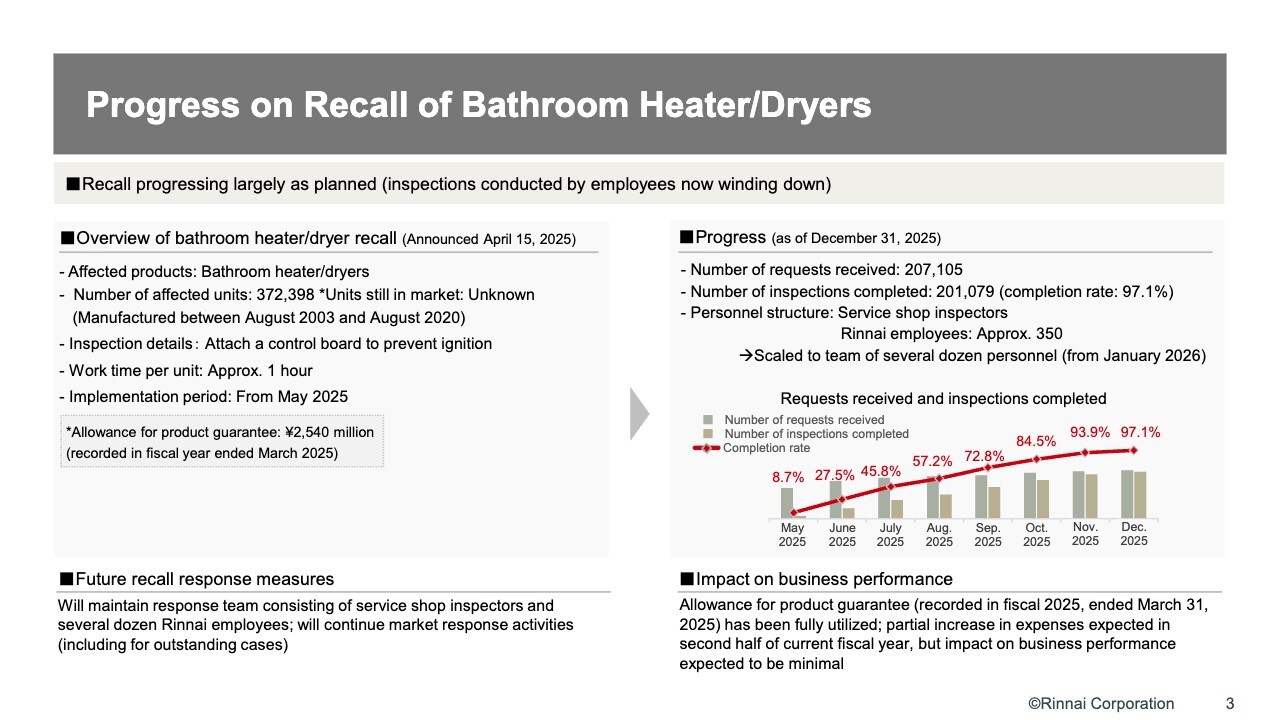
I will begin by discussing the recall of bathroom heater/dryers announced in April of this year. The number of bathroom heater/dryer units covered by the recall is slightly over 370,000. Inspections and repairs have been underway since May 2025 to resolve the defect. In the first and second quarters, the company experienced several unexpected negative impacts on income and loss.
Looking at the third quarter, as of December 31, 2025, of the 207,105 requests received for inspection and repair, we have completed the handling of over 200,000 units. This completion rate of 97.1% means that the company has almost caught up to the repair workload.
Accordingly, we have reduced the recall-related workforce from a maximum of 350 Rinnai and service shop inspectors to only several dozen from January 2026.
In terms of impacts on business performance, we recorded an allowance for product guarantees in the fiscal year ending March 31, 2025. The full amount of ¥2.54 billion has already been allocated. Accordingly, while costs incurred will impact income and loss, we view estimates of the costs as fairly insignificant.
Fiscal 2026 (First Three Quarters): Consolidated Performance Overview
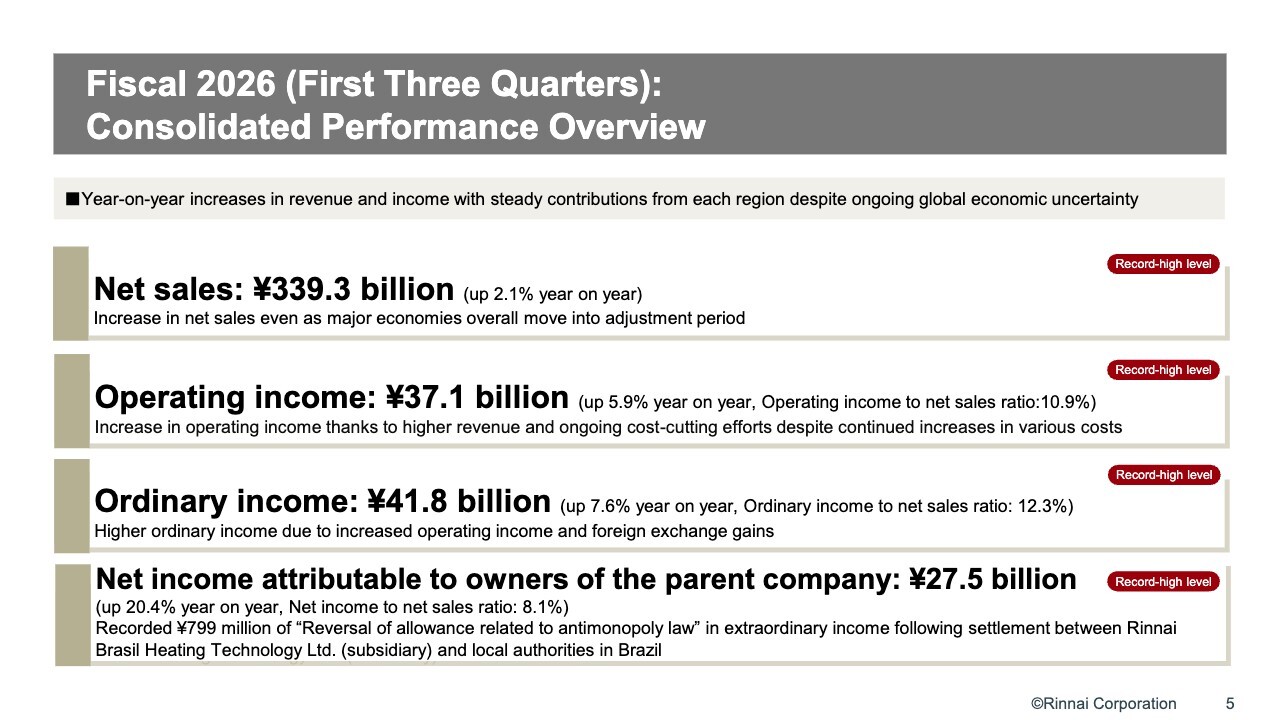
I would now like to discuss our consolidated financial results. While only a few countries and markets worldwide present positive economic environments at present, we recorded a slight increase in net sales year on year while also managing to increase operating income and other income.
The large increase in net income for the quarter was due to extraordinary gains. The allowance for antitrust law violations at subsidiary Rinnai Brasil Heating Technology Ltd., recorded as a negative figure in the previous fiscal year, was reversed by approximately ¥800 million in this fiscal year as a result of a settlement reached with local authorities. The amount was added to income.
The result was a boost to quarterly net income. In the third quarter, net sales and all incomes recorded new highs.
Fiscal 2026 (First Three Quarters): Consolidated Financial Results
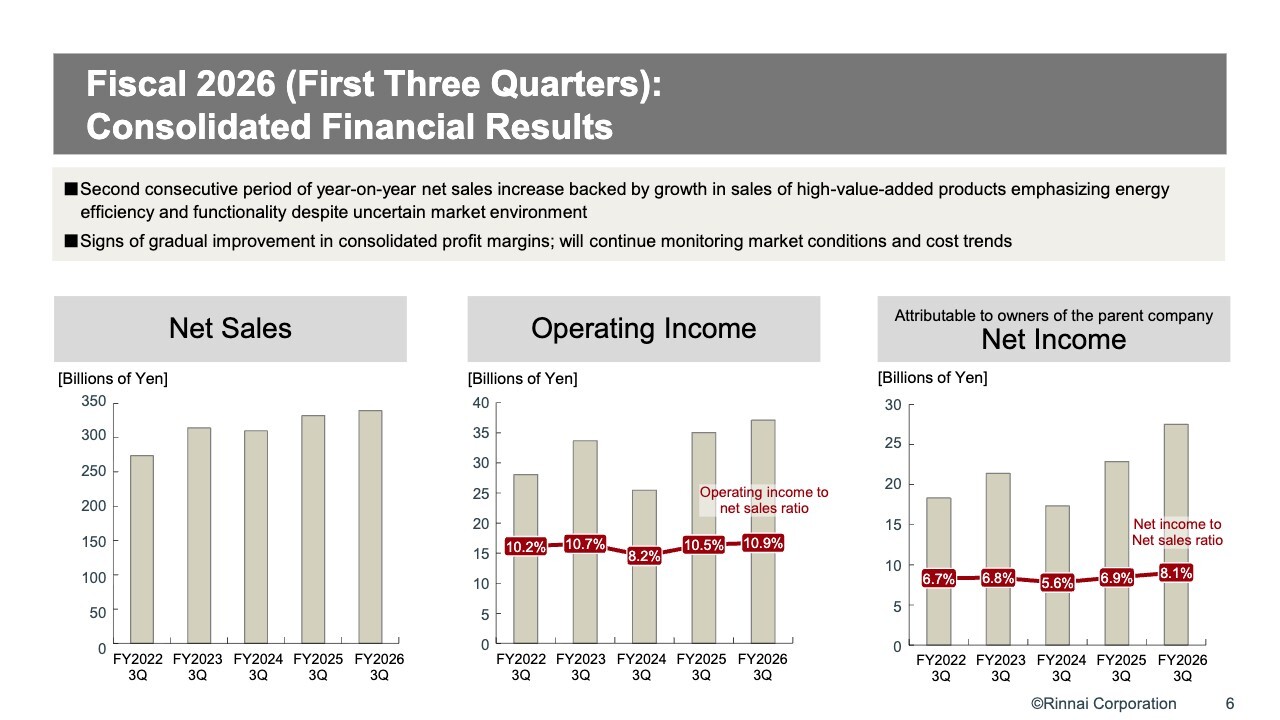
Third quarter results for the past five years are shown here. Net sales have increased for two consecutive periods, and while both good and bad points are apparent in each, we believe that sales are growing steadily overall.
Operating income and net income attributable to owners of the parent also increased for the second consecutive period. We are focused on income to net sales ratio, which has improved for two consecutive years after hitting a bottom in fiscal 2024.
Fiscal 2026 (First Three Quarters): Net Sales by Product
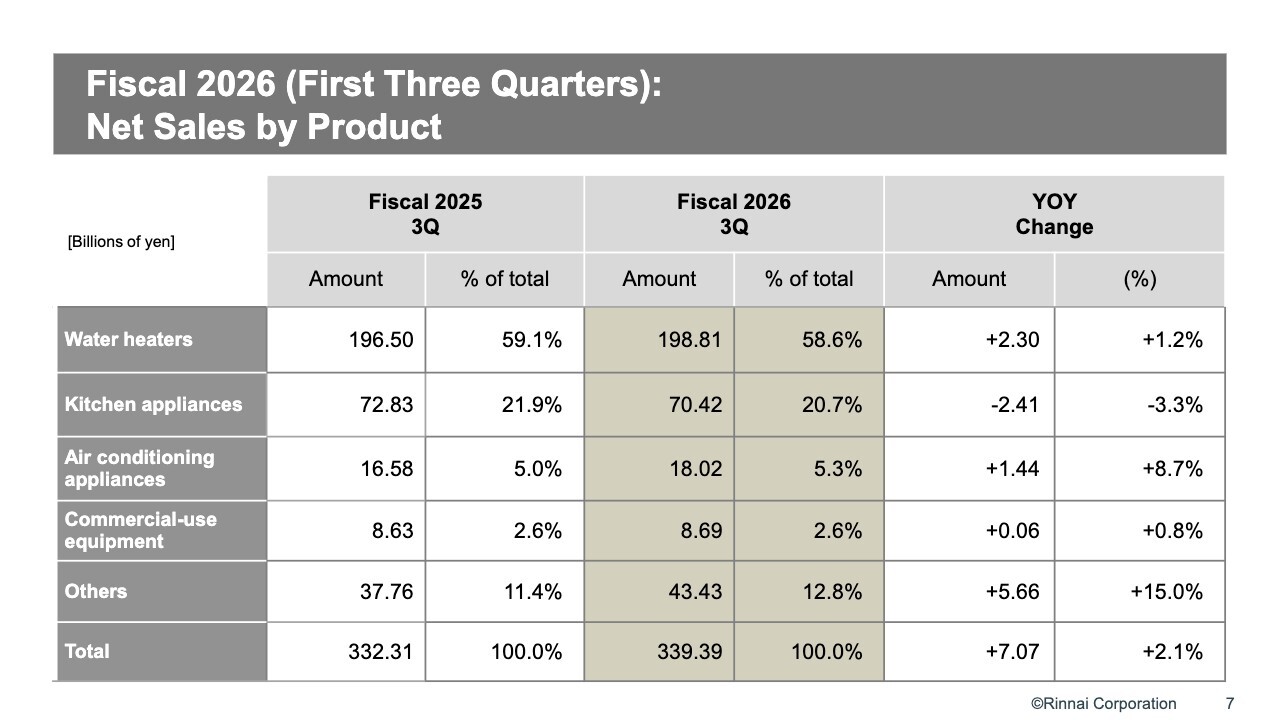
This slide shows net sales by product. As shown here, there are five categories. The “Kitchen appliances” category has been struggling, but we believe that sales in other categories remain generally favorable.
Segment-specific details will be presented later, but the Japan and U.S. segments contributed to the increase in sales in “Water heaters.”
Net sales declined in “Kitchen appliances.” The Japan, China, and Taiwan segments were particularly severe. Conversely, we believe that the Australia segment contributed significantly to the “Air conditioning appliances” and “Others” categories.
A company that we acquired, Smart Energy, handles items not included in our “Water heaters,” “Kitchen appliances,” “Air conditioning appliances,” and “Commercial-use equipment” categories, which accounts for the growth in “Others.”
Fiscal 2026 (First Three Quarters): Consolidated Sales/Income Results
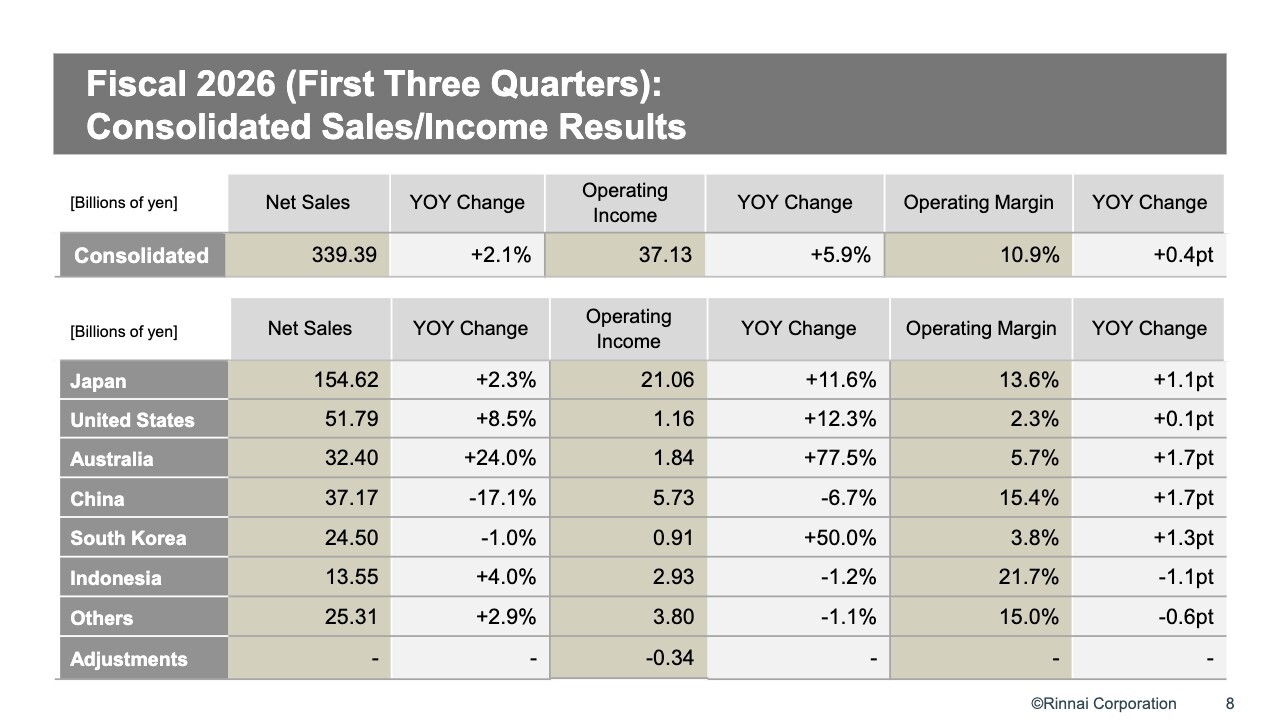
This slide presents the situation by segment. The China segment, at the center of the table, showed noticeable declines in both sales and income. In the South Korea and Indonesia segments, both sales and income increased on a local currency basis. As a result, sales and income increased in the region outside of the China segment, which we consider an acceptable result. The China segment will be discussed a bit later.
Fiscal 2026 (First Three Quarters): Consolidated Operating Income Analysis
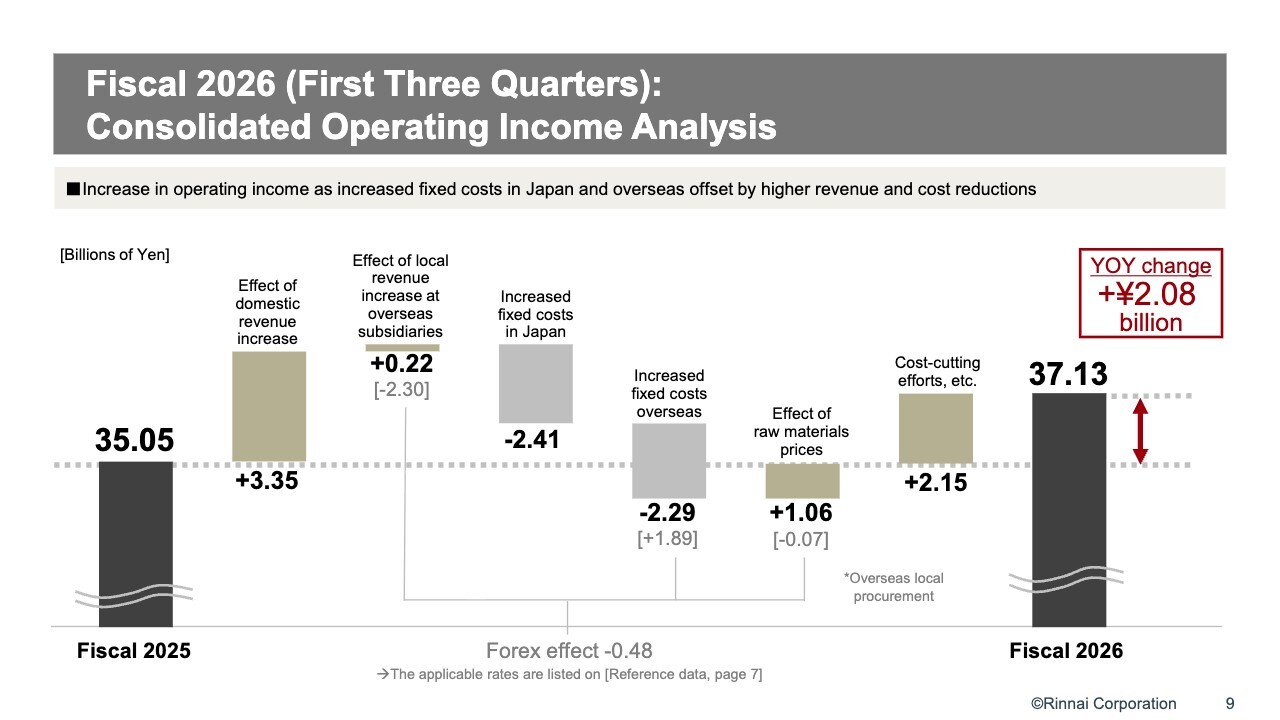
This slide presents an analysis of changes in operating income. Increased sales in Japan and at overseas subsidiaries had positive impacts on income.
While it is reported that the yen remains weak at elevated levels, a comparison between our financial results in the third quarter of the current and of previous fiscal years shows that the yen has strengthened. This foreign exchange impact weighs down income, making the increase in sales overseas appear smaller.
Accordingly, the effect of increased sales was actually somewhat greater. See page 7 of the Reference Data for details of exchange rates for major currencies.
Fixed costs increased both in Japan and overseas, negatively impacting income.
In raw material costs, the market price of copper has increased greatly, reaching an unprecedented level of over ¥2,000 per kilogram. At the same time, relatively stable steel prices and positive impacts of raw material costs overseas were primary reasons behind positive impacts from raw material costs.
The overall consolidated result was a positive impact of ¥1.0 billion. However, as the rising price of copper could have a significant impact on income and loss toward the fourth quarter, we consider it vital to keep a close eye on future movements.
Our cost-cutting efforts yielded little effect in the first quarter. The second quarter saw significant improvement, while the third quarter was somewhat subdued. This may be due in part to the fact that a recovery trend became apparent from the third quarter in the previous fiscal year, resulting in larger comparative figures.
Overall, we were able to generate a cumulative effect of ¥2.15 billion over the first three quarters.
Japan: Fiscal 2026 (First Three Quarters) Results
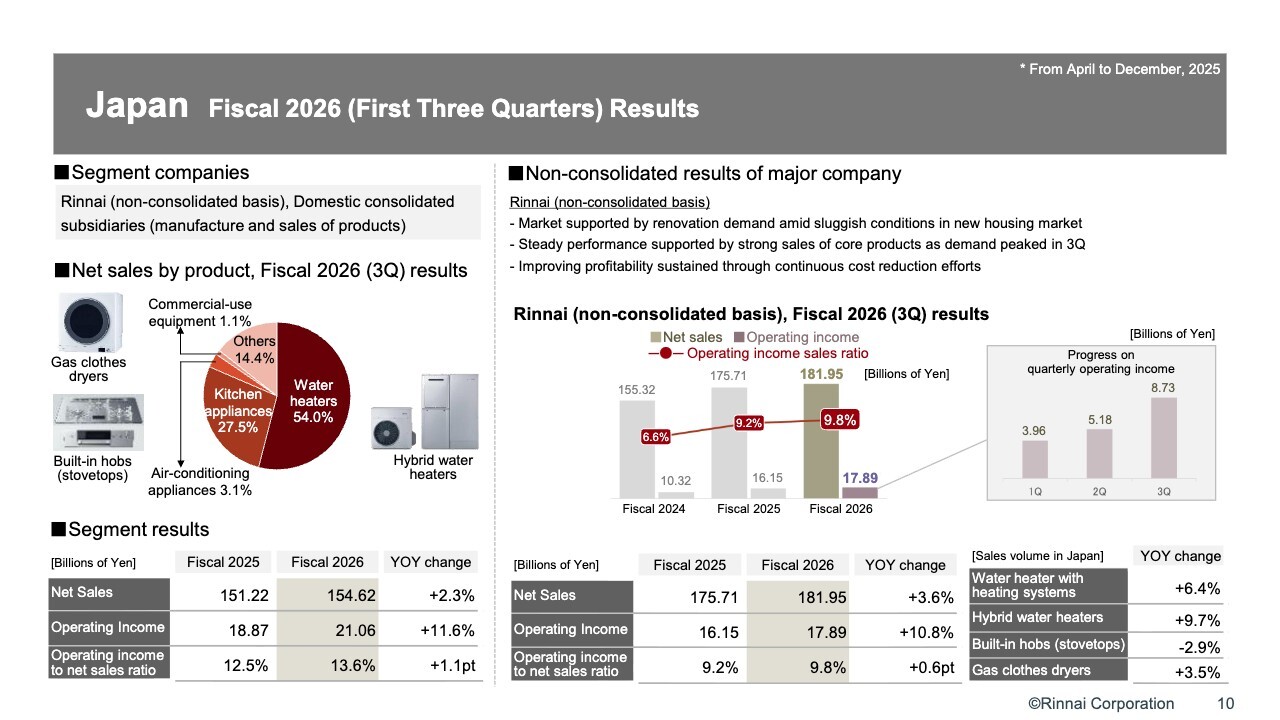
I would now like to discuss individual segments. Segment results are shown at left, as usual, with results from the main companies composing the segment shown at right. The main company in Japan is non-consolidated Rinnai Corporation.
In the Japanese market for non-consolidated Rinnai Corporation, the new housing market remains extremely challenging during the current fiscal year, and the situation is by no means positive.
Amid this, the remodeling and replacement markets are reasonably solid. The third quarter is the period of peak demand in Japan. We closely watched whether the recovery of momentum in the second quarter could be sustained in the third quarter, and believe that sales were relatively strong, especially for key products.
As a result, non-consolidated Rinnai Corporation finished the third quarter on steady footing in terms of both net sales and income. However, there is a sense that the growth rate has slowed slightly in key products, a point I will address next.
Japan Topics: Reinforced Lineup of Key Products
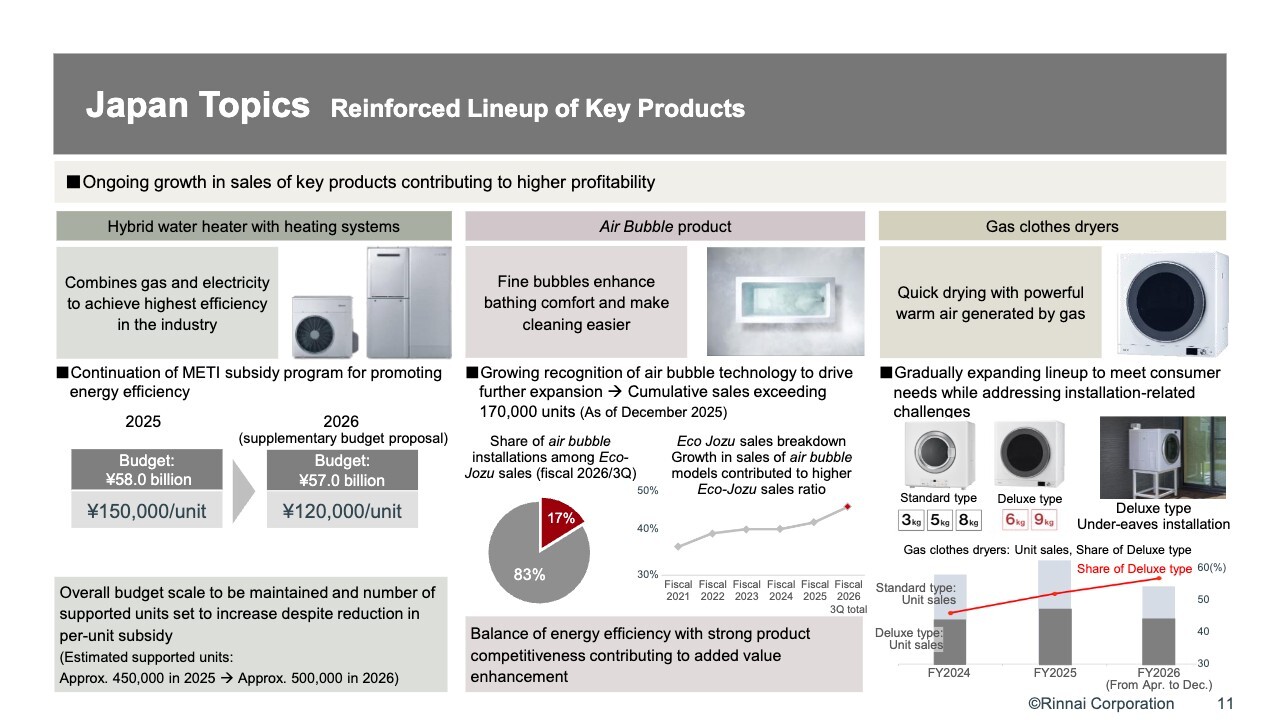
In Japan, we define the three key products shown on the slide: hybrid water heaters, Air Bubble products , and gas clothes dryers.
In hybrid water heaters, sales of ECO ONE grew steadily in both the previous and current fiscal years, aided by the tailwind of subsidies from the Ministry of Economy, Trade and Industry for energy-saving promotion projects. The subsidy policy is set to continue, although the price per unit will be slightly lower in the next fiscal year.
Of the three key products, air-bubble-related offerings, shown at center, have the highest growth rate. A high percentage of Air Bubble products are installed in Eco-Jozu, and a synergy appears by which the popularity of and demand for Air Bubble also leads to growth of Eco-Jozu.
Our gas clothes dryers are of two types, standard and deluxe. The deluxe type, launched after the standard type, has been well received in the market and is growing steadily. The deluxe type in particular is yielding positive effects because of its high added value.
United States: Fiscal 2026 (First Three Quarters) Results
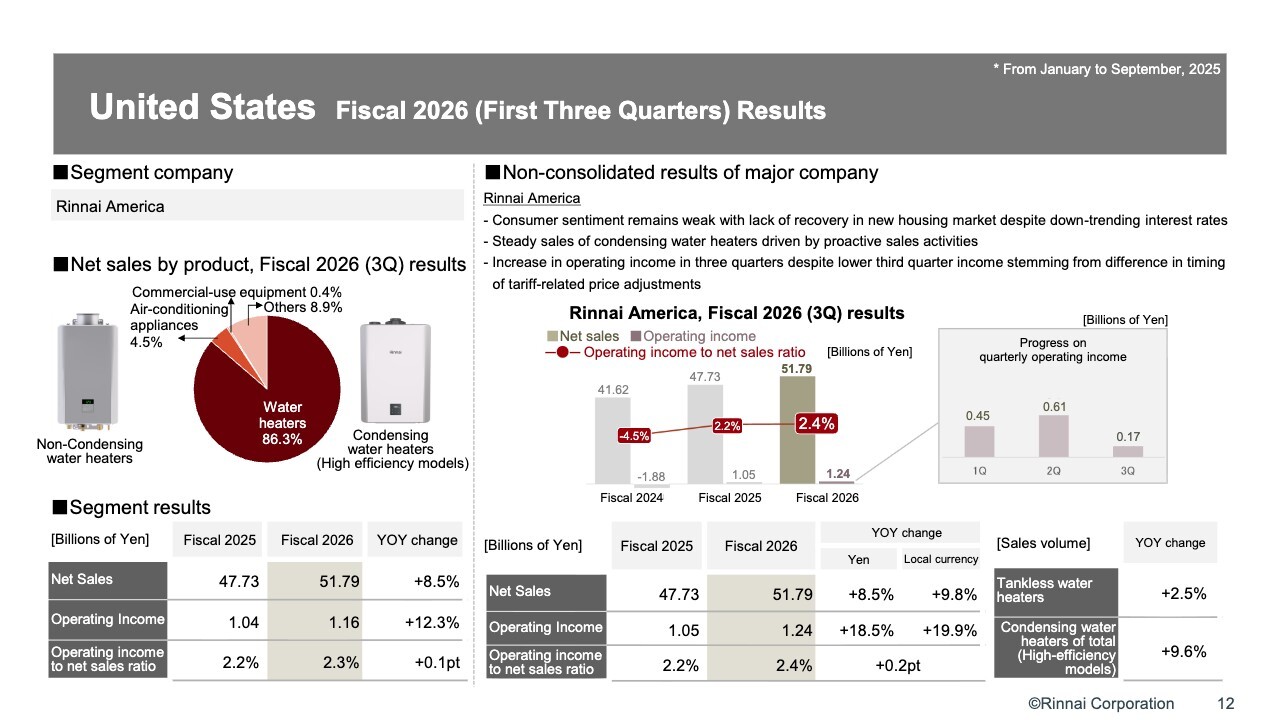
Our analysis of market conditions in the U.S. segment shows that although interest rates are trending lower, a strong recovery in housing-related markets is not yet apparent and consumer sentiment remains quite weak. At Rinnai America Corporation, condensing water heaters are performing relatively well thanks to sales efforts.
The impact of the Trump tariffs had been uncertain since the start of the fiscal year, but became clearer by the third quarter. The next slide explains this in more detail.
In the U.S. segment, sales and income increased on both local currency and yen bases, but the income to net sales ratio remains unsatisfactory and its improvement is an issue.
United States Topics: Tariff Impact and Response Measures
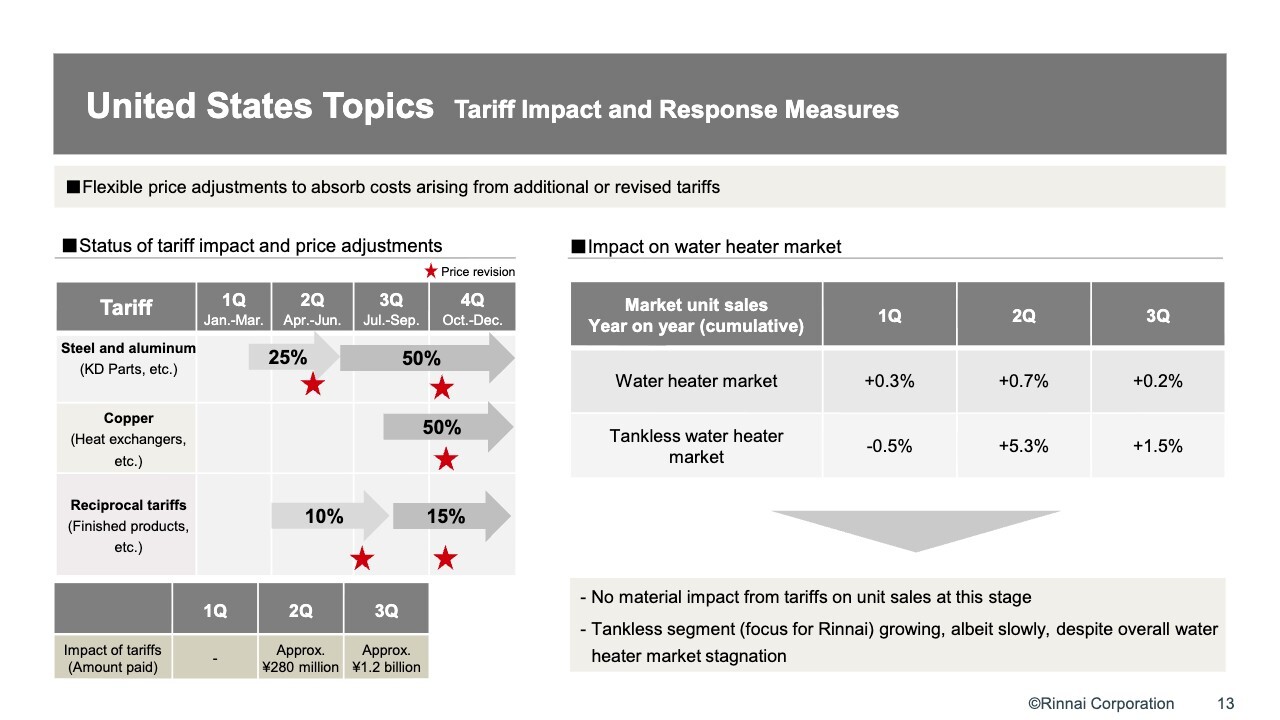
The left side of the slide shows tariffs for materials and products. The tariffs were raised to new highs around the third quarter, and new tariffs were imposed on copper.
In response, we revised our prices in October 2025 during the fourth quarter, but income struggled a bit during the third quarter due to the new and increased tariffs that had been imposed. However, the impacts of tariff increases are expected to be mitigated following fourth quarter price revisions.
Looking at the overall market for water heaters and the market for tankless water heaters, we currently do not believe that the price increases will be rejected by the market.
China: Fiscal 2026 (First Three Quarters) Results
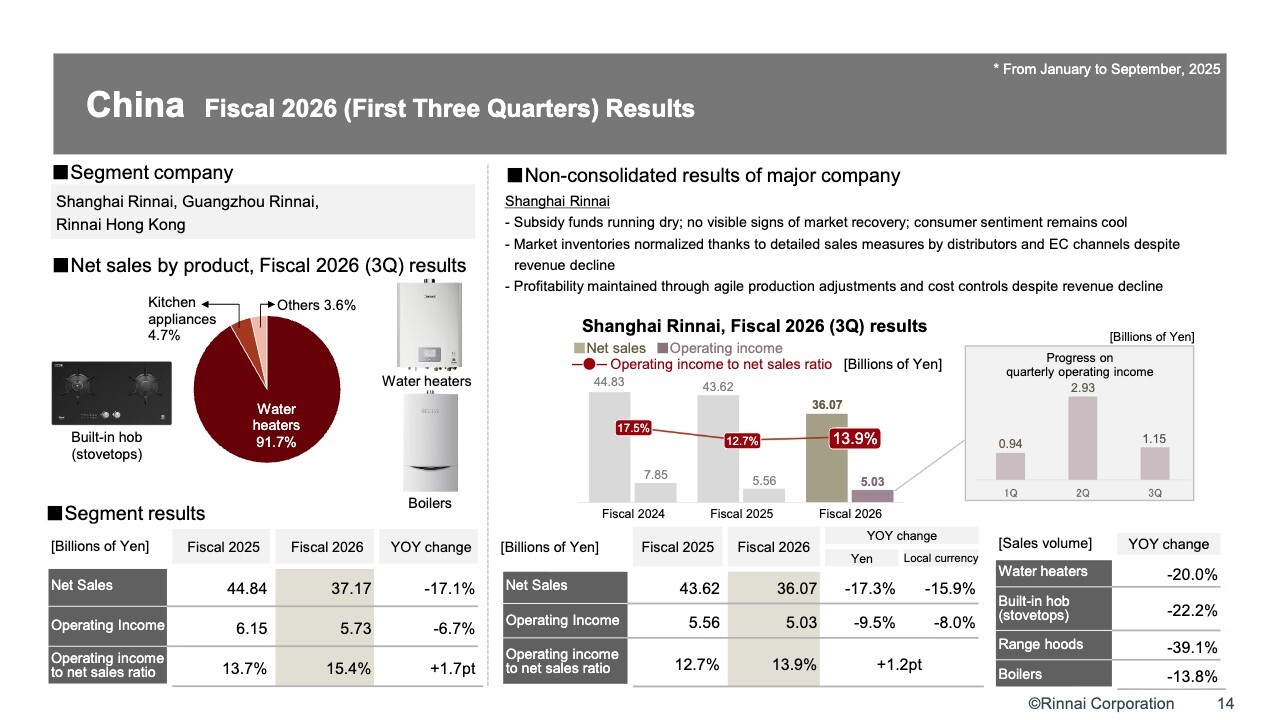
This slide concerns the China segment market. Difficult market conditions appeared last year, with no signs of recovery yet apparent. For a time, there were hopes that subsidies might yield a positive impact, but signs of market recovery remain elusive due to reasons including dwindling financial resources.
The sales situation at Shanghai Rinnai remains severe amid ongoing decline. Taking a dispassionate look at market trends reveals an upward trend in distributors’ inventories, rather than trying to force sales, we are carrying out finely tuned sales measures while applying a degree of braking to keep market inventories healthy.
Amid the decline in sales, agile production adjustments and cost containment have yielded some positive effects on income, which has not declined to the degree that net sales have.
In addition, the market has slowed considerably since the third quarter of the previous fiscal year, a quarter in which income decreased significantly. Accordingly, numbers may appear mitigated in comparison to the same quarter last year.
China Topics: Initiatives to address challenging business environment
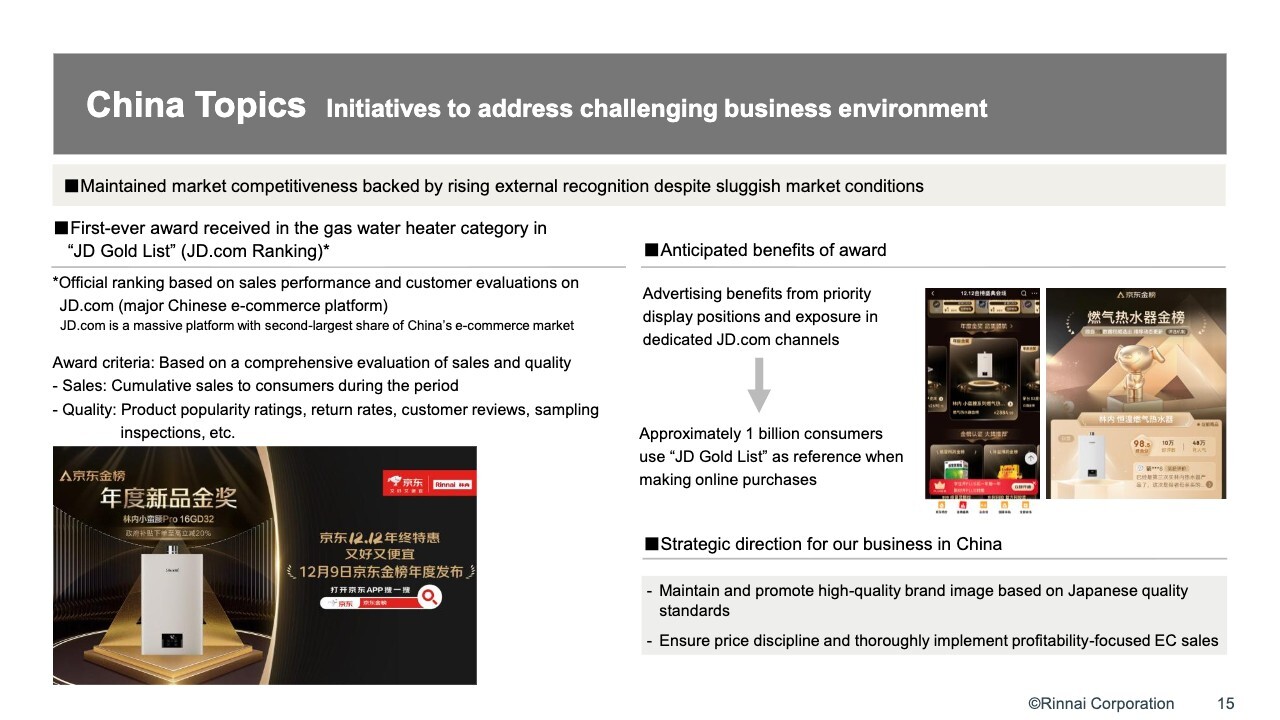
This slide looks at topics in the China segment. Approximately 40% of Shanghai Rinnai’s sales are from EC. For the first time, our company achieved first place in the gas water heater category in awards from JD.com, a major EC platform on par with Alibaba.
We recognize that this achievement is not solely due to sales performance or quantitative figures, but also to overall evaluation of the products’ popularity, return rates, and reviews.
We expect this positive evaluation to lead to benefits such as more favorable product placement on e-commerce sites. We consider this a very positive outcome, as consumers choose products based on such evaluations.
Our management direction in the China segment remains unchanged: maintain and highlight high-quality brands with Japanese quality.
Price competition is also very severe in EC, but Shanghai Rinnai maintains a certain price discipline and continues to thoroughly pursue EC sales with an emphasis on profitability.
Australia: Fiscal 2026 (First Three Quarters) Results
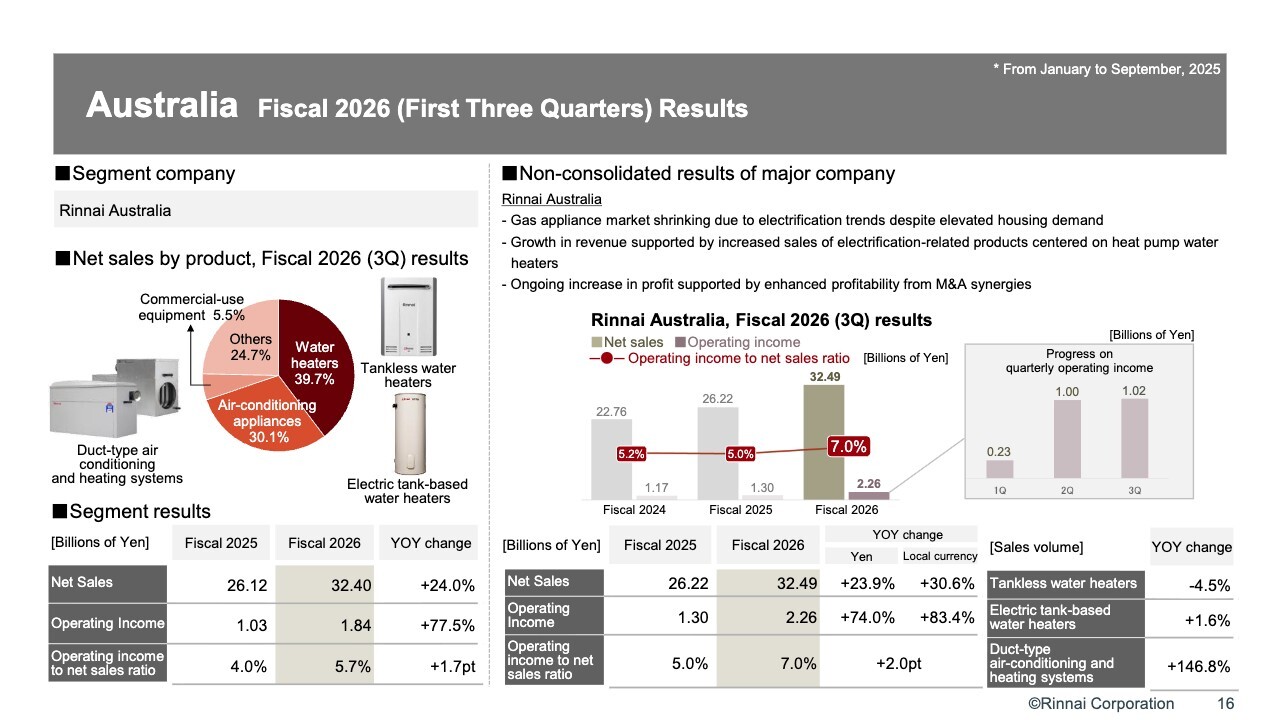
The numbers from the Australia segment were very good, presenting strong results in terms of higher sales and income. The income to net sales ratio is also increasing. The market is moving away from gas, and a shift toward electrification has begun.
Rinnai Australia has long been working to make a successful shift amid this transition period. Sales of heat pump water heaters and other electrification-related products contributed to higher sales in the third quarter.
In August 2024, the company acquired a company called Smart Energy. Synergies from the acquisition are contributing to income.
Australia Topics: Increasing value provided as residential environment solutions
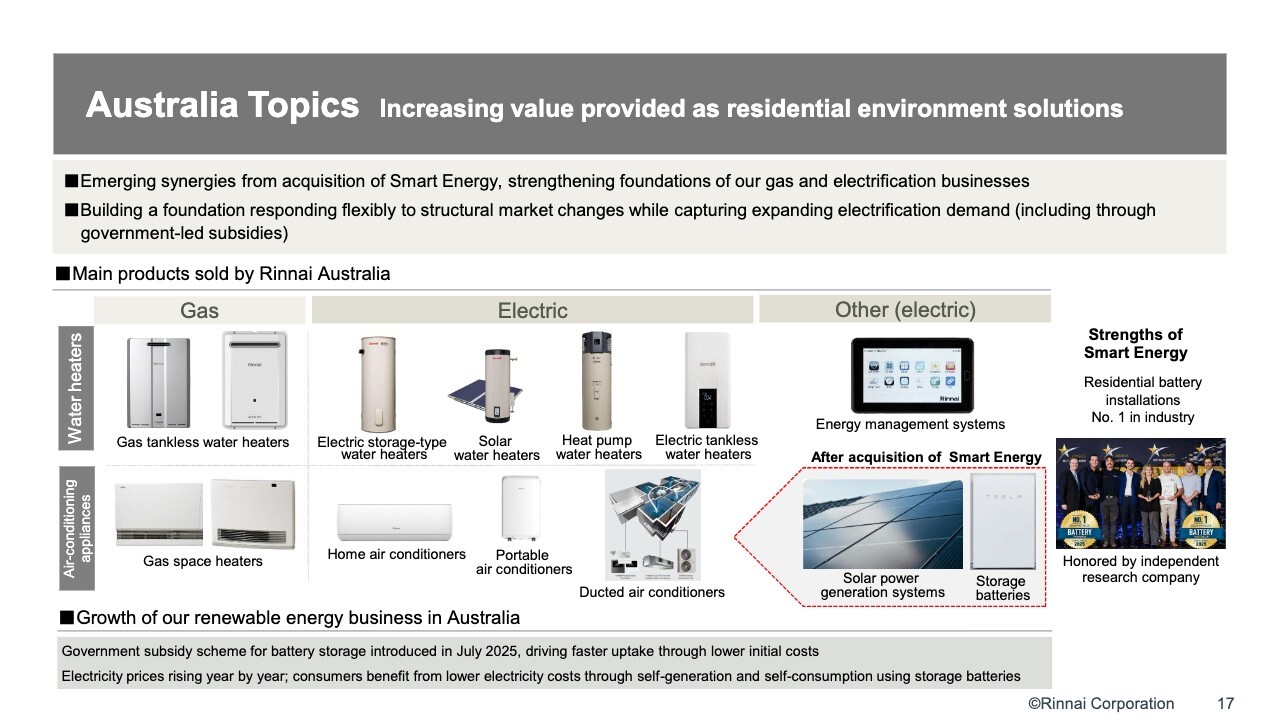
This slide shows Rinnai Australia’s product lineup amid the market shift from gas to electrification. As shown here, while handling gas products, the company has significantly expanded its lineup to include electric and other offerings.
The acquired company Smart Energy made a particularly large contribution to net sales and income in the third quarter. The company handles solar power generation systems and storage batteries, sectors that are making very strong contributions. The government is also offering subsidies for storage batteries.
South Korea: Fiscal 2026 (First Three Quarters) Results
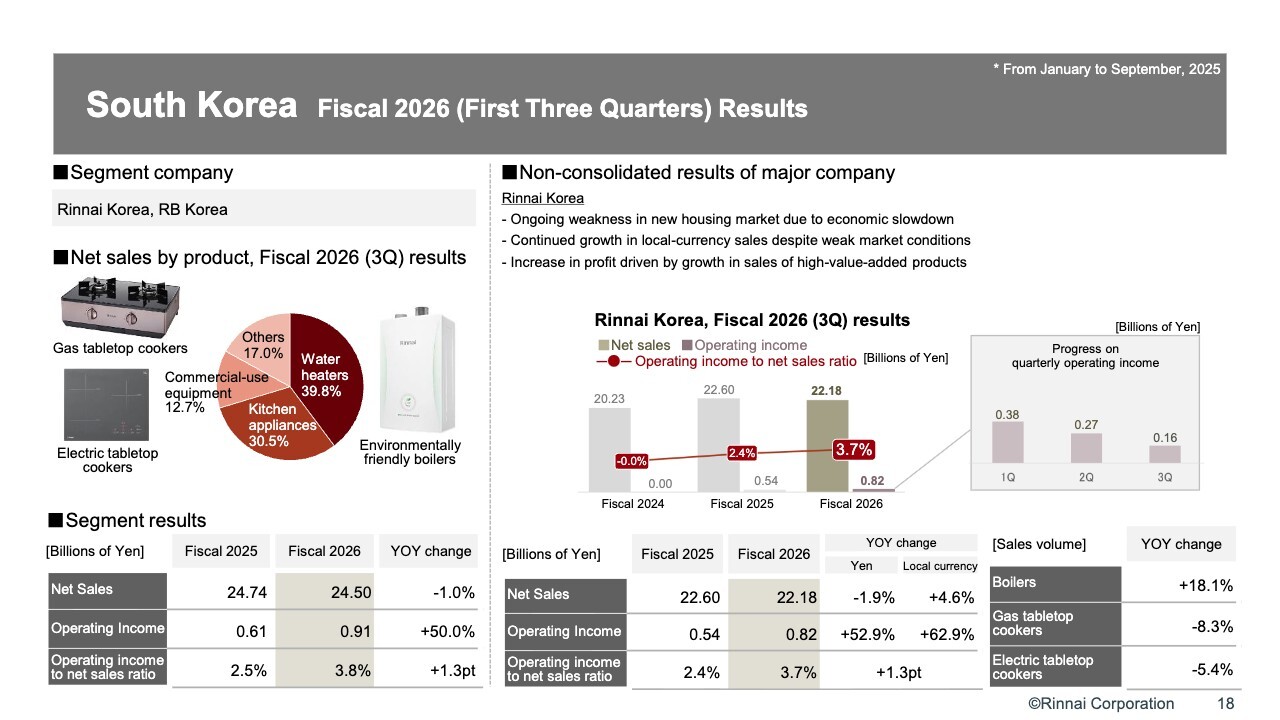
The South Korean segment market remains quite weak. However, even under such market conditions we managed to secure increased sales on a local currency basis. We see the contribution of boilers as particularly significant. As a result of a focus on high value-added products, sales in the South Korea segment have grown slightly. We have managed to increase income as well.
Indonesia: Fiscal 2026 (First Three Quarters) Results
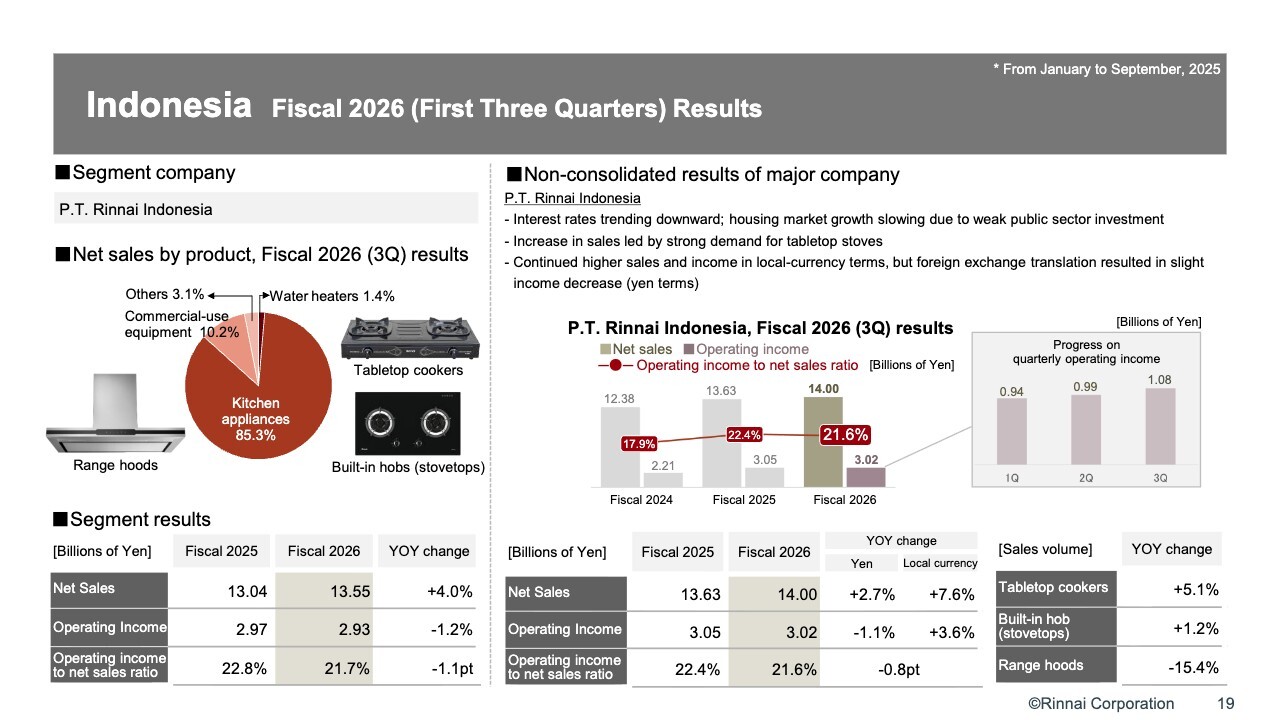
This slide concerns the Indonesia segment. We have achieved increases in both sales and income on a local currency basis. The reliable generation of around ¥1 billion in income every quarter has made a particularly significant contribution to the group. Sales of tabletop cookers fluctuate from year to year, but have increased slightly this year.
Other Regional Topics: MT Industrial (MTI) Newly Consolidated as Subsidiary
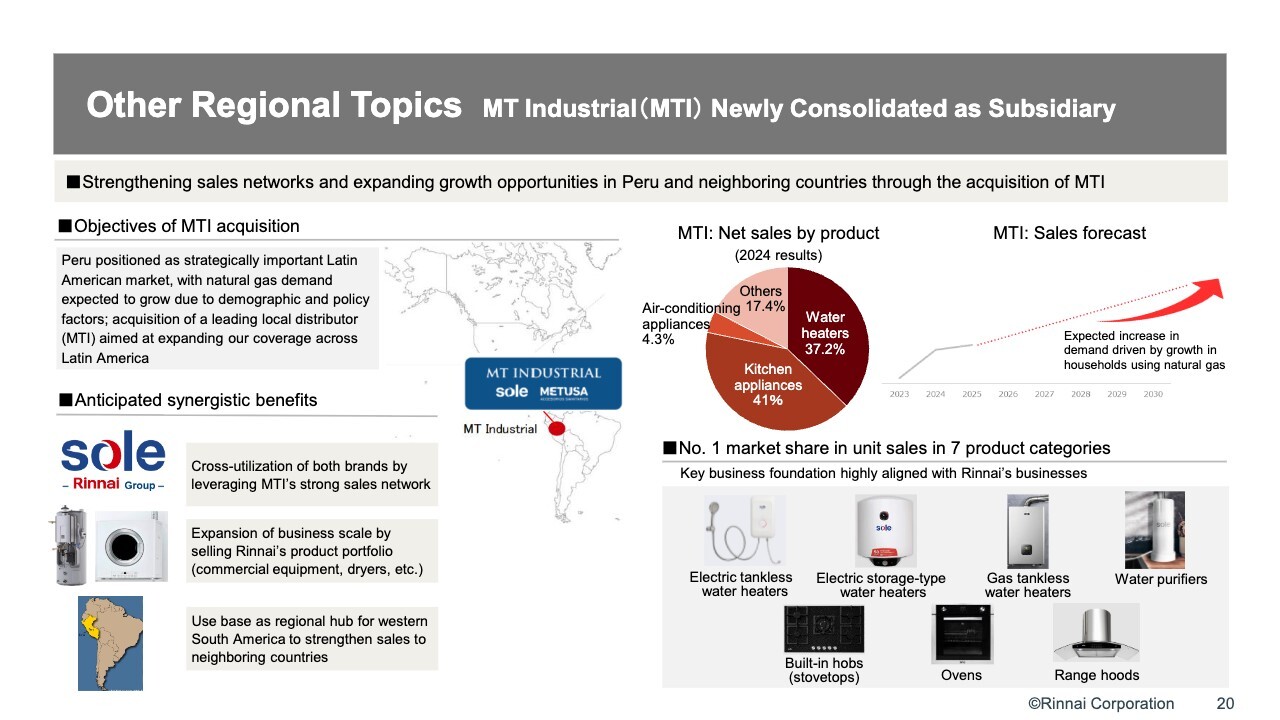
This slide addresses other regional topics. As noted during the 2Q earnings presentation, the company acquired Peru-based MT Industrial in October 2025. Our interest in Peru is due to the expectation that natural gas will grow in the country under national policy measures.
Accordingly, we believe that the demand for gas appliances, one of our strengths, will grow, and we expect to see a considerable expansion of sales within Peru.
MT Industrial also boasts very strong brand power in its “Sole” brand. Because MTI boasts the No. 1 market share for its key products, we are aiming for synergy by leveraging the strength of the brand while expanding our products through MTI’s sales channels.
We also recognize a large market for water heaters in the area surrounding Peru, and made the acquisition for the purpose of using Peru and Brazil as footholds to strengthen sales in neighboring countries.
Progress of Consolidated Earnings Forecast
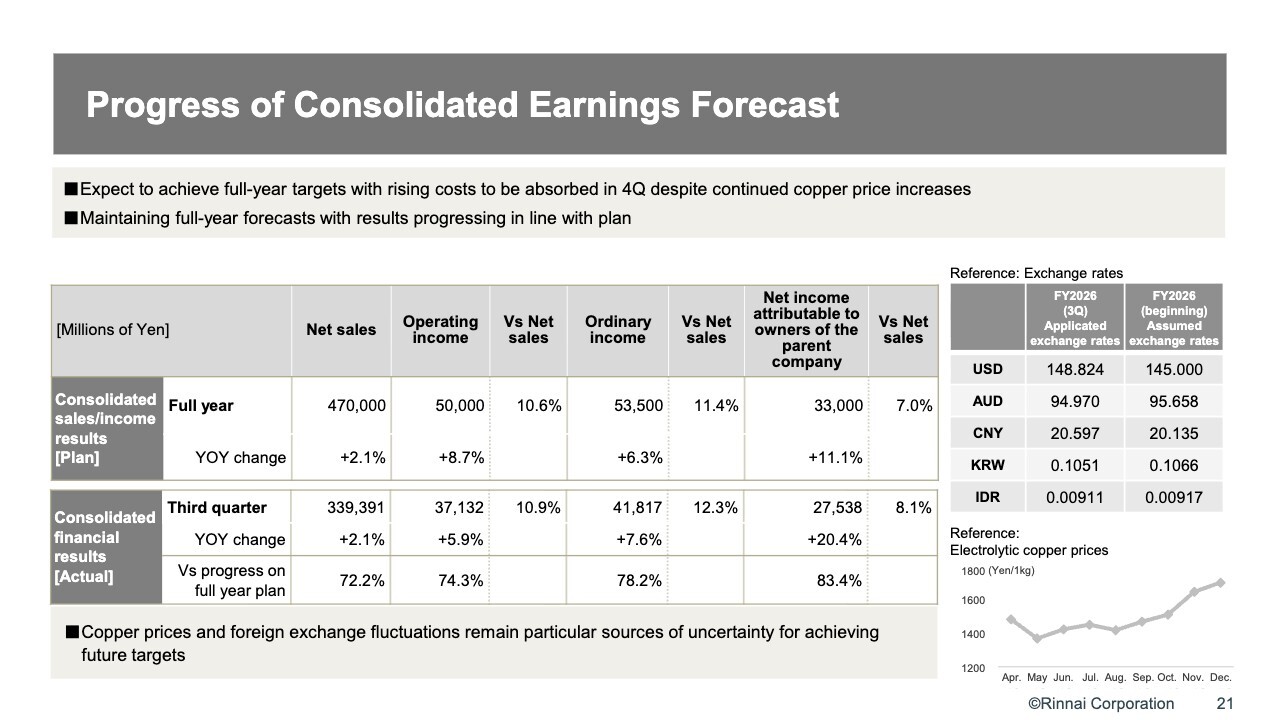
This slide concerns our consolidated earnings forecast. We have issued no corrections at this time. The full-year plan calls for net sales of ¥470 billion and operating income of ¥50 billion. Although we have not revealed specific figures on progress in the third quarter, we are making steady progress according to plan.
Accordingly, we do not intend to issue any revisions at this time. However, we see trends in copper prices and exchange rate fluctuations as uncertainty factors in the fourth quarter.
Overall, we believe that third quarter results were very solid for the company. That concludes my presentation.
Q&A: Progress toward this fiscal year’s forecast and gaps with the plan
Questioner: You noted that progress toward the forecast this fiscal year is favorable. However, according to Operating Income Analysis, the initial assumption was for an increase in income of ¥500 million due to decreased fixed costs overseas, while cumulative income for the first three quarters has decreased due to increased expenses.
Cost-cutting efforts are planned to yield a positive impact on income of ¥5.7 billion, but the cumulative increase for the first three quarters was only ¥2.15 billion, which would seem to indicate somewhat slow progress. What are your thoughts on this gap? Also, please note in which areas you plan to make up for the gap.
Ogawa: You point out that overseas fixed costs have had a larger negative impact than planned. The greatest element in this is the U.S. segment. This is because at the start of the fiscal year, the Trump tariffs were not yet clear.
When we issued plan guidance at the end of the previous fiscal year, too, we did not factor in the impacts of the Trump tariffs, whether positive or negative.
The tariffs were fixed between the first and third quarters. As the tariffs were handled as fixed costs, they resulted in expenses higher than planned. This is the most significant factor behind the gap.
Regarding cost-cutting efforts, as you note, current progress appears somewhat weak compared to plans at the start of the fiscal year. However, this is due to the fact that the allowance for the bathroom heater/dryers recall at the end of previous fiscal year was included in the cost-cutting efforts. Accordingly, we assume that the allowance amount will turn to a significant positive factor at the end of the fiscal year.
There are also areas in which outcomes differed from our forecast in a positive direction. As an example, we see the increase in sales in Japan and the fact that materials costs were lower than initially expected as positive factors that offset negative aspects.
Q&A: Ongoing impacts of the Smart Energy acquisition
Questioner: Australia appears to be performing very well. Since Smart Energy was acquired in 2024, we understand that the effects of the acquisition began to appear in the second half of last year. Could you tell us whether this growth is expected to continue into the next fiscal year and beyond?
Ogawa: As the acquisition was made in August 2024, Smart Energy has been included in consolidated results from the third quarter of the previous fiscal year. In the single-quarter comparisons for the third quarters we have presented here, Smart Energy was also included in the previous year’s results.
However, Smart Energy sales began to make a full-scale contribution to the Group from the fourth quarter of last year onward. Accordingly, in the financial results through the third quarter of this fiscal year, the effects of Smart Energy will add significantly compared with the previous year.
This may sound negative, but Smart Energy’s sales income directly relates to Rinnai Australia’s sales and income increases.
We are also considering future combinations of Smart Energy’s products with Rinnai Australia’s existing products in the future, from a synergy perspective. Smart Energy also made a strong contribution to the strong growth in heat pumps. We believe that the effects of the Smart Energy acquisition can be expected to continue well into the next fiscal year and beyond, and that Smart Energy will continue to play a very vital role in the ongoing shift from gas to electrification.
Q&A: Hybrid water heater sales policies in the Japan business
Questioner: You mentioned earlier that the growth rate of the Japan business, particularly in hybrid water heater sales units, has slowed. What measures do you intend to take from the next fiscal year?
I understand that the growth rate will gradually decline, but given the tailwind from subsidies and key products, I would like to know your thoughts on the next fiscal year and beyond.
Ogawa: As the numbers go up every year, the growth rate may seem to be slowing when viewing percentages alone. I think progress toward achieving this year’s target of 45,000 units is facing difficulties.
One factor is a slight decline in new construction this year. ECO ONE Hybrid water heaters and gas clothes dryers are products widely used in new construction. Accordingly, we believe that weakness in the new construction market may have had an effect on the slightly slower growth rate.
There is no change in our policy to focus on ECO ONE as a key product in the next fiscal year and beyond. We intend to continue with our sales methods, without a major change in strategy.
As the number of logistics firms adopting ECO ONE is increasing, we will engage in initiatives in cooperation with these while clearly highlighting subsidies.
As a manufacturer, we believe that our lineup still holds many possibilities, including changes in tank capacity. Accordingly, we will continue to focus on product development.
Q&A: Sales policies for the next fiscal year in the China segment
Questioner: In your discussion of the China segment business, I felt that your tone became a bit more cautious. You mentioned wanting to improve the soundness of market inventory. Is it correct to assume that you will continue defensive sales measures in the China segment as the environment remains challenging into the next fiscal year?
Ogawa: Based on our earnings releases, it has been just over a year since the market began slowing significantly. We currently have no information concerning prospects for market recovery in the next fiscal year and beyond. Shanghai Rinnai is also taking a very cautious view.
At the same time, we feel that amid the difficult market environment, the battle plan for Shanghai Rinnai has become very clear. While the sales situation remains difficult, I believe that the year was one in which measures to maintain income yielded a certain degree of effect.
Even if the market does not recover in the next fiscal year and beyond, we believe that Shanghai Rinnai will work to maintain and possibly increase income. Should the market recover, we believe that would be an added bonus.
Q&A: Impacts of recall costs in Japan and the effects of allowances
Questioner: Am I correct in understanding that, as allowances for recall costs in Japan have already been recorded, it is unlikely that there will be a positive effect in the next fiscal year after the impacts of the recall have dissipated?
Ogawa: That is correct. The ¥2.54 billion has already been recorded in the fiscal year ended March 2025. A slowdown in income at the end of the fiscal year was reflected in last year’s financial results. Accordingly, a comparison of the fiscal years ending March 2026 and March 2027 shows no effects of the allowance.
However, in the first quarter of the fiscal year ending March 2026, there were areas in which addressing bathroom heater/dryers placed a considerable burden in terms of income and loss. We believe that this will disappear in the fiscal year ending March 2027 and yield a positive impact.